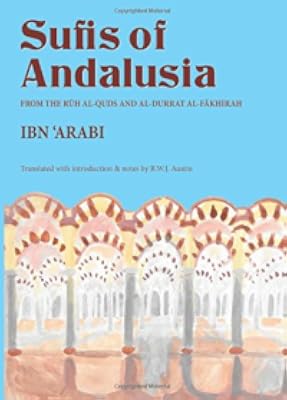
Sufis of Andalusia: The Ruh Al-Quds & Al-Durrat Al-Fakhirah
by Muhyi al-Din Muhammad ibn 'Ali Ibn al-'Arabi, R. W. J. Austin (Translator), Ibn Arabi (Author)
On This Page
Description
Parts of the Ruh al-Quds and Durrat al-Fakhirah, translated with introduction and notes by Ralph Austin. Sufis of Andalusia consists of biographical sketches of some of the contemplatives and spiritual masters among whom Ibn ‘Arabi spent his early years. The Ruh al-Quds was written in response to the comments of a friend who lamented the spiritual degeneracy of the times in which they lived. These accounts bring to life with great vividness a remarkable spiritual milieu, and a group of show more individuals who manifest superlative wisdom in their intensity of devotion and service to Reality. This book will speak directly to all serious seekers after real knowledge. -- Sufis of Andalusia consists of biographical sketches of some of the contemplatives and spiritual masters among whom Ibn 'Arabi spent his early years. show lessTags
Recommendations






























Member Reviews
Ibn al-'Arabi
Los vívidos relatos de Ibn 'Arabi de reuniones con contemplativos sufíes y maestros espirituales en sus primeros viajes por la España Árabe y el mundo islámico. Traducido del Ruh al-Quds y al-Durrat al-Fakhirah con introducción y notas de R.W.J. Austin
Estos retratos dan vida a una gran cantidad de individuos notables por la intensidad de su devoción y servicio a la realidad, y contienen muchas historias memorables que arrojan luz sobre los pináculos del enfrentamiento espiritual, así como las dificultades y obstáculos encontrados en el camino. -
Ibn 'Arabi's vivid accounts of meetings with Sufi contemplatives and spiritual masters on his early travels throughout Moorish Spain and the Islamic World. Translated from the Ruh show more al-Quds and al-Durrat al-Fakhirah with introduction and notes by R.W.J. Austin.
These portraits bring to life with great vividness a number of individuals remarkable for the intensity of their devotion and service to reality, and contain many memorable stories which throw light on the pinnacles of spiritual facing as well as difficulties and obstacles encountered on the path. show less
Estos retratos dan vida a una gran cantidad de individuos notables por la intensidad de su devoción y servicio a la realidad, y contienen muchas historias memorables que arrojan luz sobre los pináculos del enfrentamiento espiritual, así como las dificultades y obstáculos encontrados en el camino. -
Ibn 'Arabi's vivid accounts of meetings with Sufi contemplatives and spiritual masters on his early travels throughout Moorish Spain and the Islamic World. Translated from the Ruh show more al-Quds and al-Durrat al-Fakhirah with introduction and notes by R.W.J. Austin.
These portraits bring to life with great vividness a number of individuals remarkable for the intensity of their devotion and service to reality, and contain many memorable stories which throw light on the pinnacles of spiritual facing as well as difficulties and obstacles encountered on the path. show less
Apr 30, 2021Spanish
Ratings
Members
- Recently Added By
Author Information

204+ Works 1,511 Members
Muhammad ibn-'Ali ibn al-Arabi, also called Muhyi al-Din, was the celebrated Muslim philosopher who first formulated the esoteric mystical dimension of Islamic thought. Born in Murcia, Spain, he devoted 30 years to the study of traditional Islamic sciences in Seville. After travelling extensively in the East, he settled in Damascus, where he spent show more his last days in contemplation, teaching, and writing. Ibn al-Arabi composed two great mystical treatises, The Meccan Revelations and Wisdom of the Prophets (Fusus al-HikamFusus al-Hikam). Completed in Damascus, The Meccan Revelations is a personal encyclopedia of 560 chapters extending over all the esoteric sciences in Islam as he knew them, combined with valuable autobiographical information. Wisdom contains only 27 chapters, but, as the mature expression of ibn al-Arabi's mystical thought, it is regarded as one of the most important documents of its kind. However, he is best known for his mystical odes, wherein, like all Sufis, he expresses his longing for union with God in terms of passionate human love (in Mecca, he fell in love with a young beauty who came to personify wisdom for him). It is not clear whether his poetry is religious or erotic, an ambiguity also characteristic of the work of the great Persian lyricst Hafiz. Critics have found in ibn al-Arabi's poetry, as in most Sufi verse, elements of Muslim orthodoxy, Manichaeanism, Gnosticism, Neoplatonism, and Christianity. (Bowker Author Biography) show less
Some Editions
Common Knowledge
- Important places
- Andalusia, Spain
Classifications
- Genres
- Nonfiction, Religion & Spirituality, History, Philosophy, Biography & Memoir, General Nonfiction
- DDC/MDS
- 297.4 — Religion Other religions Islam Sufi, Mysticism
- LCC
- BP189.4 .I13 — Philosophy, Psychology and Religion Islam. Bahaism. Theosophy, etc. Islam. Bahai Faith. Theosophy, etc. The practice of Islam Islamic religious life
- BISAC
Statistics
- Members
- 40
- Popularity
- 717,759
- Reviews
- 2
- Rating
- (5.00)
- Languages
- English, French
- Media
- Paper
- ISBNs
- 7