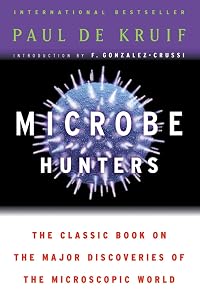
Microbe Hunters
by Paul De Kruif
On This Page
Description
An international bestseller, translated into 18 languages, Paul de Kruif's classic account of the first scientists to see and learn about the microscopic world continues to fascinate audiences. This is a timeless dramatization of the scientists, bacteriologists, doctors, and medical technicians who discovered the microbes and invented the vaccines to counter them. De Kruif writes about how seemingly simple but really fundamental discoveries of science-for instance, how a microbe was first show more viewed in a clear drop of rain water, and when, for the first time, Louis Pasteur discovered that a simple vaccine could save a man from the ravages of rabies by attacking the microbes that cause it. "It manages to delight, and frequently to entrance, old and new readers [and] continues to engage our hearts and minds today with an indescribable brand of affectionate sympathy." -- F. Gonzalez-Crussi, from the Introduction. show lessTags
Recommendations






















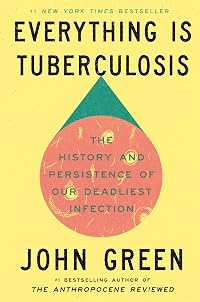




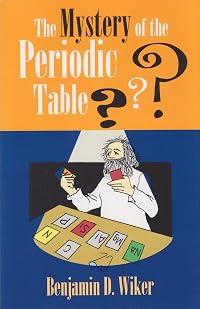
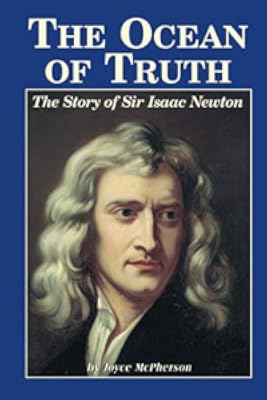



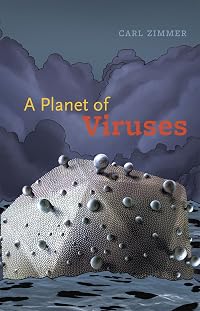
Member Reviews
“If I have seen further than others, it is by standing upon the shoulders of giants.”
Isaac Newton
Introduction
WARNING- This book was written in 1926, so be prepared for a little bit of historic political incorrectness.
There are a lot of giants in Western medicine, whose shoulders we stand on today. This book explores the giants of Microbiology… the study of microorganisms we call germs, and the diseases they produce. Our current state of medicine has advanced far beyond the treatment of just infectious disease, but so much of medicine’s later successes depend on the first great triumphs which were achieved in the field of microbiology. It is there where great minds like Louis Pasteur and Robert Koch applied meticulous
Each chapter of Microbe Hunters introduces the reader to a selected scientist who advanced the understanding of germs, viruses or parasites. Following along with them, through their early triumphs as well as setbacks gave me a much better appreciation of how painstakingly slow mankind struggled out of a morass of ignorance to our current (and still very incomplete) state of understanding in this field. Fortunately, the book doesn’t just stick to professional achievements of these pioneers; instead it delves deep into their personal lives as well, which makes it very readable and relatable.
The Gallery of the Microbe Hunters
Anton van Leeuwenhoek
(October 24, 1632 - August 30, 1723)
This is how science used to be… a guy with no special training, no degree, no published works. Just a guy with an obsessive interest. In Leeuwenhoek’s case, the interest was in lenses. On seeing his first magnifying glass, he just became captivated with the idea that curved glass could enhance human sight, revealing microstructures on daily objects, which had never been appreciated before… the hairs on an insect’s leg, the ridges on a flower petal, etc. Leeuwenhoek learned lens grinding on his own, and strove see things smaller and smaller, leading him eventually to devise the world’s first microscope.
With this, he became the first person to appreciate miniscule swimming animals in a drop of pond water. “Animalcules” he called them. Soon after, he was observing animalcules on all sorts of things… on his neighbor’s pulled tooth, from wax inside his ear, from a drop of milk, from dirt in the garden.
He kept a journal of his observations, and even tried to draw some of the little critters, but because of his hermetic life, the world might never have known any of this, if he hadn’t mentioned his hobby to a visiting neighbor, who put him in touch with the British Royal Society- a group of scientists who were interested in publishing and sharing scientific developments on any front as far and wide as they could. Thus began over fifty years of correspondence between Leeuwenhoek and the Royal Society. In meandering letters filled with complaints about his health and gossip about his neighbors, Leeuwenhoek illuminated the Society- and through them, the world- on the tiny world of microbial life. Can you imagine a prominent researcher today, corresponding with the National Academy of Science or a high-powered university about his research, and dropping in gossip about his neighbors? I LOVE THAT!
Towards the end of his life, Leeuwenhoek made the additional discovery that soup broths contain nutrients which can be used to grow and sustain cultures of animalcules for study.
Lazzaro Spallanzani
(10 January 1729 – 12 February 1799)
Spallanzani was a professor of natural science at the University at Reggio de Calabria, who became interested in microscopy and the observations of Leeuwenhoek.
Spallanzani made some important observations about microbes, the most basic probably being that boiling a broth kills them, and that a broth rendered sterile can again become contaminated by microbes, as bits of dust drop down onto it from the air. From this, he was inspired to devise a simple experiment to test a misconception that Socrates himself had left us, and which had gone unquestioned for 2000 years: the idea of spontaneous generation of life.
The theory goes, that since rancid meat left out will eventually be covered with maggots, and since a young sapling can sometimes be seen sprouting from the rotting trunk of a fallen dead tree, there must be humors or materials within dead matter which spontaneously give rise to new life.
Spallanzani thought his observations with the sterile broth being recontaminated with bacteria might be a good place to put Socrates’ idea to the test. If a boiled broth was kept sealed up, and new organisms grew from it, then they must have spontaneously generated.
In trial after trial, the sealed broth did not give rise to new life, and eventually the world came to reject Socrates’ theory.
At this time, there were other scientists around Europe hunting microbes with their microscopes. A debate arose as to how they propagate. Nobody had seen a pregnant bacterium, or bacteria copulating. Spallanzani seems to be the first person to carefully follow a single bacterium around in his microscopic field, not letting it out of his sight until- low and behold! It split into two, independent bacteria, each identical to the “parent”. Through tireless repetition of this, he established the principle of asexual reproduction, which some regarded as blasphemous.
This got Spallanzani some negative attention, but overall, his discoveries brought him and his university a lot of acclaim. Jealous colleagues tried to frame him for theft of university property, but he was aquitted.
Louis Pasteur
(December 27, 1822 – September 28, 1895)
Louis Pasteur is the weird one of this lot, for a lot of reasons. For one thing, he was not always the meticulous scientist that the rest of these guys were. Sometimes he’d do an experiment once, with just a few animals, and- satisfied that the principle he was investigating had been proven- left the thankless work of repeated verification to others. When you’re lucky and smart, and Pasteur was both, you can sometimes get away with that. At least you could in the 1870’s. But sometimes Nature has a way of punishing insufficient humility. In one particularly embarrassing debacle, Pasteur failed to adequately test an anthrax vaccine he was developing for farm animals. This is the same Anthrax we talk about when we talk about modern biologic weapons, and which somebody sent to public officials in the mail, back in 2001, but its much more common natural form is a veterinary disease which famously killed thousands of sheep and goats in France in the mid 1800’s. Pasteur- by then famous for other discoveries- was asked to develop a vaccine to save the livestock, but ended up killing more animals than he saved.
Huh- I wasn’t intending to start with his most embarrassing failure, but it looks like I did. Many of Pasteur’s contemporaries would probably delight in that, because- truth be told- he was a bit of a grandstander, and he did have an ego on him. Most of the time it was well deserved though.
Another unusual thing about Pasteur is that his early successes in microbiology were not achieved in the field of medicine. He is the guy who proved that yeast are the organisms responsible for fermenting grape juice into wine. Furthermore, he is the one who proved that when batches of wine spoil, it is usually due to bacterial contamination. The undesired bacteria outcompete yeast, and their different metabolic pathways produce all sorts of acids and other biproducts instead of the desired ethanol we all crave on occasion. Helping French vineyards identify and eliminate these competing “pest” bacteria was what really brought Pasteur to public notice. His process of “Pasteurization” –which we associate so closely with milk- was really first widely applied to wines. The revolutionary process was credited with saving French winemakers, and got him a handsome reward from Napolean III, which Pasteur put towards building his laboratories, which eventually became the Institute Pasteur, which is still with us in present day.
Whether intentional or not, Pasteur seems to blazed a path linking research and rewards, which has led us to the modern day research grants and industrial research. That’s just my commentary; not the book’s.
To his great credit, Pasteur empirically observed the process of acquired immunity, and developed vaccines. He needed Koch’s discoveries (upcoming section) to do this, and Jenner had observed smallpox immunity in milkmaids exposed to cowpox, so Pasteur cannot claim all the credit, but his early work in vaccine development is impressive. There is a story about him saving 19 Russian peasants from rabies, which is as harrowing a medical drama as you’ll ever see on Gray’s Anatomy.
Robert Koch
(11 December 1843 – 27 May 1910)
Robert Koch is a great contrast to Louis Pasteur. Koch was both meticulous and unassuming, and more in line with my preconceptions of a scientist. He started off as a country doctor, and only made the transition to become a pioneer of microbiology, and eventually a decorated university professor- after he acquired a microscope and started examining patient’s blood. Like others in this book, his expertise grew from an obsession with microbiology, which was really more like a hobby than a part of his profession.
Koch made a few very significant contributions, but probably the biggest is his recognition that each infectious disease is caused by one and only one type of organism. The skin infection Erysipelas is always caused by the Streptococcus bacteria, and never by any other type of bacteria.
eryspipelas
Steptococcus
At first, physicians didn’t want to believe it! Experience to date with Spallanzani and Pasteur’s soup broths had always shown that bacteria always swim together in a giant mishmash, with no rhyme or reason to which bacteria you were going to see. In an astounding demonstration, Koch was given unknown samples to observe under his microscope, after only being told what organ the sample came from, he could identify the disease… given a slide of Staphlococcus, and told it was from the skin, he informed his audience that it came from a carbuncle. CORRECT! Given a Streptococcus and told it was from skin, he diagnosed erysipelas. CORRECT AGAIN! Given a sample of watery diarrhea, he could pronounce that the patient had Cholera. CORRECT! And so on. Thus medicine made a major milestone, without which it would be nearly impossible to treat any infectious disease. To verify the diseases which went with the various microorganisms, Koch repeatedly infected lab animals with suspect organisms, until the linkages were irrefutable.
If Koch achieved nothing else in his lifetime, this would have been significant enough contribution to medical science. As it happens, he stumbled upon a second discovery: he found a discarded potato peel in his kitchen, which was spotted with yellow dots. Ever curious, he examined the yellow dots under his microscope, and realized that each dot was a colony swarming with billions of organisms… and not a mashup of heterogeneous organisms, but rather a massive colony of the same type of organism. At last! Here was a way to isolate a single species of bacteria, to better study it! The potato peel must have nutrients useful to only certain types of bacteria, but not others.
Thus was born a method of “plating” microbiology species, to isolate them. This technology, now nearly 150 years old, is essentially the same method used today in medical laboratories to identify germs.
Here’s a plate of yeast organisms, grown from oral thrush infection:
Here’s the deadly tuberculosis, isolated on a growth plate:
...and in the lung of an infected cow
Here’s Pseudomonas, the organism which finds purchase in the vulnerable lungs of cystic fibrosis patients:
Really, it was Koch who made the leap from just observing the behavior of microorganisms to actually identifying them as pathogens to specific diseases. Every antibiotic and vaccine which followed has Koch to thank for this concept. Pasteur probably owes him a debt of gratitude for enabling his work in later years, but unfortunately the two men couldn't stand each other. Part of it was their differing personality types, and unfortunately part of it was their personal politics- Pasteur being a patriotic Frenchman, and Koch a loyal Prussian, during a period of warfare between the two states.
Emile Roux
(December 17, 1853 – November 3, 1933)
To be honest, this chapter was the driest and most technical. Roux was a laboratory assistant of Pasteur, who was a great mind in his own right, but always denied he was a scientist, but rather a poet. What the hell a self-proclaimed poet was doing, helping Louis Pasteur inoculate guinea pigs against cholera, I have no idea, but there you go. It might have been fun if Paul de Kruif would have included some of Roux’s poetry in this volume, for the reader’s perusal. I’m guessing the career in science was maybe more of necessity than option, if you know what I’m saying.
Neverminding all that, Roux observed the little Corynebacterium diphtheriae which cause diphtheria, and asked what exactly about this bug actually caused the symptoms of diphtheria. After a lot of experimentation, whose thought processes are a bit inscrutable now, Roux hit on the idea that the bacteria must secrete a toxin into its victims’ blood- which is in fact the case. He was able to isolate the toxin and recreate the symptoms of the infection in lab animals.
Building on this, he recognized that- using Pasteur’s techniques- animals could be successfully immunized against diphtheria… leading him to (correctly) theorize that immunized animals must produce a neutralizing substance which renders the toxin harmless. This was again proven, with some inspired experiments.
From there, Roux grabbed onto the idea that maybe the antitoxin could be extracted from immunized animals and injected into infected kids, to protect them.
Indeed, it worked. It’s genius, and Roux deserves much credit. This chapter just wasn’t that much fun to read, is all.
Ilya Ilyich Mechnikov
(15 May 1845 – 15 July 1916)
Mechnikov was almost certainly bipolar it seems, with his entire narrative bouncing between suicidal depression and unhinged mania. He was some kind of child prodigy, publishing Entomology papers in scientific journals at the age of sixteen, and this helped raise him out of an almost certainly otherwise-doomed serf’s existence in rural Russia.
He became one of the early evolutionary biologists, after Darwin first published his Origin of the Species, and showed no special inclination towards medicine. One summer in the 1870’s, he was studying starfish in Messina, Sicily (coincidentally just across the Straits of Messina from the University of Reggio, where Spallazani had taught a century earlier).
Observing the starfish blood under a microscope, he identified native starfish cells which seemed to act independently to engulf invading foreign (e.g. bacterial) cells. These are the “phagocytes” we now call histiocytes, and which we now know play an important role not only in clearing foreign cells from blood and soft tissues, but also in presenting foreign antigens to the cells (lymphocytes) which mediate human immune response to germs.
Much of the rest of the chapter has to do with Mechnikov’s erratic behavior, some of his more bizarre experiments which went nowhere, and the plight of his long-suffering wife. Overall, I was left with the impression that maybe here was a guy who got lucky with one good discovery. Not to dump on Mechnikov, but he didn’t have the sustained record of achievement that figures like Pasteur and Koch had. (This is the point where trolls will say "Well what have you done with your life? I'd like to see you do better!")
Teasers
Oh damn! Look how long this is! (TWSS)
And I’m only half done!
You know what?
I'm just going to give a few teasers for the rest. The details are too good not to share, but I don't want to give away the whole book either.
If you decide to read this, and I highly encourage you to, be prepared for the following:
HEAR HOW Theobald Smith saved the American cattle industry in the 1890's, by identifying the tick as the vector responsible for transmitting Texas Fever!
READ ABOUT Robert Bruce's harrowing journeys into unexplored African territories, where he encountered the ghastly "African Sleeping Sickness", correctly identified the Trypanosoma gambiense blood parasite as the causative agent...
...and -through quite a lot of painstaking observations and impressive deductive reasoning- worked out the parasite's complex life cycle, which alternately traverses the human bloodstream and the gut of the Tsetse fly!
BOGGLE YOUR MIND learning how- separated by thousands of miles and several years- Ronald Ross in India, Patrick Manson in England, and Battista Grassi in Pavia, Italy ...unwittingly collaborated to elucidate the life cycle of the protozoan responsible for malaria! Plasmodium falciperum.
GAPE AT the incredibly brave (and some might say unethical, by today's standards) experiments Walter Reed carried out during the Spanish American War, which led to lifesaving discoveries about how to prevent Yellow Fever!
MARVEL at the story of Paul Ehrlich, who seized that favorite poison of murderers- Arsenic- and transformed it, with other igredients, into his experimental "Compound #606", creating a wonder cure to save syphalitics from the madhouse!
Conclusions
Overall, this was a great book for anybody in medicine. We live in an age where technology is so easily taken for granted, but it wasn’t always this way. Every method, every protocol, every diagnosis and treatment… they were all hard won with the proverbial blood, sweat and tears of our professional forebears. This book is a classic for a reason; it’s very accessible, and very informative. I would say a teenager could easily absorb its lessons, the chief of which, I would say, is that for as diverse as these minds were, they all possessed a few common traits which we can credit for bringing mankind into the modern medical era: they were open-minded, they were inquisitive, and they (mostly) had the humility to be led by the truths expressed by objective evidence, rather than by visions of what they thought they knew, or what how they thought things worked. They are, as I said at the beginning, the giants whose shoulders we stand upon to see further than we’ve ever seen before.
A bunch of unrelated shit I thought about
I started medical school in 1991 -over 20 years ago! In my entire association with the medical field, not a year has gone by without some public debate about what sort of medical system we should have in this country (i.e. the USA). That is to say, how society should go about apportioning resources to the medical care of the public. For the most part, it always comes down to a faceoff between private profit-driven fee structures or a state-administered entitlement program.
Advocates on either side of this argument are always very passionate, but the truth is that whichever of these two you end up with, physicians will still end up having to meet with an administrator of some sort, to justify expenses, to figure out how to make things cheaper, and to get a lecture that things like talking with patients is wasteful. (Seriously, when I was a medical student, I was told "if you're spending more than 20 minutes with a patient, you're taking too long")
I think my review of [book:The Road to Serfdom|299215] pretty well describes my view of state administered entitlement programs. But that doesn't let profit-driven private systems off the hook. Fans of the private system are always quick to claim all the dazzling technologic advances in medicine as the fruits of free enterprise in medicine. But it is not entirely fair to award free enterprise so much credit. I'm not just talking about our price-fixing pharmaceutical oligopoly; I'm talking about the bulk of medical discoveries having been made under older, less commodified circumstances- as described in this book. For the most part, these "Microbe Hunters" I described above weren't mercinaries looking for riches. Some of them were rewarded handsomely, but none of them started with that as their driving purpose. Leeuwenhoek, Pasteur and Koch were driven by a passion to learn- an obsessive desire to uncover hidden truths. Walter Reed and Battista Grassi were driven by a sincere desire to alleviate human suffering. The others fell somewhere in the middle.
I've made a lot of mistakes in my life, but one of the things I've chosen well has been my profession (the other is my partner in marriage). There has never been a time I wasn't proud to be a physician, and this is partly due to my field's long altruistic heritage. For centuries, doctors weren't especially well rewarded, and practitioners routinely risked their own health, attending to patients with contageous diseases. In more recent times, the money men have distorted our ancient order, and it has been a Faustian bargain. There is no denying that some of the tools of modern management (quality control, Lean Six Sigma, etc) as well as profit-driven technologic advances have benefitted patients. On the other hand, some of the greatest achievements continue to be motivated by the traditional philosophies of medicine; even the modern MRI was not conceived as a vehicle for accumulating wealth. So it is a bit disheartening to see this once-noble profession consumed in a proxy war between the forces of Capitalism and Socialism. It is only in the last century out of the past 60 centuries that medicine has contemplated holding back from doing everything it can for each patient. Today, finance has driven that uncomfortable situation ahead- whether it is private hospitals turning away uninsured patients, or socialized medicine deciding as a matter of policy not to offer certain patients certain services (e.g. limiting dialysis for the elderly).
I'm not naive; I know we don't have limitless resources for healthcare, but I am concerned that this decades-long contentious debate about how we are going to pay for things is coarsening the character of medicine, and I do think there is a danger that the day may come when our noble profession will be so preoccupied with issues of finance and management, that we drive the altruism and scientific curiousity of people like the Microbe Hunters -completely out of the field.
Hmmm. I think I finally understand why Carl Sagan and Stephen Jay Gould were so lauded as science popularizers, when they started. This is truly awful. The information was fascinating - the history of the discovery of microbes (germs, and then viruses), what they were, what they did, how to fight them. But it was written as if for grade schoolers at most - lots of auctorial interjections of "Isn't this interesting!" and "Wait till you see what happens next!" (not quite literally, but that tone of 'voice'). In one story, he talks about "the acid of sour milk" five or six times and only once gives it its proper name, lactic acid. He also tried to humanize the microbe hunters - and managed to present all of them, without exception, as show more idiots in one form or another. Obsessed, random, secretive, publicity-hunting, clinging to nonsensical theories or devising ever-more-complicated experiments and refusing to form _any_ theories...and to the author, whether they got proper recognition was a major point of their stories. He also spends a lot of time, especially on the last few who were working only a few years before he wrote the book in 1926, talking about how their experiments proved X, which wasn't actually useful but "someday a new microbe hunter may find a real answer in this" - which is reasonable, but again the tone rubbed me wrong. Honestly, by the last one, I was sick of the whole lot. And the casual racism, again especially evident in the last few chapters, was quite unpleasant - experiments on "darkies" and their "pickaninnies", "the Jew and the Jap" running experiments... I'm glad I read it, I found the information (when I could extract it from the nonsense) very interesting, I'd like to know more - but I'll never read this book again. show less
The classic and immensely popular account of the early explorers of microbiology. The chapter length vignettes of Leeuwenhoek, Spallazani, Redi, Pastuer (who rates two chapters), Koch, and others have a strong narrative based on the remarkable characters who opened the field at a time when both science and the scientific method itself were being shaped. I particularly treasure the excitement that the stories provide and the accounts of both successes and failures. Who has not marveled at the diligence and care of Leeuwenhoek in making his observations, or the battles that Spallazani fought over whether microbes had parents --- dealing with the "theory" of spontaneous generation. I particluarly marvel at the Pastuer whose failures show more (almost destroying the silk worm industry while trying to save it) are almost as spectacular as his successes, such as the rabies vaccine. My copy of this book is falling apart, likely purchased from the Scholastic Book Service in the mid 60s for 35 or 45 cents, as entertaining and inspiring as when I first read it: science as an exciting hunt for truth and even glory, and scientists, fumbling at times, yet engaged on what was clearly an engaging enterprise. An excellent read. show less
While I understand that when an author is writing a scientific book for the lay person he has to tone down the science a bit, in Microbe Hunters, the author Paul De Kruif grossly over does this, to the point that it becomes an insult to the readers' intelligence. And that's not even my biggest problem with this book. The book was originally published in 1926 and perhaps in it's day, it may not have have been considered racist, but to a modern day reader such as myself, the racism was blatant and offensive !
The one that started my obseesion with diseases and the heroes who track them down. It is exciting and, even after all these years, still a compelling read
I first read this in high school and recently reread it. It is a well written and entertaining history of microbiology and the scientists that made it happen.
Originally published in 1926, this book contains several short biographies of the men who were the first to create microscopes, use them to identify disease transmitters, and come up with ways to combat them. All of this is done in very homey prose that includes a easy write-off of experiments that were done on humans - what saves mice might murder men, but you have to try. It is a time and place kind of book.
Members
- Recently Added By
Lists

Read These Too
458 works; 9 members

Short Nonfiction Collections
51 works; 4 members

Trinity College Booklist (1951): Class One, Natural Science
98 works; 2 members

Best Books of 1926-1935
403 works; 10 members

Ambleside Books
459 works; 18 members

Mustich's 1000 Books to Read Before You Die: A Life Changing List
1,001 works; 19 members

In Our Time books
4,934 works; 2 members
Author Information

27+ Works 1,466 Members
All Editions
Awards and Honors
Notable Lists
Series
Belongs to Publisher Series
Work Relationships
Is abridged in
Det Bästas Bokval (1963) vol 28 : Livets krydda; Ödets vingar; Han som skapade en värld; Kejserligt besök; Mikrobjägare by Reader's Digest
Common Knowledge
- Canonical title
- Microbe Hunters
- Original title
- Microbe Hunters
- Original publication date
- 1926
- People/Characters
- Antonie van Leeuwenhoek; Louis Pasteur; Robert Koch; Walter Reed; Paul Ehrlich; Lazzaro Spallanzani
- Dedication
- To Rhea
- First words
- Two hundred and fifty years ago an obscure man named Leeuwenhoek looked for the first time into a mysterious new world peopled with a thousand different kinds of tiny beings, some ferocious and deadly, others friendly and use... (show all)ful, many of them more important to mankind than any continent or archipelago.
- Last words
- (Click to show. Warning: May contain spoilers.)"My dear colleague," said Paul Ehrlich, "for seven years of misfortune I had one moment of good luck!"
Classifications
Statistics
- Members
- 1,201
- Popularity
- 20,717
- Reviews
- 21
- Rating
- (3.95)
- Languages
- 10 — Danish, Dutch, English, French, German, Hungarian, Italian, Norwegian (Bokmål), Spanish, Swedish
- Media
- Paper, Ebook
- ISBNs
- 41
- UPCs
- 1
- ASINs
- 47