
Eric Sloane (1905–1985)
Author of Diary of an Early American Boy: Noah Blake, 1805
About the Author
Image credit: ericsloane.org
Works by Eric Sloane
The ABC Book of Early Americana: A Scetchbook of Antiquities and American Firsts (1963) 227 copies, 1 review
Do's and Don'ts of Yesteryear: A Treasury of Early American Folk Wisdom (1975) — Author — 107 copies
A Museum of Early American tools/a Reverence for wood/ Our Vanishing landscape/ Diary of an Early American Boy (1978) 14 copies
3 by Eric Sloane: Diary of an Early American Boy; A Museum of Early American Tools; A Reverence for Wood (3 volumes) (1965) 2 copies
Ric Sloane Comics #1 1 copy
Forklore of American Weather 1 copy
Museum of Early Day Tools 1 copy
Seasons of America’s Past 1 copy
"Cirrus Sunset" NM landscape, twilight, full moon, pueblo in distance (in book at 2016.119) 1 copy, 1 review
Our Vanishing Culture 1 copy
ABC Book of Early America 1 copy
Associated Works
Don't: A Manual of Mistakes and Improprieties More or Less Prevalent in Conduct and Speech (1880) — Illustrator, some editions — 164 copies, 3 reviews
Tagged
Common Knowledge
- Other names
- Hinrichs, Everard Jean (birth name)
- Birthdate
- 1905-02-27
- Date of death
- 1985-03-05
- Gender
- male
- Occupations
- painter
artist - Organizations
- Art Students League of New York
- Nationality
- USA
- Birthplace
- New York, New York, USA
- Places of residence
- New Milford, Connecticut, USA
Taos, New Mexico, USA - Associated Place (for map)
- USA
Members
Reviews
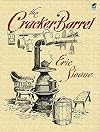
I really liked this collection of essays. The essays cover a range of topics, but mostly Sloane is expressing some sort of longing for the values or lifestyle of the past. Besides the content of the essays, I also found the writing style quite engaging. Sloane has a contagious sense of curiosity about the simplest things, and his humorous writing makes essays about seemingly mundane topics quite enjoyable. I love how he always talks about pulling out his old dictionaries and almanacs to try show more to trace the origin of a word, a custom, or an invention. Sloane says that his research may not have much purpose, but it is all worth it for the thrill of discovery. I like picturing him in an old time farmhouse, surrounded by antique tools, with dozens of books scattered about him, bubbling with excitement as he tries to discover the origin of the dollar sign.
Things I am inspired to do after reading this book, which I will probably never do.
1. Mail someone an iced cake using popcorn as the packaging. Yes, the icing will not look perfect in the end, but hopefully the cake will be intact and the recipient will have delicious icing coated pieces of popcorn to eat with their cake!
2. Revive the tradition of tree planting as a remembrance or a gift. I know this tradition still survives somewhat, but I really liked the essay where Sloane talked about how when a couple got married and moved into a new house, friends would often bring gifts of fruit trees and decorative trees for around the house. They would plant two “man and wife” trees in front of the house on either side of the entrance. Apparently these old houses could be dated by finding the age of these two trees.
3. Find some really well made tools, and have a reason to use them. I don’t really have much use for a wheelbarrow right now, but Sloane’s essay about going 100 miles to find an old fashioned wheelbarrow with a big front wheel that could handle going over rough ground really made sense. There are so many cheaply made, poorly designed tools these days, and the right tool really does make all the difference.
4. Decorate my house with useful things. In one essay talks about how he was looking in his drawer for a pair of scissors, and complaining to his wife how they seem to disappear. His wife responded, “If you look behind you, you will see a collection of early American scissors hanging on the wall as a decoration or ‘utilitarian ornamentation’ by an antiquarian character named Eric Sloane.” He found the scissors cut really well, and decided to start actually using some of the antiques around his house. I was thinking about this the last time I was in a Cracker Barrel restaurant, and saw all these old things hanging on the walls, and how nice it would be to actually use them. I also really like the phrase “utilitarian ornamentation.”
5. Find someone to open the really cool “museum of awareness or concept” to illustrate how much a billion is, or how big an acre is. And to help people comprehend the vastness of space and weather phenomena.
Overall, this book really just made me want to live a simpler lifestyle. I know that it is easy to romanticize the past, and a lot of good has come from modern innovation, but after reading this I can’t help but long for the good old days.
Thanks for the recommendation, Kim! Although in a roundabout way, I guess I recommended it to myself. show less
Things I am inspired to do after reading this book, which I will probably never do.
1. Mail someone an iced cake using popcorn as the packaging. Yes, the icing will not look perfect in the end, but hopefully the cake will be intact and the recipient will have delicious icing coated pieces of popcorn to eat with their cake!
2. Revive the tradition of tree planting as a remembrance or a gift. I know this tradition still survives somewhat, but I really liked the essay where Sloane talked about how when a couple got married and moved into a new house, friends would often bring gifts of fruit trees and decorative trees for around the house. They would plant two “man and wife” trees in front of the house on either side of the entrance. Apparently these old houses could be dated by finding the age of these two trees.
3. Find some really well made tools, and have a reason to use them. I don’t really have much use for a wheelbarrow right now, but Sloane’s essay about going 100 miles to find an old fashioned wheelbarrow with a big front wheel that could handle going over rough ground really made sense. There are so many cheaply made, poorly designed tools these days, and the right tool really does make all the difference.
4. Decorate my house with useful things. In one essay talks about how he was looking in his drawer for a pair of scissors, and complaining to his wife how they seem to disappear. His wife responded, “If you look behind you, you will see a collection of early American scissors hanging on the wall as a decoration or ‘utilitarian ornamentation’ by an antiquarian character named Eric Sloane.” He found the scissors cut really well, and decided to start actually using some of the antiques around his house. I was thinking about this the last time I was in a Cracker Barrel restaurant, and saw all these old things hanging on the walls, and how nice it would be to actually use them. I also really like the phrase “utilitarian ornamentation.”
5. Find someone to open the really cool “museum of awareness or concept” to illustrate how much a billion is, or how big an acre is. And to help people comprehend the vastness of space and weather phenomena.
Overall, this book really just made me want to live a simpler lifestyle. I know that it is easy to romanticize the past, and a lot of good has come from modern innovation, but after reading this I can’t help but long for the good old days.
Thanks for the recommendation, Kim! Although in a roundabout way, I guess I recommended it to myself. show less
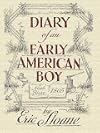
Sloane wrote this book in 1962 as an annotated, illustrated, and expanded upon version of the journal of Noah Blake from 1805, whom was fifteen at the time. Noah lived in a small New England town, although the book does not specify exactly where (a striking oversight).
The book inspires a sense of wonder and fascination with an era now two centuries past. Much of the book explores and explains novelties from a very different way of life: dirt floors, ten panes of glass per household, the show more invention of covered bridges, the lack of screws and bolts in construction. There are hundreds of such insights, including an exploration into the language of the era (holidays were “holydays”).
There’s an innocent romanticism to this sort of book.
One passage stands out to me:
"In modern times when everything a person needs may be bought in a store, there are very few hand-made things left. So we are robbed of that rare and wonderful satisfaction that comes with personal accomplishments. In Noah’s time, nearly every single thing that a person touched was the result of his own efforts. The cloth of his clothing, the meal on the table, the chair he sat in, and the floor he walked upon, all were made by the user. This is why those people had an extraordinary awareness of life. They know wood intimately; the knew the ingredients of food and medicines and inks and paints because they grew it and ground it and mixed it themselves. It was this awareness of everything about them that made the early American people so full of inner satisfaction, so grateful for life and all that went with it. Nowadays modern conveniences allow us to be forgetful, and we easily become less aware of the wonders of life."
What would it be like to revive such attention to the things that surround us and their provenance? show less
The book inspires a sense of wonder and fascination with an era now two centuries past. Much of the book explores and explains novelties from a very different way of life: dirt floors, ten panes of glass per household, the show more invention of covered bridges, the lack of screws and bolts in construction. There are hundreds of such insights, including an exploration into the language of the era (holidays were “holydays”).
There’s an innocent romanticism to this sort of book.
One passage stands out to me:
"In modern times when everything a person needs may be bought in a store, there are very few hand-made things left. So we are robbed of that rare and wonderful satisfaction that comes with personal accomplishments. In Noah’s time, nearly every single thing that a person touched was the result of his own efforts. The cloth of his clothing, the meal on the table, the chair he sat in, and the floor he walked upon, all were made by the user. This is why those people had an extraordinary awareness of life. They know wood intimately; the knew the ingredients of food and medicines and inks and paints because they grew it and ground it and mixed it themselves. It was this awareness of everything about them that made the early American people so full of inner satisfaction, so grateful for life and all that went with it. Nowadays modern conveniences allow us to be forgetful, and we easily become less aware of the wonders of life."
What would it be like to revive such attention to the things that surround us and their provenance? show less

I can't rate this objectively, because I always associate it with my father. I used to read it when visiting my parents; my Dad's not much of a reader, but he is a carpenter and owns several Sloane books. Finally I've decided to reread and review for GR....
But I do think it's a five-star book for almost everyone. It's short, fascinating, gracefully written, delightfully illustrated, and valuable. Even though I'm not a carpenter or woodsman myself, even though I have very little interest in show more history per se, I have been charmed this and several others by Sloane several times. show less
But I do think it's a five-star book for almost everyone. It's short, fascinating, gracefully written, delightfully illustrated, and valuable. Even though I'm not a carpenter or woodsman myself, even though I have very little interest in show more history per se, I have been charmed this and several others by Sloane several times. show less
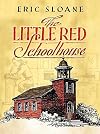
I've been fascinated with the artwork of Eric Sloane since I was a child, and I picked up this paperback on a whim. Several decades later, would I still be intrigued with Sloane's work?
I'm more interested in it now than I was all those years ago. When I was a child, it was his art that fired my enthusiasm: early American buildings and tools. But when I paged through The Little Red Schoolhouse, I still drank in the art, but I also read every scrap of text.
Sloane was a passionate advocate of show more early American life and values, and you can see it in this book. Along with his evocative illustrations, he tells us how schoolhouse properties were set up, how they experimented with octagonal and circular buildings-- even how teachers were paid. Along the way he also shows us how times have changed: "Education, like modern everyday life, has suddenly become regarded as a means of making more money." Yes, education has much to do with earning a higher salary, but it can be so much more, and Sloane reminds us just what that "more" is.
If you're interested in early American history, life, and architecture, I highly recommend any of the books written and illustrated by Eric Sloane. He is a master. show less
I'm more interested in it now than I was all those years ago. When I was a child, it was his art that fired my enthusiasm: early American buildings and tools. But when I paged through The Little Red Schoolhouse, I still drank in the art, but I also read every scrap of text.
Sloane was a passionate advocate of show more early American life and values, and you can see it in this book. Along with his evocative illustrations, he tells us how schoolhouse properties were set up, how they experimented with octagonal and circular buildings-- even how teachers were paid. Along the way he also shows us how times have changed: "Education, like modern everyday life, has suddenly become regarded as a means of making more money." Yes, education has much to do with earning a higher salary, but it can be so much more, and Sloane reminds us just what that "more" is.
If you're interested in early American history, life, and architecture, I highly recommend any of the books written and illustrated by Eric Sloane. He is a master. show less
Lists
Ambleside Year 7 (1)
You May Also Like


Associated Authors
Statistics
- Works
- 60
- Also by
- 3
- Members
- 6,946
- Popularity
- #3,520
- Rating
- 4.1
- Reviews
- 62
- ISBNs
- 137
- Languages
- 3
- Favorited
- 11