
Gavin Pretor-Pinney
Author of The Cloudspotter's Guide
About the Author
Gavin Pretor-Pinney is the founder of the Cloud Appreciation Society, author of The Ctoudspotter's Guide, and cofounder of the Idler magazine. Gavin loves watching waves in every form. He lives in Somerset, UK. Visit his website at WWw.thewavechannel.org.
Series
Works by Gavin Pretor-Pinney
The Wave Watcher's Companion: From Ocean Waves to Light Waves Via Shock Waves, Stadium Waves, and all the Rest of Life's Undulations (2010) 303 copies, 6 reviews
A Cloud a Day: (Cloud Appreciation Society book, Uplifting Positive Gift, Cloud Art book, Daydreamers book) (2019) 120 copies, 1 review
Cloud a Day Journal 1 copy
O Mundo das Nuvens 1 copy
Tagged
Common Knowledge
- Birthdate
- 1968
- Gender
- male
- Organizations
- The Cloud Appreciation Society
- Nationality
- UK
- Places of residence
- Somerset, England, UK
London, England, UK - Associated Place (for map)
- England, UK
Members
Reviews
The Wave Watcher's Companion: Ocean Waves, Stadium Waves, and All the Rest of Life's Undulations by Gavin Pretor-Pinney
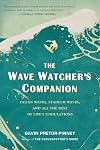
35. The Wave Watcher's Companion: Ocean Waves, Stadium Waves, and All the Rest of Life's Undulations by Gavin Pretor-Pinney
published: 2010
format: 320 page Paperback
acquired: from amazon in 2012
read: Aug 16-30
rating: 3½
Pretor-Pinney is author of [The Cloudspotters Guide] and founder of the Cloud Appreciation Society. This book I think was a spin-off of all that and very much as the title implies - an informal scientific tour of the waves in all forms and mediums, beginning with how ocean show more waves form and ending on Hawaii, failing to bodysurf; and also one that tries very hard to be, and does a fairly good job at being, entertaining. There are a lot of things that fall into the wave category, like sound, light, radio waves, seismic waves, and but also oddball things like sand ripples, brain waves in different states or how some flocks of birds confuse predators, etc.
how/why: I originally got this because I work with waves (seismic waves) and this sounded fun and an alternative look at waves, something to broaden my perspective. Five years later, moving bookshelves and their books back and forth to redo the flooring, I found myself paging through it, and I thought I needed something that was off my reading list and reading mindset, and his explanations appealed to me.
in sum: Pretor-Pinney does a great job of simplifying things to point that he actually brings something new to these waves in all their types, and I appreciated that. I particularly liked how he explained how radios work, and his tide explanations and his explanation of wave refraction with blind aliens holding hands. It actually helps. He's accessible, and enjoyable, there are no equations but lots of figures. There are inevitably sections that require the brain time to think something through or to construct a concept. So it's not quite as fast a read as I anticipated.
Certainly recommended to anyone interested.
2017
https://www.librarything.com/topic/260412#6162229 show less
published: 2010
format: 320 page Paperback
acquired: from amazon in 2012
read: Aug 16-30
rating: 3½
Pretor-Pinney is author of [The Cloudspotters Guide] and founder of the Cloud Appreciation Society. This book I think was a spin-off of all that and very much as the title implies - an informal scientific tour of the waves in all forms and mediums, beginning with how ocean show more waves form and ending on Hawaii, failing to bodysurf; and also one that tries very hard to be, and does a fairly good job at being, entertaining. There are a lot of things that fall into the wave category, like sound, light, radio waves, seismic waves, and but also oddball things like sand ripples, brain waves in different states or how some flocks of birds confuse predators, etc.
how/why: I originally got this because I work with waves (seismic waves) and this sounded fun and an alternative look at waves, something to broaden my perspective. Five years later, moving bookshelves and their books back and forth to redo the flooring, I found myself paging through it, and I thought I needed something that was off my reading list and reading mindset, and his explanations appealed to me.
in sum: Pretor-Pinney does a great job of simplifying things to point that he actually brings something new to these waves in all their types, and I appreciated that. I particularly liked how he explained how radios work, and his tide explanations and his explanation of wave refraction with blind aliens holding hands. It actually helps. He's accessible, and enjoyable, there are no equations but lots of figures. There are inevitably sections that require the brain time to think something through or to construct a concept. So it's not quite as fast a read as I anticipated.
Certainly recommended to anyone interested.
2017
https://www.librarything.com/topic/260412#6162229 show less
The Wave Watcher's Companion: Ocean Waves, Stadium Waves, and All the Rest of Life's Undulations by Gavin Pretor-Pinney
Gavin Pretor-Pinney discusses waves of many variety from a scientific perspective. Unlike most science books, this one is very readable. His prose is almost poetic at times, I found myself rereading a few sections for the imagery, not the science. And there wasn't one metaphor - unless I just missed it.
The book is completely devoid of math. Still, it discusses details in a number of fields that help you to understand different phenomena. He starts and ends with ocean waves. He covers what show more drives them from their birth, what sustains them, and what give them their differing appearances and sizes. Different chapters discuss sound waves, supersonic flight, shock waves, light waves and more. In giving examples of different effects, he finds interesting trivia to fill the book.
One of the first things I noticed was that there is some italic text next to some paragraphs, partially indented into the text block. It seems to be fairly random at times, yet makes sense with respect to the paragraphs after having read it. My guess is that it would provide a memory assist when trying to either recall portions of the book or looking for a passage.
Overall, the book is very enjoyable and a moderately fast read. You don't have to be a science nerd to enjoy it. If you are a science nerd, the lack of equations won't be missed. show less
The book is completely devoid of math. Still, it discusses details in a number of fields that help you to understand different phenomena. He starts and ends with ocean waves. He covers what show more drives them from their birth, what sustains them, and what give them their differing appearances and sizes. Different chapters discuss sound waves, supersonic flight, shock waves, light waves and more. In giving examples of different effects, he finds interesting trivia to fill the book.
One of the first things I noticed was that there is some italic text next to some paragraphs, partially indented into the text block. It seems to be fairly random at times, yet makes sense with respect to the paragraphs after having read it. My guess is that it would provide a memory assist when trying to either recall portions of the book or looking for a passage.
Overall, the book is very enjoyable and a moderately fast read. You don't have to be a science nerd to enjoy it. If you are a science nerd, the lack of equations won't be missed. show less

I adored this book. It is informative, full of good science, and yet strangely whimsical. An inspired choice on the part of the publisher, since it was not an obvious best-seller. My admiration is perhaps inflated by the location in which I read it: West Cork, the bottom left-hand corner of Ireland, where cloud formations and changing skies are a subject of constant delight and/or angst. Hardback edition undermined only by the very poor quality of photographs.
A Cloud a Day: (Cloud Appreciation Society book, Uplifting Positive Gift, Cloud Art book, Daydreamers book) by Gavin Pretor-Pinney
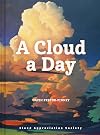
Anyone who ever looks to the sky would find this a beautiful and informative book. The photography is the most obvious beauty of the book, and while the text is smaller, it is very informative, inspiring, and clever. The original writing is funny and unique, while the quotes and poetry are very inspiring … like a sky full of clouds. Chronicle Books has worked with the Cloud Appreciation Society (more than 46,000 members) and all the fine photos are from their members from around the world. show more The editor of the book, Gavin Pretor-Pinney, is the founder of the society, and one of his quotes I loved so much, was about how we live in the sky, “not beneath it, but within it.” For people who want to know even more of the science involved with clouds, they should check out his other books, The Cloudspotter’s Guide and The Cloud Collector’s Handbook.
The world of clouds has always fascinated me, and some of the beautiful pages of this book are of famous artists showing how inspired they were by these bits of water, ice, and sunlight above us.
This is a very special book, but I want to tell everyone, get outside, and look to the sky. You certainly won’t see all the rare and the geographic-specific clouds shown in this book, but it will be nature at some of its most stunning. I find myself thinking about all the people who were living out their busy lives under some of these incredible clouds—without ever looking up. show less
The world of clouds has always fascinated me, and some of the beautiful pages of this book are of famous artists showing how inspired they were by these bits of water, ice, and sunlight above us.
This is a very special book, but I want to tell everyone, get outside, and look to the sky. You certainly won’t see all the rare and the geographic-specific clouds shown in this book, but it will be nature at some of its most stunning. I find myself thinking about all the people who were living out their busy lives under some of these incredible clouds—without ever looking up. show less
Lists
Awards


You May Also Like


Associated Authors
Statistics
- Works
- 16
- Members
- 2,508
- Popularity
- #10,237
- Rating
- 3.9
- Reviews
- 48
- ISBNs
- 58
- Languages
- 12
- Favorited
- 1