
Kathleen Jamie
Author of Findings
About the Author
Kathleen Jamie is a part-time lecturer in creative writing at St. Andrews University.
Works by Kathleen Jamie
Skeins O Geese 2 copies
Autumn A Folio Anthology 2 copies
Scotland 1 copy
The Green Room 1 copy
Skeins o Geese 1 copy
Associated Works
I Wouldn't Thank You for a Valentine: Poems For Young Feminists (1992) — Contributor — 57 copies, 2 reviews
The Poetry Review - Volume 113:4 Winter 2023 — Contributor — 2 copies
Archipelago, Number Nine (Winter 2014) — Contributor — 1 copy
Tagged
Common Knowledge
- Birthdate
- 1962-05-13
- Gender
- female
- Education
- University of Edinburgh (MA)
- Occupations
- Professor of Poetry
poet
essayist - Organizations
- University of St Andrews
Stirling University - Awards and honors
- Eric Gregory Award (1981)
Royal Society of Literature (fellow)
Scots Makar (2021-2024) - Relationships
- Dee, Tim (travel companion)
- Nationality
- UK
- Birthplace
- Renfrewshire, Scotland, UK
- Places of residence
- Fife, Scotland, UK
- Associated Place (for map)
- Scotland, UK
Members
Reviews
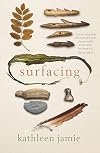
Life feels like one headlong rush at times. The phone squeaks constantly with notifications, demanding attention now, the 24 hour news fills our lives with politics and despair and yet time goes no faster than it did 5000 years ago. It grinds ceaselessly on, covering memories and objects with its gossamer-thin seconds. To go back in time, we need to unearth our landscapes and memories.
Time is a spiral. What goes around comes around.
The book opens with her in Alaska helping at an show more archaeological dig in a Yup’ik village. The site is normally frozen most of the year, but in the summer the cold relents, normally allowing the top four or five inches to be uncovered, however, climate change means that the permafrost is thawing to a depth of half a metre allowing more secrets of its hunter-gatherer past to be revealed. The objects that they are finding are enabling the village to re-discover their past. They found dance masks that were discarded after missionaries told them it was devil worship and for the first time in a very long time performed a dance that was pieced together from the elder’s memories.
The landscape was astonishing. There was nothing I wanted to do more than sit quietly and look at it, come to terms with its vastness.
Her next excursion to the past is at the Links of Noltland, up in Orkney. This Neolithic site has been covered by dunes and what they have found here was last seen by human eyes thousands of years ago. The need to excavate and understand just what is there, is urgent as it is subject to erosion from the storms that the Atlantic brings, as well as the other pressure of funding to carry out the work being stopped because of budget pressures. These people were only a step away from the wild and had short brutal lives and yet they were skilled enough to have devised a method when they built their homes to keep out the relentless wind.
They fill your hands, these fragments, these stories, but with a wide gesture, you cast them back across the field again.
Jamie writes of time spent in Xiahe in Tibet in her younger days, at the time of the student protests and the clampdown of martial law in the region and the palpable tension in the area. They explore as much as they can, but because they are foreigners, they have an undue amount of attention directed towards them, including the inevitable night raid by the police. There are other essays in here too, almost short interludes between the longer pieces. She stops her car to watch the mastery an eagle has over the air and consider the timelessness of a woodland. Some of the essays are more personal too, she recalls the moment of her fathers passing and struggles to hear her mother and grandmothers voices in her mind.
A new Kathleen Jamie book is a thing of joy, and Surfacing does not disappoint at all. Her wonderful writing is layered, building images of the things that she sees, until you the reader, feel immersed in the same place that she inhabited. Some of the essays are very moving, Elders in particular, but also The Wind Horse where you sense the tension in the town from what she observes. Her skill as a poet means, for me at least, that her writing has a way of helping you seen the world around in a new and different light, revealing as much from the shadows as from the obvious and this book is no different. show less
Time is a spiral. What goes around comes around.
The book opens with her in Alaska helping at an show more archaeological dig in a Yup’ik village. The site is normally frozen most of the year, but in the summer the cold relents, normally allowing the top four or five inches to be uncovered, however, climate change means that the permafrost is thawing to a depth of half a metre allowing more secrets of its hunter-gatherer past to be revealed. The objects that they are finding are enabling the village to re-discover their past. They found dance masks that were discarded after missionaries told them it was devil worship and for the first time in a very long time performed a dance that was pieced together from the elder’s memories.
The landscape was astonishing. There was nothing I wanted to do more than sit quietly and look at it, come to terms with its vastness.
Her next excursion to the past is at the Links of Noltland, up in Orkney. This Neolithic site has been covered by dunes and what they have found here was last seen by human eyes thousands of years ago. The need to excavate and understand just what is there, is urgent as it is subject to erosion from the storms that the Atlantic brings, as well as the other pressure of funding to carry out the work being stopped because of budget pressures. These people were only a step away from the wild and had short brutal lives and yet they were skilled enough to have devised a method when they built their homes to keep out the relentless wind.
They fill your hands, these fragments, these stories, but with a wide gesture, you cast them back across the field again.
Jamie writes of time spent in Xiahe in Tibet in her younger days, at the time of the student protests and the clampdown of martial law in the region and the palpable tension in the area. They explore as much as they can, but because they are foreigners, they have an undue amount of attention directed towards them, including the inevitable night raid by the police. There are other essays in here too, almost short interludes between the longer pieces. She stops her car to watch the mastery an eagle has over the air and consider the timelessness of a woodland. Some of the essays are more personal too, she recalls the moment of her fathers passing and struggles to hear her mother and grandmothers voices in her mind.
A new Kathleen Jamie book is a thing of joy, and Surfacing does not disappoint at all. Her wonderful writing is layered, building images of the things that she sees, until you the reader, feel immersed in the same place that she inhabited. Some of the essays are very moving, Elders in particular, but also The Wind Horse where you sense the tension in the town from what she observes. Her skill as a poet means, for me at least, that her writing has a way of helping you seen the world around in a new and different light, revealing as much from the shadows as from the obvious and this book is no different. show less

Although Surfacing is only the second book by [[Kathleen Jamie]] I've read, she's already become one of my favourite essayists and guides to the all too often unseen world around us.
Starting in a cave in the West Highlands, a cave where bone sfrom a bear that lived 45,000 years ago were found, she contemplates the changes in topography since then. Ice ages have come and gone twice. the last one 10,000 years ago. In "the great scheme of things", are we living through "a warm bank holiday show more weekend" before the glaciers return, or will the earth continue to heat up as Jamie seems to believe?
What the retreat of ice and glaciers has revealed are traces of past cultures, surfacing after hundreds of years. Two of the essays here each capture a village recently revealed, but only for now, both under threat from coastal erosion and wind: Quinhagak Alaska, a village by the Bering Sea, the other a Neolithic farming community in Orkney. Jamie's explorations are usually in the north, "a place of entrancing desolation".
Jamie has been called the leading Scottish poet of her generation. Words and their meaning are critical to her. She contemplates a remark about the early Neolithic farmers, knowing they were only a step away from the wild: I began to wonder what it might have meant to them then, back when 'wild' was a new idea. Did stories linger of a way of life before farming, before cattle raising and sheep? Did 'the wild' thrill them, darkly? Shame them?
Who were the people who lived in these places? What happened to them? These aren't new thoughts, but Jamie builds on them:
Starting in a cave in the West Highlands, a cave where bone sfrom a bear that lived 45,000 years ago were found, she contemplates the changes in topography since then. Ice ages have come and gone twice. the last one 10,000 years ago. In "the great scheme of things", are we living through "a warm bank holiday show more weekend" before the glaciers return, or will the earth continue to heat up as Jamie seems to believe?
What the retreat of ice and glaciers has revealed are traces of past cultures, surfacing after hundreds of years. Two of the essays here each capture a village recently revealed, but only for now, both under threat from coastal erosion and wind: Quinhagak Alaska, a village by the Bering Sea, the other a Neolithic farming community in Orkney. Jamie's explorations are usually in the north, "a place of entrancing desolation".
Jamie has been called the leading Scottish poet of her generation. Words and their meaning are critical to her. She contemplates a remark about the early Neolithic farmers, knowing they were only a step away from the wild: I began to wonder what it might have meant to them then, back when 'wild' was a new idea. Did stories linger of a way of life before farming, before cattle raising and sheep? Did 'the wild' thrill them, darkly? Shame them?
Who were the people who lived in these places? What happened to them? These aren't new thoughts, but Jamie builds on them:
By now we number in our billions, have built mega-cities with instant global communications, and send spacecraft to explore unknown shores. We can live to be eighty, ninety, a hundred years old! You early farmers were a success beyond measure. But {now} millions shrink in poverty. Others build high walls and fabricate missiles. Sea levels rise, storm winds are bearing down on us. We are becoming ashamed of our own layer - plastic and waste.show less
There are other essays here, more personal, from Jamie's own life. How to bring the sound of your grandmother's voice to the surface? a trek to Tibet aborted at the border because how could you know about Tienanmen in a pre internet age? Later there is the death of her father. With each essay another layer is added to the accumulation of her own life, a life these wanderings are simultaneously building and revealing for her.
It's difficult to convey a sense of Jamie's rootedness and introspection, her connection to the earth and the wild, so the best thing to do is just read her and discover it for yourself.
I enjoyed 'Sightlines' more than [b:Findings|895779|Findings|Kathleen Jamie|https://i.gr-assets.com/images/S/compressed.photo.goodreads.com/books/1507565933l/895779._SY75_.jpg|880973]. The writing is equally beautiful and lyrical in both, but this collection is longer, feels more cohesive, and includes more archaeology. Somehow it connected for me on an emotional level more than the first collection, which is a reflection both on the content and my mood while reading each book, I suspect. show more The essays in 'Sightlines' discourse upon seabirds, remote Hebridean islands, orcas, and the excavation of an ancient burial site, among other topics. My favourite chapter concerned the Hvalsalen, a collection of whale skeletons in Bergen Natural History Museum. Jamie writes in beguiling detail of the whale bones in the process of cleaning and restoration. Whales are inherently fascinating creatures and she approaches them with wonder and measured consideration. Throughout the book, I appreciated how thoughtfully she reflects upon her fascination with nature, wildness, and the place of humans within it. I liked the balance between humans-as-animals and our tendency to anthropomorphise animals; Jamie sees no contradiction between the two, nor makes any judgement as to their correctness.
More prosaically, I enjoyed taking trips to vividly described and stunningly isolated islands without risk of seasickness. 'Sightlines' is an escapist read, as it transports you to new places, while also inviting reflection. The essay on a lunar eclipse reminded me of how profoundly I appreciated an eclipse, although it can't have been the same one, during my PhD. I stood out on my flat's balcony for at least an hour from about 3am watching the moon turn red. Somehow this calmed my mind, which was at the time buzzing relentlessly with the stress of writing my thesis. Jamie captures the same sense of perspective that I remember feeling, a profound reminder that we live on a ball of rock in space. Another essay on the wonder of excavating history reminded me of a childhood phase of wanting to be an archaeologist. I am definitely too much of an indoor person for archeology, but I can certainly understand the fascination of painstakingly uncovering the past. It was very pleasant to have these memories reawakened. The second essay, however, is quite different to the rest and not calming or escapist to read, as it concerns pathology. That one I could perhaps have done without at this time of profound health anxiety. show less
More prosaically, I enjoyed taking trips to vividly described and stunningly isolated islands without risk of seasickness. 'Sightlines' is an escapist read, as it transports you to new places, while also inviting reflection. The essay on a lunar eclipse reminded me of how profoundly I appreciated an eclipse, although it can't have been the same one, during my PhD. I stood out on my flat's balcony for at least an hour from about 3am watching the moon turn red. Somehow this calmed my mind, which was at the time buzzing relentlessly with the stress of writing my thesis. Jamie captures the same sense of perspective that I remember feeling, a profound reminder that we live on a ball of rock in space. Another essay on the wonder of excavating history reminded me of a childhood phase of wanting to be an archaeologist. I am definitely too much of an indoor person for archeology, but I can certainly understand the fascination of painstakingly uncovering the past. It was very pleasant to have these memories reawakened. The second essay, however, is quite different to the rest and not calming or escapist to read, as it concerns pathology. That one I could perhaps have done without at this time of profound health anxiety. show less
I read this book last year, and of late I’ve been feeling the pull of nature and wanted something to ease me back into the nature’s embrace. This is definitely a book that accomplishes that. Each chapter deals with different aspects of nature, from the landscape to specific birds. The beauty of this book is the author’s use of language. Her prose has a poetic rhythm to it which enhances how she sees the natural world. “Crouched in the grass like intelligent stones are half a dozen show more brown hares.” This gives the reader not only a detailed account of the author’s encounter but also a full appreciation for nature. Fascinating. show less
Lists
Awards


You May Also Like


Associated Authors
Statistics
- Works
- 34
- Also by
- 15
- Members
- 1,685
- Popularity
- #15,260
- Rating
- 4.0
- Reviews
- 42
- ISBNs
- 73
- Languages
- 6
- Favorited
- 7