
Richard Hamblyn
Author of The Invention of Clouds: How an Amateur Meteorologist Forged the Language of the Skies
About the Author
Richard Hamblyn was born in 1965 & is a graduate of the universities of Essex & Cambridge, where he wrote a doctoral dissertation on the early history of geology in Britain. He lives & works in London. (Bowker Author Biography)
Works by Richard Hamblyn
The Invention of Clouds: How an Amateur Meteorologist Forged the Language of the Skies (2001) 373 copies, 9 reviews
Associated Works
The Public Domain Review: Selected Essays, The First Three Years, 2011-2013 (2014) — Contributor — 33 copies, 2 reviews
Tagged
Common Knowledge
- Birthdate
- 1965
- Gender
- male
- Occupations
- lecturer (English and humanities)
- Short biography
- I am an environmental writer and historian, with a particular interest in the cultural cross-currents that flow between the sciences and the humanities. I was born in 1965 and grew up in Truro, Cornwall; Kingston, Jamaica; and Hastings, East Sussex (my adopted father was a fisheries biologist – hence the maritime locations).
- Nationality
- UK
- Associated Place (for map)
- UK
Members
Reviews
The invention of clouds : how an amateur meteorologist forged the language of the skies by Richard Hamblyn
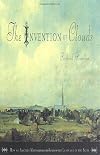
The Publisher Says: The Invention of Clouds is the true story of Luke Howard, the amateur English meteorologist who in 1802 gave the clouds their names -- cumulus, cirrus, stratus. He immediately gained international fame, becoming a cult figure among artists and painters -- Goethe, Constable, and Coleridge revered him -- and legitimizing the science of meteorology. Part history of science, part cultural excavation, this is not only the biography of a man, but of a moment: the cultural birth show more of the modern scientific era.
My Review: Late eighteenth century London was an amazingly fertile place, with many concurrent revolutions burgeoning, and knowledge as such becoming an object of trade, almost, it was seen as so very desirable and advantageous to possess a new piece of it. The idea of scientific study of the natural world was relatively new, but had already made very solid and quite impressive inroads into the public consciousness. No longer was a person pursuing research into the material world liable to excite unwelcome and potentially hazardous attention from religious authorities. The world was open at last to apparently limitless desire of humans to ask questions and seek answers.
Into that atmosphere was born Luke Howard, a scion of a stolid, solid, money-making Quaker (more accurately called "Dissenters") family. He was cursed with unquenchable curiosity in a relgious sect that valued the practical over the notional, and obedience over personal happiness. (Depressingly familiar, eh what?) His childhood fascination with clouds was subsumed into the coerced "need" that his wealthy father felt for Luke to have a trade.
Nonetheless, Luke pursued his passion for observing clouds, in time falling in with the other members of his age and class and religion who were among the vanguard of scientific researches (eg, William Allen, Richard Phillips, WH Pepys) at that moment, largely due to their cultural isolation from more mainstream pursuits by faith and the laws of the day. His friend and business partner William Allen had founded something called The Askesian Society, where Howard presented a lecture in December 1802 that set the world on its ear: He proposed and defended a naming system for the clouds that, with minor extensions, we use to this good day.
Not bad for a 30-year-old ne'er-do-well (per his father) who was pathologically shy and unwilling to be "famous."
Late eighteenth century London was an amazingly fertile place, with many concurrent revolutions burgeoning, and knowledge as such becoming an object of trade, almost, it was seen as so very desirable and advantageous to possess a new piece of it. The idea of scientific study of the natural world was relatively new, but had already made very solid and quite impressive inroads into the public consciousness. No longer was a person pursuing research into the material world liable to excite unwelcome and potentially hazardous attention from religious authorities. The world was open at last to apparently limitless desire of humans to ask questions and seek answers.
Into that atmosphere was born Luke Howard, a scion of a stolid, solid, money-making Quaker (more accurately called "Dissenters") family. He was cursed with unquenchable curiosity in a relgious sect that valued the practical over the notional, and obedience over personal happiness. (Depressingly familiar, eh what?) His childhood fascination with clouds was subsumed into the coerced "need" that his wealthy father felt for Luke to have a trade.
Nonetheless, Luke pursued his passion for observing clouds, in time falling in with the other members of his age and class and religion who were among the vanguard of scientific researches (eg, William Allen, Richard Phillips, WH Pepys) at that moment, largely due to their cultural isolation from more mainstream pursuits by faith and the laws of the day. His friend and business partner William Allen had founded something called The Askesian Society, where Howard presented a lecture in December 1802 that set the world on its ear: He proposed and defended a naming system for the clouds that, with minor extensions, we use to this good day.
Not bad for a 30-year-old ne'er-do-well (per his father) who was pathologically shy and unwilling to be "famous."
It's a beautiful looking little book, in a landscape trim, illustrated with paintings, etchings, and drawings of the clouds; it's a nicely written explanation of the science of nephology (the study of clouds) and its relationship to meteorology (the study of weather overall); and it's just plain interesting to read about how outsiders and the marginalized have always, it seems, been the pointers to huge advances in the arts and sciences. show less
My Review: Late eighteenth century London was an amazingly fertile place, with many concurrent revolutions burgeoning, and knowledge as such becoming an object of trade, almost, it was seen as so very desirable and advantageous to possess a new piece of it. The idea of scientific study of the natural world was relatively new, but had already made very solid and quite impressive inroads into the public consciousness. No longer was a person pursuing research into the material world liable to excite unwelcome and potentially hazardous attention from religious authorities. The world was open at last to apparently limitless desire of humans to ask questions and seek answers.
Into that atmosphere was born Luke Howard, a scion of a stolid, solid, money-making Quaker (more accurately called "Dissenters") family. He was cursed with unquenchable curiosity in a relgious sect that valued the practical over the notional, and obedience over personal happiness. (Depressingly familiar, eh what?) His childhood fascination with clouds was subsumed into the coerced "need" that his wealthy father felt for Luke to have a trade.
Nonetheless, Luke pursued his passion for observing clouds, in time falling in with the other members of his age and class and religion who were among the vanguard of scientific researches (eg, William Allen, Richard Phillips, WH Pepys) at that moment, largely due to their cultural isolation from more mainstream pursuits by faith and the laws of the day. His friend and business partner William Allen had founded something called The Askesian Society, where Howard presented a lecture in December 1802 that set the world on its ear: He proposed and defended a naming system for the clouds that, with minor extensions, we use to this good day.
Not bad for a 30-year-old ne'er-do-well (per his father) who was pathologically shy and unwilling to be "famous."
Late eighteenth century London was an amazingly fertile place, with many concurrent revolutions burgeoning, and knowledge as such becoming an object of trade, almost, it was seen as so very desirable and advantageous to possess a new piece of it. The idea of scientific study of the natural world was relatively new, but had already made very solid and quite impressive inroads into the public consciousness. No longer was a person pursuing research into the material world liable to excite unwelcome and potentially hazardous attention from religious authorities. The world was open at last to apparently limitless desire of humans to ask questions and seek answers.
Into that atmosphere was born Luke Howard, a scion of a stolid, solid, money-making Quaker (more accurately called "Dissenters") family. He was cursed with unquenchable curiosity in a relgious sect that valued the practical over the notional, and obedience over personal happiness. (Depressingly familiar, eh what?) His childhood fascination with clouds was subsumed into the coerced "need" that his wealthy father felt for Luke to have a trade.
Nonetheless, Luke pursued his passion for observing clouds, in time falling in with the other members of his age and class and religion who were among the vanguard of scientific researches (eg, William Allen, Richard Phillips, WH Pepys) at that moment, largely due to their cultural isolation from more mainstream pursuits by faith and the laws of the day. His friend and business partner William Allen had founded something called The Askesian Society, where Howard presented a lecture in December 1802 that set the world on its ear: He proposed and defended a naming system for the clouds that, with minor extensions, we use to this good day.
Not bad for a 30-year-old ne'er-do-well (per his father) who was pathologically shy and unwilling to be "famous."
It's a beautiful looking little book, in a landscape trim, illustrated with paintings, etchings, and drawings of the clouds; it's a nicely written explanation of the science of nephology (the study of clouds) and its relationship to meteorology (the study of weather overall); and it's just plain interesting to read about how outsiders and the marginalized have always, it seems, been the pointers to huge advances in the arts and sciences. show less

I was interested to read about these four events, Krakatau being the only one I was familiar with. My favourite section was the one about the Hilo tsunami, with a thought-provoking commentary on "disaster amnesia" and the importance of public awareness. One of my favourite lines in the book was "in spite of the expensive equipment available, one should never underestimate the lifesaving potential of someone running away from the shoreline shouting, 'Tsunami!'".
The descriptions of all the show more disasters were focused on eyewitness accounts. It was interesting to learn what the people who were there thought at the time, but two dozen accounts of the fog over Europe in 1783 tend to get rather repetitive. And the narrative connecting the accounts was not exactly riveting.
I learned quite a bit from this book, and enjoyed it enough to persist to the end. Unfortunately, I also found that I kept dozing off. show less
The descriptions of all the show more disasters were focused on eyewitness accounts. It was interesting to learn what the people who were there thought at the time, but two dozen accounts of the fog over Europe in 1783 tend to get rather repetitive. And the narrative connecting the accounts was not exactly riveting.
I learned quite a bit from this book, and enjoyed it enough to persist to the end. Unfortunately, I also found that I kept dozing off. show less

This is a very beautiful and thoughtful book that tells the story of the man who invented the cloud naming system. However the book is more than that as it is also a scholarly, if perhaps sometimes rather self-satisfied, look at the excitng period in which science clubs abounded as an intellectual, social and quite trendy thing and how the arts/science split is so artificial and ignorant. The author bridges arts, science and literature in a natural, simple and what should be obvious way even show more though we continue to have this same rather false and simplistic debate on the today programme every month. Hamblyn has now written another book called "Terra: what lies beneath" and again it is a skillful and rather beautiful piece of work that delicately intertwines culture, history, geography, science and climate change with human stories. The author may be pleased with himself but with some good reason. show less
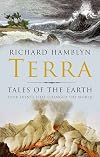
[This is a review I wrote in 2009]
** Four devastating natural disasters narrated largely from eye-witness accounts**
A narration of four events that changed the world, all natural disasters. Each disaster chosen corresponds to one of the four natural elements - earth, air, fire, water - showing how volatile each of these elements can be. Richard Hamblyn has chosen the Lisbon earthquake of 1755, the European Air Panic of 1783 (the unusual weather phenomena and strange appearance of the skies), show more the Krakatoa volcanic eruption of 1883, and the Hilo Tsunami of 1946. His preface about the most devastating Tsunami in recorded history, the Boxing Day disaster in 2004 is a stark reminder of our vulnerability to natural disasters at any time and how important it is that we as humans learn from what our planet is telling us and learn from any past mistakes in dealing with these catastrophic events.
Part history, part history of science and geology, reading Richard Hamblyn's narration is a humbling experience. Each case history is drawn primarily from eye-witness accounts which lends a very human perspective to these natural disasters and enhances the reminder that any one of these events could take place again. A very readable and thought-provoking thesis. show less
** Four devastating natural disasters narrated largely from eye-witness accounts**
A narration of four events that changed the world, all natural disasters. Each disaster chosen corresponds to one of the four natural elements - earth, air, fire, water - showing how volatile each of these elements can be. Richard Hamblyn has chosen the Lisbon earthquake of 1755, the European Air Panic of 1783 (the unusual weather phenomena and strange appearance of the skies), show more the Krakatoa volcanic eruption of 1883, and the Hilo Tsunami of 1946. His preface about the most devastating Tsunami in recorded history, the Boxing Day disaster in 2004 is a stark reminder of our vulnerability to natural disasters at any time and how important it is that we as humans learn from what our planet is telling us and learn from any past mistakes in dealing with these catastrophic events.
Part history, part history of science and geology, reading Richard Hamblyn's narration is a humbling experience. Each case history is drawn primarily from eye-witness accounts which lends a very human perspective to these natural disasters and enhances the reminder that any one of these events could take place again. A very readable and thought-provoking thesis. show less
Lists
Awards


You May Also Like


Associated Authors
Statistics
- Works
- 18
- Also by
- 1
- Members
- 763
- Popularity
- #33,345
- Rating
- 3.6
- Reviews
- 15
- ISBNs
- 42
- Languages
- 5