Sweet Dreams
by Michael Frayn
On This Page
Description
A wonderfully comic and satirical journey to the nerve-centre of the universe. An ordinary man finds his way to Heaven and discovers a city of rich opportunities for leisure and enjoyment.Tags
Recommendations























Member Recommendations
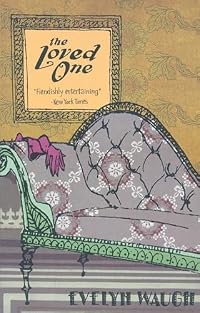
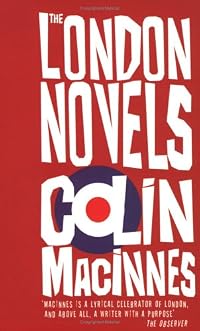
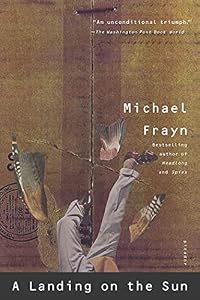
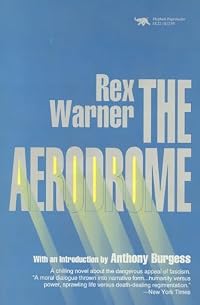
SnootyBaronet Afterlife
Member Reviews
An utter delight.
Even though it was written in the 1970s, it still feels completely fresh & topical today. It's a lovely, optimistic satire of man & covers many of the Big Ideas. I know when Life of Pi was so very popular, various reviews said it would affirm/renew your faith in God (a claim that left me mystified), but Sweet Dreams *is* actually one of those entertaining, sweet (& a teeny bit bittersweet), humorous stories that will affirm/renew your faith in God (a fun read even if you're not religious), or perhaps in just your role as a human in creating a better world. This is basically a philosophical musing set in a heaven/utopia, while pondering & satirizing man & God's role w/in the world. Like Vonnegut, Frayn's writing style is show more simple & understated, almost to the point that it seems quite effortless to ponder some quite heavy philosophy while enjoying such an easy, pleasing tale. *Definitely recommended*.
There are lots of lovely and funny parts in this book; I think my favorite sections are when Howard (main protagonist) gets a great job & his friend Phil has a rather interesting one as well....
and
Warning, SPOILERS ahead...
My other favorite sections include some rather fun conversations...
And, later, Howard is having drinks with Freddie & Caroline (Freddie's wife)...
So, God as a bit of a shy, self-effacing Englishman.... LOL. show less
Even though it was written in the 1970s, it still feels completely fresh & topical today. It's a lovely, optimistic satire of man & covers many of the Big Ideas. I know when Life of Pi was so very popular, various reviews said it would affirm/renew your faith in God (a claim that left me mystified), but Sweet Dreams *is* actually one of those entertaining, sweet (& a teeny bit bittersweet), humorous stories that will affirm/renew your faith in God (a fun read even if you're not religious), or perhaps in just your role as a human in creating a better world. This is basically a philosophical musing set in a heaven/utopia, while pondering & satirizing man & God's role w/in the world. Like Vonnegut, Frayn's writing style is show more simple & understated, almost to the point that it seems quite effortless to ponder some quite heavy philosophy while enjoying such an easy, pleasing tale. *Definitely recommended*.
There are lots of lovely and funny parts in this book; I think my favorite sections are when Howard (main protagonist) gets a great job & his friend Phil has a rather interesting one as well....
He has in fact got a job, now his father mentions it, and an astonishingly good one, too, for someone in his first year down from university. He is working with Harry Fischer's design group, which is almost certainly the liveliest team in the profession at this particular moment. They all think so, at any rate, though they turn it into a joke. You can tell how lively they are by the fact that they work not in great white north-lit drawing-offices, like the more fashionable and established groups, but in a few cramped rooms on the fourth floor of an Edwardian commercial block, above a tobacconist and an employment agency, mostly looking out on an airshaft.
They are designing the Alps.
and
Phil has an incredibly good job, too. He is creating man.
Or at any rate, he is with one of the research teams working on the man project. Half the university departments and industries in the city are involved. The end product, as everyone knows from all the projections and mock-ups they keep making public to try to justify the wildly escalating costs, will have two arms and two legs, a language capability, and a fairly sophisticated emotional and moral response. The general idea is to build something pretty much in their own image.
Warning, SPOILERS ahead...
My other favorite sections include some rather fun conversations...
"I beg your pardon?" says Howard.
Freddie clears his throat, and forces himself to look Howard in the eye.
"I said, I'm God."
He folds his arms very tightly, and looks away over Howard's shoulder. He is plainly embarrassed. So is Howard. He is embarrassed to have embarrassed Freddie.
"I'm terribly sorry," says Howard.
"Can't be helped," says Freddie. "Just one of those things."
"I mean, I'm sorry not to have known."
"Not at all. I'm sorry I had to spring it on you like that."
There is an awkward silence. Freddie fiddles with his biscuit, breaking it into small pieces, and dropping crumbs which catch in the hairy surface of his trousers.
"Well," says Howard. "Congratulations."
"Oh," says Freddie. "Thanks."
----------
The more Howard thinks about it, the less he knows where to look or what to do with his hands. He tries putting them behind his back and looking at the floor, smiling reflectively. Freddie is having difficulties, too. He puts his dry biscuit down, and with his left hand seizes his right elbow. With his right hand he takes hold of his chin. Then he, too, examines the floor.
"On second thoughts," he says, "I don't know about congratulations. Not like being elected to a fellowship, or whatever. Wasn't open to other candidates, you see."
And, later, Howard is having drinks with Freddie & Caroline (Freddie's wife)...
"I can't help feeling," says Howard, sticking his head forward ruefully, "now I know who you are, that I've been a bit outspoken in some of my remarks about the system."
"Not at all!" says Freddie.
"Not a bit!" says Caroline.
"But I must in all honesty say," says Howard very quickly, jutting his chin out and smilingly blinking his eyes, "that I still think there are a number of things in the universe which really need seriously looking into."
"Oh, the whole thing!" says Freddie with feeling.
"Ghastly mess," says Caroline.
"Absolute disaster area," says Freddie.
"Frightful," says Caroline.
"So far as one can understand it," says Freddie.
"Freddie feels frightfully strongly about it, you see," says Caroline.
Howard looks from one to the other in astonishment.
"Good heavens!" he says. "I should never have guessed...."
"Oh, Freddie's a terrific radical," says Caroline.
"Really?" says Howard.
"A terrible firebrand, really," says Caroline.
Freddie knots himself up.
"A bit firebrandish," he admits.
"A bit of a Maoist, to tell you the truth," says Caroline.
She looks sideways at Howard to see how he is taking this. So does Freddie.
"A Maoist?" says Howard, astonished.
"Permanent revolution," says Caroline.
"That style of thing," agrees Freddie.
"What he feels, you see," says Caroline, "is that people ought to struggle pretty well all the time against the limitations of the world and their own nature. Not stop."
Howard gazes at Freddie, deeply impressed.
"Don't worry," says Freddie. "I don't think my views have much effect."
So, God as a bit of a shy, self-effacing Englishman.... LOL. show less
A middle-aged, middle-class British man of the 1970s dies and goes to heaven. And heaven turns out to be the total wish fulfillment of a middle-aged, middle-class British man of the 1970s. Have you ever heard the expression "Carry yourself with the confidence of a mediocre white man"? Well, that's pretty much a one-sentence distillation of this book.
I think this satire probably worked much better when it was first written. Since then there have been so many clever takes on the afterlife, from "Defending Your Life" to "The Good Place," that the joke doesn't really land the way it would have when it was fresher. Frayn's writing is good, and it's kind of fun as a time capsule of 1970s values, but even in this short novel the concept seems show more like a single joke dragged out to interminable length. show less
I think this satire probably worked much better when it was first written. Since then there have been so many clever takes on the afterlife, from "Defending Your Life" to "The Good Place," that the joke doesn't really land the way it would have when it was fresher. Frayn's writing is good, and it's kind of fun as a time capsule of 1970s values, but even in this short novel the concept seems show more like a single joke dragged out to interminable length. show less
A sweet book, actually (especially for a satire!), not mean-spirited in the slightest, funny in the sense that it will cause many a smile, rather than guffaws (judging from television comedies and my reaction to them, I guffaw when shocked, and I smiled when recognizing the absurdity of the familiar).
This is the fourth book by Michael Frayn that I've read. Of the four, 'The Tin Men' definitely remains my favourite. 'Sweet Dreams' is a satirical account of heaven from the perspective of a bourgeois man. Although it worked very well as such, my lack of identification with the main character (and especially his treatment of women) reduced the book's appeal. The overall message seemed to be that true heaven for such a man is being taken seriously by everyone. It is clear, though, that his behaviour and ideas don't really justify such treatment.
As the book proceeds, a privileged middle-aged bourgeois clique emerges, defining themselves as revolutionary in a manner that is ironic and depressingly believable. Their revolution mainly show more consists of having house parties. This novel was first published in 1973 and works well as a satire on the left-wing politics of that time. It has perhaps aged worse than 'The Tin Men' as the class that the main character Howard Baker represents is now something of an anachronism. Howard may be deluded and pompous, but he is idealistic in a way that now seems quaint. Thus although the narrative is bitterly amusing, it isn't (to me) hilarious in the way 'Tin Men' was. Probably my favourite detail was the fact that everyone could fly, but didn't due simultaneously to the embarrassment of no-one else doing it and the worry of 'what if everyone did it?' show less
As the book proceeds, a privileged middle-aged bourgeois clique emerges, defining themselves as revolutionary in a manner that is ironic and depressingly believable. Their revolution mainly show more consists of having house parties. This novel was first published in 1973 and works well as a satire on the left-wing politics of that time. It has perhaps aged worse than 'The Tin Men' as the class that the main character Howard Baker represents is now something of an anachronism. Howard may be deluded and pompous, but he is idealistic in a way that now seems quaint. Thus although the narrative is bitterly amusing, it isn't (to me) hilarious in the way 'Tin Men' was. Probably my favourite detail was the fact that everyone could fly, but didn't due simultaneously to the embarrassment of no-one else doing it and the worry of 'what if everyone did it?' show less
Startling, playful surrealism
Wonderful unique concept
Ratings
Members
- Recently Added By
Lists

Anthony Burgess 99 Post War Novels
99 works; 7 members

David Pringle's Modern Fantasy: The 100 Best Novels
100 works; 5 members
Author Information

87+ Works 9,757 Members
Michael Frayn is the author of the award-winning "Copenhagen" & twelve other plays, including "Noises Off". The most recent of his nine novels is "Headlong", a New York Times Editor's Choice & Booker Prize finalist. He lives in London. (Bowker Author Biography)
Awards and Honors
Common Knowledge
- Canonical title
- Sweet Dreams
- Original title
- Sweet Dreams
- Original publication date
- 1973
- First words
- A man sits in his car at the traffic-lights, waiting for them to go green.
- Last words
- (Click to show. Warning: May contain spoilers.)At sunset, with the sky red and the road wet after a day of storms, he is approaching some great metropolis. A restless excitement stirs in him, a sense of being on the verge of deep and different things …
Classifications
Statistics
- Members
- 150
- Popularity
- 217,320
- Reviews
- 6
- Rating
- (3.43)
- Languages
- English, Italian
- Media
- Paper, Ebook
- ISBNs
- 14
- ASINs
- 2