On This Page
Description
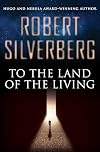
The Hugo Award-winning author returns to the mythical world of Gilgamesh the King in this adventurous sequel: "An enthralling quest." --The Times (London) The warrior-king Gilgamesh--part man, part god--is not only larger than life; he is larger than death. Trapped in the Afterworld, a bizarre reality in which everyone who has ever died lives again . . . only to die again and again in endless succession, Gilgamesh sets out to find his lost friend Enkidu and fight his way back to the show more land of the living. Along the way, he encounters a rogue's gallery of figures from history, literature, and myth--including H. P. Lovecraft and Robert E. Howard--and travels from the ancient city of Uruk to modern-day Manhattan. But the Afterworld is not so easily escaped. show lessTags
Recommendations











Member Reviews
"To The Land of The Living" by Robert Silverberg (1990)
If you liked Philip Jose Farmer's "Riverworld" Series you'll love this book.
Similarities: every person who ever lived, and died, is in the same predicament; whenever anyone dies in the Afterworld they're reborn again, in a different part of the Afterworld and possibly a different time; no one knows the what, where, or why of the Afterworld; famous/infamous historical figures dominate the Afterworld.
Differences: Farmer's world stretches along a world-spanning river – Silverberg's is a huge, unending desert; the premise of Riverworld is that someone is controlling the world and escape from Riverworld is only achieved by becoming 'enlightened' and thereby allowing you to pass beyond show more the continuous reincarnations; the premise of the 'Afterworld' is that the spirit/soul never dies and afterlife is forever.
Farmer's series is captivating and challenging, inasmuch the reader finds himself imagining his own response to the trials and tribulations of Richard Burton. But the final book was an immense letdown and painful to read in the emptiness of its dénouement. Silverberg's ending is not quite as bad, but not a whole lot better (I won't give it away and spoil it for you).
I found Farmer's premise more convincing: that there is a power above and beyond, that is controlling the lives of humanity and pushing individuals to a higher state of consciousness. Silverberg tells a great story here, but is too nihilistic in his conception of life after death. It's sad that they both suck you into a fascinating and exciting journey that only ends in a disappointing vapidness.
Despite the fact that neither author was able to conceive a satisfying ending I recommend both these stories for the sheer challenge of putting yourself in the protagonist's shoes and imagining what and how you would do in similar circumstances with the protagonist's same strengths and weakness.
While I enjoyed the book immensely, I only gave it 4-stars because of the ending. show less
If you liked Philip Jose Farmer's "Riverworld" Series you'll love this book.
Similarities: every person who ever lived, and died, is in the same predicament; whenever anyone dies in the Afterworld they're reborn again, in a different part of the Afterworld and possibly a different time; no one knows the what, where, or why of the Afterworld; famous/infamous historical figures dominate the Afterworld.
Differences: Farmer's world stretches along a world-spanning river – Silverberg's is a huge, unending desert; the premise of Riverworld is that someone is controlling the world and escape from Riverworld is only achieved by becoming 'enlightened' and thereby allowing you to pass beyond show more the continuous reincarnations; the premise of the 'Afterworld' is that the spirit/soul never dies and afterlife is forever.
Farmer's series is captivating and challenging, inasmuch the reader finds himself imagining his own response to the trials and tribulations of Richard Burton. But the final book was an immense letdown and painful to read in the emptiness of its dénouement. Silverberg's ending is not quite as bad, but not a whole lot better (I won't give it away and spoil it for you).
I found Farmer's premise more convincing: that there is a power above and beyond, that is controlling the lives of humanity and pushing individuals to a higher state of consciousness. Silverberg tells a great story here, but is too nihilistic in his conception of life after death. It's sad that they both suck you into a fascinating and exciting journey that only ends in a disappointing vapidness.
Despite the fact that neither author was able to conceive a satisfying ending I recommend both these stories for the sheer challenge of putting yourself in the protagonist's shoes and imagining what and how you would do in similar circumstances with the protagonist's same strengths and weakness.
While I enjoyed the book immensely, I only gave it 4-stars because of the ending. show less
Sequel to Silverberg's "Gilgamesh the King". I don't own a copy of the first book, and hadn't read either for over a decade, so my memory of the first is pretty hazy at this point. However, the all seeing eye of Google confirms my impression that this one is different in tone to the first. It's set in a shared universe used by several writers, but I've never read any of the works by other authors, so from my perspective this is simply a sequel to a previous stand-alone.
The novel is set in the Afterworld, the dream-like place where everyone goes when they die. There is no escape from the Afterworld -- one can be killed there, but only to be revived again, sometimes within minutes and sometimes not for decades. For some, the Afterworld is show more Hell; for others, it is simply the place where they are now, different to life, better in some ways and worse in others.
The novel is set in the present day, so Gilgamesh the Sumerian has been in the Afterworld for a very long time indeed. The novel follows his wanderings in his quest to be re-united with his friend Enkidu, a journey that turns out to be as much about self-discovery as anything he had intended to do. But there are rumours that there exists a way back to the Land of the Living, and Gilgamesh is gradually drawn into the attempts to find that way. Along the way he meets a good many other historical figures, and one of the themes of the novel is the way in which history distorts real people and turns them into myths they barely recognise as themselves.
There's a lot of philosophy in this novel, but it's by no means dry. Indeed, it's often very funny. And it works well as a stand-alone, without knowledge of the first book. Definitely worth trying. show less
The novel is set in the Afterworld, the dream-like place where everyone goes when they die. There is no escape from the Afterworld -- one can be killed there, but only to be revived again, sometimes within minutes and sometimes not for decades. For some, the Afterworld is show more Hell; for others, it is simply the place where they are now, different to life, better in some ways and worse in others.
The novel is set in the present day, so Gilgamesh the Sumerian has been in the Afterworld for a very long time indeed. The novel follows his wanderings in his quest to be re-united with his friend Enkidu, a journey that turns out to be as much about self-discovery as anything he had intended to do. But there are rumours that there exists a way back to the Land of the Living, and Gilgamesh is gradually drawn into the attempts to find that way. Along the way he meets a good many other historical figures, and one of the themes of the novel is the way in which history distorts real people and turns them into myths they barely recognise as themselves.
There's a lot of philosophy in this novel, but it's by no means dry. Indeed, it's often very funny. And it works well as a stand-alone, without knowledge of the first book. Definitely worth trying. show less
Ratings
Members
- Recently Added By
Author Information

990+ Works 62,312 Members
Some Editions
Series

Belongs to Publisher Series
Common Knowledge
- Original publication date
- 1989
- People/Characters
- Gilgamesh; Enkidu; the Hairy Man; Herod Agrippa; Prester John; Simon Magus (show all 9); Vy-otin; Ninsun; Inanna
- Epigraph
- Per me si va ne la citta dolente.
Per me si va ne l'etterno dolore,
Per me si va tra la perdua gente/
Giustizia mosse il mio alto fattore;
Fecemi la divina podestate,
La somma sapienza ed il primo amore.
Din... (show all)anzi a me non fuor cose create
Se non etterne, ed io etterno duro.
LASCIATE OGNI SPERANZA, VOI CH'ENTRATE.
I am he whom you call Gilgamesh. I am the pilgrim who has seen everything within the confines of the Land, and far beyond it; I am the man to whom all things were made known, the secret things, the truths of life and death, most especially thos of death. I have coupled with Iananna in the bed of the Sacred Marriage; I have slain demons and spoken with gods; I am two parts god myself, and only one part mortal. Here in Uruk I am king, and when I walk through the streets I walk alone, for there is no one who dares approach me too closely. - Dedication
- FOR RALPH Who keeps track of it all, from Antigua to Zimbabwe - dear friend, trusted adviser
- First words
- Jagged green lightning danced on the horizon and the wind came ripping like a blade out of the east, skinnig the flat land bare and sending up clouds of gray-brown dust.
- Last words
- (Click to show. Warning: May contain spoilers.)And Gilgamesh, smiling, waving also, called out in joyous response, and began to walk toward him.
- Blurbers
- Asimov, Isaac; Straub, Peter
Classifications
- Genres
- Fiction and Literature, Science Fiction, Fantasy
- DDC/MDS
- 813.54 — Literature & rhetoric American literature in English American fiction in English 1900-1999 1945-1999
- LCC
- PZ7 .C429 .S558 — Language and Literature Fiction and juvenile belles lettres Fiction and juvenile belles lettres Juvenile belles lettres
- BISAC
Statistics
- Members
- 236
- Popularity
- 136,812
- Reviews
- 2
- Rating
- (3.37)
- Languages
- English, French, German
- Media
- Paper, Ebook
- ISBNs
- 11
- ASINs
- 6