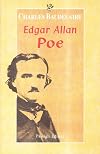
Edgar Allan Poe
by Charles Baudelaire
On This Page
Description
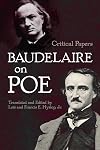
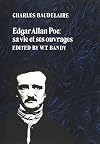
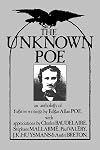
The earliest foreign study of the life and works of Edgar Allan Poe, the text presented in this volume is something of a landmark in the history of comparative literature. Baudelaire ́s first and longest essay on Poe was published in the Revue de Paris is 1852; it was revised and abridged for use as the preface of the first volume of his translation of Poe ́s tales, Histoires extraordinaires. This study was significant especially in the area of Franco-American literary relations because it show more was the basis of not only the French attitude toward Poe, but of his reputation throughout Europe ́one might almost say, throughout the world. The essay on Poe has never been the subject of a separate publication. This edition reveals for the first time the sources of information used by Baudelaire. It shows that a considerable part of the study was translated literally from articles by John M. Daniel and John R. Thompson in the Southern Literary Messenger (1849 ́50). Previous editions vary widely in excellence because almost all suffered from the mistaken belief that Baudelaire was acquainted with the American edition of Poe ́s works when he wrote the 1852 essay and that it was largely based on Rufus Griswold ́s Memoir contained in that edition. This led to the commentary and notes that were unconsciously misleading and in many cases false.The introduction to this edition presents a complete and accurate account of the genesis of Baudelaire ́s essay, with supporting documents showing his indebtedness to American, French, and British sources. It enables the reader to distinguish clearly between what Baudelaire himself knew or thought about Poe and what he borrowed from other writers. show lessTags
Recommendations



















Member Recommendations
Member Reviews
En los últimos tiempos se ha hablado mucho de Edgar Poe. El caso es que se lo merece. Con un volumen de relatos, su reputación ha cruzado los mares. Ha sorprendido, sobre todo sorprendido, antes que conmovido o entusiasmado. Lo mismo les sucede por lo general a todos los novelistas que avanzan únicamente apoyados en un método de creación propia, que es la consecuencia misma de su temperamento. No creo que sea posible encontrar un gran novelista que no haya sido el artífice de su método. O, mejor dicho, cuya sensibilidad primitiva no haya sido meditada y transformada en un arte indiscutible
Aug 15, 2011Spanish
Se recogen aquí los textos que Baudelaire dedicó a Poe, entre los que destaca "Edgar Poe, su vida y sus obras", estudio que sirvió de introducción a "Historias extraordinarias", considerado hoy como una de las más rigurosas y brillantes aportaciones al conocimiento de Poe y del propio Baudelaire.
Oct 1, 2021Spanish
Ratings
Members
- Recently Added By
Author Information

759+ Works 19,315 Members
Charles Baudelaire, 1821 - 1867 Charles Baudelaire had perhaps had an immeasurable impact on modern poetry. He was born on April 9, 1821, to Joseph-Francois Baudelaire and Caroline Archimbaut Dufays in Paris. He was educated first at a military boarding school and then the College Louis-le-Grand, where he was later expelled in 1839. Baudelaire show more then began to study law, at the Ecole de Droit in Paris, but devoted most of his time to debauchery. After an abortive trip to the East, he settled in Paris and lived on an inheritance from his much despised step father, while he wrote poetry. During this period he met Jeanne Duval, a mulatto with whom he fell in love with and who became the "Black Venus," the muse behind some of his most powerful erotic verse. Baudelaire strove to portray sensual experiences and moods through complex imagery and classical form, avoiding sentimentality and objective description. Thus he profoundly influenced the later French symbolist writers, including Mallarme and Rimbaud, and such English-language poets as Yeats, Eliot, and Stevens. With much of his inheritance squandered, Baudelaire turned to journalism, especially art and literary criticism, the first of which were "Les Salons". Here he discovered the work of Edgar Allan Poe, which became an influence on his own poetry. While continuing to write unpublished verse, Baudelaire became famous as critic and translator of Poe. This reputation enabled Baudelaire to publish his most famous collection of poetry, "Les Fleurs du Mal" (The Flowers of Evil) in 1857. The result was an obscenity trial and the banning of six of the poems. Though he continued to write journalism with some success, he became increasingly depressed and pessimistic. Baudelaire attempted suicide in 1845, an attempt to get attention, and became minorly involved in the French Revolution. Today Baudelaire's work is considered the "last brilliant summation of romanticism, precursor of symbolism and the first expression of modern techniques". It was his originality that set him apart and ultimately proved to be his end. Baudelaire died, apparently from complications of syphilis, on August 31, 1867, in Paris. (Bowker Author Biography) show less
Work Relationships
Is contained in
Classifications
- Genres
- Fiction and Literature, Literature Studies and Criticism
- DDC/MDS
- 818.3 — Literature & rhetoric American literature in English American miscellaneous writings in English Middle 19th Century 1830-61
- LCC
- PS2631 .B383 — Language and Literature American literature American literature Individual authors 19th century
- BISAC
Statistics
- Members
- 46
- Popularity
- 648,469
- Reviews
- 2
- Rating
- (4.67)
- Languages
- 5 — English, French, Italian, Portuguese, Spanish
- Media
- Paper, Ebook
- ISBNs
- 14
- ASINs
- 3