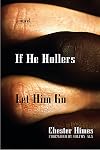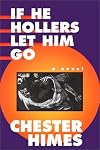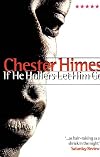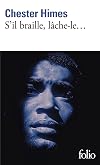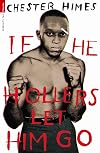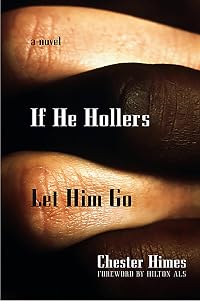
If He Hollers, Let Him Go
by Chester Himes
On This Page
Description
In a four day period, Bob Jones, a young black man working in the Los Angelos during World War II, loses his job, his girl, and his army deferment and is falsely accused of raping a white woman.Tags
Recommendations



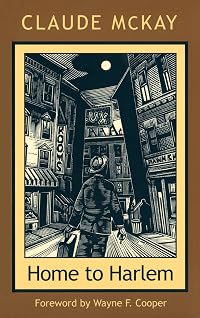
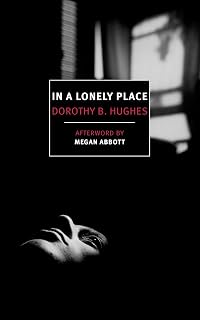
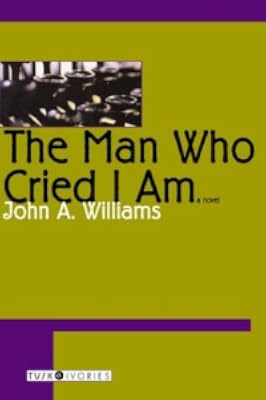

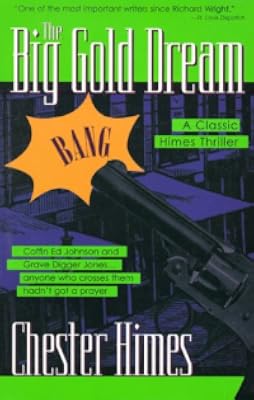




Member Recommendations
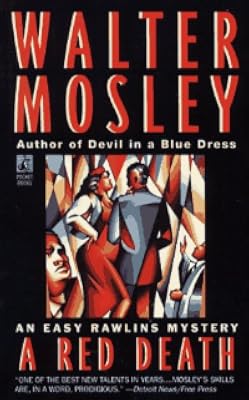
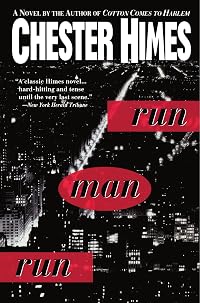
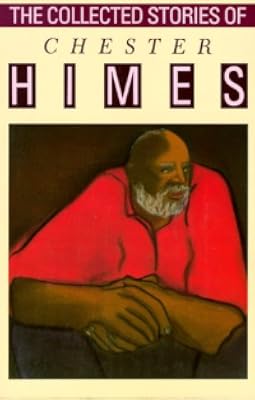
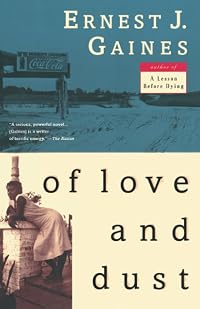
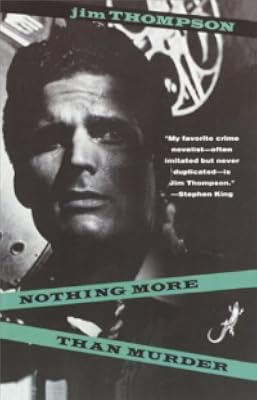
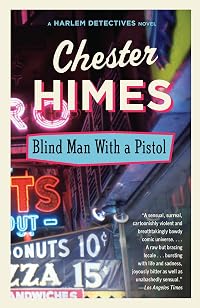
tangentialine this takes place during the watts riots of 1965 in L.A. same sense of intolerable tension, same cool bravado on the part of the protagonist, same racial issues, and both great books.
Member Reviews
Himes’ first novel shows that his talents as a writer were intact early. The prose swings hard and direct, the poignancy intensified by the first-person narration. A reader feels the anger, remorse, doubt, and defiance of the protagonist as he maneuvers around and through the mire of classism, colorism, and the ubiquitous racism of WWII-era Los Angeles. The potential for violence hangs over almost every encounter, like a choking smoke. Himes’ early novels didn’t get the respect they deserve, but in the wild action of the last pages here, you can almost see his raucous Harlem novels coming a decade later.
This is the account of four life-changing days in the life of Robert Jones, a black leaderman of a black crew in a Californian shipyard during WWII. Bob is a fiery man who knows his own worth and tries to assert it in the white world he lives in, even with all the restrictions he knows he have to take into account. But there are things he's not willing to take, and he won't take. And when one of these happens and he is suspended from work because he stood his ground, his entire life is shaken to the roots.
Here starts a wild journey into Bob's soul, while he interrogates himself about what being a black man means in a white, segregated world, and what future there could ever be - what future of fulfilment there could ever be - for a man show more in his position.
The story is told in the first person by Bob and it's mindblowing. Himes takes you into Bob's heart of hearts and let you into his deepest, more secret thoughts and feelings. Into his most secrets fears, his most unspeakable of hopes, into his deepest frustrations. There had been moments I had to remind myself: "You are not Bob Jones", so deep the identification was. I really thought with him, felt with him, got angry with him, grabbed and lost hopes with him. It's like walking all the way right beside him.
Himes is a master of dialogue. I've always liked his strong grip on people's way of speaking of themselves in the sheer way they speak of anything. Sometimes it's more like listening to his characters than read them.
I've rarely read such an involving story. I enjoyed it a lot. show less
Here starts a wild journey into Bob's soul, while he interrogates himself about what being a black man means in a white, segregated world, and what future there could ever be - what future of fulfilment there could ever be - for a man show more in his position.
The story is told in the first person by Bob and it's mindblowing. Himes takes you into Bob's heart of hearts and let you into his deepest, more secret thoughts and feelings. Into his most secrets fears, his most unspeakable of hopes, into his deepest frustrations. There had been moments I had to remind myself: "You are not Bob Jones", so deep the identification was. I really thought with him, felt with him, got angry with him, grabbed and lost hopes with him. It's like walking all the way right beside him.
Himes is a master of dialogue. I've always liked his strong grip on people's way of speaking of themselves in the sheer way they speak of anything. Sometimes it's more like listening to his characters than read them.
I've rarely read such an involving story. I enjoyed it a lot. show less
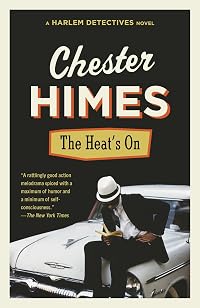
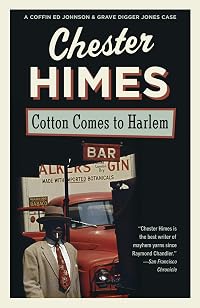
I wonder if the American publishing world of the 1950s and early 1960s didn’t quite know what to do with Chester Himes. His early novels in particular were angry and pulled few punches regarding subjects like race, sex, injustice, and violence. While it was clear to anyone who read him that Himes possessed an extraordinary talent, it seems to me like everything was done that could be done to make the covers of his early American edition hardcover books look as flat as possible. On the other hand, his crime novels that had to be published in this country as paperback originals were allowed cover art as lurid and suggestive as any of the other paperback novels then being published. Different audience perhaps… In any case, don’t miss show more his first novel, IF HE HOLLERS LET HIM GO. It is terrific. show less
The first novel by Chester Himes is a powerful, scary and deeply angry book about endemic institutionalised racism in 40s America. Told in 1st person we meet Bob Jones, an ambitious, intelligent, if violent man. Newly promoted and dating a rich beautiful girl he is on the up and up, but he soon finds the promotion is just a sop to the black workers and the promise of equality is a facade. He still has to know his place and the tragedy is he just can't.
This is where its genius lies, the constant build up of slights, pettiness and downright nastiness. How it shapes what he thinks and how it imbues every aspect of his life. You know he should stop but you know that he can't and more importantly why should he? Comparing it to your own life show more it leaves a bitter taste, the only thing that stops my going to a nice restaurant is money.
It's really the first book I have read that brings everyday bigotry to life and for that fact alone I would highly recommend it . The characters are great, the constant simmering tension makes a great thriller and if sometimes it descends too much into a straight mouth piece, it's still a great story.
One thing though don't read the back, giving endings away is annoying. show less
This is where its genius lies, the constant build up of slights, pettiness and downright nastiness. How it shapes what he thinks and how it imbues every aspect of his life. You know he should stop but you know that he can't and more importantly why should he? Comparing it to your own life show more it leaves a bitter taste, the only thing that stops my going to a nice restaurant is money.
It's really the first book I have read that brings everyday bigotry to life and for that fact alone I would highly recommend it . The characters are great, the constant simmering tension makes a great thriller and if sometimes it descends too much into a straight mouth piece, it's still a great story.
One thing though don't read the back, giving endings away is annoying. show less
An intense book dealing w the internal struggles of Bob Jones, an intelligent and intense black man in the shipyards of WWII California. A glimpse at the mental and at times physical toll of being black in pre-civil rights America. The book had little action or real story until the end but it finished well. This book is Himes' first and it must have poured out from him.
Himes sets his story in WW2 where Bob Jones works as a “Leaderman” for a group of ship builders. After a build up of institutional racism and casual racism on the street Bob loses his temper with a white woman in work who calls him the N word and he cusses her out. From this small incident Bob’s life is soon spiralling out of control. Jones is an angry man and through his eyes we see the unfairness of the oppression that African Americans (and others – most notably the Japanese who are interned at the time the book is set) really is. Jones is not willing to take it lying down and Himes explores the way others react to this including Jones’s girlfriend who, being fair skinned, is more accepted and therefore advises Jones to be show more more placid. This is a gritty and compelling read in which you share the main character’s frustration.
Overall – highly recommended for thriller fans show less
Overall – highly recommended for thriller fans show less
The setting of this novel is Los Angeles during World War II. The main character, Bob Jones, is an African-American man, who gets a job at a defense shipyard there, and is the narrator of this story. Bob is, in fact, the supervisor of a small crew of other African-Americans. The action takes place just after the forced internment of Japanese-Americans in California, which kind of sets the stage for how Bob sees himself as a black man in white Los Angeles. He's also in a situation where, because most of the able-bodied men have gone off to war, there's an influx of laborers, both white and African-American, men and women. He often ruminates about his existence as a black man, realizing that even with his position as supervisor, other show more supervisors will not share their white workers when he needs them to do so, or that he is not wanted in white, middle-class restaurants or other establishments. In short, Bob is aware that as an African-American man at this time, he's being oppressed, and the whole symbolism (imho) of the Japanese internment reminds him constantly that it could happen to him at any time for any reason.
Bob has a girlfriend, Alice, who, since her father is a very well-paid physician, lives a very middle-class sort of life. Alice is fair-skinned and a social worker, entertaining herself with intellectual friends. When Bob tries to explain how he feels because of being African-American in Los Angeles, Alice tries to explain to him that if he'd just let all of these feelings of white oppression go, and find himself a place in the middle-class scene, life would be so much easier for him. Alice is sort of a dreamer, who doesn't want to come to terms with her heritage; she really has no clue. Bob, on the other hand, can't ignore the realities of his life, and this hits home one day on the job when a trashy white woman laborer from Texas calls him the n-word and he reacts in kind, setting off a chain of events that snowball out of control.
I liked this book, and I'll probably read many more by this author in the future. His characters were believable, the setting was entirely believable and as a reader, you get into Bob's head very quickly and you stay with him the entire time. Himes is an awesome writer. I would most definitely recommend this book to people who want a bit of grit in their reading, or to people who may have been previously on the fence about reading this author, but don't expect to come away with this upbeat 'cause it ain't gonna happen. show less
Bob has a girlfriend, Alice, who, since her father is a very well-paid physician, lives a very middle-class sort of life. Alice is fair-skinned and a social worker, entertaining herself with intellectual friends. When Bob tries to explain how he feels because of being African-American in Los Angeles, Alice tries to explain to him that if he'd just let all of these feelings of white oppression go, and find himself a place in the middle-class scene, life would be so much easier for him. Alice is sort of a dreamer, who doesn't want to come to terms with her heritage; she really has no clue. Bob, on the other hand, can't ignore the realities of his life, and this hits home one day on the job when a trashy white woman laborer from Texas calls him the n-word and he reacts in kind, setting off a chain of events that snowball out of control.
I liked this book, and I'll probably read many more by this author in the future. His characters were believable, the setting was entirely believable and as a reader, you get into Bob's head very quickly and you stay with him the entire time. Himes is an awesome writer. I would most definitely recommend this book to people who want a bit of grit in their reading, or to people who may have been previously on the fence about reading this author, but don't expect to come away with this upbeat 'cause it ain't gonna happen. show less
Members
- Recently Added By
Published Reviews
“We feel the pinpricks and absorb the slights, his simmer-to-roilingboil escalations. We sense, too, the capacity for his fury, in a moment, to deescalate.”
added by Lemeritus
Lists

Lithub: 50 Great Classic Novels Under 200 pages
50 works; 10 members

Books To Get From The Library
115 works; 5 members

Books Read in College
80 works; 5 members
Author Information

59+ Works 6,144 Members
Chester B. Himes was born in Jefferson City, Missouri on July 29, 1909. He attended Ohio State University in Columbus, but was expelled his freshman year for a prank. He began writing short stories and having them published in national magazines such as Abbott's Monthly Magazine and Esquire while in prison for armed robbery. He was paroled after 8 show more years and eventually joined the Works Progress Administration, where he served as a writer with the Ohio Writers' Project. His first novel, If He Hollers Let Him Go, is about the fear, anger, and humiliation of a black employee at a racist defense plant during World War II and was published in 1945. He moved to Paris, France in the 1950s and then to Moraira, Spain in 1969. He was more popular in Europe than in the United States and primarily wrote about black protagonists plagued by white racism and self-hate. His other works include Lonely Crusade, Pinktoes, Black on Black, The Quality of Hurt, and My Life As Absurdity. He also wrote detective novels set in Harlem, New York City including Run Man, Run, The Real Cool Killers, and Blind Man with a Pistol. He won the 1958 Grand Prix de Littérature Policière and the 1982 Columbus Foundation award. He died on November 12, 1984 from Parkinson's Disease. (Bowker Author Biography) show less
Some Editions
Awards and Honors
Series
Belongs to Publisher Series
Gallimard, Folio (1618)
Common Knowledge
- Canonical title
- If He Hollers, Let Him Go
- Original title
- If He Hollers, Let Him Go
- Original publication date
- 1945
- Important places
- California, USA
- Related movies
- If He Hollers, Let Him Go! (1968 | IMDb)
- First words
- I dreamed a fellow asked me if I wanted a dog and I said yeah, I'd like to have a dog and he went off and came back with a little black dog with stiff black gold-tipped hair and sad eyes that looked something like a wire-hair... (show all)ed terrier.
- Last words
- (Click to show. Warning: May contain spoilers.)Two hours later I was in the army.
Classifications
Statistics
- Members
- 657
- Popularity
- 43,945
- Reviews
- 10
- Rating
- (3.89)
- Languages
- English, French, German, Italian
- Media
- Paper, Ebook
- ISBNs
- 18
- ASINs
- 14