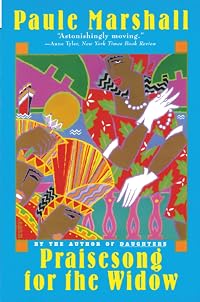
Praisesong for the Widow
by Paule Marshall
On This Page
Description
"Avey Johnson--a Black, middle-aged, middle-class widow given to hats, gloves, and pearls--has long since put behind her the Harlem of her childhood. Then on a cruise to the Caribbean with two friends, inspired by a troubling dream, she senses her life beginning to unravel--and in a panic packs her bag in the middle of the night and abandons her friends at the next port of call. The unexpected and beautiful adventure that follows provides Avey with the links to the culture and history she show more has so long disavowed. Originally published in 1983, Praisesong for the Widow was a recipient of the Before Columbus Foundation American Book Award, and is presented here in a beautiful new hardcover edition as the second title in McSweeney's Of the Diaspora series."--Provided by publisher. show lessTags
Recommendations





















Member Reviews
This 1983 novel stitches up the rended fabric between Africa and the US for Avey (short for Avatara) Johnson. A middle aged widow, Avey is with two friends on a Caribbean cruise when she abruptly decides to leave them and return to New York. Instead, while she's waiting for the flight home from Grenada, Avey is drawn to a rum shop on the beach and to its elderly proprietor, Lebert Joseph. He is preparing for an annual homecoming to an outer island, Carriacou, and Avey makes the rough journey with him, still compelled by she doesn't know what. The dancing, singing, and summoning up of ancestors reminds Avey of her childhood visits to Tatem, the South Carolina island where her Ibo ancestors walked into the sea, refusing to succumb to show more enslavement.
Sandwiched in between the island tales is Avey's life with her husband Jay, an ambitious accountant who is almost destroyed by virulent post-WW II racism he encounters as he tries to move his family to higher economic ground.
The lovely recounting of Jay and Avey's secret private dances, and of the Banda, Temne, Arada, Moko, Congo, Chamba tribe members and their Beg Pardon circles of celebration on Carriacou, make this a novel to savor and to reread. show less
Sandwiched in between the island tales is Avey's life with her husband Jay, an ambitious accountant who is almost destroyed by virulent post-WW II racism he encounters as he tries to move his family to higher economic ground.
The lovely recounting of Jay and Avey's secret private dances, and of the Banda, Temne, Arada, Moko, Congo, Chamba tribe members and their Beg Pardon circles of celebration on Carriacou, make this a novel to savor and to reread. show less
"What's your nation?" he asked her, his manner curious, interested, even friendly all of a sudden. "Arada . . . ? Is you an Arada?" He waited. "Cromanti maybe . . . ?" And he again waited. "Yarraba then . . . ? Moko . . . ?"
On and on he recited the list of names, pausing after each one to give her time to answer.
"Temne . . . ? Is you a Temne maybe? Banda . . . ?"
What was the man going on about? What were these names? Each one made her head ache all the more. She thought she heard in them the faint rattle of the necklace of cowrie shells and amber Marion always wore. Africa? Did they have something to do with Africa?
Sixty-something widow Avey Johnson is on a Caribbean cruise with a couple of friends, an annual event since the death of show more her husband some four years earlier. Something happens to Avey on this cruise. She has a sudden urge to leave the ship and take the next plane home, so she disembarks at Grenada, the ship's next port of call. Instead of flying home immediately, Avey is drawn into the annual excursion from Grenada to the out island of Carriacou - a sort of ritual homecoming for the islanders who now make their homes on Grenada. The experience becomes a spiritual and cultural homecoming for Avey.
This novel explores collective memory as expressed through religious and cultural rituals and oral traditions in the United States and the Caribbean. Recommended for readers with an interest in African American literature, Caribbean literature, the African diaspora, women's studies, and religious studies. show less
On and on he recited the list of names, pausing after each one to give her time to answer.
"Temne . . . ? Is you a Temne maybe? Banda . . . ?"
What was the man going on about? What were these names? Each one made her head ache all the more. She thought she heard in them the faint rattle of the necklace of cowrie shells and amber Marion always wore. Africa? Did they have something to do with Africa?
Sixty-something widow Avey Johnson is on a Caribbean cruise with a couple of friends, an annual event since the death of show more her husband some four years earlier. Something happens to Avey on this cruise. She has a sudden urge to leave the ship and take the next plane home, so she disembarks at Grenada, the ship's next port of call. Instead of flying home immediately, Avey is drawn into the annual excursion from Grenada to the out island of Carriacou - a sort of ritual homecoming for the islanders who now make their homes on Grenada. The experience becomes a spiritual and cultural homecoming for Avey.
This novel explores collective memory as expressed through religious and cultural rituals and oral traditions in the United States and the Caribbean. Recommended for readers with an interest in African American literature, Caribbean literature, the African diaspora, women's studies, and religious studies. show less
Avey Johnson is a well-to-do widow of a certain age on a luxury cruise with two of her friends in the Caribbean. This is an annual event for them, but something strange has been happening to Avey. She's been having dreams, feeling odd, and even seeing visions. Propelled by in impulse she doesn't understand, she determines to disembark at the next port of call and take a flight home.
Her friends are hurt and furious but she cannot be dissuaded. Once on the island she sees a large number of people departing for what is locally known as "The Excursion." Out-islanders go home en masse to a smaller island in the archipelago for a few days.
Feeling as though she is in some sort of trance, Avey takes a taxi to a hotel and plans to fly home in show more the morning. However, in the night she has a spiritual crisis brought on by reflecting upon her marriage and the way her husband sacrificed everything about himself in order to ensure the financial survival of the family. She mourns the change in him, and herself over the years.
In the morning, she is still in a daze and wanders the beach until she meets an elderly man who tells her more about The Excursion and invites her to join so that she can be right with her ancestors. While sharing in the cultural dances, Avey feels herself connected to her people ind South Carolina, as well as all those around her.
She vows to return home and join again with her roots and work to connect her children and grandchildren as well.
This is a surreal and moving story of a woman remembering how to live and connecting to her history for the first time. show less
Her friends are hurt and furious but she cannot be dissuaded. Once on the island she sees a large number of people departing for what is locally known as "The Excursion." Out-islanders go home en masse to a smaller island in the archipelago for a few days.
Feeling as though she is in some sort of trance, Avey takes a taxi to a hotel and plans to fly home in show more the morning. However, in the night she has a spiritual crisis brought on by reflecting upon her marriage and the way her husband sacrificed everything about himself in order to ensure the financial survival of the family. She mourns the change in him, and herself over the years.
In the morning, she is still in a daze and wanders the beach until she meets an elderly man who tells her more about The Excursion and invites her to join so that she can be right with her ancestors. While sharing in the cultural dances, Avey feels herself connected to her people ind South Carolina, as well as all those around her.
She vows to return home and join again with her roots and work to connect her children and grandchildren as well.
This is a surreal and moving story of a woman remembering how to live and connecting to her history for the first time. show less
this is really wonderful. i had to read it in snatches of paragraphs and pages over far, far too long for such a slim and layered volume, but couldn't stop myself because i was liking it so much.
the language and the story are both fantastic, although the motivation/feelings of the characters were sometimes inexplicable to me. (notably i didn't understand at all why thomasina reacted with anger at all, or why avey even thought she would be disappointed with what she found the excursion to be. ) could be a generational thing or a cultural thing, but it was never significant enough to get in the way of the story and the reading. in the midst of so many beautiful descriptions of so many things throughout this book, i think the short, show more page-long sex scene she writes may be the most beautiful description of making love that i've ever read.
this is about separation and loss, longing, discovery and recovery. it is really lovely and i'm looking forward to reading it again and giving it the focus it is due (and likely rating it higher). show less
the language and the story are both fantastic, although the motivation/feelings of the characters were sometimes inexplicable to me. (
this is about separation and loss, longing, discovery and recovery. it is really lovely and i'm looking forward to reading it again and giving it the focus it is due (and likely rating it higher). show less
This story fell a bit flat for me. The flashbacks and memories were the most engaging and driving portions of the book, but they were few and far between. And unfortunately, there just weren't enough of them to give real meat or believability to the narrator or focus of the story. The beginning and the end especially dragged, and in general I just have to say that I found myself bored for much of the novel. Certainly, it's an easy read and doesn't take much time if you're curious...however, I'm afraid it's not one I would generally recommend.
This book was very disappointing. The plot was intriguing, but the writing wasn't up to par. The characters were interesting and held lots of promise, but ultimately, the book never came through. The best parts were about the main character's earlier life.
This is an important book for me because the main character ends up in a search for herself in Grenada -- at some locations that I had recently walked in search of family members. The widow meets an old man on the beach and joins him and others from the island of Carriacou for an annual pilgramage to Carriacou. I continually give this book to family members and buy it back into my library. See if you like it.
Members
- Recently Added By
Lists

500 Great Books by Women
507 works; 60 members
Talk Discussions
Past Discussions
Novel: African-American woman reconnects w/ African heritage in Name that Book (July 2013)
Author Information

15+ Works 1,935 Members
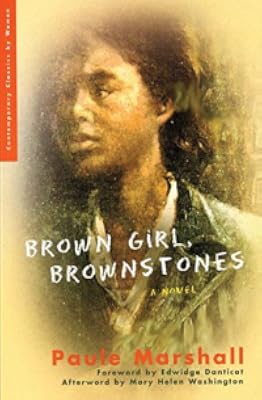
Paule Marshall was born on April 9, 1929 in Brooklyn, New York. She received a B.A. in English literature from Brooklyn College in 1953. She worked briefly as a librarian before joining Our World magazine. Her first novel, Brown Girl, Brownstones, was published in 1959. Her other novels include The Chosen Place, the Timeless People; Daughters; and show more The Fisher King. She is also the author of two collections of short fiction: Soul Clap Hands and Sing, which received the National Institute of Arts Award, and Reena and Other Stories. She has received several awards including the John Dos Passos Prize for Literature and the Columbus Foundation American Book Award for Praisesong for the Widow in 1983. Paule Marshall passed away on August 12, 2019 at the age of 90. (Bowker Author Biography) show less
Some Editions
Awards and Honors
Notable Lists
Series
Belongs to Publisher Series
rororo neue frau (5781)
Work Relationships
Common Knowledge
- Original title
- Praisesong for the Widow
- Original publication date
- 1983
- People/Characters
- Avey Johnson
- Important places*
- Grenada
- First words
- With a strength born of the decision that had just come to her in the middle of the night, Avey Johnson forced the suitcase shut on the clothes piled inside and slid the lock in place.
- Last words
- (Click to show. Warning: May contain spoilers.)"It was here that they brought them," she would begin--as had been ordained. "They took them out of the boats right here where we're standing..."
*Some information comes from Common Knowledge in other languages. Click "Edit" for more information.
Classifications
Statistics
- Members
- 446
- Popularity
- 68,802
- Reviews
- 8
- Rating
- (3.69)
- Languages
- Dutch, English, German, Italian
- Media
- Paper
- ISBNs
- 11
- ASINs
- 5