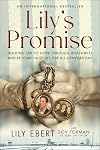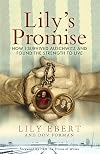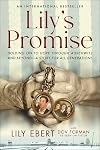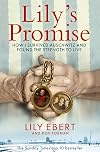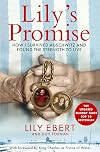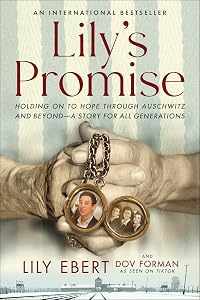
Lily's Promise: Holding On to Hope Through Auschwitz and Beyond―A Story for All Generations
by Lily Ebert, Dov Forman
On This Page
Description
Performed by Anna Cordell and Dov Forman featuring a foreword written and read by Charles HRH The Prince of Wales and dedication written and read by Lily Ebert."Utterly compelling, heartbreaking, truthful and yet redemptive . . . a testimony of irrepressible spirit and an unforgettable family chronicle. I couldn't stop reading it."—Simon Sebag Montefiore
In this life-affirming intergenerational memoir, Lily Ebert, a Holocaust survivor, and her great-grandson, Dov Forman, come together to show more share her story—an unforgettable tale of resilience and resistance.
On Yom Kippur, 1944, fighting to stay alive as a prisoner in Auschwitz, Lily Ebert made a promise to herself. She would survive the hell she was in and tell the world her story, for everyone who couldn't. Now, at ninety-eight, this remarkable woman—and TikTok sensation, thanks to the help of her eighteen-year-old great-grandson—fulfills that vow, relaying the details of her harrowing experiences with candor, charm, and an overflowing heart.
In these pages, she writes movingly about her happy childhood in Hungary, the death of her mother and two youngest siblings on their arrival at Auschwitz, and her determination to keep her two other sisters safe. She describes the inhumanity of the camp and the small acts of defiance that gave her strength. Lily lost so much, but she built a new life for herself and her family, first in Israel and then in London.
Dov knows that it is up to younger people like him to keep Lily's promise. He and Lily bridge the generation gap to share her experience, reminding us of the joy that accompanies the solemn responsibility of keeping the past—and our stories—alive.
. show less
Tags
Recommendations






Member Reviews
This is an intensely moving and inspirational memoir by a Holocaust survivor, the now 98 year old Lily Ebert (nee Engelmann), survivor of Auschwitz, of one of the Buchenwald satellite camps and of a forced death march across Germany before being rescued by US soldiers in April 1945. The work was written in cooperation with her great grandson Dov Forman, who helped to her her story out there on social media and help with gaps in her memories.
Lily was born in Hungary where she lived in the small town of Bonyhád with her three sisters and two brothers and their parents. They were a very close knit, but liberal and tolerant family, and their upbringing was idyllic, despite the occasional spectre of long term historical anti-semitism in show more Hungary. Life continued largely as normal for the family, until the death of the father from natural causes in 1942. The Holocaust in force came late to Hungary, after the Germans overran the country in March 1944. The elder son was conscripted into a labour service, while Lily, her three sisters and younger brother, and their mother were sent to a ghetto and, along with the rest of the Jewish population of their town, kept in increasingly stringent conditions until they were deported to Auschwitz in early July. On arrival, Lily's mother and her youngest sister and younger brother were immediately sent to the gas chamber, while Lily and her other two sisters Rene and Piri survived to go through months of work, exhaustion and starvation. Lily and her sisters and some others whom they befriended essentially survived by having a mutual support network and being determined to stay together to maintain a small oasis of sanity amid the madness and horror. Lily kept her mother's jewels hidden in her shoe and, later, in successive pieces of daily bread throughout her experiences.
After some four months in Auschwitz, the group were moved to a munitions factory attached to Buchenwald where the treatment was a little better as the Holocaust had destroyed so many lives of slave workers that even the Nazis realised they had to keep their workers alive to keep their flagging war machine going. As the allies advanced into German territory in early 1945, Lily and her group were sent on one of the notorious death marches across the territory ahead of the advancing liberators, before they were eventually saved by stumbling across some American soldiers. Meanwhile at Yom Kippur 1944, Lily had promised that, if she survived, she would never let the world forget what she and her fellows suffered.
After liberation, Lily and her inseparable sisters moved to Switzerland - a country for which she nevertheless felt some resentment, as they has closed their borders to Jewish refugees in 1942, and to where children over the age of 16 were even now prevented from emigrating, thus driving 21 year old Lily to take six years off her age. Later she moved to the new state of Israel where, after briefly and unsuccessfully trying life on a kibbutz, she settled in Tel Aviv and married a confident young man Shmuel who had lived in Israel since before the war, with whom she had three children. Later on Shmuel suffered poor health and needed a cooler climate so the family moved to Britain and settled in north London, leaving Rene and Piri back in Israel.
For decades Lily could not talk about her experiences in the Holocaust, her fellow citizens in Israel being divided essentially into two categories, fellow survivors with whom it was felt there was no need to talk about it, and those, like Shmuel, who had not been through those experiences and who could never understood what the survivors had been through. She found it easier to talk when she had grandchildren; and in addition society became more interested in hearing from Holocaust survivors in the years after the Eichmann trial in 1961 had allowed survivors for the first time to recount their experiences to a public willing more now to listen than they had been in the immediate post-war years. Thus Lily could at last carry out her Yom Kippur 1944 promise that the would let the world know what happened and she now continues to do so, working with schoolchildren through the Holocaust Educational Trust and other organisations. Her great grandson Dov has helped by publicising her experiences on social media and using Twitter, for example, to identify a particular US soldier who wrote her a message of hope for the future in 1945. A remarkable and inspiring story. show less
Lily was born in Hungary where she lived in the small town of Bonyhád with her three sisters and two brothers and their parents. They were a very close knit, but liberal and tolerant family, and their upbringing was idyllic, despite the occasional spectre of long term historical anti-semitism in show more Hungary. Life continued largely as normal for the family, until the death of the father from natural causes in 1942. The Holocaust in force came late to Hungary, after the Germans overran the country in March 1944. The elder son was conscripted into a labour service, while Lily, her three sisters and younger brother, and their mother were sent to a ghetto and, along with the rest of the Jewish population of their town, kept in increasingly stringent conditions until they were deported to Auschwitz in early July. On arrival, Lily's mother and her youngest sister and younger brother were immediately sent to the gas chamber, while Lily and her other two sisters Rene and Piri survived to go through months of work, exhaustion and starvation. Lily and her sisters and some others whom they befriended essentially survived by having a mutual support network and being determined to stay together to maintain a small oasis of sanity amid the madness and horror. Lily kept her mother's jewels hidden in her shoe and, later, in successive pieces of daily bread throughout her experiences.
After some four months in Auschwitz, the group were moved to a munitions factory attached to Buchenwald where the treatment was a little better as the Holocaust had destroyed so many lives of slave workers that even the Nazis realised they had to keep their workers alive to keep their flagging war machine going. As the allies advanced into German territory in early 1945, Lily and her group were sent on one of the notorious death marches across the territory ahead of the advancing liberators, before they were eventually saved by stumbling across some American soldiers. Meanwhile at Yom Kippur 1944, Lily had promised that, if she survived, she would never let the world forget what she and her fellows suffered.
After liberation, Lily and her inseparable sisters moved to Switzerland - a country for which she nevertheless felt some resentment, as they has closed their borders to Jewish refugees in 1942, and to where children over the age of 16 were even now prevented from emigrating, thus driving 21 year old Lily to take six years off her age. Later she moved to the new state of Israel where, after briefly and unsuccessfully trying life on a kibbutz, she settled in Tel Aviv and married a confident young man Shmuel who had lived in Israel since before the war, with whom she had three children. Later on Shmuel suffered poor health and needed a cooler climate so the family moved to Britain and settled in north London, leaving Rene and Piri back in Israel.
For decades Lily could not talk about her experiences in the Holocaust, her fellow citizens in Israel being divided essentially into two categories, fellow survivors with whom it was felt there was no need to talk about it, and those, like Shmuel, who had not been through those experiences and who could never understood what the survivors had been through. She found it easier to talk when she had grandchildren; and in addition society became more interested in hearing from Holocaust survivors in the years after the Eichmann trial in 1961 had allowed survivors for the first time to recount their experiences to a public willing more now to listen than they had been in the immediate post-war years. Thus Lily could at last carry out her Yom Kippur 1944 promise that the would let the world know what happened and she now continues to do so, working with schoolchildren through the Holocaust Educational Trust and other organisations. Her great grandson Dov has helped by publicising her experiences on social media and using Twitter, for example, to identify a particular US soldier who wrote her a message of hope for the future in 1945. A remarkable and inspiring story. show less
This was a very emotional read that I was well prepared for before I dove in. I have had this book for awhile but I knew that I had to be in the right headspace to handle it and I was right. At least I have that option. Lily couldn’t help what happened to her and her family and that realization makes me feel so sick. No matter how much I read about World War II the pure evilness never ceases to amaze me.
As I was reading, I found myself wishing this wasn’t a true story, but every time that thought crossed my mind it made me sicker. Because of Lily I now understand why so many complied with the demands of the Nazi’s and was able to see the war through the eyes of a Hungarian Jew. I felt what Lily felt as she went through horror show more after horror, day after day. Her strength to endure what she did is unbelievable and honestly, I don’t know if I would have that much will to live if I were put in that same situation.
I read this novel in practically one sitting but there were moments I had to sit the book down, take a deep breath, and gather my thoughts and emotions. It is a page-turner while also being hard to read due to the very heavy subject matter.
I love Dov so much for helping his great-great-grandmother like he has. I have one grandmother still living and because of reading this account I have been asking more questions about her life and have already learned several things I didn’t know before. It also has me thinking about how if these stories aren’t told that time will make them cease to exist. That fact makes me so sad, which is why I have been feeling it in my own heart to tell stories of the past. Whether we realize it or not, they are important.
*I have voluntarily reviewed a copy of this book which I received from the publisher through NetGalley. All views and opinions expressed are completely honest, and my own. show less
As I was reading, I found myself wishing this wasn’t a true story, but every time that thought crossed my mind it made me sicker. Because of Lily I now understand why so many complied with the demands of the Nazi’s and was able to see the war through the eyes of a Hungarian Jew. I felt what Lily felt as she went through horror show more after horror, day after day. Her strength to endure what she did is unbelievable and honestly, I don’t know if I would have that much will to live if I were put in that same situation.
I read this novel in practically one sitting but there were moments I had to sit the book down, take a deep breath, and gather my thoughts and emotions. It is a page-turner while also being hard to read due to the very heavy subject matter.
I love Dov so much for helping his great-great-grandmother like he has. I have one grandmother still living and because of reading this account I have been asking more questions about her life and have already learned several things I didn’t know before. It also has me thinking about how if these stories aren’t told that time will make them cease to exist. That fact makes me so sad, which is why I have been feeling it in my own heart to tell stories of the past. Whether we realize it or not, they are important.
*I have voluntarily reviewed a copy of this book which I received from the publisher through NetGalley. All views and opinions expressed are completely honest, and my own. show less
I think it goes without saying that every one of these stories, especially when they are written as first hand accounts, are always freshly heartbreaking. This one is written by 97 year old Lily Ebert, and her Great Grandson. Can I just say how incredible it is for Lily to not only to have survived the Nazi hell of Aushwitz, but also for her to have lived now to be almost 100 years old! Quite remarkable! This story is a little different in that maybe only about 40 percent of the book is written about that time in Aushwitz. A good chunk of this novel covers Lily’s life after leaving Aushwitz, and the life she began to build in the years following her release. In spite of her challenges, Lily goes on to define the resilience of the show more human spirit as she rebuilds her life again and again as she marries, changes countries, has children, and finally becomes a sort of megaphone for those that had experienced this awful tragedy. This is a novel not only of remembrance for those that didn’t make it, but also a story of hope for those that lived. As Lily proves that the Nazis never succeeded in their Final Solution. Thank you to Netgalley for the copy in exchange for an honest review. show less
The rating on this book in no ways takes away from the story. Told first person by Lily Ebert was raised in a small town in Hungary by loving Orthodox Jewish parents. She was a teenager and the oldest child when the Nazi party began harassing the Jewish population - little by little. Ever the optimist, the family believed that this would be the last - nothing else could happen as they obediently moved from their home to the ghetto, etc.
Eventually, Lily and her two younger sisters Peri and Rene)were separated from their mother and sent on a crowded train to one concentration camp and then to Auschwitz. The first part of the book tells of their experiences there and their ability to stay together with Lily always the protector. The show more situation was horrible - poor food, cold, work, lice, sickness.
The second part of the book tells after the liberation. The girls were first sent to Switzerland where they were housed with a wealthy family. They regained their strength and their beautiful hair returned. They have no future, no parents, no connections, and no idea what has happened to the rest of their family.
Eventually, they are taken to Palestine which does turn into the state of Israel not long after they were there. Lily writes about how difficult it is for any of the survivors to speak of their past even though Lily made a promise to herself to tell the story to the world so that it would never happen again.
Lily not only survives, she marries and has three children. Her sisters also marry and have children and the family remains very close as their faith sustains them and traditions return.
The final part is Lily's life in London, the death of her beloved husband, and her relationship with the children and grandchildren. Dov, a grandson, who is a social media creator, helps her tell her story. She has become a noted speaker to others about the Holocaust.
The most interesting parts of the book tell of how survivors each take a different view of what has happened, the discord often between them, and the desire, at first, to keep all this away from her family - to protect them.
It is probably the straight forward narrative that, after reading much fiction with beautifully turned phrases etc. that makes the book, certainly not less important, but less engrossing to read. However, truly an inspiring story and one that should be read. show less
Eventually, Lily and her two younger sisters Peri and Rene)were separated from their mother and sent on a crowded train to one concentration camp and then to Auschwitz. The first part of the book tells of their experiences there and their ability to stay together with Lily always the protector. The show more situation was horrible - poor food, cold, work, lice, sickness.
The second part of the book tells after the liberation. The girls were first sent to Switzerland where they were housed with a wealthy family. They regained their strength and their beautiful hair returned. They have no future, no parents, no connections, and no idea what has happened to the rest of their family.
Eventually, they are taken to Palestine which does turn into the state of Israel not long after they were there. Lily writes about how difficult it is for any of the survivors to speak of their past even though Lily made a promise to herself to tell the story to the world so that it would never happen again.
Lily not only survives, she marries and has three children. Her sisters also marry and have children and the family remains very close as their faith sustains them and traditions return.
The final part is Lily's life in London, the death of her beloved husband, and her relationship with the children and grandchildren. Dov, a grandson, who is a social media creator, helps her tell her story. She has become a noted speaker to others about the Holocaust.
The most interesting parts of the book tell of how survivors each take a different view of what has happened, the discord often between them, and the desire, at first, to keep all this away from her family - to protect them.
It is probably the straight forward narrative that, after reading much fiction with beautifully turned phrases etc. that makes the book, certainly not less important, but less engrossing to read. However, truly an inspiring story and one that should be read. show less
Harrowing and inspirational, "Lily's Promise" is the remarkable true story of Lily Ebert, a young Hungarian Jew who, along with her two younger sisters survived the depravities of Auschwitz after most of her family was sent to the gas chambers.
This was an amazing story of survival and tenacity. I have nothing but admiration for Lily and her determination to tell her story. All through this memoir she displays wisdom, courage and strength. How she went back to Auschwitz after everything she witnessed and experienced, and started talking about her time in the camp was amazing. To hear her must have moved her listeners to tears. Dov, her great-grandson is also a remarkable young man and a credit to Lily. The bond they share is show more touching.
Considering all that is happening in the world today, Lily's story is a vital one and her message is one everyone should heed to ensure that history is not forgotten. A truly remarkable read. show less
This was an amazing story of survival and tenacity. I have nothing but admiration for Lily and her determination to tell her story. All through this memoir she displays wisdom, courage and strength. How she went back to Auschwitz after everything she witnessed and experienced, and started talking about her time in the camp was amazing. To hear her must have moved her listeners to tears. Dov, her great-grandson is also a remarkable young man and a credit to Lily. The bond they share is show more touching.
Considering all that is happening in the world today, Lily's story is a vital one and her message is one everyone should heed to ensure that history is not forgotten. A truly remarkable read. show less
Born and raised in Hungary, during WWII Lily and her family are sent to Auschwitz. Her mother and two younger siblings are immediately sent to the gas showers and crematoria. Left with two of her sisters, Lily does everything that she can to make sure that they survive. At 98, Lily shares her story with her great grandchild, who begins posting her story in social media. Before long, Lily is a TikTok sensation.
Lily is a strong, determined, and courageous woman. Her story is extremely admirable and heartwarming. I could have done without the modern day story with her great grandson. That could have been covered in an epilogue. I really wanted to focus on Lily, not the present. Despite this criticism, I highly recommend this book.
Lily is a strong, determined, and courageous woman. Her story is extremely admirable and heartwarming. I could have done without the modern day story with her great grandson. That could have been covered in an epilogue. I really wanted to focus on Lily, not the present. Despite this criticism, I highly recommend this book.
historical-places-events, history, multicultural, jews, biography, memoir, memories, #NEVERFORGET, coping-mechanisms, mass-murder, social-media, PTSD*****
It hurts to read parts of the book. Lily and her siblings live in a loving Kosher home in Hungary with little or no knowledge of the scourge of Europe. When the family is split up and taken away, Lily manages to keep two of her sisters with her and even adds a few other girls at times. Lily is magnificently resourceful under incredible conditions. Man's inhumanity to man is made very clear in the way that so much is done to dehumanize those in the camps. Remember, these are civilian noncombatants. Not POWs. Life goes on for some, she is moved first to Switzerland and then Israel, show more marries and has children. Life goes well for a time until her beloved husband has several heart attacks and they go to England (not speaking English) for other cardiac treatment which goes well for a number of years. At the time when she is in despair over his death, she begins a new phase in her life initiated by her great-grandson and begins her own healing process as well. NEVER FORGET.
This is a very moving book that is needed now and in the future.
I requested and received a free e-book copy from HarperOne via NetGalley. Thank you show less
It hurts to read parts of the book. Lily and her siblings live in a loving Kosher home in Hungary with little or no knowledge of the scourge of Europe. When the family is split up and taken away, Lily manages to keep two of her sisters with her and even adds a few other girls at times. Lily is magnificently resourceful under incredible conditions. Man's inhumanity to man is made very clear in the way that so much is done to dehumanize those in the camps. Remember, these are civilian noncombatants. Not POWs. Life goes on for some, she is moved first to Switzerland and then Israel, show more marries and has children. Life goes well for a time until her beloved husband has several heart attacks and they go to England (not speaking English) for other cardiac treatment which goes well for a number of years. At the time when she is in despair over his death, she begins a new phase in her life initiated by her great-grandson and begins her own healing process as well. NEVER FORGET.
This is a very moving book that is needed now and in the future.
I requested and received a free e-book copy from HarperOne via NetGalley. Thank you show less
Members
- Recently Added By
Lists

Books Read in 2024
4,727 works; 128 members
Author Information
1 Work 205 Members
1 Work 202 Members
Awards and Honors
Awards
Common Knowledge
- Important events
- Holocaust
Classifications
- Genres
- Nonfiction, Biography & Memoir, History, General Nonfiction, Religion & Spirituality
- DDC/MDS
- 940.5318092 — History & geography History of Europe History of Europe 1918- World War II, 1939-1945 Social, political, economic history; Holocaust Holocaust Standard subdivisions History, geographic treatment, biography Biography
- LCC
- D805.5 .A96 .E247 — History of Europe, Asia, Africa and Oceania History (General) World War II (1939-1945)
- BISAC
Statistics
- Members
- 202
- Popularity
- 159,877
- Reviews
- 9
- Rating
- (4.41)
- Languages
- 6 — Dutch, English, Finnish, German, Hungarian, Italian
- Media
- Paper, Audiobook, Ebook
- ISBNs
- 20
- ASINs
- 5