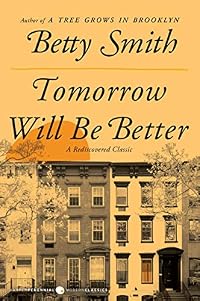
Tomorrow Will Be Better
by Betty Smith
On This Page
Description
From Betty Smith, author of the beloved classic A Tree Grows in Brooklyn, comes a poignant story of love, marriage, poverty, and hope set in 1920s Brooklyn. Tomorrow Will Be Better tells the story of Margy Shannon, a shy but joyfully optimistic young woman just out of school who lives with her parents and witnesses how a lifetime of hard work, poverty, and pain has worn them down. Her mother's resentment toward being a housewife and her father's inability to express his emotions result in a show more tense home life where Margy has no voice. Unable to speak up against her overbearing mother, Margy takes refuge in her dreams of a better life. Her goals are simple-to find a husband, have children, and live in a nice home-one where her children will never know the terror of want or the need to hide from quarreling parents. When she meets Frankie Malone, she thinks her dreams might be fulfilled, but a devastating loss rattles her to her core and challenges her life-long optimism. As she struggles to come to terms with the unexpected path her life has taken, Margy must decide whether to accept things as they are or move firmly in the direction of what she truly wants. Rich with the flavor of its Brooklyn background, and filled with the joys and heartbreak of family life, Tomorrow Will Be Better is told with a simplicity, tenderness, and warmhearted humor that only Betty Smith could write. show lessTags
Recommendations

















Member Reviews
My goodness this book is sad. Not necessarily because a lot of bad things happen, but simply because none of the characters (except maybe Reenie?) end the book happy. The characters started unfulfilled and end the book in the exact same condition. In some ways, I loved that about it, since I really felt the melancholy of being poor in 1920s Brooklyn acutely while I was reading. Smith does a good job of painting different shades of discontent and coping mechanisms in a way that induces empathy rather than pity. But, I can't imagine re-reading this any time soon. It just leaves you with a feeling of almost hopelessness that was hard to take.
I first read A Tree Grows in Brooklyn by Betty Smith when I was just a kid but it quickly became one of my favourite books so when I saw Tomorrow Will Be Better by Smith on Edelweiss+, I was thrilled. I will admit I was also worried how I would react - it is often hard, at least for me, to read other books by an author when the only one I have read is as beloved as A Tree. I worried needlessly. Long out of print, Tomorrow Will Be Better is finally being brought back and, like A Tree, it is beautifully written and, in many way, timeless. Written in 1948 but set in the 1920s in an impoverished Irish American neighbourhood, it is a story of young love and the efforts to overcome the crushing poverty of their youth that has left their show more parents worn out and able to relate to their children only in mostly negative ways.
As I read the book, I found the date it was first published even more significant than the period in which it was set. WWII had ended just a few years previously, most western countries had enacted policies to prevent another Great Depression, and now new ones to help the general population move forward. It was a hopeful time as most looked towards the future, not sure what it would be like but sure that, as the title suggests, it had to be better. And like those times, after the young couple in the story has faced and overcome so many hardships, the ending is left open, leaving the reader to decide for themselves how their future will unfold - I, for one, am rooting for them.
Thanks to Edelweiss+ and Harper Perennial Classics for the opportunity to read this book in exchange for an honest review show less
As I read the book, I found the date it was first published even more significant than the period in which it was set. WWII had ended just a few years previously, most western countries had enacted policies to prevent another Great Depression, and now new ones to help the general population move forward. It was a hopeful time as most looked towards the future, not sure what it would be like but sure that, as the title suggests, it had to be better. And like those times, after the young couple in the story has faced and overcome so many hardships, the ending is left open, leaving the reader to decide for themselves how their future will unfold - I, for one, am rooting for them.
Thanks to Edelweiss+ and Harper Perennial Classics for the opportunity to read this book in exchange for an honest review show less
This book should be read by everyone under thirty who is contemplating marriage for the first time. I thought it absolutely brilliant and inspiring. It charts a young woman's growth from romantic innocence to the mature recognition that only she is in charge of her life. It is unflinching about the pain we cause one another, even inadvertently, and the lack of options for the working-class.
I was reminded by a review below to mention the scene at the Chinese laundry. So often these days classic books are derided for their lack of sensitivity towards people of color, but this book challenges that assumption. Frankie, too, is a character who is described with great sensitivity.
I was reminded by a review below to mention the scene at the Chinese laundry. So often these days classic books are derided for their lack of sensitivity towards people of color, but this book challenges that assumption. Frankie, too, is a character who is described with great sensitivity.
Set in 1920s Brooklyn during the Harding administration, TOMORROW WILL BETTER (1948) at first follows a standard Betty Smith storyline, with the love story of Margy Shannon and Frankie Malone - how they meet and decide to marry, despite parental objections and the grinding poverty of the times. The very limited career choices of women take center stage too, suggesting marriage is the only desirable option, and working wives were looked down on and shamed their husbands. Then things take a darker turn as Margy becomes pregnant and very delicate intimations of homosexuality enter into their story. Remember, this was the 20s, and written in the 40s, so certain subjects were still very taboo. But Smith handles these elements in such a show more tactful and veiled manner that no one could be offended. Still, powerful stuff from an already acclaimed writer like Betty Smith. I was caught up in the story from the very beginning and was not disappointed at its mildly shocking and unexpected ending. If you are a Betty Smith fan, you'll love this one too. It's been in an out of print since 1948 and is back in print again as I write this. Very highly recommended.
- Tim Bazzett, author of the memoir, BOOKLOVER show less
- Tim Bazzett, author of the memoir, BOOKLOVER show less
This was a serious story, but with such entertaining characters, you can feel sad and laugh at the same time.
The book was about the marriage of Margy Shannon and Frankie Malone, a marriage that never should have happened. In fact, that goes for every marriage in the story, no romance novel here. Margy Shannon's parents were two sparring opponents, who took their bitter frustrations out on each other. Henny was never the success he thought he'd be and felt trapped, while Flo had such a bad childbirth experience she stopped sleeping with her husband. Their situation should have been a warning to Margy to look before you leap, but because of her desire to escape from home she leaped at the chance to marry Frankie, whom she had only know a show more short time. Frankie's home life was no bed of roses either, and he was also tired of his flashy flapper girlfriend, Irma (this was set in the 1920's)and thought sweet, quiet Margy a refreshing change.
Betty Smith lets you know from the start that there are troubles ahead, in the scene at the neighborhood dance, where an overheard conversation leads to an emotional exchange which makes them both believe they're right for each other, though they couldn't be more wrong.
Like I said, this story is serious, but it has its funny moments, like when Frankie first meets Margy's parents, when Margy and Frankie tell Mr. and Mrs. Malone they're engaged,and when their dads, along with his sister's boyfriend, take Frankie for a boy's night out before the wedding.
All too soon, Margy and Frankie both realize their marriage isn't what they thought it would be and things go downhill fast, especially when Margy discovers Frankie doesn't feel much physical desire for her, and she in turn, doesn't enjoy sleeping with him, and finds herself thinking about her former boss, Mr. Preston, who couldn't hide his interest in her. He was no romantic hero by a longshot, an unassertive mama's boy in his mid thirties, still living at home, looking out for his widowed mother who takes terrible advantage of him, and thinks she's still a flirty young girl, instead of a selfish, middle aged woman.
There are two pregnancies in the story: Margy's best friend, Renee, whose boyfriend doesn't marry her right away, using his parents' disapproval as an excuse (they have different religions), and Margy herself, who hopes the baby will bring her and Frankie closer together. Only one has a happy outcome.
There's a memorable scene in a Chinese laundry that has nothing to do with the story, but was put in to make a strong point about ethnic stereotypes and under estimating people, as well as a nostalgic flashback involving Renee and her mom, that has a twist at the end.
Another one is when Margy speaks her mind to not only Frankie, but both sets of parents, and gives them quite a bit to think about.
Okay, I've said enough; read this book, you won't be disappointed. show less
The book was about the marriage of Margy Shannon and Frankie Malone, a marriage that never should have happened. In fact, that goes for every marriage in the story, no romance novel here. Margy Shannon's parents were two sparring opponents, who took their bitter frustrations out on each other. Henny was never the success he thought he'd be and felt trapped, while Flo had such a bad childbirth experience she stopped sleeping with her husband. Their situation should have been a warning to Margy to look before you leap, but because of her desire to escape from home she leaped at the chance to marry Frankie, whom she had only know a show more short time. Frankie's home life was no bed of roses either, and he was also tired of his flashy flapper girlfriend, Irma (this was set in the 1920's)and thought sweet, quiet Margy a refreshing change.
Betty Smith lets you know from the start that there are troubles ahead, in the scene at the neighborhood dance, where an overheard conversation leads to an emotional exchange which makes them both believe they're right for each other, though they couldn't be more wrong.
Like I said, this story is serious, but it has its funny moments, like when Frankie first meets Margy's parents, when Margy and Frankie tell Mr. and Mrs. Malone they're engaged,and when their dads, along with his sister's boyfriend, take Frankie for a boy's night out before the wedding.
All too soon, Margy and Frankie both realize their marriage isn't what they thought it would be and things go downhill fast, especially when Margy discovers Frankie doesn't feel much physical desire for her, and she in turn, doesn't enjoy sleeping with him, and finds herself thinking about her former boss, Mr. Preston, who couldn't hide his interest in her. He was no romantic hero by a longshot, an unassertive mama's boy in his mid thirties, still living at home, looking out for his widowed mother who takes terrible advantage of him, and thinks she's still a flirty young girl, instead of a selfish, middle aged woman.
There are two pregnancies in the story: Margy's best friend, Renee, whose boyfriend doesn't marry her right away, using his parents' disapproval as an excuse (they have different religions), and Margy herself, who hopes the baby will bring her and Frankie closer together. Only one has a happy outcome.
There's a memorable scene in a Chinese laundry that has nothing to do with the story, but was put in to make a strong point about ethnic stereotypes and under estimating people, as well as a nostalgic flashback involving Renee and her mom, that has a twist at the end.
Another one is when Margy speaks her mind to not only Frankie, but both sets of parents, and gives them quite a bit to think about.
Okay, I've said enough; read this book, you won't be disappointed. show less
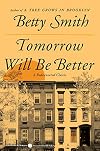
My edition large print, over 400 pp. Line drawing cover, making it look sort of literary.
Anyway. I think I should've just reread ATGiB instead (after all, I've only read it once, and that was almost 2 decades ago). Smith certainly does know how to bring her characters alive. Or, half-alive, which is all the luckiest of them ever achieve. An easy, yet also wise read... but not an enjoyable one.
Anyway. I think I should've just reread ATGiB instead (after all, I've only read it once, and that was almost 2 decades ago). Smith certainly does know how to bring her characters alive. Or, half-alive, which is all the luckiest of them ever achieve. An easy, yet also wise read... but not an enjoyable one.
I enjoy reading books describing life in earlier times. In this case it is the 1920's Brooklyn, NY. I didn't enjoy this one as much as Betty Smith's A Tree Grows in Brooklyn though.
Members
- Recently Added By
Lists

Publisher's Weekly Bestsellers - Part II - 1940 - 1979
355 works; 5 members

Books With Complete Sentence Titles
374 works; 15 members
Author Information

19+ Works 20,882 Members
Betty Smith, December 15, 1896 - January 17, 1972 Betty Smith was born December 15, 1896, in Brooklyn, New York. She attended grammar school in Brooklyn, completing only the eighth grade. After leaving school at the age of fourteen, she worked in a factory, in retail and clerical jobs in New York City and eventually became a reader and editor for show more Dramatists Play Service, as well as an actress and playwright for the Federal Theater project and a radio actress. She attended the University of Michigan, from 1927 to 1930, as a special student. While attending the University of Michigan, some of her one-act plays were published, and she also worked as a feature writer for NEA (a newspaper syndicate) and wrote columns for the Detroit Free Press. She went on to Yale University Drama School, from 1930 to 1934. Smith became a member of the faculty of the University of North Carolina, Chapel Hill, from 1945 till 1946. She was a member of the Authors League and the Dramatists Guild. Smith is perhaps best known for her work "A Tree Grows in Brooklyn," which became an overnight success for the first time writer. She won the Avery and Jule Hopwood first prize of $1,000 in 1931; the Rockefeller fellowship in playwriting and Rockefeller Dramatists Guild playwriting fellowship while at Yale and the Sir Walter Raleigh award for fiction in 1958, for "Maggie--Now." Betty Smith died on January 17, 1972. (Bowker Author Biography) show less
Awards and Honors
Distinctions
Series
Belongs to Publisher Series
Perennial Library (P49)
Harper Perennial (P049)
Work Relationships
Is contained in
Common Knowledge
- Canonical title
- Tomorrow Will Be Better
- Original publication date
- 1948
- People/Characters
- Margy Shannon; Frankie Malone
- Important places
- Brooklyn, New York, New York, USA
- Epigraph
- Spes fovet et fore cras semper ait melius
Hope ever urges on, and tells us tomorrow will be better.
Tibullus, Carmina. II. 6, 20.
Classifications
- Genres
- General Fiction, Fiction and Literature
- DDC/MDS
- 813.52 — Literature & rhetoric American literature in English American fiction in English 1900-1999 1900-1945
- LCC
- PZ3 .S64335 .T — Language and Literature Fiction and juvenile belles lettres Fiction and juvenile belles lettres Fiction in English
- BISAC
Statistics
- Members
- 350
- Popularity
- 89,260
- Reviews
- 11
- Rating
- (3.70)
- Languages
- English, Italian, Spanish, Swedish
- Media
- Paper, Audiobook, Ebook
- ISBNs
- 17
- ASINs
- 11