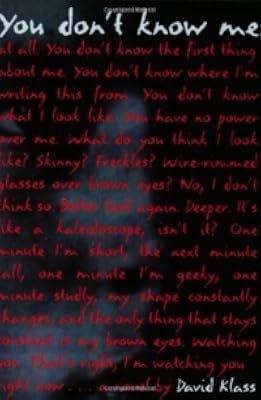
You Don't Know Me
by David Klass
On This Page
Description
Fourteen-year-old John creates alternative realities in his mind as he tries to deal with his mother's abusive boyfriend, his crush on a beautiful, but shallow classmate and other problems at school.Tags
Recommendations


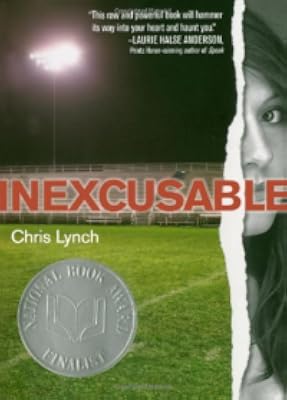
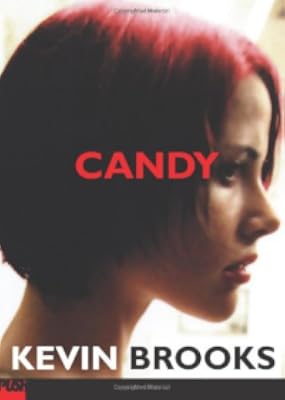
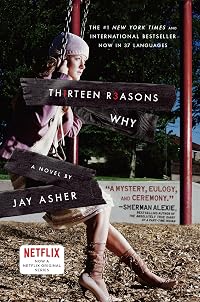
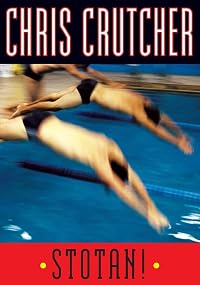




Member Recommendations
Member Reviews
Klass is an American screenwriter (for adults) and novelist (for teens). This book focuses on the difficulties of a 14 year old boy, John, who is abused at home and drifts through school. I read this book because I was given the opportunity to teach it to a group of 13-14 year olds.
The premise
John is angry. His mother is too caught up in the man-who-is-not-his-father to see how miserable his life is. This man also beats him when his mother is not around. School is not much better: he has a crush on a seemingly unattainable girl and his best friend is an eggroll thief. His other friend cannot speak to girls, algebra is gobblydegook and music practice is an on-going battle with a frog pretending to be a tuba. John normally copes by show more applying lashings of irony and some fantasy to his situation, but in a dramatic turn of events he dares to ask out the girl of his dreams. Could things be about to change for the better?
Nothing is as it seems
John’s anger is immediately and powerfully in evidence from the opening lines of the first chapter. He insists repeatedly that ‘you don’t know me’, and although it gradually becomes clear that he is talking to his mother, the reader is likely to feel a little under attack in the first few pages. I felt that this device worked well to ensure that readers are immediately pulled into John’s world and his way of thinking. We quickly learn about all the key elements of John’s life and this prepares us well for the story to follow.
Writing that the book deals with John’s anger makes the book sound heavy-going, but in fact it is written in a very humorous tone which means that although the reader feels the weight of John’s bitterness, it doesn’t weigh them down. In particular, frequent reference is made to the Lahasha Palulu, a fictitious tribe who have interesting ways of dealing with the situations that John finds himself in. I felt that Klass did well to create this kind of levity and that teens would respond well to the style of writing and John’s desire for things to be different.
This is not a ground-breaking story. John’s crush is, predictably, not worthy of his attention, and he completely fails to notice the more suitable, pleasant girl who is in his orbit. However, the characters are handled well: Gloria (known to John in his imagination as Glory Hallelujah) is convincingly airheaded and Violet is pleasingly practical. It is interesting that someone as open to irony as John does not ‘see through’ Gloria earlier on and one of the things I liked about teaching this book was that young readers have to learn to detach themselves from the narrative perspective – which can be quite challenging in a story with first-person narration – and form their own opinions about the other characters. This is a good skill for young people to be developing.
There is plenty of plot to keep young readers interested but it never overwhelms the strong narrative voice and the characters behave in believable, although gradually more melodramatic, ways as the tension ratchets up. The last section of the story is perhaps rather over-the-top and the final events are a little predictable for an adult reader, but most of my teenage readers did not accurately predict the ending and felt that the story was still convincing. Personally, I would have liked a little less melodrama and action, but I think the views of the intended audience are probably more important here than mine!
What I did like about the ending of the story is that I felt it promoted a good morality and would help to encourage young people who were being abused to speak out. I think that this is important and that Klass has handled a difficult topic very well.
Descriptions of the abuse within the book are not graphically gory or extensive, but are present at a couple of key points. I am very squeamish and was able to read these accounts of violence without difficulty, so I do not think this would present a problem to other readers. Perhaps similarly, the youth of the characters means that there are only limited references to sexual experience, and this becomes more a focus for comedy than anything a parent might rather their child wasn’t reading. Pleasingly for a teen book there are no diversions into alcohol or drug abuse. (This definitely isn’t ‘Skins’!)
Conclusions
This is a great YA book that deals effectively with a difficult topic and could even encourage teenagers who are suffering abuse to want to seek help. Certainly it encourages readers to develop their empathy for others and to be wary of simply accepting other people’s story of themselves. John’s character is convincing and Klass gives him a strong narrative voice that grips readers throughout. The other characters are suitably developed, although an adult reader might feel that a couple border on being mere caricatures. The ending is perhaps a little melodramatic and predictable for very mature teens, but is a suitable ending thematically and is likely to please as it is very heart-warming. This story would be particularly well-suited to 13-16 year olds (girls and boys). Although I found it a pleasant enough read, it is not a crossover book that adults are also likely to enjoy. This is certainly not a criticism of this book, which the majority of my class really enjoyed reading. Recommended. show less
The premise
John is angry. His mother is too caught up in the man-who-is-not-his-father to see how miserable his life is. This man also beats him when his mother is not around. School is not much better: he has a crush on a seemingly unattainable girl and his best friend is an eggroll thief. His other friend cannot speak to girls, algebra is gobblydegook and music practice is an on-going battle with a frog pretending to be a tuba. John normally copes by show more applying lashings of irony and some fantasy to his situation, but in a dramatic turn of events he dares to ask out the girl of his dreams. Could things be about to change for the better?
Nothing is as it seems
John’s anger is immediately and powerfully in evidence from the opening lines of the first chapter. He insists repeatedly that ‘you don’t know me’, and although it gradually becomes clear that he is talking to his mother, the reader is likely to feel a little under attack in the first few pages. I felt that this device worked well to ensure that readers are immediately pulled into John’s world and his way of thinking. We quickly learn about all the key elements of John’s life and this prepares us well for the story to follow.
Writing that the book deals with John’s anger makes the book sound heavy-going, but in fact it is written in a very humorous tone which means that although the reader feels the weight of John’s bitterness, it doesn’t weigh them down. In particular, frequent reference is made to the Lahasha Palulu, a fictitious tribe who have interesting ways of dealing with the situations that John finds himself in. I felt that Klass did well to create this kind of levity and that teens would respond well to the style of writing and John’s desire for things to be different.
This is not a ground-breaking story. John’s crush is, predictably, not worthy of his attention, and he completely fails to notice the more suitable, pleasant girl who is in his orbit. However, the characters are handled well: Gloria (known to John in his imagination as Glory Hallelujah) is convincingly airheaded and Violet is pleasingly practical. It is interesting that someone as open to irony as John does not ‘see through’ Gloria earlier on and one of the things I liked about teaching this book was that young readers have to learn to detach themselves from the narrative perspective – which can be quite challenging in a story with first-person narration – and form their own opinions about the other characters. This is a good skill for young people to be developing.
There is plenty of plot to keep young readers interested but it never overwhelms the strong narrative voice and the characters behave in believable, although gradually more melodramatic, ways as the tension ratchets up. The last section of the story is perhaps rather over-the-top and the final events are a little predictable for an adult reader, but most of my teenage readers did not accurately predict the ending and felt that the story was still convincing. Personally, I would have liked a little less melodrama and action, but I think the views of the intended audience are probably more important here than mine!
What I did like about the ending of the story is that I felt it promoted a good morality and would help to encourage young people who were being abused to speak out. I think that this is important and that Klass has handled a difficult topic very well.
Descriptions of the abuse within the book are not graphically gory or extensive, but are present at a couple of key points. I am very squeamish and was able to read these accounts of violence without difficulty, so I do not think this would present a problem to other readers. Perhaps similarly, the youth of the characters means that there are only limited references to sexual experience, and this becomes more a focus for comedy than anything a parent might rather their child wasn’t reading. Pleasingly for a teen book there are no diversions into alcohol or drug abuse. (This definitely isn’t ‘Skins’!)
Conclusions
This is a great YA book that deals effectively with a difficult topic and could even encourage teenagers who are suffering abuse to want to seek help. Certainly it encourages readers to develop their empathy for others and to be wary of simply accepting other people’s story of themselves. John’s character is convincing and Klass gives him a strong narrative voice that grips readers throughout. The other characters are suitably developed, although an adult reader might feel that a couple border on being mere caricatures. The ending is perhaps a little melodramatic and predictable for very mature teens, but is a suitable ending thematically and is likely to please as it is very heart-warming. This story would be particularly well-suited to 13-16 year olds (girls and boys). Although I found it a pleasant enough read, it is not a crossover book that adults are also likely to enjoy. This is certainly not a criticism of this book, which the majority of my class really enjoyed reading. Recommended. show less
*spoilers to follow…
“You don’t have to see things to know that they are happening.”
Or so says John, the fourteen-year-old protagonist of You Don’t Know Me. He is crying out to his mother (and the others that surround him) to see and to know him as she seemingly does neither. His mother also does not see that her new boyfriend is repeatedly beating John up–leaving shrewdly placed physical marks that only the most observant will notice. Conversely, the marks left on John’s psyche are clearly evident to all who take the time to know him.
John has a lot of “nots” in his life. His mother does not know him, the man in her life is not his father, his school is not a school (it’s an anti-school), his tuba is not a tuba show more (it’s a frog), his friend who is not his friend, and so on. At one point, his teacher Mrs. Gabriel (aka Mrs. Moonface) asks him, “John, are you thinking? Are the wheels turning?”
Truthfully, John is always thinking and his wheels are always turning. Sometimes he’s thinking about what the Lashasa Palulu would do in a certain situation and sometimes he’s reinterpreting what people are really saying inside his own head; these thoughts are laugh-out-loud funny. But sometimes he’s thinking about how his stepfather is going to hurt him next and the next time could possibly be worse than the last; these thoughts are not the least bit funny. His inner monologue throughout the book is at times humorous and at times horrifying but is at all times painstakingly real.
John’s home situation has colored his perception of others and has created a wall of isolation which he keeps solid with sarcasm and self-assurances that everyone else must be out to make him miserable and to hurt him too. Yet, while John fears not being known, he discovers that he does not know other people either–outward appearances prove often to be deceiving.
The girl of his dreams turns out to be shallow, his mother turns out to be much deeper than he thought, his music teacher turns out to be a hero, his math teacher turns out to have been hurt badly in the past, and the man who is not his father turns out to be a worse criminal than he thought. John begins to let people in and to break down his wall of isolation–through a new friendship with a fellow band member, through his music, and through his slowly rehabilitating relationship with his mother.
Most of the novel is largely comprised of John’s talking about his situation. His horrible treatment at home is largely witnessed through retrospective introspection; so, for some, the violent actions detailed at the end might be sudden and jarring. Yet, this violence is not gratuitous; rather it is a necessary plot device underscoring the horror of John’s situation and of the situation of others’ like him who slip through the cracks “unknown”.
Klass’s story is a reminder to some to be cognizant of the pain of others and to step in before it’s too late and to others (those in John’s situation) that people who want to help are out there, willing and ready to help if asked. show less
“You don’t have to see things to know that they are happening.”
Or so says John, the fourteen-year-old protagonist of You Don’t Know Me. He is crying out to his mother (and the others that surround him) to see and to know him as she seemingly does neither. His mother also does not see that her new boyfriend is repeatedly beating John up–leaving shrewdly placed physical marks that only the most observant will notice. Conversely, the marks left on John’s psyche are clearly evident to all who take the time to know him.
John has a lot of “nots” in his life. His mother does not know him, the man in her life is not his father, his school is not a school (it’s an anti-school), his tuba is not a tuba show more (it’s a frog), his friend who is not his friend, and so on. At one point, his teacher Mrs. Gabriel (aka Mrs. Moonface) asks him, “John, are you thinking? Are the wheels turning?”
Truthfully, John is always thinking and his wheels are always turning. Sometimes he’s thinking about what the Lashasa Palulu would do in a certain situation and sometimes he’s reinterpreting what people are really saying inside his own head; these thoughts are laugh-out-loud funny. But sometimes he’s thinking about how his stepfather is going to hurt him next and the next time could possibly be worse than the last; these thoughts are not the least bit funny. His inner monologue throughout the book is at times humorous and at times horrifying but is at all times painstakingly real.
John’s home situation has colored his perception of others and has created a wall of isolation which he keeps solid with sarcasm and self-assurances that everyone else must be out to make him miserable and to hurt him too. Yet, while John fears not being known, he discovers that he does not know other people either–outward appearances prove often to be deceiving.
The girl of his dreams turns out to be shallow, his mother turns out to be much deeper than he thought, his music teacher turns out to be a hero, his math teacher turns out to have been hurt badly in the past, and the man who is not his father turns out to be a worse criminal than he thought. John begins to let people in and to break down his wall of isolation–through a new friendship with a fellow band member, through his music, and through his slowly rehabilitating relationship with his mother.
Most of the novel is largely comprised of John’s talking about his situation. His horrible treatment at home is largely witnessed through retrospective introspection; so, for some, the violent actions detailed at the end might be sudden and jarring. Yet, this violence is not gratuitous; rather it is a necessary plot device underscoring the horror of John’s situation and of the situation of others’ like him who slip through the cracks “unknown”.
Klass’s story is a reminder to some to be cognizant of the pain of others and to step in before it’s too late and to others (those in John’s situation) that people who want to help are out there, willing and ready to help if asked. show less
My 14-year-old son chose this book and he started laughing on page one, telling me "Mom, I love this book." So I read it. It is a wry, witting look at a teenage boy's attempt to navigate life, high school, and dating while suffering abuse at the hands of his mom's boyfriend. I, too, loved it.
Welcome to John’s world. John is a witty teenage kid who has many of the same thoughts, feelings and problems as any other boy his age. He refers to school as “anti-school” because, “School is a fun place and this place is torture.” His math teacher takes delight in calling on people to come to the chalkboard and work out impossible problems. He and his best friend are both infatuated with a beautiful girl who is definitely out of their league. A kind face in a hostile world, his band teacher senses that something isn’t right. The source of John’s greatest anguish is that his real father abandoned him and his mother ten years ago and John is currently being physically abused by “the man who is not my father.” He wishes show more his mother cared enough about him to notice, and since she doesn’t, he concludes that she just doesn’t know or love him.
To cope with all the pain life dishes out, John creates alternate realities in his head. For instance, when he gives a girl a note and she eats it, he ponders that perhaps she is actually a goat in disguise. Life comes to a crashing blow when the beautiful girl plays a cruel trick on him, he is suspended for mouthing off to a teacher, and his mother goes out of town leaving him alone with the alcoholic, violent man who is not his father. Written from a unique point of view, in a fast-paced entirely entertaining way, this book will have you flipping pages as you laugh and weep at his story. A truly remarkable book! show less
To cope with all the pain life dishes out, John creates alternate realities in his head. For instance, when he gives a girl a note and she eats it, he ponders that perhaps she is actually a goat in disguise. Life comes to a crashing blow when the beautiful girl plays a cruel trick on him, he is suspended for mouthing off to a teacher, and his mother goes out of town leaving him alone with the alcoholic, violent man who is not his father. Written from a unique point of view, in a fast-paced entirely entertaining way, this book will have you flipping pages as you laugh and weep at his story. A truly remarkable book! show less
This is a very good book told from the perspective of a high school boy. It is told in stream-of-consciousness which really allows the reader to get into the character's head. Of course, this means that everything he tells you is biased by his own beliefs which is what makes this story so very interesting; we have no idea what anyone else is thinking, and we don' t know for sure if what he reveals about other characters is true. This adds an extra element to the story that may not be realized until you are deep within the tale.
The writing style is beautiful and clever. The author seems to really understand high-school students and the issues, common and extreme, in their lives. The reader is able to follow the main character as he show more struggles with mall cops, friends (both close and traitorous), girls (and the ever included to sex or to sex question), angry fathers and step-fathers, distant mothers, school dances, difficult academics, and even abuse and crime.
This is not to be confused with superficial nonsense novels, though. This book tackles real issues, and the ending is uplifting as well as filled with important lessons.
I would highly recommend this book to every YA entering 9th and 10th grade as well as everyone else! show less
The writing style is beautiful and clever. The author seems to really understand high-school students and the issues, common and extreme, in their lives. The reader is able to follow the main character as he show more struggles with mall cops, friends (both close and traitorous), girls (and the ever included to sex or to sex question), angry fathers and step-fathers, distant mothers, school dances, difficult academics, and even abuse and crime.
This is not to be confused with superficial nonsense novels, though. This book tackles real issues, and the ending is uplifting as well as filled with important lessons.
I would highly recommend this book to every YA entering 9th and 10th grade as well as everyone else! show less
Klass' novel tells the story of John, a junior high boy with an abusive almost-stepfather who does honorably battle with academics, the cliquish social scene in his school, and his home life. The book is written all in present tense, for example, "I surmise that I am in deep trouble because Mr. Steenwilly keeps looking at me(84)". The entire book is written is this present-tense, understated monotone. It works exceeding well with John's monologues. Wonderful, in fact. But it doesn't work as well with dialogue--though I'm completely convinced that I'm inside John's head with his dry comments and sarcasm when he narrates, when any of the other characters speak, it feels wooden. Hence, the 4-star rating. This is a great book for teens who show more feel misunderstood, or who have issues with trusting parental or authority figures. I think that the narrative style is inventive and could provide a point of departure for discussions about the craft of writing. A high school creative writing course would be a good place to read this book. Recommended for purchase for all collections--junior high and high school school libraries, as well as public library teen collections. There is no adult language, though some of the themes in the book wouldn't be appropriate for a tween audience. show less
Very interesting use of language and a suspenseful plot made this a great, quick read. It was a little refreshing to read a YA novel with no monsters in it - or maybe I should say, with only monsters of the human variety.
Members
- Recently Added By
Published Reviews
ThingScore 75
Juan Manuel Trujillo Ch
10. B
You Dont Know Me
David Klass
2006 copyright
Number of pages: 352
On the surface, John is just like most teens: he goes to high school every day, where he has several good friends and pines over the most popular girl. However, no one knows that every evening John is abused by his stepfather.
This is a terribly sad novel that shows how easily an abused kid can slip show more through the cracks. Abused and hurt children like John are usually too scared to tell anyone. John is convinced no one knows or cares about him. He's sure his teachers' own lives are so unhappy that they want to make others miserable too. He thinks nothing of leaving his best friend when he's in big trouble, knowing that his friend would do the same to him. And, because we know his secret, he is convinced that we, the readers, are the worst people of all. No one has rescued him yet. Everyone, even his own mother, has let John continue to live in fear. Why should he have faith in anyone?
John finally does get help --- and he lucks out. Help comes without him ever having to speak up. In reality, victims of abuse almost always need to take the terrifying step of telling someone before they get help.
If you like a book that really gets into a character's head or if you have an interest in psychology, this book is for you. Mixed in with his jaded thoughts, John has the same worries and feelings as any of us, making him a completely understandable and likable character. Without being overly dramatic, YOU DON'T KNOW ME packs a lot of action between its covers.
Unfamiliar words: Adamant. page 23. Adjective. insistent. My father is always adamant in brushing my teeth.
Penchant. 54. Noun. strong inclination. i have an strong penchant on doing my friends homework, that's why i like them.
Miser. 77. noun. person who hoards money. my stepfather is a miser, he always ask me to walk rather than to ride my bicycle on my way school.
Euphoria. 165. noun. a strong felling of wellbeing or elation. everytime Charlie smiles at me. euphoria struck me.
lament. 201. express sorrow of. verb. i was lamenting of being alive. show less
10. B
You Dont Know Me
David Klass
2006 copyright
Number of pages: 352
On the surface, John is just like most teens: he goes to high school every day, where he has several good friends and pines over the most popular girl. However, no one knows that every evening John is abused by his stepfather.
This is a terribly sad novel that shows how easily an abused kid can slip show more through the cracks. Abused and hurt children like John are usually too scared to tell anyone. John is convinced no one knows or cares about him. He's sure his teachers' own lives are so unhappy that they want to make others miserable too. He thinks nothing of leaving his best friend when he's in big trouble, knowing that his friend would do the same to him. And, because we know his secret, he is convinced that we, the readers, are the worst people of all. No one has rescued him yet. Everyone, even his own mother, has let John continue to live in fear. Why should he have faith in anyone?
John finally does get help --- and he lucks out. Help comes without him ever having to speak up. In reality, victims of abuse almost always need to take the terrifying step of telling someone before they get help.
If you like a book that really gets into a character's head or if you have an interest in psychology, this book is for you. Mixed in with his jaded thoughts, John has the same worries and feelings as any of us, making him a completely understandable and likable character. Without being overly dramatic, YOU DON'T KNOW ME packs a lot of action between its covers.
Unfamiliar words: Adamant. page 23. Adjective. insistent. My father is always adamant in brushing my teeth.
Penchant. 54. Noun. strong inclination. i have an strong penchant on doing my friends homework, that's why i like them.
Miser. 77. noun. person who hoards money. my stepfather is a miser, he always ask me to walk rather than to ride my bicycle on my way school.
Euphoria. 165. noun. a strong felling of wellbeing or elation. everytime Charlie smiles at me. euphoria struck me.
lament. 201. express sorrow of. verb. i was lamenting of being alive. show less
added by Chimuelos
Lists

to get
244 works; 2 members
Talk Discussions
Past Discussions
Found: YA contemporary setting. young man in abusive home in Name that Book (April 2022)
Author Information

28+ Works 3,642 Members
Awards and Honors
Awards
Distinctions
Common Knowledge
- Original publication date
- 2001
- Dedication
- For Giselle
- First words
- You don't know me. Just for example, you think I'm upstairs in my room doing my homework. Wrong. I'm not in my room. I'm not doing my homework. And even if I were up in my room I wouldn't be doing my homework, so you'd s... (show all)till be wrong.
- Last words
- (Click to show. Warning: May contain spoilers.)And I understand that, forlorn and cautionary as it started out, and muddled and painful as it became in places, it was, in the end, a love song.
Classifications
- Genres
- Teen, Fiction and Literature, Young Adult
- DDC/MDS
- 813.54 — Literature & rhetoric American literature in English American fiction in English 1900-1999 1945-1999
- LCC
- PZ7 .K67813 .Y — Language and Literature Fiction and juvenile belles lettres Fiction and juvenile belles lettres Juvenile belles lettres
- BISAC
Statistics
- Members
- 1,125
- Popularity
- 22,470
- Reviews
- 35
- Rating
- (3.88)
- Languages
- 9 — Danish, Dutch, English, Finnish, French, German, Greek, Italian, Norwegian (Bokmål)
- Media
- Paper, Audiobook, Ebook
- ISBNs
- 30
- ASINs
- 6