On This Page
Description
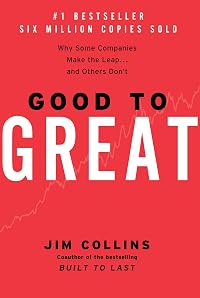
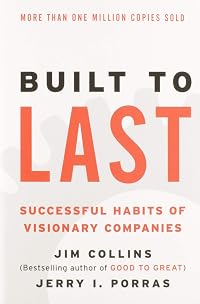
Built To Last, the defining management study of the nineties, showed how great companies triumph over time and how long-term sustained performance can be engineered into the DNA of an enterprise from the very beginning. But what about companies that are not born with great DNA? How can good companies, mediocre companies, even bad companies achieve enduring greatness? Are there those that convert long-term mediocrity or worse into long-term superiority? If so, what are the distinguishing show more characteristics that cause a company to go from good to great? Over five years, Jim Collins and his research team have analyzed the histories of 28 companies, discovering why some companies make the leap and others don't. The findings include: Level 5 Leadership: A surprising style, required for greatness. The Hedgehog Concept: Finding your three circles, to transcend the curse of competence. A Culture of Discipline: The alchemy of great results. Technology Accelerators: How good-to-great companies think differently about technology. The Flywheel and the Doom Loop: Why those who do frequent restructuring fail to make the leap. show lessTags
Recommendations






Member Reviews
Good to Great is a perennial entry on lists of top business books, and for good reason. Jim Collins and his team of researchers spent years examining the characteristics of companies that made the transition from being merely “good” to being leaders in their respective industries.
The factors that Collins identified — hiring, training, and retaining the right people; identifying and building on core organizational strengths; and working for small, incremental growth — are factors that can also be used to build up great parishes, Catholic schools, and other ministries.
I love Good to Great’s reliance on solid research and data demonstrating that what we think are the characteristics of great organizations — especially the idea show more of a dynamic genius in charge — are rarely effective in promoting real success.
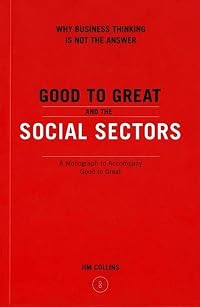
Collins wrote a short follow-up, Good to Great in the Social Sectors, in 2005 — it treats the Good to Great concept in the context of non-profit organizations. But the original book contains all the foundational themes of Collins’ work. show less
The factors that Collins identified — hiring, training, and retaining the right people; identifying and building on core organizational strengths; and working for small, incremental growth — are factors that can also be used to build up great parishes, Catholic schools, and other ministries.
I love Good to Great’s reliance on solid research and data demonstrating that what we think are the characteristics of great organizations — especially the idea show more of a dynamic genius in charge — are rarely effective in promoting real success.
Collins wrote a short follow-up, Good to Great in the Social Sectors, in 2005 — it treats the Good to Great concept in the context of non-profit organizations. But the original book contains all the foundational themes of Collins’ work. show less
All hype aside, you can question the author's research method. Heck, you can even argue that the conclusion and subsequent proposal on how to go from a good-to-great company is by and large common sense. But, being involved in positions that bring me in direct contact with key decision makers, you'd be amazed by how bullish, irrational and brazen decisions can be made. So, every now and then it's good to have someone remind us about what it takes to run a great company.
There appear to be some interesting ideas in this book, but overall, it seems to be a case of the author simply choosing a set of companies that happened to meet some criteria, then looking for similar facts about those companies, and calling them causes that the companies met the criteria.
Maybe I've been reading too many books about biases and fallacies in statistics and behavior lately, but I think this is all luck. See http://www.happen.com/article/good-to-great-or-just-lucky/ for another similar view.
As Steven Levitt (http://www.freakonomics.com/2008/07/28/from-good-to-great-to-below-average/) says, these companies have done worse than the overall market since this book was written. I understand Jim Collins has written a later book show more studying why companies fail, to somewhat try to explain this.
But the simpler explanation is that it's all luck. It was interesting to me to read in Good to Great that when the company CEOs were asked about what they have done to make their companies great, a lot of them said they were lucky. Collins did not take them at face value, but rather, decided that a characteristic of good CEOs is that they are humble and explain their successes as good luck. And similarly, bad CEOs blame their failures on bad luck.
But what if it just is all luck? Isn't that a simpler explanation.
I'm not saying there are factors that make a company successful or not, but this book hasn't convinced me of what any of them are by its use of data, which seems to fail many common tests. show less
Maybe I've been reading too many books about biases and fallacies in statistics and behavior lately, but I think this is all luck. See http://www.happen.com/article/good-to-great-or-just-lucky/ for another similar view.
As Steven Levitt (http://www.freakonomics.com/2008/07/28/from-good-to-great-to-below-average/) says, these companies have done worse than the overall market since this book was written. I understand Jim Collins has written a later book show more studying why companies fail, to somewhat try to explain this.
But the simpler explanation is that it's all luck. It was interesting to me to read in Good to Great that when the company CEOs were asked about what they have done to make their companies great, a lot of them said they were lucky. Collins did not take them at face value, but rather, decided that a characteristic of good CEOs is that they are humble and explain their successes as good luck. And similarly, bad CEOs blame their failures on bad luck.
But what if it just is all luck? Isn't that a simpler explanation.
I'm not saying there are factors that make a company successful or not, but this book hasn't convinced me of what any of them are by its use of data, which seems to fail many common tests. show less
As far as business books go, Good to Great sets a high standard for methodology and seldom falls back on the palaver that's so representative of the genre. It's an enjoyable, easy read and Collins and his team pull some fine principles from their research.
That said, it still strikes me that the methodology employed in business research, as evidenced in Good to Great, has a long way to go. The conclusions are based on survivorship bias, very broad induction, and tiny sample sets. There's little attempt, as I remember, at creating falsifiable hypotheses, and then falsifying them. The conclusions are based more on comparisons of a few examples and loose correlations.
Now with *that* said, business may never be broken down to a science, so show more Collins' level of accuracy may be sufficient, as long as readers interpret the conclusions as flexible, guiding principles. The limiting factor there of course is the average business reader, who has far more to improve on in critical reading than good business authors (like Collins) have to improve in the way of critical analysis. show less
That said, it still strikes me that the methodology employed in business research, as evidenced in Good to Great, has a long way to go. The conclusions are based on survivorship bias, very broad induction, and tiny sample sets. There's little attempt, as I remember, at creating falsifiable hypotheses, and then falsifying them. The conclusions are based more on comparisons of a few examples and loose correlations.
Now with *that* said, business may never be broken down to a science, so show more Collins' level of accuracy may be sufficient, as long as readers interpret the conclusions as flexible, guiding principles. The limiting factor there of course is the average business reader, who has far more to improve on in critical reading than good business authors (like Collins) have to improve in the way of critical analysis. show less
Besides the two most important reminders that this book brought along, the concept of 'level 5 leadership' and the importance of selecting the right people for the job and despite half of the book describing the methodology of their study, the books has a higher ration of trite, if common sense, ideas than strong arguments that can predict success.
The first thing to remember is that excellent leadership is not only about being a servant leader—it's also mandatory that you are a rigorous, ambitious person that relentlessly follows a vision of excellence. Even so, this seems to me easier to do than being a truly humble leader as you accumulate success and power. And here the book is thin on explanations. I wish it had touched more on show more how humility is neither about being weak, meek, or indecisive, nor even about shunning publicity. Humility is about a true lack of narcissism—knowing what you don't know (the overwhelming amount of dark matter out there), not underestimating your competition, listening to weird ideas, being passionately curious, and valuing substance to fluff.
Secondly, it is paramount to have the right people on the bus even before knowing the direction. This sounds very common sense, again, but in a world obsessed with fast growth it might also be the first thing to cut on. I'm a strong believer in the hiring principles of continuing to look when in doubt (but making sure you've looked thoroughly) and in being swift in making people changes when a certain formation goes against the vision and the strategy you've all agreed to pursue. Lastly, James Collins makes an interesting point about giving best people the best opportunities rather than the best problems to solve. I've seen many very talented people being crushed because they were given the responsibility of steering a sinking boat.
Overall, James Collins is not the first one to explain that grit, passion, huge amounts of work and discipline, focus, and putting understanding in front of bravado are what builds great performers, both in the individual and in the corporate spheres. In particular, the Hedgehog Concept, for which the book is usually referenced, is argued incredibly weakly but it should give managers the guideline that it's not really worth giving your best performers mandates they aren't passionate about, and this is me turning the concept onto its head towards individual performance, for the book looks at it in a corporate, macro sense.
I also share the sentiment that it is mostly backwards looking (after all, most of the "great" companies are not great companies anymore) and therefore it doesn't really make predictions and it is more about correlation than causation.
As well, while researching the criticism about this book, I've stumbled upon a nice piece in HBR which was proposing that some of these great companies should look at becoming good after all—that is to say coming back from great, which solely means exceptionally profitable, like Pepsi, who are not in the book, or Philips Morris, who are in the book, to working for the greater good. show less
The first thing to remember is that excellent leadership is not only about being a servant leader—it's also mandatory that you are a rigorous, ambitious person that relentlessly follows a vision of excellence. Even so, this seems to me easier to do than being a truly humble leader as you accumulate success and power. And here the book is thin on explanations. I wish it had touched more on show more how humility is neither about being weak, meek, or indecisive, nor even about shunning publicity. Humility is about a true lack of narcissism—knowing what you don't know (the overwhelming amount of dark matter out there), not underestimating your competition, listening to weird ideas, being passionately curious, and valuing substance to fluff.
Secondly, it is paramount to have the right people on the bus even before knowing the direction. This sounds very common sense, again, but in a world obsessed with fast growth it might also be the first thing to cut on. I'm a strong believer in the hiring principles of continuing to look when in doubt (but making sure you've looked thoroughly) and in being swift in making people changes when a certain formation goes against the vision and the strategy you've all agreed to pursue. Lastly, James Collins makes an interesting point about giving best people the best opportunities rather than the best problems to solve. I've seen many very talented people being crushed because they were given the responsibility of steering a sinking boat.
Overall, James Collins is not the first one to explain that grit, passion, huge amounts of work and discipline, focus, and putting understanding in front of bravado are what builds great performers, both in the individual and in the corporate spheres. In particular, the Hedgehog Concept, for which the book is usually referenced, is argued incredibly weakly but it should give managers the guideline that it's not really worth giving your best performers mandates they aren't passionate about, and this is me turning the concept onto its head towards individual performance, for the book looks at it in a corporate, macro sense.
I also share the sentiment that it is mostly backwards looking (after all, most of the "great" companies are not great companies anymore) and therefore it doesn't really make predictions and it is more about correlation than causation.
As well, while researching the criticism about this book, I've stumbled upon a nice piece in HBR which was proposing that some of these great companies should look at becoming good after all—that is to say coming back from great, which solely means exceptionally profitable, like Pepsi, who are not in the book, or Philips Morris, who are in the book, to working for the greater good. show less
This work is the result of a cohort business study. The control group consisted of publicly owned companies that had good performance for 15 years and then great performance (defined as outperforming the market by over three times) for 15 years. There were only 11 good-to-great companies. Eleven other companies in similar lines of work were chosen into the comparison group. Then the research group dissected those companies to figure out what the great companies had in common and how they different from the comparison companies. The result is this book.
Collins and his research team undertook interviews, performed research on publicly available information, and tried to details as much as possible. As such, Good to Great not only covers show more abstract principles which animate these companies, but also, it shares the stories of excellent success along with the not-as-excellent narratives of the comparison group.
On occasion, this book’s writing seems to lapse into marketing and hype, but I guess that is to be expected among the business genre. Although the book is not as hard of a science as something like physics, Collins’ team seems to aspire to genuinely making their study as scientific as possible. It’s clear that they looked for fundamental insights instead of just covering the surface. For that, they deserve to be praised. Also, because of the stringent inclusion requirements (which require 30+ years of historical data), tech companies are not considered in this work. The qualities that make tech companies great – especially in the face of constant changing environments – is of particular interest to me, and I would like to see further exploration on that topic.
Their overall findings suggest a category of leader that they term a “Level-Five Leader.” This type of leader consistently puts the organization above her or his personal needs. They serve as the mortar which connect the bricks of a group into a strong wall. Through reading this book, you can explore more of this quality of leader.
Unfortunately, time has shown that several of these companies have engaged in ethically questionable policies. That blunts this book’s impact significantly. It goes to show that in the field of business research, it is difficult to adequately control all the factors, such as hidden cheating. It was a good attempt, and still brings forth historical insights into an era. Nonetheless, enthusiasm needs to be dampened with reality. show less
Collins and his research team undertook interviews, performed research on publicly available information, and tried to details as much as possible. As such, Good to Great not only covers show more abstract principles which animate these companies, but also, it shares the stories of excellent success along with the not-as-excellent narratives of the comparison group.
On occasion, this book’s writing seems to lapse into marketing and hype, but I guess that is to be expected among the business genre. Although the book is not as hard of a science as something like physics, Collins’ team seems to aspire to genuinely making their study as scientific as possible. It’s clear that they looked for fundamental insights instead of just covering the surface. For that, they deserve to be praised. Also, because of the stringent inclusion requirements (which require 30+ years of historical data), tech companies are not considered in this work. The qualities that make tech companies great – especially in the face of constant changing environments – is of particular interest to me, and I would like to see further exploration on that topic.
Their overall findings suggest a category of leader that they term a “Level-Five Leader.” This type of leader consistently puts the organization above her or his personal needs. They serve as the mortar which connect the bricks of a group into a strong wall. Through reading this book, you can explore more of this quality of leader.
Unfortunately, time has shown that several of these companies have engaged in ethically questionable policies. That blunts this book’s impact significantly. It goes to show that in the field of business research, it is difficult to adequately control all the factors, such as hidden cheating. It was a good attempt, and still brings forth historical insights into an era. Nonetheless, enthusiasm needs to be dampened with reality. show less
I’ve resisted reading this book for a decade or so. As a pastor I’ve long associated it with an uncritical business thinking takeover of Christian leadership. As I read it, I’m certainly critical of parts, from methodology to interpretation, but slowly it overwhelmed me with helpfulness. It’s just too helpful of a book to not read and apply. Yes, of course, it’s not the only book to read, and it doesn’t have all the answers (whatever that means), but it’s one of the few books I read this year that I’ll reread in the next three years.
Members
- Recently Added By
Lists

Favourite Books
1,820 works; 310 members

Mind Expanding Books by hackerkid
581 works; 8 members

My List
302 works; 1 member
Author Information

23+ Works 16,342 Members
Jim Collins holds B.S. and M.B.A. degrees from Stanford University. A visiting professor of business administration at Stanford Graduate School of Business, he is a management consultant. He has written several articles for the Harvard Business Review, Inc., Fortune magazine, California Management Review and Stanford Magazine. He is the co-author show more of Built to Last: Successful Habits of Visionary Companies; Managing the Small to Mid-Sized Firm: Readings, Cases and Instructor's Manual; Beyond Entrepreneurship; and Great by Choice. He has also worked with Hewlett Packard and McKinsey & Co. (Bowker Author Biography) show less
Some Editions
Awards and Honors
Awards
Distinctions
Notable Lists
Series

Work Relationships
Common Knowledge
- Canonical title
- Good to Great: Why Some Companies Make the Leap... and Others Don't
- Original title
- Good to Great: Why Some Companies Make the Leap... and Others Don't
- Epigraph
- "That's what makes death so hard - unsatisfied curiosity." - Beryl Markham, "West with the Night"
- Dedication
- This book is dedicated to the Chimps. I love you all, each and every one.
- Original language
- English
Classifications
Statistics
- Members
- 9,465
- Popularity
- 1,110
- Reviews
- 103
- Rating
- (3.95)
- Languages
- 18 — Chinese, Danish, Dutch, English, Estonian, Finnish, French, German, Japanese, Korean, Norwegian (Bokmål), Polish, Russian, Spanish, Swedish, Turkish, Vietnamese, Portuguese (Portugal)
- Media
- Paper, Audiobook, Ebook
- ISBNs
- 68
- UPCs
- 1
- ASINs
- 20