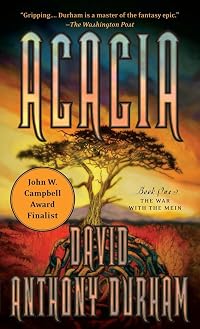
On This Page
Description
“David Anthony Durham has serious chops. I can’t wait to read whatever he writes next."—George R. R. Martin
Welcome to Acacia . . .
Born into generations of prosperity, the four royal children of the Akaran dynasty know little of the world outside their opulent island paradise. But when an assassin strikes at the heart of their power, their lives are changed forever.
Forced to flee to distant corners and separated against their will, the children must navigate a web of hidden show more allegiances, ancient magic, foreign invaders, and illicit trade that will challenge their very notion of who they are. As they come to understand their true purpose in life, the fate of the world lies in their hands.
. show less
Tags
Recommendations
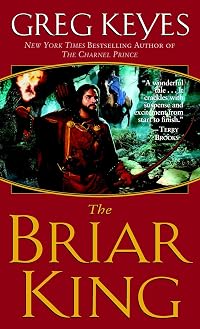
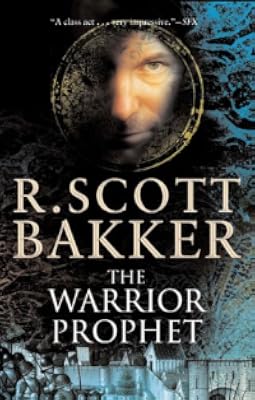
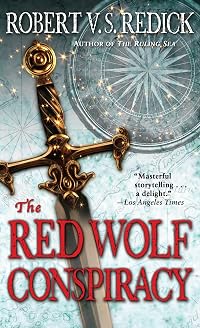
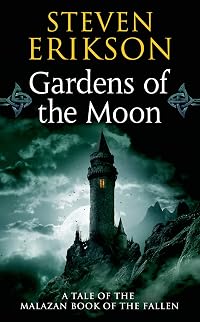



Member Reviews
Me, 50% of the way through: This epic fantasy is trying interesting things in making the drug trade the foundation of an empire and having the usurper Mein not much better than the deposed Acacians, except for how the Mein cut deals for other groups’ support that worsen conditions of oppression that we only hear about and don’t see. It’s also really neat to see fantasy where the characters seem mostly African- or Asian-derived, including the POV characters, and the whitest group is the barbarian Numrek. But I just don’t like anybody. Me, 80% of the way through: I really like what he’s doing with the exiled former ruling family! I can’t wait to see what happens! Me, 95% of the way through: Argh! Why did he hand one of the show more most interesting characters the stupid stick, in a way everyone in the text acknowledges is stupid, and contradicts decisions made a few short pages ago, in order to get to the next big plot point? Why did he then have another interesting character “just know” something that causes her arc to swerve wildly? He at least tries to explain the latter, but only in a way that destroys her agency. [personal profile] astolat suggested that he was too interested in the plot developments he decided should happen to deal with the characters he’d set up, and that feels right. If you like palace intrigue and don’t mind one stunning instance of plot-mandated idiocy, then you might enjoy this book/series, but I'm done. show less
When I was asked to review this book, I was less than enthusiastic. I’ve been reading genre fiction for a long time, and there are things I’d decided I was done with. Topping that list was “High Fantasy Quest Novels,” followed almost immediately by “Book 1 of a Brand New Series” (with a special amount of “done” leftover for “Book 1’s in Excess of 500 Pages”). Still, the book was sent to me by someone I trust, so I decided to give it a go.
She always was the smart one.
David Anthony Durham has pulled off something remarkable: a huge, sprawling epic that manages to weave together history, politics, intrigue and thunderous action scenes without ever losing track of the multitudes of finely-drawn characters.
The detail show more that Durham lavishes on his world is impressive, and it grounds you firmly in this land. The author’s previous work as an historical novelist is clear in the care he takes with the backgrounds of the various kingdoms. We learn about myths, religious practices, courting practices, ruling philosophies, and day to day living for a number of different peoples. The truly amazing thing is that this wealth of detail is all germane to the main action of the story, and that, with a few exceptions, the story doesn’t grind to a halt while we’re getting the background info.
That said, this is book one of a series, which means that there’s a great deal of setup for a payoff that, although sensible, seems a bit too abrupt. Or maybe that’s just my impatience; this is only book one, after all. I’m sure I’ll get the payoff I want eventually, but I want it now!
Much closer to George R.R. Martin than J.R.R. Tolkien, Acacia has wonders in store both for those who love epic fantasy and for those who think it’s old hat. Once you visit, you’ll be as giddy as I am that there are more chapters still to come (and as grumpy as I am that they’re not out yet). show less
She always was the smart one.
David Anthony Durham has pulled off something remarkable: a huge, sprawling epic that manages to weave together history, politics, intrigue and thunderous action scenes without ever losing track of the multitudes of finely-drawn characters.
The detail show more that Durham lavishes on his world is impressive, and it grounds you firmly in this land. The author’s previous work as an historical novelist is clear in the care he takes with the backgrounds of the various kingdoms. We learn about myths, religious practices, courting practices, ruling philosophies, and day to day living for a number of different peoples. The truly amazing thing is that this wealth of detail is all germane to the main action of the story, and that, with a few exceptions, the story doesn’t grind to a halt while we’re getting the background info.
That said, this is book one of a series, which means that there’s a great deal of setup for a payoff that, although sensible, seems a bit too abrupt. Or maybe that’s just my impatience; this is only book one, after all. I’m sure I’ll get the payoff I want eventually, but I want it now!
Much closer to George R.R. Martin than J.R.R. Tolkien, Acacia has wonders in store both for those who love epic fantasy and for those who think it’s old hat. Once you visit, you’ll be as giddy as I am that there are more chapters still to come (and as grumpy as I am that they’re not out yet). show less
This was almost 30 hours and didn't really get going until about 20 hours in. It was interesting but was basically a political fantasy, with the characters pushed way back, until about the 20-hour mark. I did really like that last 10 hours though, when the characters took over the story and there was more magic. He really does write well. I probably would have never finished this if I was reading it instead of listening, I just read too slow to spend 3 months on books this long. I love the narrator, he did some Tad Williams books that I read a long time ago.
The second book is 24-hours long. I'm torn on whether to read it or not. Worried it might be slow again, but at least it's about 6 hours shorter. Guess it just depends on if I can show more find it on Libby or Hoopla. show less
The second book is 24-hours long. I'm torn on whether to read it or not. Worried it might be slow again, but at least it's about 6 hours shorter. Guess it just depends on if I can show more find it on Libby or Hoopla. show less
With this book the author leaves behind his historical novels and begins a foray into fantasy. And, as fantasy novels go, this one is excellent. There are several detailed characters, a fascinating world with its own varied history full of legends and hidden secrets, and numerous surprises in store for the reader. Acacia is the name of an empire ruled for generations by the Akaran dynasty, currently headed by Leodan Akaran. The rulers live on an island of the same name known for its many acacia trees. But from the very beginning you know that Leodan's days as ruler are numbered. A people known as the Mein, long ago banished to the icy northern climate, have sent an assassin and are amassing for war. Leodan's four young children are show more successfully spirited away in the ensuing conflict. The children, two sons and two daughters, each go on to live wildly different lives since the start of the war. It's all very interesting and engrossing reading. Woven into the story are themes of slavery, oppression, a sinister drug trade, and the Akarans own revisionist history. It's exciting and fascinating to see how events unfold, especially in the last two thirds of the book. This is the first of a planned trilogy and I am eagerly awaiting the next book. One of the best fantasies I've come across in years. According the author's blog, "Acacia has been put into early production to be a feature film by Relativity Media and Michael De Luca Productions. The screenwriter Andrew Grant is at work on the film adaption now." Cool! show less
The book revolves around four royal children as they try to manage the massive kingdom their ancestors have created. We meet the children in the middle of a lesson, where the youngest princess asks the tutor "why is Acacia always in the center of the map?". Her siblings answer that is it because Acacia is the only country of importance while the tutor tries, unheard, to explain the equal validity of others. Then the king is assassinated and the children secreted away to those other countries.
To be blunt? The entire series makes you feel like the poor tutor. Even after the empire begins to collapse and is taken over by a country that has been cursed and subjugated by their own for generations. Worse, you find out that even the local show more citizens are controlled by drugs and live in slavery. All this and at least one of them doesn't grow out of that same superiority complex.
Overall, the book is like watching a train wreck. Good writing and world building, but you really start to hate the characters. show less
To be blunt? The entire series makes you feel like the poor tutor. Even after the empire begins to collapse and is taken over by a country that has been cursed and subjugated by their own for generations. Worse, you find out that even the local show more citizens are controlled by drugs and live in slavery. All this and at least one of them doesn't grow out of that same superiority complex.
Overall, the book is like watching a train wreck. Good writing and world building, but you really start to hate the characters. show less
***Early book spoiler***
A very good read and well worth the price. David Durham tells a fantastic story about 4 royal siblings who are torn about when their kingdom is taken over. Each is thrown to different parts of the diverse kingdom and partake in very distinct lifestyles that transform them in unique ways.
The book is very well written and you get over 700 pages of story. The characters are developed well, but he could go further with their development. Some more detail about geography, relationships between peoples, the aspects of the cities, etc. would also be nice.
A very good read and well worth the price. David Durham tells a fantastic story about 4 royal siblings who are torn about when their kingdom is taken over. Each is thrown to different parts of the diverse kingdom and partake in very distinct lifestyles that transform them in unique ways.
The book is very well written and you get over 700 pages of story. The characters are developed well, but he could go further with their development. Some more detail about geography, relationships between peoples, the aspects of the cities, etc. would also be nice.
Had David chopped this sucker down, cutting much of the slow buildup, this would have been a much bigger impact. The world-building is top notch - I loved the idea the Creator's song was stolen by man, and this theft corrupted the word and the world and the Creator in his sadness left it behind.
Members
- Recently Added By
Published Reviews
ThingScore 100
Through a vivid depiction of ethnically diverse cultures, breathless warfare, and a deep understanding of that old adage--"Those who cannot learn from the past are doomed to repeat it"--he creates not only a philosophical epic for the thinking fan but also a masterpiece of character and realism that even a theory-clutching Joyce scholar could appreciate.
...
Why dole out your money for tales of show more fictional worlds when things there are just as bad? One reason, I suppose, is that you would then miss out on novels like David Anthony Durham's tour de force, Acacia, a deeply political vision of the fantastic that exposes the humanity at the heart of every ruthless machination. show less
...
Why dole out your money for tales of show more fictional worlds when things there are just as bad? One reason, I suppose, is that you would then miss out on novels like David Anthony Durham's tour de force, Acacia, a deeply political vision of the fantastic that exposes the humanity at the heart of every ruthless machination. show less
added by orend
Top 25 Fantasy Books # 16
The new kid on the fantasy block has some new moves that may even impress the old timers. Durham, a well known historical fiction author, brings his writing prowess to the fantasy genre. And what an effort it is! Acacia has all the elements that make A Song of Ice and Fire so compelling.
The new kid on the fantasy block has some new moves that may even impress the old timers. Durham, a well known historical fiction author, brings his writing prowess to the fantasy genre. And what an effort it is! Acacia has all the elements that make A Song of Ice and Fire so compelling.
added by feeling.is.first
Lists

infjsarah's wishlist
408 works; 2 members
Author Information

15+ Works 3,048 Members
Some Editions
Awards and Honors
Distinctions
Series

Common Knowledge
- Canonical title
- Acacia: The War with the Mein
- Original publication date
- 2007
- People/Characters
- Aliver; Thaddeus; Corinn; Mena; Dariel; Hanish Mein (show all 7); King Leodan
- Dedication
- For Laughton and Patricia
- First words
- The Assassin left the stronghold of Mein Tahalian by the great front gate, riding through a crack in the armored pine beams just wide enough to let him slip out.
- Last words
- (Click to show. Warning: May contain spoilers.)There before her, receding down the hill through the windswept light of dusk, went the Queen of Acacia, with her forearems cupped around her heir and her entourage close behind her, the future hers to shape.
- Publisher's editor
- Howard, Gerald
Classifications
Statistics
- Members
- 1,430
- Popularity
- 16,503
- Reviews
- 40
- Rating
- (3.54)
- Languages
- 8 — English, French, German, Italian, Polish, Portuguese, Spanish, Swedish
- Media
- Paper, Audiobook, Ebook
- ISBNs
- 22
- ASINs
- 10