On This Page
Description
In 1934, famed British traveler Freya Stark sailed down the Red Sea, alighting in Aden, located at the tip of the Arabian peninsula. From this backwater outpost, Stark set forth on what was to be her most unforgettable adventure: Following the ancient frankincense routes of the Hadhramaut Valley, the most fertile in Arabia, she sought to be the first Westerner to locate and document the lost city of Shabwa. Chronicling her journey through the towns and encampments of the Hadhramaut, The show more Southern Gates of Arabia is a tale alive with sheikhs and sultans, tragedy and triumph. Although the claim to discovering Shabwa would not ultimately be Stark's, The Southern Gates of Arabia, a bestseller upon its original publication, remains a classic in the literature of travel. This edition includes a new Introduction by Jane Fletcher Geniesse, Stark's biographer. show lessTags
Recommendations


























Member Recommendations

Member Reviews
This interesting book by explorer Freya Stark charts her movements through Arabia as she searches for the ruined city of Shabwa (in modern day Yemen). The things I loved most were Freya's descriptions. They are many. They are vivid. They bring the writing to life. On her travels, she met various sultans in the region, and her descriptions of her time with them are hugely insightful.
I definitely enjoyed this book more than "The Valleys of the Assassins". However, I have a couple of similar complaints. The first is that there are absolutely no photos. Freya talks about using her camera, always looking to document through pictures. None of those pictures made it into this book. There are a couple of hand drawn illustrations. That is all. show more The second is that the book, like the first, feels anti-climactic. She talks on and on about how she is looking for Shabwa, but in the end, sickness puts a stop to her journey, which is frustrating for both her and me!
Still, this is a highly readable travelogue. show less
I definitely enjoyed this book more than "The Valleys of the Assassins". However, I have a couple of similar complaints. The first is that there are absolutely no photos. Freya talks about using her camera, always looking to document through pictures. None of those pictures made it into this book. There are a couple of hand drawn illustrations. That is all. show more The second is that the book, like the first, feels anti-climactic. She talks on and on about how she is looking for Shabwa, but in the end, sickness puts a stop to her journey, which is frustrating for both her and me!
Still, this is a highly readable travelogue. show less
After a brief introductory chapter giving the history of the Hadhramaut (roughly modern Yemen), Stark starts her travel story by wondering why a ship appears to be a more satisfactory possession than a woman for peace loving men! She also remarks upon the indigo on the skin of the beduin (sic, and not Arabs) who she meets at Cana, which I hadn’t heard about before.
Some of these beduin guide and escort her into the interior of the Hadhramaut, as she rides a donkey and walks as the impulse takes her for the first part of her journey and than travels by car. The book is copiously illustrated with photos taken by Stark, and although these are in black and white, and not high resolution as they were taken in 1935, they help in conjuring show more up a world which may have appeared ancient and unchanged for centuries to Stark, but would subsequently change rapidly.
The beduin were dressed not at all as I expected, with those travelling with Stark wearing little more than loin cloths that look like shorts (but have folds where they keep tobacco, sugar and tea), some form of head wear (not a turban), a knife in a sheath, and little else.
I preferred the first part of the journey, where Stark would sleep on the trail or receive hospitality from the rulers of towns. However the whole journey is described in what are now such romantic terms, with a charming style journey was and gently humorous manner, describing places now lost following the impact of the West and “civilisation “.
Unfortunately Stark became ill before she managed to reach her notional destination, so the ending is abrupt, but the journey was full of beautiful descriptions and is well worth the read show less
Some of these beduin guide and escort her into the interior of the Hadhramaut, as she rides a donkey and walks as the impulse takes her for the first part of her journey and than travels by car. The book is copiously illustrated with photos taken by Stark, and although these are in black and white, and not high resolution as they were taken in 1935, they help in conjuring show more up a world which may have appeared ancient and unchanged for centuries to Stark, but would subsequently change rapidly.
The beduin were dressed not at all as I expected, with those travelling with Stark wearing little more than loin cloths that look like shorts (but have folds where they keep tobacco, sugar and tea), some form of head wear (not a turban), a knife in a sheath, and little else.
I preferred the first part of the journey, where Stark would sleep on the trail or receive hospitality from the rulers of towns. However the whole journey is described in what are now such romantic terms, with a charming style journey was and gently humorous manner, describing places now lost following the impact of the West and “civilisation “.
Unfortunately Stark became ill before she managed to reach her notional destination, so the ending is abrupt, but the journey was full of beautiful descriptions and is well worth the read show less
This is a wonderful history of an indomitable woman as she adventured into a land little known in the west. Her relationships and insights can teach us in these days of "us" and "them".
This was a travel journal made by a British woman who journeyed to Arabia to follow the Incense Trade route. It was in the 1930's, before oil took over and when it was as it had been for centuries. Very interesting but very detailled.
read this next
i wouldn't read stark again. i didn't find her interesting even though her trip should be very interesting.
i wouldn't read stark again. i didn't find her interesting even though her trip should be very interesting.
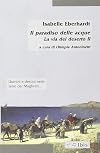
A metà degli Anni Trenta, Freya Stark, scrittrice e viaggiatrice anglosassone, si lancia in un'impresa quasi impossibile: attraversare l'impervia regione dell'Hadramaut, nell'Arabia meridionale e ripercorrere la via dell'incenso, seguendo a dorso di cammello, asino, mulo e perfino a piedi, la pista carovaniera lungo la quale veniva trasportata la preziosa resina profumata. Conoscitrice dell'Islam, con una perfetta padronanza della lingua araba, è la prima donna a compiere questa traversata tra insidie e disagi. Ultima erede di una stirpe di grandi viaggiatori inglesi da Kipling a Lawrens, è stata una figura leggendaria del nostro secolo, forse lo stesso nome di battesimo, che i genitori presero dal racconto esotico di Conrad "Freya show more delle sette isole", fu preludio a quella che sarà la sua esistenza. Non solo taccuini di viaggio, ma il suo contributo si tradusse anche nella redazione di carte e mappe in occasione delle esplorazioni, nell'aggiornamento puntuale della toponomastica,
"Viaggiare significa ignorare i fastidi esterni e lasciarsi andare completamente all'esperienza - scrive questa piccola tenace donna - fondersi con tutto quello che ci circonda, accettare tutto quello che ci succede e così, in questo modo, fare finalmente parte del paese che si attraversa. E questo è il momento in cui si avverte che la ricompensa sta arrivando".
E in un'altra delle tante pagine indimenticabili leggiamo quel che è il pensiero del vero viaggiatore, dalla mente aperta e priva di preconcetti: “Per viaggiare bisogna essere soli: se si va con qualcun altro tutto finisce in chiacchiere. Dobbiamo essere forti e aver fiducia nelle sorprese della vita”. show less
"Viaggiare significa ignorare i fastidi esterni e lasciarsi andare completamente all'esperienza - scrive questa piccola tenace donna - fondersi con tutto quello che ci circonda, accettare tutto quello che ci succede e così, in questo modo, fare finalmente parte del paese che si attraversa. E questo è il momento in cui si avverte che la ricompensa sta arrivando".
E in un'altra delle tante pagine indimenticabili leggiamo quel che è il pensiero del vero viaggiatore, dalla mente aperta e priva di preconcetti: “Per viaggiare bisogna essere soli: se si va con qualcun altro tutto finisce in chiacchiere. Dobbiamo essere forti e aver fiducia nelle sorprese della vita”. show less
Sep 5, 2017Italian
Ratings
Members
- Recently Added By
Lists

Huxley's Reading Log 2018
37 works; 1 member
Author Information

43+ Works 2,482 Members
Freya Stark (1893-1993), 'the poet of travel', was the doyenne of Middle East travel writers. Her travels earned her the title of Dame and huge public acclaim. Her many, now classic, books include Traveller's Prelude, Ionia, The Southern Gates of Arabia, Alexander's Path, Dust in the Lion's Paw, East is West and Valleys of the Assassins.
Series

Belongs to Publisher Series
Common Knowledge
- Canonical title
- The Southern Gates of Arabia: A Journey in the Hadramaut
- Original title
- The Southern Gates of Arabia: A Journey in the Hadramaut
- Original publication date
- 1936
- People/Characters
- Freya Stark
- Important places
- Yemen; Hadhramaut
- Dedication
- This book is dedicated to The Royal Air Force, and especially to those in Aden who made the writing of it possible by carrying me in safety from Shibam
- First words
- In the first century of our era an anonymous Greek sea captain wrote the Periplus of the Erythraean Sea. (Stark's 'Introduction')
I have often wondered why a ship appears to be on the whole a more satisfactory possession than a woman. - Last words
- (Click to show. Warning: May contain spoilers.)'It doesn't do to wander
Too far from sober men,
But there's an Island yonder,
(in sands if not in seas)
I think of it again.'
Classifications
- Genres
- Travel, Nonfiction, General Nonfiction, Biography & Memoir
- DDC/MDS
- 956 — History & geography History of Asia Middle East Asia: Turkey, Iraq, Syria, Lebanon, Israel, Jordan
- LCC
- DS247 .H3 .S8 — History of Europe, Asia, Africa and Oceania Asia History of Asia Arabian Peninsula. Saudi Arabia Local history and description
- BISAC
Statistics
- Members
- 344
- Popularity
- 91,957
- Reviews
- 6
- Rating
- (4.04)
- Languages
- English, French, German, Italian
- Media
- Paper, Ebook
- ISBNs
- 17
- ASINs
- 14