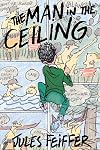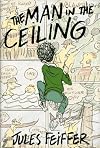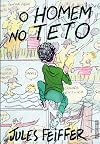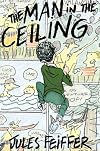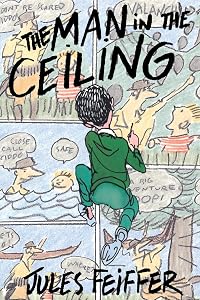
The Man in the Ceiling
by Jules Feiffer
On This Page
Description
Although not very good at sports or in his schoolwork, Jimmy can draw and dreams of being a great cartoonist; that dream seems within reach when star athlete Charley Beemer suggests they create comics together.Tags
Recommendations
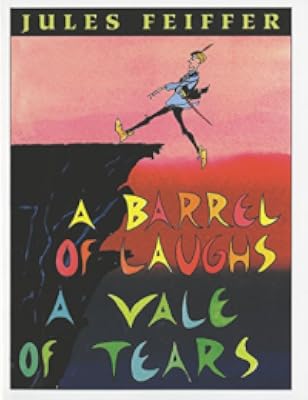
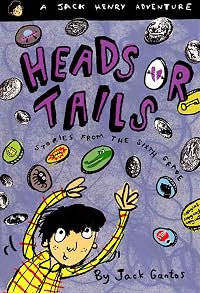
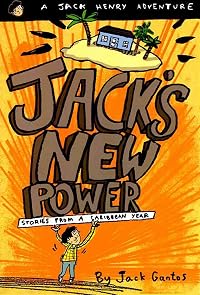
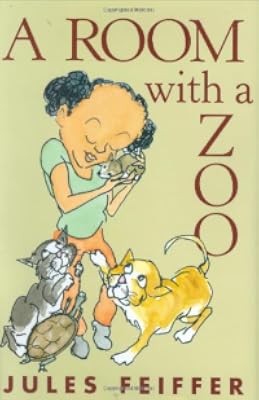
















Member Recommendations
by anonymous user
Member Reviews
This book is subtle yet transcendent. Jules Feiffer tells the story of Jimmy Jibbett, a boy whose talent as a comic book cartoonist is not acknowledged by his family. The book follows Jimmy's progression to acceptance.
The best part about this poignant story is the layout. The book has many illustrations (Feiffer also illustrated The Phantom Tollbooth and created comics for various magazines) which depict Jimmy's family life. So, we see his older sister Lisi's temper tantrums in their full intensity, and we also take a glimpse into his mother's upstairs lair, the "Sanctum Sanctorum." But, Feiffer truly shines when he gives us pages from the comic books that Jimmy creates. The reader can track Jimmy's growth through these comic book show more pages. There are moments early on when Jimmy succumbs to peer pressure and just draws what others tell him to. But, by the end of the book, Jimmy is able to draw a hand. This drawing is so important, it is the final page of the book.
What really strikes me about this book is how understanding and thoughtful Jimmy is. He's a truly admirable character and his success at the end of the book comes as a celebration for Feiffer's readers. This book is beautifully crafted. show less
The best part about this poignant story is the layout. The book has many illustrations (Feiffer also illustrated The Phantom Tollbooth and created comics for various magazines) which depict Jimmy's family life. So, we see his older sister Lisi's temper tantrums in their full intensity, and we also take a glimpse into his mother's upstairs lair, the "Sanctum Sanctorum." But, Feiffer truly shines when he gives us pages from the comic books that Jimmy creates. The reader can track Jimmy's growth through these comic book show more pages. There are moments early on when Jimmy succumbs to peer pressure and just draws what others tell him to. But, by the end of the book, Jimmy is able to draw a hand. This drawing is so important, it is the final page of the book.
What really strikes me about this book is how understanding and thoughtful Jimmy is. He's a truly admirable character and his success at the end of the book comes as a celebration for Feiffer's readers. This book is beautifully crafted. show less
Having enjoyed other Feiffer works such as Passionella, I was disappointed and depressed by this book. It was described by one blurb as "wickedly funny", usually a sure sign that I'll like a book -- but I found it unfunny, wickedly or otherwise.
My beefs with this book are three:
1. Writing classes teach that you should "show, rather than tell;" but Feiffer tells us about our protagonist, Jimmy -- and tells us, and tells us.
2. The plot struck me as discouraging, though it was intended to be inspiring.
3. Jimmy's family behave abominably to him (and on occasion, to each other), with no negative consequences to themselves. If this was based on Feiffer's own family, I can only feel very, very sorry for him. The parents do not "parent"; in show more fact, the mother seems irresponsible as a parent, the father nearly oblivious. Jimmy's older sister is a nightmare who wouldn't have known an ungrounded day if she'd grown up in the house of actual *adults*; Jimmy's parents let her get away with murder (figuratively). This is the kind of family where someone will scream or argue for an hour, trying to get someone else to do a 10-minute chore for them...instead of just doing their own task themselves.
The adults seem equally bad at handling problems: I mean, how hard is it to insist that an untrained dog be put on a leash in your house, instead of destroying it?
The takeaway message seems to be, in part, that nobody else in life is reliable, no one will really support you if you have talent, so you have to just put up with their abuse until you succeed on your own -- and even then, someone might take that success away from you.
Positives: Each character behaves in a consistent, if maddening, manner. I liked the idea of expressing yourself through cartoon concepts, and the book does a good job showing the creative process. show less
My beefs with this book are three:
1. Writing classes teach that you should "show, rather than tell;" but Feiffer tells us about our protagonist, Jimmy -- and tells us, and tells us.
2. The plot struck me as discouraging, though it was intended to be inspiring.
3. Jimmy's family behave abominably to him (and on occasion, to each other), with no negative consequences to themselves. If this was based on Feiffer's own family, I can only feel very, very sorry for him. The parents do not "parent"; in show more fact, the mother seems irresponsible as a parent, the father nearly oblivious. Jimmy's older sister is a nightmare who wouldn't have known an ungrounded day if she'd grown up in the house of actual *adults*; Jimmy's parents let her get away with murder (figuratively). This is the kind of family where someone will scream or argue for an hour, trying to get someone else to do a 10-minute chore for them...instead of just doing their own task themselves.
The adults seem equally bad at handling problems: I mean, how hard is it to insist that an untrained dog be put on a leash in your house, instead of destroying it?
The takeaway message seems to be, in part, that nobody else in life is reliable, no one will really support you if you have talent, so you have to just put up with their abuse until you succeed on your own -- and even then, someone might take that success away from you.
Positives: Each character behaves in a consistent, if maddening, manner. I liked the idea of expressing yourself through cartoon concepts, and the book does a good job showing the creative process. show less
Kinda cute story about a 10 yo boy and the family that he doesn't quite fit into. Unfortunately most of the time the characters are losers, and I am just tired of reading about people who don't really try. Jimmy heroically tries to wake them up, but they're mostly self-absorbed and self-pitying.
The Man in the Ceiling is a great book for children ages 12 and older. The boy in the story is trying to find his identity and he is looking for support from his parents. He has never really been good at sports and he does not have a lot in common with his dad, or anyone in his family, except for his uncle. He is simply trying to figure out what works best for him and how he wants to live his life while still craving support from his family. I feel like a lot of older children would be able to relate to this story because they are at that age when they are trying to "find" themselves and figure out what they want and what they do not want. However, i feel this book is more for young boys than it is for young girls simply because it is show more told throught the young boy's point-of-view. show less
Although this book took me forever to read because it kept putting me to sleep, I really liked this story about a budding cartoonist and his family. It's all about failure and trying.
Best ever. One of my all-time favs. Poignant, hilarious story of a young boy in an odd family, trying to balance his needs with his idol's wants.
I LOVE THIS BOOK. As a child, and as an adult. Quirky and smart. And its currently being adapted by Feiffer and Andrew Lippa as a musical. I cannot wait.
Members
- Recently Added By
Lists

Books About Boys
175 works; 15 members
Author Information

91+ Works 6,987 Members
Jules Feiffer was born on January 26, 1929. While working as a cartoonist, his work appeared in The New Yorker, Esquire, Playboy, The Nation, and The New York Times. He won a Pulitzer Prize for his editorial cartooning in The Village Voice in 1986. His other awards include a George Polk Award for his cartoons; an Obie Award for the play Little show more Murders; an Oscar for the anti-military short subject animation, Munro; and Lifetime Achievement Awards from the Writers Guild of America and the National Cartoonist Society. He is currently focusing on writing and illustrating books for children and young adults including The Man in the Ceiling, A Room with a Zoo and Bark, George! He has been a professor at the Yale School of Drama, Northwestern University, Dartmouth, and Stony Brook Southampton College. Feiffer has been honored with major retrospectives at the New York Historical Society, the Library of Congress and The School of Visual Arts. (Bowker Author Biography) show less
Awards and Honors
Awards
Common Knowledge
- Canonical title
- The Man in the Ceiling
Classifications
- Genres
- Kids, Children's Books, Fiction and Literature, Tween
- DDC/MDS
- 813.54 — Literature & rhetoric American literature in English American fiction in English 1900-1999 1945-1999
- LCC
- PZ7 .F33345 .M — Language and Literature Fiction and juvenile belles lettres Fiction and juvenile belles lettres Juvenile belles lettres
- BISAC
Statistics
- Members
- 416
- Popularity
- 74,774
- Reviews
- 9
- Rating
- (3.96)
- Languages
- English, German, Italian, Portuguese
- Media
- Paper, Audiobook, Ebook
- ISBNs
- 14
- ASINs
- 6