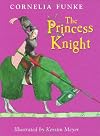
The Princess Knight
by Cornelia Funke, Kerstin Meyer (Illustrator)
On This Page
Description
Violetta, a little princess, is determined to become as big and strong as her brothers. She secretly teaches herself to become the bravest and cleverest knight in the land until she must face the king's best knights in a jousting tournament. Will she be ready?Tags
Recommendations




Member Reviews
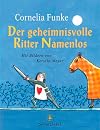
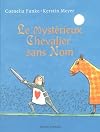
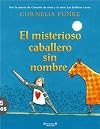
Cornelia Funke, the German children's author whose fantasy novels, from The Thief Lord to Inkheart, are so beloved, has also produced a number of picture-books, amongst them this sweet fractured fairy-tale, originally published as Der geheimnisvolle Ritter Namenlos (literally translated as "The Mysterious Rider, Nameless"). Raised to pursue all the past-times of her brothers, Princess Violetta - the youngest child and only daughter of King Wilfred - perseveres despite her smaller size, and becomes an accomplished equestrian, sword-fighter and jouster. When her father announces, the day before her sixteenth birthday, that her hand in marriage will be given to the winner of a tournament, the spirited young princess decides that there is show more only one thing to do...
An entertaining tale with a wonderful can-do attitude, The Princess Knight manages to convey the idea that girls are just as capable as boys - sadly, a message that is still needed in our society - without descending into any kind of overt didacticism, or demonizing the masculine. I liked the fact that King Wilfred is a little clueless, and a LOT insensitive, when it comes to setting up the tournament, but accepts Violetta's decision, in the end, and still loves her. I also liked that Violetta's brothers tease her as a girl, but are also sympathetic (the scene where her brother tries to comfort her, in her tower room, is so sweet!) to her desires. All in all, a charming tale, and a nice contrast to those fairy-tales which feature princesses who are rescued, or won by the hero. Not necessarily a replacement for these more traditional tales, but a lovely accompaniment - another choice to add the shelf! How fitting, as choice is what it's all about... show less
An entertaining tale with a wonderful can-do attitude, The Princess Knight manages to convey the idea that girls are just as capable as boys - sadly, a message that is still needed in our society - without descending into any kind of overt didacticism, or demonizing the masculine. I liked the fact that King Wilfred is a little clueless, and a LOT insensitive, when it comes to setting up the tournament, but accepts Violetta's decision, in the end, and still loves her. I also liked that Violetta's brothers tease her as a girl, but are also sympathetic (the scene where her brother tries to comfort her, in her tower room, is so sweet!) to her desires. All in all, a charming tale, and a nice contrast to those fairy-tales which feature princesses who are rescued, or won by the hero. Not necessarily a replacement for these more traditional tales, but a lovely accompaniment - another choice to add the shelf! How fitting, as choice is what it's all about... show less
When his daughter is born and his wife passes away, a king decides to raise his daughter just like his sons -- training to use swords, ride horseback, etc. As she grows up though, he still wants to marry off her to the winner of a jousting competition. So the clever princess knight enters herself in the competition instead...
I absolutely loved this book and am sorry it took me so long to read it after seeing it on recommended lists. The way it plays with tired old fairy tale tropes was lovely and a nice relief from so many other 'damsel in distress' style princess stories. The illustrations are more cartoonish than I generally like, but it worked okay with this story.
I would definitely recommend for anyone looking for feminist reads show more for either boys or girls. show less
I absolutely loved this book and am sorry it took me so long to read it after seeing it on recommended lists. The way it plays with tired old fairy tale tropes was lovely and a nice relief from so many other 'damsel in distress' style princess stories. The illustrations are more cartoonish than I generally like, but it worked okay with this story.
I would definitely recommend for anyone looking for feminist reads show more for either boys or girls. show less
The Princess Knight by Cornelia Funke (Author), Kerstin Meyer (Illustrator)
Chicken House (2004), Edition: First US Edition, 32 pages
The Princess Knight is a picture book written by Cornelia Funke and illustrated by Kerstin Meyer. This book belongs in the traditional fantasy genre because of the presence of knights, kings, and princesses.
The Princess Knight is about a princess named Violet who has been raised by her father, the king, in the same way her three brothers had been raised. She had been trained to ride horses and joust, so she developed a strong sense of self. It's this determination that leads her to rebel against her father when he decided to hold a tournament to decide who would marry Violet. She then decides to impersonate show more a knight and compete for her own hand.
One thing that I really appreciated about The Princess Knight was how it subverts the traditional princess narrative and allows Violet to have her own agency and individuality. Violet doesn't want to have her husband chosen for her and resents being offered as a prize, especially when she was as talented as the other knights. When the book eventually tells us that Violet gets married, it's such an afterthought that it's kind of a joke. "And who did she marry? Well, if you MUST know, many years later, she married the rose gardener's son and lived and happily ever after."
Violet is an incredibly strong character and an excellent role model for young girls, and The Princess Knight is a great story about not conforming to what is expected of you and following what makes you happy. show less
Chicken House (2004), Edition: First US Edition, 32 pages
The Princess Knight is a picture book written by Cornelia Funke and illustrated by Kerstin Meyer. This book belongs in the traditional fantasy genre because of the presence of knights, kings, and princesses.
The Princess Knight is about a princess named Violet who has been raised by her father, the king, in the same way her three brothers had been raised. She had been trained to ride horses and joust, so she developed a strong sense of self. It's this determination that leads her to rebel against her father when he decided to hold a tournament to decide who would marry Violet. She then decides to impersonate show more a knight and compete for her own hand.
One thing that I really appreciated about The Princess Knight was how it subverts the traditional princess narrative and allows Violet to have her own agency and individuality. Violet doesn't want to have her husband chosen for her and resents being offered as a prize, especially when she was as talented as the other knights. When the book eventually tells us that Violet gets married, it's such an afterthought that it's kind of a joke. "And who did she marry? Well, if you MUST know, many years later, she married the rose gardener's son and lived and happily ever after."
Violet is an incredibly strong character and an excellent role model for young girls, and The Princess Knight is a great story about not conforming to what is expected of you and following what makes you happy. show less
Originally published in German as Der geheimnisvolle Ritter Namenlos (which can be roughly translated as the mysterious knight no-name), Cornelia Funke's clever tale of a little princess, who, after the death of her mother, is taught by her father the same lessons and knightly pursuits he is teaching his sons, is both entertaining and empowering (and a great story for all children, not just little girls). Violetta is smaller than her brothers, and of course, like many younger siblings, she receives her share of teasing, although it never gets out of hand. The brothers are just acting like typical brothers, they are not maliciously cruel, not the type of villainous siblings so often encountered in traditional folk and fairy tales. show more Violetta soon realises that the manner in which her brothers are being taught their knightly skills just does not suit her, and so decides to learn these skills on her own (in secret), using her own (successful) strategies. While her brothers become tall and strong, Violetta (although small and slight) becomes supremely nimble and quick; due to her gentle nature and manner, her father's horses love carrying her on their backs.
However, King Wilfred finally realises that Violetta is not one of his knights, but a marriageable princess, and thus decides to hold a jousting tournament for his daughter's hand in marriage (something that Violetta definitely does NOT desire). I did not like the fact that the king shut his daughter in the tower when she rebelled against his wishes (and I appreciate that her youngest brother offered to win the tournament to prevent her marriage). I would, however, say that while King Wilfred is rather clueless and insensitive, he does finally accept his daughter's decision and clearly loves her dearly. When Violetta returns after a year and a day, the king gives her a horse as black as her armour, and she is allowed marry whom she desires.
I have, unfortunately, not had the opportunity to read the original German version of this tale (something I hope to remedy sooner rather than later). Thus, I cannot say all that much about Anthea Bell's translation (how true it is to the original, for example). But as far as the narrative is concerned, I think that it flows well, is engaging, and also does not feel like a "translation" (it reads and feels like an original, well-written text, something that I find both desirable and important in translated works, especially works of fiction).
There is only one aspect of The Princess Knight that I consider a bit problematic, and that is the title. I believe that the English title gives away a bit too much of the mystery, and I think a title closer to Cornelia Funke's original German title (perhaps something like The Mysterious Knight or The Mysterious Anonymous Knight), might have been a slightly better choice, but that is a minor, and likely also very personal quibble.
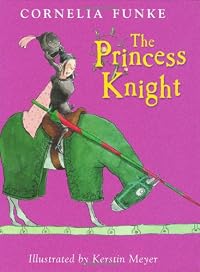
At first, I did not really enjoy Kerstin Meyer's illustrations. I was intrigued by the fact that she had supposedly used the famous Bayeux Tapestry as inspiration, but as I have never found the former all that esthetically pleasing, I had a similar first reaction to Kerstin Meyer's illustrations. On reflection though, I do think that the illustrations are, in fact, a perfect complement to the text, to the entire theme of the story. They capture the Mediaeval feel of the knightly pursuits and lessons, the jousting tournaments. While by themselves, Kerstin Meyer's illustrations would definitely not be a personal favourite, in combination with the narrative, they become magical and fun, while also giving an air of historical authenticity to the text. show less
However, King Wilfred finally realises that Violetta is not one of his knights, but a marriageable princess, and thus decides to hold a jousting tournament for his daughter's hand in marriage (something that Violetta definitely does NOT desire). I did not like the fact that the king shut his daughter in the tower when she rebelled against his wishes (and I appreciate that her youngest brother offered to win the tournament to prevent her marriage). I would, however, say that while King Wilfred is rather clueless and insensitive, he does finally accept his daughter's decision and clearly loves her dearly. When Violetta returns after a year and a day, the king gives her a horse as black as her armour, and she is allowed marry whom she desires.
I have, unfortunately, not had the opportunity to read the original German version of this tale (something I hope to remedy sooner rather than later). Thus, I cannot say all that much about Anthea Bell's translation (how true it is to the original, for example). But as far as the narrative is concerned, I think that it flows well, is engaging, and also does not feel like a "translation" (it reads and feels like an original, well-written text, something that I find both desirable and important in translated works, especially works of fiction).
There is only one aspect of The Princess Knight that I consider a bit problematic, and that is the title. I believe that the English title gives away a bit too much of the mystery, and I think a title closer to Cornelia Funke's original German title (perhaps something like The Mysterious Knight or The Mysterious Anonymous Knight), might have been a slightly better choice, but that is a minor, and likely also very personal quibble.
At first, I did not really enjoy Kerstin Meyer's illustrations. I was intrigued by the fact that she had supposedly used the famous Bayeux Tapestry as inspiration, but as I have never found the former all that esthetically pleasing, I had a similar first reaction to Kerstin Meyer's illustrations. On reflection though, I do think that the illustrations are, in fact, a perfect complement to the text, to the entire theme of the story. They capture the Mediaeval feel of the knightly pursuits and lessons, the jousting tournaments. While by themselves, Kerstin Meyer's illustrations would definitely not be a personal favourite, in combination with the narrative, they become magical and fun, while also giving an air of historical authenticity to the text. show less
There are several reasons why I enjoy this story. The book tells a tale of a young princess who wants everyone to know she can be as brave and strong as her brothers. The language and writing are very engaging and descriptive. The story is paced well and the events flow nicely. The illustrations are appropriate for the mood of the story, which takes place during Medieval Times. I really enjoy the princess character named Violet. Violet is an extremely determined young girl who wants to prove to her family that she can fight in knight battles. Unfortunately, her brothers refuse to let Violet participate in their knight activities because she is a girl. Her father insists that she gets married because that is what a female should do with show more her life, not fight in battles. Although knight battles are not prevalent in today’s society, female readers who face gender injustices daily can relate to Violet’s situation. I believe the conflict between what is expected of Violet and what she really wants in life creates a dynamic plot. I love that Violet refuses to follow this stereotype and secretly practices jousting until it is time for the jousting tournament. Violet disguises herself as a boy, competes and wins the contest, and then reveals her true identity. Her father and brothers realize that Violet is just as capable at fighting in battles as any boy. The book pushes readers to think about gender roles and the stereotypes placed on male and females. Readers may realize that girls are stronger than society portrays them to be. The big idea of the story is girls can succeed in any competition, even if it is a competition mainly for boys. Determination to succeed and be included has a positive outcome, and I believe this is a very important message for girls and boys to understand. show less
The story of a plucky girl who grows to overcome gender roles and achieve the life that she always wanted is simple and enjoyable. The illustrations are playfully simple as well.
I very much enjoyed this book. The theme of the story is about not letting anyone tell you who or what you can and cannot be and that you chose your own path in life. You see this during the part of the story where Violetta fights in her own tournament and wins, causing her father, the king, to have to call off the tournament. I especially like that the main character is a girl because I feel as if there are not a lot of gender-role-defying books out there to inspire little girls to do their best and reach for the stars. This book shows them that with a lot of dedication and practice, they can do anything boys can do, sometimes even better. This is seen multiple times throughout the book, once when Violetta trains in secret in the night show more so she can beat her brothers, and another time when she fights in the tournament for her own hand in marriage. show less
Members
- Recently Added By
Lists

Everything's Better With Princesses
33 works; 7 members

Youth: Sexuality & Gender
119 works; 1 member
Author Information

191+ Works 73,726 Members
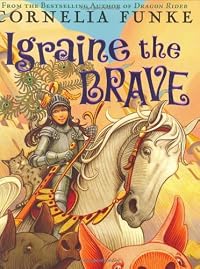
Author Cornelia Maria Funke was born in Dorsten, Germany on December 10, 1958. After graduating from the University of Hamburg, she worked as a social worker for three years. After completing a course in book illustration at the Hamburg State College of Design, she worked as a children's book illustrator and designed board games. Her desire to show more draw magical worlds and her disappointment over the way some stories were written inspired her to write her own children's books. Her book, The Thief Lord, won the Mildred L. Batchelder Award for the best translated children's book of the year and the Book Sense Book of the Year Award. She has also received the Book Sense Children's Literature Award for Inkheart and Inkspell. Funke has written numerous books including Dragon Rider, When Santa Fell to Earth, Igraine The Brave, Reckless, Saving Mississippi, Inkheart, Inkspell, Inkdeath, Igraine the Brave, and The Princess Knight. Inkheart was adapted into a film. Cornelia Funke was voted into the Time magazine's list of the 100 most influential people of 2005. (Bowker Author Biography) show less
Some Editions
Awards and Honors
Awards
Work Relationships
Common Knowledge
- Canonical title
- The Princess Knight
- Original publication date
- 2001
- People/Characters
- Princess Violetta; King Wilfred the Worthy; Emma the nursemaid; the rose gardener's son
- First words
- King Wilfred the Worthy had three sons.
- Last words
- (Click to show. Warning: May contain spoilers.)Well, if you must know, many years later, she married the rose gardener's son and lived happily ever after.
- Original language
- German
Classifications
Statistics
- Members
- 588
- Popularity
- 49,609
- Reviews
- 23
- Rating
- (3.93)
- Languages
- 5 — Dutch, English, French, German, Spanish
- Media
- Paper, Ebook
- ISBNs
- 11
- ASINs
- 1