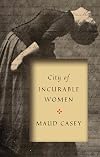
City of Incurable Women
by Maud Casey
On This Page
Description
"Where are the hysterics, those magnificent women of former times?" wrote Jacques Lacan. Long history's ghosts, they have been revived at last by Maud Casey in City of Incurable Women as complex, flesh-and-blood people, dispossessed and marginalized due to their gender and class but with their own stories to tell. These linked, evocative prose portraits, accompanied by period photographs and medical documents both authentic and re-imagined, poignantly restore the humanity to the 19th century show more female psychiatric patients confined in Paris's Salpêtrière hospital and reduced to specimens for study by the celebrated neurologist Jean-Martin Charcot and his male students-- show lessTags
Recommendations














































Member Recommendations

susanbooks Both novels explore the lives of Charcot's patients. Blanche is in both.
Member Reviews
"The luxurious pain of a body in the throes of its symptoms has been likened to a dance, and when she, a dancer, was a body in pain, it was something to behold."
I’ve written and re-written this review too many times for what it’s worth. I’ll keep it like this:
Maud Casey writes a compelling and emotional look at the lives of women diagnosed with hysteria who passed through the gates of the Salpêtrière hospital. Casey and I have obviously read Charcot's original publications and its interpretations by Didi-Huberman, seen the sometimes horrific, sometimes beautiful images of the women, and we've come to almost the same conclusion: these women were trying to survive trauma and retraumatization every single day.
Casey writes the story show more through a very thoughtful stream of consciousness. She brings us into the tattered and disjointed mind of a sufferer, shows us the attempt to articulate the depths of pain, and soaks its entirety in anger. The author heightens this sense of internal mess with photographs, case notes, and an array of medical quotes on the matter, and it is brilliant. Maud, I say you have it down.
Why? Well, I know I’ve spent the last few years trying to articulate what happened to me, and I still haven't figured it out. Maybe I never fully will. All I know was that I was diagnosed with conversion disorder after having episodes similar to some described by Charcot in his case notes. I've seen the early photos of these women—the really horrible ones that are not posed before Londe was able to put his damned studio inside—and it's like a mirror. It is terror, pain, anger, disgust, shame—It is not understanding why your brain is melting and you can no longer control your body. It is red. Blood red. (And there's always a doctor around, and he never knows what's really going on.)
I appreciated immensely Casey's ability to discern the layered acting that I believe occurred in the hospital, and to treat it kindly. In City of Incurable Women, the hysterics know they have to put on a show sometimes. They are put in front of important men and expensive cameras and learn very quickly the way psychiatric hospitals operate (hint: they are a lot like prisons). These wards are an internal city built by intricate networks of prestige and privileges, and the women of the Salpêtrière were no different.
What I am intrigued by more than anything, and what I wish the author would have discussed, is what exactly that line was. Patients came in with somatic symptoms and obviously kept having them—the things needed to heal were not easy to acquire there. Things like physical and emotional safety, cognitive behavioral therapy, and fuck, even some lithium from time to time just weren't happening. You stick a bunch of girls with PTSD or epilepsy or psychosis in a room, let male doctors touch them wherever they want whenever they want, barely feed them, barely let them outside, and at some point, it is simply a testament to survival.
Anyways, I loved this little thing, and it's helped me figure out how I can write again after being so sick. Stuff like this warps the head and makes you realize a lot of stuff you thought mattered really doesn't. Maud Casey understands that. I like that. show less
I’ve written and re-written this review too many times for what it’s worth. I’ll keep it like this:
Maud Casey writes a compelling and emotional look at the lives of women diagnosed with hysteria who passed through the gates of the Salpêtrière hospital. Casey and I have obviously read Charcot's original publications and its interpretations by Didi-Huberman, seen the sometimes horrific, sometimes beautiful images of the women, and we've come to almost the same conclusion: these women were trying to survive trauma and retraumatization every single day.
Casey writes the story show more through a very thoughtful stream of consciousness. She brings us into the tattered and disjointed mind of a sufferer, shows us the attempt to articulate the depths of pain, and soaks its entirety in anger. The author heightens this sense of internal mess with photographs, case notes, and an array of medical quotes on the matter, and it is brilliant. Maud, I say you have it down.
Why? Well, I know I’ve spent the last few years trying to articulate what happened to me, and I still haven't figured it out. Maybe I never fully will. All I know was that I was diagnosed with conversion disorder after having episodes similar to some described by Charcot in his case notes. I've seen the early photos of these women—the really horrible ones that are not posed before Londe was able to put his damned studio inside—and it's like a mirror. It is terror, pain, anger, disgust, shame—It is not understanding why your brain is melting and you can no longer control your body. It is red. Blood red. (And there's always a doctor around, and he never knows what's really going on.)
I appreciated immensely Casey's ability to discern the layered acting that I believe occurred in the hospital, and to treat it kindly. In City of Incurable Women, the hysterics know they have to put on a show sometimes. They are put in front of important men and expensive cameras and learn very quickly the way psychiatric hospitals operate (hint: they are a lot like prisons). These wards are an internal city built by intricate networks of prestige and privileges, and the women of the Salpêtrière were no different.
What I am intrigued by more than anything, and what I wish the author would have discussed, is what exactly that line was. Patients came in with somatic symptoms and obviously kept having them—the things needed to heal were not easy to acquire there. Things like physical and emotional safety, cognitive behavioral therapy, and fuck, even some lithium from time to time just weren't happening. You stick a bunch of girls with PTSD or epilepsy or psychosis in a room, let male doctors touch them wherever they want whenever they want, barely feed them, barely let them outside, and at some point, it is simply a testament to survival.
Anyways, I loved this little thing, and it's helped me figure out how I can write again after being so sick. Stuff like this warps the head and makes you realize a lot of stuff you thought mattered really doesn't. Maud Casey understands that. I like that. show less
There’s the story of your life and then there are the parts no one can ever know.
Not even you.
from City of Incurable Women by Maud Casey
The hospital was a city unto itself, the largest asylum in Europe, comprised of women diagnosed as ‘incurable’ hysterics. The medical professionals took advantage of this endless supply of powerless women, conducting experiments, which they photographed. They had their ‘favorite’ women who could hold a pose for the required length of time to expose the photographic plate, some patients becoming actresses to obtain attention and preferential treatment.
Each woman was photographed at admittance, a card created describing her physically and her ailment.
The doctors experiments were bizarre. They show more inscribed words and dates upon their skin and photographed the raised lesions. They set the women in a bed and photographed them in ‘ecstasy.’
The effects of poverty, tragedy, and trauma were diagnosed as hysteria. Ovarian compression was one treatment. After all, female hormones were the cause of hysteria.
I read Maud Casey’s The City of Incurable Women in one sitting. Casey has given voices and stories to the women in the photographs, unforgettably haunting and poetic. The photographic images of the women, their records, and paintings depicting the doctors studying the women, remind that this may be fiction, but these were women and girls who lived and suffered. Girls born in poverty, girls who were sexually assaulted, orphans.
In the before, we were all kinds of girls. A daughter, for example, who missed 150 days of school because of bad reading habits[…]one of the twenty-one moral causes of death, alongside nostalgia, misery, love, and joy.
from City of Incurable Women by Maud Casey
Casey reminds us of centuries of women who were treated without compassion. “We were saints. We were witches. We were burned at the stake. We are on fire still,” she concludes. It sends shivers up my spine.
I have chosen female doctors for thirty-five years. I can only imagine how the treatment of female patients would have been different had more women been allowed to practice in the 19th c. And, although important advances did come out of this hospital, science–even faulty theories–compressed compassion and skirted psychological insight. These women were human Guinea pigs and valued only as test subjects.
This beautifully written, haunting novel gives voice to a few women of the millions throughout history who were marginalized and shut away. It is staggering to consider.
I received an ARC from the publisher. My review is fair and unbiased. show less
Not even you.
from City of Incurable Women by Maud Casey
The hospital was a city unto itself, the largest asylum in Europe, comprised of women diagnosed as ‘incurable’ hysterics. The medical professionals took advantage of this endless supply of powerless women, conducting experiments, which they photographed. They had their ‘favorite’ women who could hold a pose for the required length of time to expose the photographic plate, some patients becoming actresses to obtain attention and preferential treatment.
Each woman was photographed at admittance, a card created describing her physically and her ailment.
The doctors experiments were bizarre. They show more inscribed words and dates upon their skin and photographed the raised lesions. They set the women in a bed and photographed them in ‘ecstasy.’
The effects of poverty, tragedy, and trauma were diagnosed as hysteria. Ovarian compression was one treatment. After all, female hormones were the cause of hysteria.
I read Maud Casey’s The City of Incurable Women in one sitting. Casey has given voices and stories to the women in the photographs, unforgettably haunting and poetic. The photographic images of the women, their records, and paintings depicting the doctors studying the women, remind that this may be fiction, but these were women and girls who lived and suffered. Girls born in poverty, girls who were sexually assaulted, orphans.
In the before, we were all kinds of girls. A daughter, for example, who missed 150 days of school because of bad reading habits[…]one of the twenty-one moral causes of death, alongside nostalgia, misery, love, and joy.
from City of Incurable Women by Maud Casey
Casey reminds us of centuries of women who were treated without compassion. “We were saints. We were witches. We were burned at the stake. We are on fire still,” she concludes. It sends shivers up my spine.
I have chosen female doctors for thirty-five years. I can only imagine how the treatment of female patients would have been different had more women been allowed to practice in the 19th c. And, although important advances did come out of this hospital, science–even faulty theories–compressed compassion and skirted psychological insight. These women were human Guinea pigs and valued only as test subjects.
This beautifully written, haunting novel gives voice to a few women of the millions throughout history who were marginalized and shut away. It is staggering to consider.
I received an ARC from the publisher. My review is fair and unbiased. show less
City of Incurable Women is a sadly beautiful book in which Maude Casey imagines the inner voices of women institutionalized for hysteria in Paris's Salpetriere under the direction of Dr. Jean-Martin Charcot at the turn of the last century. Well-populated, the hospital had all the necessities that make life livable in any city. This is fiction, but it's not a novel nor a series of short stories. In fact, I can't classify it, but the dream-like juxtaposition of the women's memories and thoughts. made even more dream-like by Casey's elegant language, with their actual pictures and copies of doctors' papers, profoundly affect the reader.
The first and last speaker is Augustine, who was admitted to the hospital when she was fifteen and lived show more there until her escape fifty years later. She was one of the doctor's "best girls" who was much-photographed and was given a private room until she fell out of favor. She was beautiful and her pictures validate this. She was also troubled and in trouble for her short life in her before. The treatments for hysteria were macabre and include scratching patients' names or malady or the hospital name on their skin to see how much scarring remains (pictures included) and something called "ovarian compression." If I have it right (and I may not), the best girls were trained to reproduce the typical positions of other patients and then photographed in the stages of hysteria: supplication, eroticism, hallucinations, mockery, ecstasy, etc.
Other speakers include Genevieve, a plain woman lost in religious wanderings, who was transformed into beauty by the lighting on her up-turned face illustrating ecstasy, and Jane Avril, who danced her way into the Salpetriere and saw the whole world dancing. There is the unnamed patient, whose life as a seamstress in Paris is distressing but normal until we read that she spent her time sewing "the eyes and beaks of birds" onto hats. All were lost and in pain. Yet there was life, and in Maud Casey's hands, there was beauty.
My thanks to Early Reviewers for a copy and to Bellevue Literary Press that cannot publish an uninteresting book. show less
The first and last speaker is Augustine, who was admitted to the hospital when she was fifteen and lived show more there until her escape fifty years later. She was one of the doctor's "best girls" who was much-photographed and was given a private room until she fell out of favor. She was beautiful and her pictures validate this. She was also troubled and in trouble for her short life in her before. The treatments for hysteria were macabre and include scratching patients' names or malady or the hospital name on their skin to see how much scarring remains (pictures included) and something called "ovarian compression." If I have it right (and I may not), the best girls were trained to reproduce the typical positions of other patients and then photographed in the stages of hysteria: supplication, eroticism, hallucinations, mockery, ecstasy, etc.
Other speakers include Genevieve, a plain woman lost in religious wanderings, who was transformed into beauty by the lighting on her up-turned face illustrating ecstasy, and Jane Avril, who danced her way into the Salpetriere and saw the whole world dancing. There is the unnamed patient, whose life as a seamstress in Paris is distressing but normal until we read that she spent her time sewing "the eyes and beaks of birds" onto hats. All were lost and in pain. Yet there was life, and in Maud Casey's hands, there was beauty.
My thanks to Early Reviewers for a copy and to Bellevue Literary Press that cannot publish an uninteresting book. show less
 This review was written for LibraryThing Early Reviewers.
Maud Casey's City of Incurable Women reads less like fiction than like an extended prose poem, dancing around ideas, trying them on, repeating them, varying them. The incurable women are the female psychiatric patients, particularly those diagnosed as hysterics, confined in the late 1800s to Paris' Salpetriere Hospital and "studied" by Jean-Martin Charcot and a bevy of other doctors, all male.
These women were displayed before auditoriums full of "medical" men who watched as they were hypnotized, went into contortions, and were stimulated physically, including sexually. The women were extensively photographed as well.
The monologues that form the chapters of this book frequently distinguish between the "best" girls and the ordinary show more ones—the best being those who hypnotized easily, who were subject to dramatic seizures, yet simultaneously tractable, and, generally speaking, who were most attractive. This version of medicine was the gendered version of racialized craniometry and eugenics. White male doctors indulged themselves by studying markers of illness, madness, and criminal tendencies among those they considered their inferiors.
Looking at Salpetriere with modern sensibilities, one can't help but see the institution, its staff, and its patients as the stuff of horror fiction or elaborately crafted pornography of dominance and forced submission. It is hard not to imagine that Salpetriere was perceived similarly by the women it treated.
If you're interested in an emotive reflection on the experience of women at Salpetriere you'll find City of Incurable Women compelling reading, but my suggestion would be to first explore some of the modern nonfiction looking at Salpetriere, its functioning, and the power and assumptions of the different classes of individuals living and working within it.
I received a free electronic review copy of this title from the publisher via Edelweiss+; the opinions are my own. show less
These women were displayed before auditoriums full of "medical" men who watched as they were hypnotized, went into contortions, and were stimulated physically, including sexually. The women were extensively photographed as well.
The monologues that form the chapters of this book frequently distinguish between the "best" girls and the ordinary show more ones—the best being those who hypnotized easily, who were subject to dramatic seizures, yet simultaneously tractable, and, generally speaking, who were most attractive. This version of medicine was the gendered version of racialized craniometry and eugenics. White male doctors indulged themselves by studying markers of illness, madness, and criminal tendencies among those they considered their inferiors.
Looking at Salpetriere with modern sensibilities, one can't help but see the institution, its staff, and its patients as the stuff of horror fiction or elaborately crafted pornography of dominance and forced submission. It is hard not to imagine that Salpetriere was perceived similarly by the women it treated.
If you're interested in an emotive reflection on the experience of women at Salpetriere you'll find City of Incurable Women compelling reading, but my suggestion would be to first explore some of the modern nonfiction looking at Salpetriere, its functioning, and the power and assumptions of the different classes of individuals living and working within it.
I received a free electronic review copy of this title from the publisher via Edelweiss+; the opinions are my own. show less
The City of Incurable Women is an innovate historical novel centered around women institutionalized in Paris’ famous Salpetriere hospital with the diagnosis of hysteria. A marvelous mixture of fact and fiction, it gives the reader some idea of what it might be like to be a poor, powerless woman in 19th C France who may have had psychiatric problems or who may have merely failed to conform (or accept abuse). Women like the women Casey writes about did exist—she includes photographs of them— and in elegant, moving prose, Casey brings them to life in a truly marvelous way.
This review was written for LibraryThing Early Reviewers.In the second part of the 19th century, Jean-Martin Charcot was a known figure in Paris while working and teaching in the Pitié-Salpêtrière Hospital. A lot of his methods sound barbaric and abusive today but in the days he and his colleagues practices, the knowledge of neurology, psychology and psychiatry was essentially zero. His name remains known and the current state of a lot of these sciences owes him and the men who came after him in the same hospital a great debt. Some of their patients, all of them women for certain diagnoses, were popular enough in his days because of the demonstrations they had to do; some of them remained just case studies.
So Maud Casey decided to give the voice to these women - the ones that were show more admitted for hysteria and were deemed incurable. I am not sure if the book is supposed to be a novella or a collection of linked stories (it can work as either) but in both cases, reading it in order helps. Casey mixes truth and invention (her notes at the end explain each of the elements) and gives us the portraits of a few of these women, interspersed with real and invented images and documents. At the start of the book, the narrator tells us the stories but then the women themselves take over. And that's where the book goes off the rails.
Most of what the women have to say had already been said in the previous stories/sections. And even if we ignore that, there is no real differentiation between the voices of the narrator and the women - if it was not for the change from the third to the first person, you would not know something changed. So what was the point of the change?
It was a nice idea and I found some parts of the text lyrical and horrifying at the same time. But it did not really deliver to its main purpose - it may have given some kind of backstories to some of these women but it never gave them back their voices (invented or not). Still - I am not sorry I read the novella - it made me look up a lot of things I had never read about before and some of the prose was beautiful. But it could have been so much more. show less
So Maud Casey decided to give the voice to these women - the ones that were show more admitted for hysteria and were deemed incurable. I am not sure if the book is supposed to be a novella or a collection of linked stories (it can work as either) but in both cases, reading it in order helps. Casey mixes truth and invention (her notes at the end explain each of the elements) and gives us the portraits of a few of these women, interspersed with real and invented images and documents. At the start of the book, the narrator tells us the stories but then the women themselves take over. And that's where the book goes off the rails.
Most of what the women have to say had already been said in the previous stories/sections. And even if we ignore that, there is no real differentiation between the voices of the narrator and the women - if it was not for the change from the third to the first person, you would not know something changed. So what was the point of the change?
It was a nice idea and I found some parts of the text lyrical and horrifying at the same time. But it did not really deliver to its main purpose - it may have given some kind of backstories to some of these women but it never gave them back their voices (invented or not). Still - I am not sorry I read the novella - it made me look up a lot of things I had never read about before and some of the prose was beautiful. But it could have been so much more. show less
This small unique book recounts some of the tragic stories of marginalized women committed to Paris' Salpetriere insane asylum in the 19th century. Through medical documents and photographs, their histories unfolded as male doctors treated them in unconventional, bizarre ways. One treatment was ovarian compression, hailed, unbelievably, as innovative and effective. Many of these patients were orphans or products of a dysfunctional, poverty-stricken home life. Some had been sexually assaulted and others were incarcerated for seemingly innocuous reasons like bad reading habits.
Although fictionalized, Maud Casey has cast a light on an unimaginable period in mental health history. The stories are haunting and profound. My thanks to show more LibraryThing and the publisher for the opportunity to read this book, which I may have overlooked and serves as a poignant reminder of how far the treatment of real mental illness has come. show less
Although fictionalized, Maud Casey has cast a light on an unimaginable period in mental health history. The stories are haunting and profound. My thanks to show more LibraryThing and the publisher for the opportunity to read this book, which I may have overlooked and serves as a poignant reminder of how far the treatment of real mental illness has come. show less
This review was written for LibraryThing Early Reviewers.Members
- Recently Added By
Lists

Feminism
167 works; 4 members
Author Information

7+ Works 437 Members
Awards and Honors
Common Knowledge
- Canonical title
- City of Incurable Women
- Original publication date
- 2022
- First words
- The hospital has always been a museum full of dead things. Anatomical drawings. A cabinet full of skulls and spinal columns. Entire skeletons. Plaster casts of bodies. Endless photographs of us - this girl making this shape, ... (show all)that girl making another, clenched toes, a hand cupping the dark. Are the photographs dead, too? I float outside the frame, not dead at all. It is true there are things I would prefer not to discuss. For example, all the things you want to know. -Prologue
The city is, in many ways, like other cities. Like other cities, it was built alongside a river and has a series of low, rambling buildings, at the center of which is the domed chapel of a cruciform church. In the chapel, Cha... (show all)pelle Saint-Louis, the great doctor will one day lie in state. -The City Itself - Canonical DDC/MDS
- 813.00
- Canonical LCC
- PS3553.A79338
Classifications
Statistics
- Members
- 79
- Popularity
- 401,706
- Reviews
- 11
- Rating
- (3.64)
- Languages
- English
- Media
- Paper, Audiobook, Ebook
- ISBNs
- 3