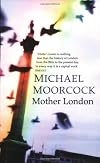
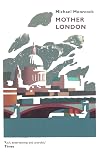
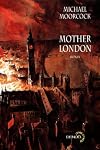
Mother London
by Michael Moorcock
On This Page
Description
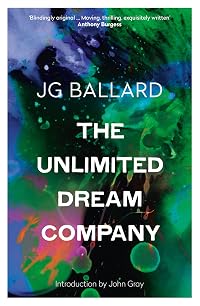
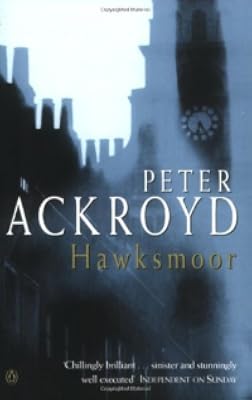
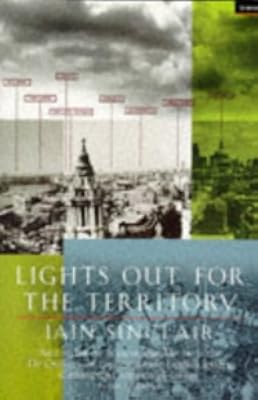
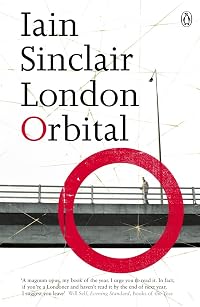
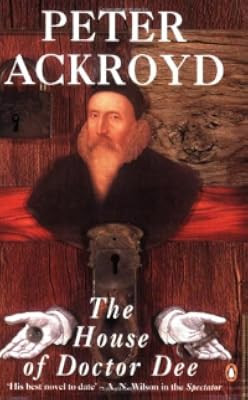
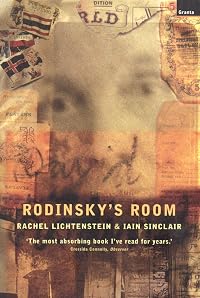
Moorcock's work ranks with Peter Acroyd, Iain Sinclair and Zadie Smith in defining London.Tags
Recommendations


















Member Reviews
I'm very surprised no-one has reviewed this rather good and quite accessible novel.
Those who can't stomach SF and fantasy but liked, for example Martin Amis' "London Fields" or Peter Ackroyd's non-fiction about London, should have little trouble with this, while Moorcock's genre fans should be interested to read his take on the "literary" novel.
The SF is reduced to one character being telepathic and Moorcock also tones down his postmodernism - there are some "streams of consciousness" but they are quite short and helpfully in italics. The chronology flits about in "cut-up" style but only by whole chapters.
Three friends who met in a lunatic asylum, Mary, Josef and David, (mother, father and adopted "son"! But this isn't Incredibly show more Portentous and they aren't a bit holy) criss-cross London from the Blitz in 1940 to the arrival of Mrs Thatcher in 1980. They each have chapters from their perspective but for me the most engaging is the larger than life but kindly Josef Kiss. ('Ware very weird surnames all through, as per Dickens.) Using his telepathy in a pre-war mind-reading music-hall act, he is driven insane as, plausibly, he also picks up the thoughts of people with horrific sexual fantasies. Partly rehabilitated by heroically finding people trapped beneath buildings in the Blitz, he and the other two stick up for each other through the next 40 years, in and out of therapy.
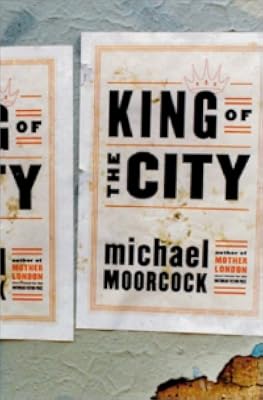
Thatcher and Thatcherism get a fair old kicking, at the shambolic but moving funeral of David's Uncle Jim, a civil servant under eight prime ministers and the fiasco of the yuppified restaurant an acquaintance almost persuades the friends to invest in (spoiler here!) but the politics doesn't unbalance the book, unlike the later "King Of The City". (A much more knockabout book in any case and not a sequel.)
The descriptions of various parts of London - the pubs round Ludgate Hill with names of legends as old as the city, the riots at the Notting Hill Carnival in the 70s, the canals particularly spring to mind - are great and detailed.
But there's a huge accretion of detail round the characters too, of all the Hollywood films, cowboy comics and other ephemera they remember. They relate to and get sustenance from their heroes from these to various degrees. In the asylum, one character lives entirely in such fantasy worlds. The more balanced characters draw on them to play jokes or get out of tight spots - and then become mythologised themselves.
And this is really the theme of the novel. "By means of our myths and legends we maintain a sense of what we are worth and who we are. Without them, we should undoubtedly go mad." (And three very different mates sticking by one another through thick and thin doesn't hurt either.) show less
Those who can't stomach SF and fantasy but liked, for example Martin Amis' "London Fields" or Peter Ackroyd's non-fiction about London, should have little trouble with this, while Moorcock's genre fans should be interested to read his take on the "literary" novel.
The SF is reduced to one character being telepathic and Moorcock also tones down his postmodernism - there are some "streams of consciousness" but they are quite short and helpfully in italics. The chronology flits about in "cut-up" style but only by whole chapters.
Three friends who met in a lunatic asylum, Mary, Josef and David, (mother, father and adopted "son"! But this isn't Incredibly show more Portentous and they aren't a bit holy) criss-cross London from the Blitz in 1940 to the arrival of Mrs Thatcher in 1980. They each have chapters from their perspective but for me the most engaging is the larger than life but kindly Josef Kiss. ('Ware very weird surnames all through, as per Dickens.) Using his telepathy in a pre-war mind-reading music-hall act, he is driven insane as, plausibly, he also picks up the thoughts of people with horrific sexual fantasies. Partly rehabilitated by heroically finding people trapped beneath buildings in the Blitz, he and the other two stick up for each other through the next 40 years, in and out of therapy.
Thatcher and Thatcherism get a fair old kicking, at the shambolic but moving funeral of David's Uncle Jim, a civil servant under eight prime ministers and the fiasco of the yuppified restaurant an acquaintance almost persuades the friends to invest in (spoiler here!) but the politics doesn't unbalance the book, unlike the later "King Of The City". (A much more knockabout book in any case and not a sequel.)
The descriptions of various parts of London - the pubs round Ludgate Hill with names of legends as old as the city, the riots at the Notting Hill Carnival in the 70s, the canals particularly spring to mind - are great and detailed.
But there's a huge accretion of detail round the characters too, of all the Hollywood films, cowboy comics and other ephemera they remember. They relate to and get sustenance from their heroes from these to various degrees. In the asylum, one character lives entirely in such fantasy worlds. The more balanced characters draw on them to play jokes or get out of tight spots - and then become mythologised themselves.
And this is really the theme of the novel. "By means of our myths and legends we maintain a sense of what we are worth and who we are. Without them, we should undoubtedly go mad." (And three very different mates sticking by one another through thick and thin doesn't hurt either.) show less
PEARLY KING OF PIMLICO. PEARLY QUEEN OF DALSTON. Their proud, knowing, friendly faces look no different from the gypsies, the travellers, the first settlers who returned to London after the desolation, drifting in from all the compass points, bringing their carts to market, some to settle, some to stay on the outskirts and grow lavender; some to put down roots in Kent and plant orchard; horse people from India to found the New Troy, powerful kings and queens, arrogant creators of cities and dynasties wherever they paused; always travelling on again, perhaps to the other planets, to the stars; unremarked carriers of civilisation, showing few signs of it in themselves, but spreading it like a virus across the universe.
When we first meet show more David Mummery, Mary Gasalee and Josef Kiss, they are all out-patients attending the same group therapy session. All three have the gift or curse of being able to hear other people's thoughts, which has led them to a life in and out of mental hospitals and on constant medication to suppress the voices in their heads. The only one ever to have used his talent is Mr Kiss, who made a living in the pre-war music halls with a mind-reading act that was rather too successful for his own good, and had a knack for locating people buried alive under collapsed buildings as an ARP warden during the Blitz.
The story goes backwards and forwards in time between the Blitz and the late 1980s, giving the reader a window in to the lives of the three main characters and their friends and acquaintances, and so we can feel their regret at the way the city they love has changed through the years. show less
When we first meet show more David Mummery, Mary Gasalee and Josef Kiss, they are all out-patients attending the same group therapy session. All three have the gift or curse of being able to hear other people's thoughts, which has led them to a life in and out of mental hospitals and on constant medication to suppress the voices in their heads. The only one ever to have used his talent is Mr Kiss, who made a living in the pre-war music halls with a mind-reading act that was rather too successful for his own good, and had a knack for locating people buried alive under collapsed buildings as an ARP warden during the Blitz.
The story goes backwards and forwards in time between the Blitz and the late 1980s, giving the reader a window in to the lives of the three main characters and their friends and acquaintances, and so we can feel their regret at the way the city they love has changed through the years. show less
This is a sort of biography of multiple characters as their lives in london interact. On a minor note all of the characters suffer from mental issues due to being psychic. I say this is a minor note as being a bit psychic certainly hasn't done any of them any good and doesn't play a very large role in the story.
Its very well written with very well rounded characters. I will say i did occasionally get confused amongst some of the minor characters, the story jumps back and forth through time a lot and you could say there are a lot of moving parts.
I'm sure some familiarity with london and its history would be beneficial but i still liked it despite my lack of background knowledge.
Its also quite long and might reward multiple reads as show more there is a lot to dig through. show less
Its very well written with very well rounded characters. I will say i did occasionally get confused amongst some of the minor characters, the story jumps back and forth through time a lot and you could say there are a lot of moving parts.
I'm sure some familiarity with london and its history would be beneficial but i still liked it despite my lack of background knowledge.
Its also quite long and might reward multiple reads as show more there is a lot to dig through. show less
I gave this over 50 pages, and can only cringe at the thought of reading the next 400 some odd pages.
What can I say about this book, oh yes, written by Michael Moorcock. If you are familiar with him I need say no more, if you are not then you might want to know most of his stuff reads like your on acid and live in the 60's.
Damned, je n'aime définitivement pas Moorcock, après n'avoir jamais fini le premier tome d'Elric. C'est très descriptif, un peu verbeux, mais je dois surtout ne pas être assez amoureux de Londres pour saisir tout le sel de la chose. Et puis il n'y a pas vraiment d'intrigue, juste des personnages qui interagissent entre eux, sans but précis (je n'ai pas pu dépasser la page 150). Un roman d'ambiance, donc, pour les fans de la capitale anglaise.
Apr 8, 2010French
Members
- Recently Added By
Lists

The Guardian's 1000 Novels Everyone Must Read
1,005 works; 547 members

Speculative Fiction: Slipstream Literature
166 works; 16 members

london novels (adult)
21 works; 3 members

Shaking a Leg
111 works; 3 members

Books We Love to Reread
688 works; 296 members

Novels with a city or town in the title
61 works; 1 member
Author Information

658+ Works 65,013 Members
Michael Moorcock, 1939 - Writer Michael Moorcock was born December 18, 1939 in Mitcham, Surrey, England. Moorcock was the editor of the juvenile magazine Tarzan Adventures from 1956-58, an editor and writer for the Sexton Blake Library and for comic strips and children's annuals from 1959-61, an editor and pamphleteer for Liberal Party in 1962, show more and became editor and publisher for the science fiction magazine New Worlds in 1964. He has worked as a singer-guitarist, has worked with the rock bands Hawkwind and Blue Oyster Cult and is a member of the rock band Michael Moorcock and the Deep Fix. Moorcock's writing covers a wide range of science fiction and fantasy genres. "The Chronicles of Castle Brass" was a sword and sorcery novel, and "Breakfast in the Ruins: A Novel of Inhumanity" uses the character Karl Glogauer as a different person in different times. Karl participates in the political violence of the French Revolution, the Paris Commune, and a Nazi concentration camp. Moorcock also wrote books and stories that featured the character Jerry Cornelius, who had no consistent character or appearance. "The Condition of Muzak" completed the initial Jerry Cornelius tetralogy and won Guardian Literary Prize in 1977. "Byzantium Endures" and "The Laughter of Carthage" are two autobiographical novels of the Russian emigre Colonel Pyat and were the closest Moorcock came to conventional literary fiction. "Byzantium Endures" focuses on the first twenty years of Pyat's life and tells of his role in the Russian revolution. Pyat survives the revolution and the subsequent civil war by working first for one side and then another. "The Laughter of Carthage" covers Pyat's life from 1920-1924 telling of his escape from Communist Russia and his travels in Europe and America. It's a sweeping picture of the world during the 1920's because it takes the character from living in Constantinople to Hollywood. Moorcock returned to the New Wave style in "Blood: A Southern Fantasy" (1994) and combined mainstream fiction with fantasy in "The Brothel of Rosenstrasse," which is set in the imaginary city of Mirenburg. MoorCock won the 1967 Nebula Award for Behold the Man and the 1979 World Fantasy Award for his novel, Gloriana. (Bowker Author Biography) show less
Some Editions
Awards and Honors
Series
Belongs to Publisher Series
Work Relationships
Has as a commentary on the text
Common Knowledge
- Canonical title*
- Mother London
- Original title
- Mother London
- Original publication date
- 1988
- People/Characters
- Josef Kiss; Mary Gasalee; David Mummery
- Important places
- London, England, UK
- Important events
- World War II
- Dedication
- This book is dedicated to the memory of my friend Pete Taylor and is also for Brian Alford wherever he may be
- First words
- "By means of cetain myths which cannot easily be damaged or debased the majority of us survive. All old great cities possess their special myths. Amongst London's in recent years is the story of the Blitz, of our endurance."
*Some information comes from Common Knowledge in other languages. Click "Edit" for more information.
Classifications
Statistics
- Members
- 674
- Popularity
- 42,504
- Reviews
- 7
- Rating
- (3.66)
- Languages
- 5 — English, French, German, Italian, Russian
- Media
- Paper, Ebook
- ISBNs
- 15
- ASINs
- 3