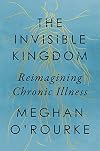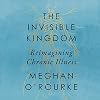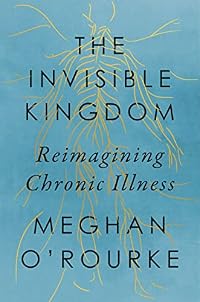
The Invisible Kingdom: Reimagining Chronic Illness
by Meghan O'Rourke
On This Page
Description
A landmark exploration of one of the most consequential and mysterious issues of our time: the rise of chronic illness and autoimmune diseases A silent epidemic of chronic illnesses afflicts tens of millions of Americans: these are diseases that are poorly understood, frequently marginalized, and can go undiagnosed and unrecognized altogether. Renowned writer Meghan O'Rourke delivers a revelatory investigation into this elusive category of "invisible" illness that encompasses autoimmune show more diseases, post-treatment Lyme disease syndrome, and now long COVID, synthesizing the personal and the universal to help all of us through this new frontier. Drawing on her own medical experiences as well as a decade of interviews with doctors, patients, researchers, and public health experts, O'Rourke traces the history of Western definitions of illness, and reveals how inherited ideas of cause, diagnosis, and treatment have led us to ignore a host of hard-to-understand medical conditions, ones that resist easy description or simple cures. And as America faces this health crisis of extraordinary proportions, the populations most likely to be neglected by our institutions include women, the working class, and people of color. Blending lyricism and erudition, candor and empathy, O'Rourke brings together her deep and disparate talents and roles as critic, journalist, poet, teacher, and patient, synthesizing the personal and universal into one monumental project arguing for a seismic shift in our approach to disease. The Invisible Kingdom offers hope for the sick, solace and insight for their loved ones, and a radical new understanding of our bodies and our health. show lessTags
Recommendations










Member Reviews
In The Invisible Kingdom, author Meghan O'Rourke seeks to understand the mysterious, debilitating illnesses that dominated her life for a decade. Does she have a complex autoimmune disturbance, chronic Lyme disease, or a vexing combination of both? O'Rourke maxes out her credit cards as she investigates both Western and integrative therapies, none of which are completely satisfactory. Yet, eventually, O'Rourke achieves a state of relative health that allows her to resume teaching, have two children, and write this book.
I thought I would really like this book, but I grew tired of the self-absorbed nature of the narrative. Still, I recommend it to those with chronic diseases.
I thought I would really like this book, but I grew tired of the self-absorbed nature of the narrative. Still, I recommend it to those with chronic diseases.
As a woman who has sought out doctors for a range of symptoms, only to be told that my levels are normal and I just have anxiety - I relate to this book more than I'd like and appreciate its existence. The author explores chronic illness on a macro and micro level and highlights how difficult it is to be seen, heard and truly understood as a person with hard-to-identify auto-immune disease(s). She stresses how important is it for the medical and scientific community to reevaluate how we view the individual when it comes to healthcare, looking at the person as a whole -- rather than a collection of separate organs or body systems -- and considering the totality of the condition. This book doesn't give any answers but rather points out show more how hard finding answers can be.
I'd highly recommend this book to anyone whose life is impacted by an auto-immune disease or chronic illness. show less
I'd highly recommend this book to anyone whose life is impacted by an auto-immune disease or chronic illness. show less
Meghan O'Rourke is issuing a challenge to all of us here, not just to the medical community, a challenge for more sensivity and patience, a challenge to reimagine the way we relate to and care for the members of our communities who suffer from chronic illnesses and/or pain. It is a challenge we should take to heart.
And yet this book fell somewhat flat for this reader. I have experienced some of the types of frustrations of which Ms. O'Rourke writes; the book was well written and there were passages that resonated. But overall it was in need of serious editing. At times very intimate and personal, at times oddly removed, the voice was inconsistent. I can accept that this may in fact be part of the point, as O'Rourke does write about the show more way chronic suffering attacks the self. And yet in her call for greater tolerance the book comes across not so much as a plea for help but as bitterness; in her call for solutions there appears to be little discernment. I do think O'Rourke's message is important, and I hope that this book resonates with some readers, but for this one, the book felt oddly unformed and unsettled. show less
And yet this book fell somewhat flat for this reader. I have experienced some of the types of frustrations of which Ms. O'Rourke writes; the book was well written and there were passages that resonated. But overall it was in need of serious editing. At times very intimate and personal, at times oddly removed, the voice was inconsistent. I can accept that this may in fact be part of the point, as O'Rourke does write about the show more way chronic suffering attacks the self. And yet in her call for greater tolerance the book comes across not so much as a plea for help but as bitterness; in her call for solutions there appears to be little discernment. I do think O'Rourke's message is important, and I hope that this book resonates with some readers, but for this one, the book felt oddly unformed and unsettled. show less
A wonderfully researched and biographical look into chronic illness and the author's personal experiences with it. Most doctors like to treat traumatic illnesses as they are easier to diagnose and heal. A chronic disease lingers and hard to pin down and treat such as a bevy of auto immune illnesses. The author virtually missed her thirties to a wide variety of symptoms that virtually debilitate her for over a decade. She even touches on long Covid as a help to chronic disease sufferers as it makes doctors more sympathetic to long term hard to diagnose health issues..
The author went on a journey over a decade plus to find out what was wrong with her, and surprisingly she got some answers but nothing definitive; this is how chronic illness can affect someone’s life. There’s lots of good reporting as well about many autoimmune diseases as well as the medical community. I can’t believe I’ve read two books this month that talk about fecal transplants; had never heard of it and now know too much.
Given that I knew little about chronic illness and autoimmune diseases, O'Rourke's book was enlightening. About a third of the way through, she tells readers that if they feel “exhausted” as she painstakingly chronicles her suffering from mysterious illnesses, try to imagine the exhaustion one feels living with them. People who struggle with illnesses that have no name "get little sympathy," O'Rourke suggests.
Meghan O’ Rourke’s The Invisible Kingdom: Reimagining Chronic Illness was a National Book Award Finalist. This book presented the grueling hardships of the author’s struggle with the devastating illnesses of autoimmune diseases. Her struggles began in earnest as a young woman at university and persisted later in her life.
Eventually, Meghan was able to find suitable help after visiting numerous specialists. During these encounters she was upset by the lack of knowledge concerning autoimmune diseases, physicians’ inability to make a diagnosis, and hearing that sufferers of such an illness must have a psychological problem.
After years of trials and errors she was diagnosed as having Lyme disease. Meghan received a treatment of show more antibiotics that helped. Yet, she continued to suffer with bodily pains and brain fog, but at times she felt better. Well, enough, to make trips, teach classes, and be able to work out. It was after having a fecal transfer in England she got a boost. Meghan soon became pregnant and gave birth to a son.
Caring for a new-born child, she was also faced with an ailing father. With her husband Jim and child, her dad moved into their home in Brooklyn. Her father who was suffering from lymphoma cancer got well enough and moved back to Connecticut. But these experiences were a further strain on her ailing body. With other health setbacks, and times of feeling well, Meghan was pregnant again, and gave birth to another child.
The book concluded with the author feeling rather conflicted. She wrote that she did not want to give a false sense of the meaning of her suffering. As she put it, at times she felt lousy, and sometimes better. But the illness itself robbed her of many precious moments she missed as a young woman because of her health. She did not even know for sure if she had Lyme disease, in addition to several other autoimmune diseases. However, she was presently feeling better, but has continued living with chronic disease with her family. show less
Eventually, Meghan was able to find suitable help after visiting numerous specialists. During these encounters she was upset by the lack of knowledge concerning autoimmune diseases, physicians’ inability to make a diagnosis, and hearing that sufferers of such an illness must have a psychological problem.
After years of trials and errors she was diagnosed as having Lyme disease. Meghan received a treatment of show more antibiotics that helped. Yet, she continued to suffer with bodily pains and brain fog, but at times she felt better. Well, enough, to make trips, teach classes, and be able to work out. It was after having a fecal transfer in England she got a boost. Meghan soon became pregnant and gave birth to a son.
Caring for a new-born child, she was also faced with an ailing father. With her husband Jim and child, her dad moved into their home in Brooklyn. Her father who was suffering from lymphoma cancer got well enough and moved back to Connecticut. But these experiences were a further strain on her ailing body. With other health setbacks, and times of feeling well, Meghan was pregnant again, and gave birth to another child.
The book concluded with the author feeling rather conflicted. She wrote that she did not want to give a false sense of the meaning of her suffering. As she put it, at times she felt lousy, and sometimes better. But the illness itself robbed her of many precious moments she missed as a young woman because of her health. She did not even know for sure if she had Lyme disease, in addition to several other autoimmune diseases. However, she was presently feeling better, but has continued living with chronic disease with her family. show less
Members
- Recently Added By
Lists

Top Five Books of 2022
736 works; 272 members

Recommend the 20 best books you've read in the last five years
2,168 works; 601 members

Science: Health & Medical
100 works; 1 member

Books Read in College
80 works; 5 members

National Book Awards 2022 Longlist
50 works; 1 member

Fave books about Ehlers-Danlos syndrome
7 works; 1 member
Author Information

13+ Works 842 Members
Meghan Q'Rourke is Editor of The Yale Review and the author of the best-selling memoir The Long Goodbye and the poetry collections Once, Halflife, and Sun in Days. She is currently completing a book about contested chronic illness.
Some Editions
Awards and Honors
Awards
Distinctions
Notable Lists
Common Knowledge
- Original publication date
- 2022
Classifications
Statistics
- Members
- 370
- Popularity
- 84,358
- Reviews
- 13
- Rating
- (4.00)
- Languages
- English
- Media
- Paper, Audiobook, Ebook
- ISBNs
- 6
- ASINs
- 2