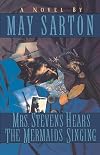
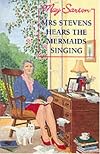
Mrs. Stevens Hears the Mermaids Singing
by May Sarton
On This Page
Description
Sarton's most important novel tells the story of a poet in her seventies, whose life is retold episodically during an interview with two writers from a literary magazine Hilary Stevens's prolific career includes a provocative novel that shot her into the public consciousness years ago, and an oeuvre of poetry that more recently has consigned her to near-obscurity. Now in the twilight of her life, Hilary, who is both a feminist and a lesbian, is receiving renewed attention for an upcoming show more collection of poems, one that has brought two young reporters to her Cape Cod home. As Hilary prepares for the conversation, she recalls formative moments both large and small. She then embarks on the interview itself—a witty and intelligent discussion of her life, work, and romantic relationships with men and women. After the journalists have left, Hilary helps a visiting male friend with his anxiety over being gay and imparts wisdom about channeling his own creative passions.This ebook features an extended biography of May Sarton. show lessTags
Recommendations
























Member Reviews
This is a short and often poetic book, the story of a day in which a novelist and poet in her 70s looks back over her life, aided by the presence of a couple of Paris Review-style interviewers (although ironically, she tells us far more than she tells them). And through the story of her life, it considers what it means to be a writer.
I feel that I would be doing the book a disservice if I tried to characterise what it's saying too narrowly. It's discursive and sometimes contradicts itself, very much like someone trying to work out what they think. But it's certainly about life as an artist - and how there can often be tensions between life and the art, particularly for women.
For Mrs Stevens, being an artist means having a sensitivity show more to emotional truth (the "hearing the mermaids singing" of the title) and being prepared to be absolutely honest about it - combined with the element of detachment necessary to turn it into words on a page. None of these seem to sit particularly well with domestic life.
Art - or genius, or the desire to create - is presented as something which demands attention, but is also dangerous - not least because of the vulnerability it creates. "Inspiration? It felt more like being harnessed to wild horses whom she must learn to control or be herself flung down and broken." Mrs Stevens needs to write - but also resents it.
This book, like its main character, is idiosyncratic, charming, thoughtful and occasionally a tiny bit infuriating. show less
I feel that I would be doing the book a disservice if I tried to characterise what it's saying too narrowly. It's discursive and sometimes contradicts itself, very much like someone trying to work out what they think. But it's certainly about life as an artist - and how there can often be tensions between life and the art, particularly for women.
For Mrs Stevens, being an artist means having a sensitivity show more to emotional truth (the "hearing the mermaids singing" of the title) and being prepared to be absolutely honest about it - combined with the element of detachment necessary to turn it into words on a page. None of these seem to sit particularly well with domestic life.
Art - or genius, or the desire to create - is presented as something which demands attention, but is also dangerous - not least because of the vulnerability it creates. "Inspiration? It felt more like being harnessed to wild horses whom she must learn to control or be herself flung down and broken." Mrs Stevens needs to write - but also resents it.
This book, like its main character, is idiosyncratic, charming, thoughtful and occasionally a tiny bit infuriating. show less
Upon its publication in the early 1960s, May Sarton worried that Mrs. Stevens Hears the Mermaids Singing would result in her forever being classified as a lesbian writer. That she was a lesbian was no secret since she had lived on openly homosexual life with relationships with notables such as Elizabeth Bowen. Her concern was that readers would focus on the characters bisexuality and miss what she had to say about love which to her was the same whether it was shared as part of a gay or straight relationship. Early in Mrs. Stevens... she tells a young protegee, "Love opens the doors into everything, as far as I can see..." and then counsels that it doesn't matter whom one loves as long as one does. Love to Sarton is a journey of show more discovery, with self discovery being perhaps the greatest end to the quest.
The plot of the novel details a day in the life of the now elderly Mrs. Hilary Stevens, upper middle class American, raised in genteel remoteness but stylish parents in Boston and abroad. In early adulthood she finds herself the author of a controversial novel which she thinks is a fake and then soon after as the wife of a seemingly robust Englishman who had been ruined by the war. Later she becomes a poet of some renowned, and then a forgotten poet buried in anthologies. At the point where the novel begins, Hilary's secluded life on Cape Cod has been interrupted by a late wave of fame. Her newest volume of poems has raised interest in her again, hence on the day of the story she is to be interviewed by a pair of reporters. Her preparations for the interview have caused her to rethink her life and work, and especially the influences of some of the Muses to her art. In relief to this, she has become a mentor to a young man who is suffering from the failure of a love affair between himself and an older man.
Readers who like a pensive book about love, life and art which is long on soul though light on action are likely to enjoy this novel. As always Sarton's prose has a womanly sturdiness to it, nearly as fragrant and vivid as Colette's, an author summoned several times by Mrs. Stevens. One thing that Mrs. Stevens insists on is that woman writers must retain their femininity.
I found Mrs. Stevens oddly similar to John Updike's Seek My Face. The similarity was so striking that midway through I sought out my volumes of Updike's reviews and essays to see if at any point he mentioned Ms. Sarton's novel. I found little mention of Sarton at all. Odd since they have a great deal in common. show less
The plot of the novel details a day in the life of the now elderly Mrs. Hilary Stevens, upper middle class American, raised in genteel remoteness but stylish parents in Boston and abroad. In early adulthood she finds herself the author of a controversial novel which she thinks is a fake and then soon after as the wife of a seemingly robust Englishman who had been ruined by the war. Later she becomes a poet of some renowned, and then a forgotten poet buried in anthologies. At the point where the novel begins, Hilary's secluded life on Cape Cod has been interrupted by a late wave of fame. Her newest volume of poems has raised interest in her again, hence on the day of the story she is to be interviewed by a pair of reporters. Her preparations for the interview have caused her to rethink her life and work, and especially the influences of some of the Muses to her art. In relief to this, she has become a mentor to a young man who is suffering from the failure of a love affair between himself and an older man.
Readers who like a pensive book about love, life and art which is long on soul though light on action are likely to enjoy this novel. As always Sarton's prose has a womanly sturdiness to it, nearly as fragrant and vivid as Colette's, an author summoned several times by Mrs. Stevens. One thing that Mrs. Stevens insists on is that woman writers must retain their femininity.
I found Mrs. Stevens oddly similar to John Updike's Seek My Face. The similarity was so striking that midway through I sought out my volumes of Updike's reviews and essays to see if at any point he mentioned Ms. Sarton's novel. I found little mention of Sarton at all. Odd since they have a great deal in common. show less
Mrs. Hilary Stevens is an aging writer who lives a largely solitary life on Cape Ann. After being ignored for decades and nearly erased from anthologies, her ninth and latest volume of poetry is a critical success. As a result, two journalists from a respected literary magazine are scheduled to interview her about her life's work. The bulk of the novel involves this interview and the long-forgotten memories it brings to the surface. In addition, a side story opens and closes the novel that involves Mar, a college boy who docks his boat at Hilary's pier and forms a close bond with her, based on shared experience.
Admittedly, I sometimes bristle at the inner-life-of-the-artist narrative. I find them defensive, pretentious, and nearly show more always rooted in the assumption that a privileged lifestyle and the freedom it brings is essential for one to live an authentic, creative life. This novel arguably shares those negative characteristics, however, I quickly warmed to the richly drawn Mrs. Stevens and her passionate dedication to her art. Much of Hilary's reflections during the interview involve the various muses she's had throughout her writing life and through these explorations, some fascinating insights are made about the angst and passion at the heart of artistic pursuits. Sarton's skill in articulating difficult to pin down aspects of love, lust, attraction, and particularly bisexuality, is impressive. That being said, this novel is flawed. It's heavy-handed; contains multiple ill-conceived metaphors; and includes some cringe-worthy, old-fashioned notions about gender roles (which wouldn't be odd, considering when it was published, but seems bizarre when juxtaposed with the novel's rather forward-thinking take on human sexuality). So, I suppose this is not for everyone, but, for me, it was a worthwhile read that strongly resonated on a personal level, so there's that. show less
Admittedly, I sometimes bristle at the inner-life-of-the-artist narrative. I find them defensive, pretentious, and nearly show more always rooted in the assumption that a privileged lifestyle and the freedom it brings is essential for one to live an authentic, creative life. This novel arguably shares those negative characteristics, however, I quickly warmed to the richly drawn Mrs. Stevens and her passionate dedication to her art. Much of Hilary's reflections during the interview involve the various muses she's had throughout her writing life and through these explorations, some fascinating insights are made about the angst and passion at the heart of artistic pursuits. Sarton's skill in articulating difficult to pin down aspects of love, lust, attraction, and particularly bisexuality, is impressive. That being said, this novel is flawed. It's heavy-handed; contains multiple ill-conceived metaphors; and includes some cringe-worthy, old-fashioned notions about gender roles (which wouldn't be odd, considering when it was published, but seems bizarre when juxtaposed with the novel's rather forward-thinking take on human sexuality). So, I suppose this is not for everyone, but, for me, it was a worthwhile read that strongly resonated on a personal level, so there's that. show less
This is a modified review of one that appeared on my blog: http://www.reluctantm.com/?p=2425
Do you really think it is impossible for a woman and a writer to lead a normal life as a woman?
I live in a small town that I moved to two years ago. I'm not the friendliest person and I work at home, by myself. Some mornings, some afternoons, I fall into the trap of thinking that no one experienced this, that all my struggling with family and motherhood and solitude and attempts at writing are somehow new and unique. It can be a bit of a kick in the gut to have it pointed out the exact opposite: other women have thought about what I think about now. Other women have written their thoughts down on it. I'm hardly alone; I just have to reach out.
So show more we have Mrs Stevens Hears The Mermaids Singing. During an interview, an author reflects on her books, her life, her loves (male and female), the Muse (female). She reflects on the difference between solitude (a good thing) and loneliness (a bad one). She befriends a college student smarting from his first gay encounter. It takes place over two days. In one sense, even written in 1965, stands up today. Dateless: authors still write, struggle to find the Muse, get married, break-up, and women still try to have-it-all. In another sense, it's a book about feminism without the benefit of second-wave feminism, and there's a datedness in the assumptions of what roles women can play. There's a datedness in Mrs Stevens' recollections of her gadabout twenties and thirties, floating around Europe, one would assume wearing trousers and having gin fizzes and charleston dancing. It takes more imagination to relate to that.
The introduction, written by Carolyn G. Heilbrun (who the Internet tells me is an American Feminist Academic), mentions that the writing does not match the depth of the ideas. Maybe I wouldn't have noticed it if it hadn't been said, but then, once read, that was all I could notice. The novel's beginning is a cliché: Mrs Stevens waking up and thinking about what she's going to do that day. Metaphors are obvious. The whole book is plagued with measles or chickenpox or something that makes there be "..."'s on each page (oh, how I despise ellipses unless they are being used as in a mathematical statement, i.e. x1,x2,…,xn). People talk in a way that never feels natural to me, but I wasn't alive in the 1960s and maybe that was how upper-class-type people spoke. The dialogue reminded me of watching The Prime of Miss Jean Brodie when I was only six or seven, where, at least to a six year old; there's that sort of affectation to the speech that distances the viewer/reader. You have to look past that, the introduction suggests. Look past that and see what's underneath.
And so, what did this book tell me? Can I write while female and still have a normal female life? Mrs Stevens didn't, but tells one of her interviewers she can try. She can hope. Maybe I can too, provided I "[fight] my war to get to [my] desk before [my] little bundle of energy has been dissipated."
(This review brought to you while my partner entertains the child in the basement with Dragon Quest VIII on the PS2, so maybe it's less impossible to combine all this than it may seem.)
This reissue of Mrs Stevens Hears The Mermaids Singing by May Sarton went on sale July 22nd, 2014, but the book was originally published in 1965.
I received a copy free from Netgalley in exchange for an honest review. show less
Do you really think it is impossible for a woman and a writer to lead a normal life as a woman?
I live in a small town that I moved to two years ago. I'm not the friendliest person and I work at home, by myself. Some mornings, some afternoons, I fall into the trap of thinking that no one experienced this, that all my struggling with family and motherhood and solitude and attempts at writing are somehow new and unique. It can be a bit of a kick in the gut to have it pointed out the exact opposite: other women have thought about what I think about now. Other women have written their thoughts down on it. I'm hardly alone; I just have to reach out.
So show more we have Mrs Stevens Hears The Mermaids Singing. During an interview, an author reflects on her books, her life, her loves (male and female), the Muse (female). She reflects on the difference between solitude (a good thing) and loneliness (a bad one). She befriends a college student smarting from his first gay encounter. It takes place over two days. In one sense, even written in 1965, stands up today. Dateless: authors still write, struggle to find the Muse, get married, break-up, and women still try to have-it-all. In another sense, it's a book about feminism without the benefit of second-wave feminism, and there's a datedness in the assumptions of what roles women can play. There's a datedness in Mrs Stevens' recollections of her gadabout twenties and thirties, floating around Europe, one would assume wearing trousers and having gin fizzes and charleston dancing. It takes more imagination to relate to that.
The introduction, written by Carolyn G. Heilbrun (who the Internet tells me is an American Feminist Academic), mentions that the writing does not match the depth of the ideas. Maybe I wouldn't have noticed it if it hadn't been said, but then, once read, that was all I could notice. The novel's beginning is a cliché: Mrs Stevens waking up and thinking about what she's going to do that day. Metaphors are obvious. The whole book is plagued with measles or chickenpox or something that makes there be "..."'s on each page (oh, how I despise ellipses unless they are being used as in a mathematical statement, i.e. x1,x2,…,xn). People talk in a way that never feels natural to me, but I wasn't alive in the 1960s and maybe that was how upper-class-type people spoke. The dialogue reminded me of watching The Prime of Miss Jean Brodie when I was only six or seven, where, at least to a six year old; there's that sort of affectation to the speech that distances the viewer/reader. You have to look past that, the introduction suggests. Look past that and see what's underneath.
And so, what did this book tell me? Can I write while female and still have a normal female life? Mrs Stevens didn't, but tells one of her interviewers she can try. She can hope. Maybe I can too, provided I "[fight] my war to get to [my] desk before [my] little bundle of energy has been dissipated."
(This review brought to you while my partner entertains the child in the basement with Dragon Quest VIII on the PS2, so maybe it's less impossible to combine all this than it may seem.)
This reissue of Mrs Stevens Hears The Mermaids Singing by May Sarton went on sale July 22nd, 2014, but the book was originally published in 1965.
I received a copy free from Netgalley in exchange for an honest review. show less
1965. This book is one of those changed-my-life-books that come along once in a while. I can't be expected to review it impartially therefore. I suspect it may have some flaws, but for me it came along perfect at the perfect time and swept all other possible concerns away. I suspect it is a bit didactic, possibly dry, dated, not radical enough. Who cares? It was as Bob Dylan says in Tangled Up In Blue: And every one of them words rang true
And glowed like burning coal
Pouring off of every page
Like it was written in my soul from me to you
And glowed like burning coal
Pouring off of every page
Like it was written in my soul from me to you
Upon its publication in the early 1960s, May Sarton worried that Mrs. Stevens Hears the Mermaids Singing would result in her forever being classified as a lesbian writer. That she was a lesbian was no secret since she had lived on openly homosexual life with relationships with notables such as Elizabeth Bowen. Her concern was that readers would focus on the characters bisexuality and miss what she had to say about love which to her was the same whether it was shared as part of a gay or straight relationship. Early in Mrs. Stevens... she tells a young protegee, "Love opens the doors into everything, as far as I can see..." and then counsels that it doesn't matter whom one loves as long as one does. Love to Sarton is a journey of show more discovery, with self discovery being perhaps the greatest end to the quest.
The plot of the novel details a day in the life of the now elderly Mrs. Hilary Stevens, upper middle class American, raised in genteel remoteness but stylish parents in Boston and abroad. In early adulthood she finds herself the author of a controversial novel which she thinks is a fake and then soon after as the wife of a seemingly robust Englishman who had been ruined by the war. Later she becomes a poet of some renowned, and then a forgotten poet buried in anthologies. At the point where the novel begins, Hilary's secluded life on Cape Cod has been interrupted by a late wave of fame. Her newest volume of poems has raised interest in her again, hence on the day of the story she is to be interviewed by a pair of reporters. Her preparations for the interview have caused her to rethink her life and work, and especially the influences of some of the Muses to her art. In relief to this, she has become a mentor to a young man who is suffering from the failure of a love affair between himself and an older man.
Readers who like a pensive book about love, life and art which is long on soul though light on action are likely to enjoy this novel. As always Sarton's prose has a womanly sturdiness to it, nearly as fragrant and vivid as Colette's, an author summoned several times by Mrs. Stevens. One thing that Mrs. Stevens insists on is that woman writers must retain their femininity.
I found Mrs. Stevens oddly similar to John Updike's Seek My Face. The similarity was so striking that midway through I sought out my volumes of Updike's reviews and essays to see if at any point he mentioned Ms. Sarton's novel. I found little mention of Sarton at all. Odd since they have a great deal in common. show less
The plot of the novel details a day in the life of the now elderly Mrs. Hilary Stevens, upper middle class American, raised in genteel remoteness but stylish parents in Boston and abroad. In early adulthood she finds herself the author of a controversial novel which she thinks is a fake and then soon after as the wife of a seemingly robust Englishman who had been ruined by the war. Later she becomes a poet of some renowned, and then a forgotten poet buried in anthologies. At the point where the novel begins, Hilary's secluded life on Cape Cod has been interrupted by a late wave of fame. Her newest volume of poems has raised interest in her again, hence on the day of the story she is to be interviewed by a pair of reporters. Her preparations for the interview have caused her to rethink her life and work, and especially the influences of some of the Muses to her art. In relief to this, she has become a mentor to a young man who is suffering from the failure of a love affair between himself and an older man.
Readers who like a pensive book about love, life and art which is long on soul though light on action are likely to enjoy this novel. As always Sarton's prose has a womanly sturdiness to it, nearly as fragrant and vivid as Colette's, an author summoned several times by Mrs. Stevens. One thing that Mrs. Stevens insists on is that woman writers must retain their femininity.
I found Mrs. Stevens oddly similar to John Updike's Seek My Face. The similarity was so striking that midway through I sought out my volumes of Updike's reviews and essays to see if at any point he mentioned Ms. Sarton's novel. I found little mention of Sarton at all. Odd since they have a great deal in common. show less
Upon its publication in the early 1960s, May Sarton worried that Mrs. Stevens Hears the Mermaids Singing would result in her forever being classified as a lesbian writer. That she was a lesbian was no secret since she had lived on openly homosexual life with relationships with notables such as Elizabeth Bowen. Her concern was that readers would focus on the characters bisexuality and miss what she had to say about love which to her was the same whether it was shared as part of a gay or straight relationship. Early in Mrs. Stevens... she tells a young protegee, "Love opens the doors into everything, as far as I can see..." and then counsels that it doesn't matter whom one loves as long as one does. Love to Sarton is a journey of show more discovery, with self discovery being perhaps the greatest end to the quest.
The plot of the novel details a day in the life of the now elderly Mrs. Hilary Stevens, upper middle class American, raised in genteel remoteness but stylish parents in Boston and abroad. In early adulthood she finds herself the author of a controversial novel which she thinks is a fake and then soon after as the wife of a seemingly robust Englishman who had been ruined by the war. Later she becomes a poet of some renowned, and then a forgotten poet buried in anthologies. At the point where the novel begins, Hilary's secluded life on Cape Cod has been interrupted by a late wave of fame. Her newest volume of poems has raised interest in her again, hence on the day of the story she is to be interviewed by a pair of reporters. Her preparations for the interview have caused her to rethink her life and work, and especially the influences of some of the Muses to her art. In relief to this, she has become a mentor to a young man who is suffering from the failure of a love affair between himself and an older man.
Readers who like a pensive book about love, life and art which is long on soul though light on action are likely to enjoy this novel. As always Sarton's prose has a womanly sturdiness to it, nearly as fragrant and vivid as Colette's, an author summoned several times by Mrs. Stevens. One thing that Mrs. Stevens insists on is that woman writers must retain their femininity.
I found Mrs. Stevens oddly similar to John Updike's Seek My Face. The similarity was so striking that midway through I sought out my volumes of Updike's reviews and essays to see if at any point he mentioned Ms. Sarton's novel. I found little mention of Sarton at all. Odd since they have a great deal in common. show less
The plot of the novel details a day in the life of the now elderly Mrs. Hilary Stevens, upper middle class American, raised in genteel remoteness but stylish parents in Boston and abroad. In early adulthood she finds herself the author of a controversial novel which she thinks is a fake and then soon after as the wife of a seemingly robust Englishman who had been ruined by the war. Later she becomes a poet of some renowned, and then a forgotten poet buried in anthologies. At the point where the novel begins, Hilary's secluded life on Cape Cod has been interrupted by a late wave of fame. Her newest volume of poems has raised interest in her again, hence on the day of the story she is to be interviewed by a pair of reporters. Her preparations for the interview have caused her to rethink her life and work, and especially the influences of some of the Muses to her art. In relief to this, she has become a mentor to a young man who is suffering from the failure of a love affair between himself and an older man.
Readers who like a pensive book about love, life and art which is long on soul though light on action are likely to enjoy this novel. As always Sarton's prose has a womanly sturdiness to it, nearly as fragrant and vivid as Colette's, an author summoned several times by Mrs. Stevens. One thing that Mrs. Stevens insists on is that woman writers must retain their femininity.
I found Mrs. Stevens oddly similar to John Updike's Seek My Face. The similarity was so striking that midway through I sought out my volumes of Updike's reviews and essays to see if at any point he mentioned Ms. Sarton's novel. I found little mention of Sarton at all. Odd since they have a great deal in common. show less
Members
- Recently Added By
Lists

Fiction Featuring Cranky, Eccentric Old Folks
80 works; 35 members

Publishing Triangle 100 Best Lesbian and Gay Novels
97 works; 6 members

Fantastical/Mythological Creatures in the Title
37 works; 2 members
Author Information

102+ Works 8,654 Members
May Sarton (1912-1995) is the author of more than fifty volumes of poetry collections, novels, and memoirs
Awards and Honors
Work Relationships
Common Knowledge
- Original title
- Beyond God the Father
- Original publication date
- 1965
- Related movies
- Mrs. Stevens Hears the Mermaids Singing (2004 | IMDb)
- Epigraph
- From love one can only escape at the price of lifeitself; and no lessening of sorrow is worth exile from that stream of all things human and divine. - Freya Stark
- Dedication
- to THE MUSE
Classifications
Statistics
- Members
- 418
- Popularity
- 74,029
- Reviews
- 12
- Rating
- (3.75)
- Languages
- Dutch, English, German
- Media
- Paper, Ebook
- ISBNs
- 9
- ASINs
- 7