A Dry White Season
by André Brink
On This Page
Description
As startling and powerful as when first published more than two decades ago, André Brink's classic novel, A Dry White Season, is an unflinching and unforgettable look at racial intolerance, the human condition, and the heavy price of morality.Ben Du Toit is a white schoolteacher in suburban Johannesburg in a dark time of intolerance and state-sanctioned apartheid. A simple, apolitical man, he believes in the essential fairness of the South African government and its policies—until show more the sudden arrest and subsequent "suicide" of a black janitor from Du Toit's school. Haunted by new questions and desperate to believe that the man's death was a tragic accident, Du Toit undertakes an investigation into the terrible affair—a quest for the truth that will have devastating consequences for the teacher and his family, as it draws him into a lethal morass of lies, corruption, and murder.
. show less
Tags
Recommendations


















Member Recommendations

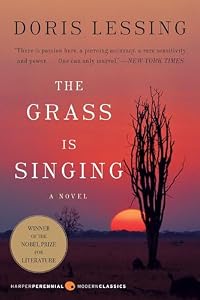
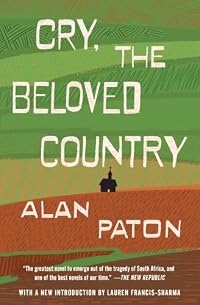
Tinwara Whereas Brink's book is a work of fiction (with a high dose of reality) Donald Woods really lived through an experience similar as Brink's protagonist. As a journalist he got in touch with Steve Biko and tried to tell Biko's story to the world.
20
Member Reviews
“What can I do but what I have done? I cannot choose not to intervene: that would be a denial and a mockery not only of everything I believe in, but of the hope that compassion may survive among men.”
Ben is a white South African school teacher who believes in the essential fairness of his government, until circumstances and the moral choices he must make upend his life. Gordon, the black janitor at the school where Ben teaches, approaches Ben for help when his teenage son Jonathan disappears during the Soweto riots. Ben agrees to help Gordon, and through witnesses they trace Jonathan to the custody of the Special Branch. Within days, however, Jonathan is dead, and the Special Branch denies ever having had him in custody.
Gordon feels show more compelled to investigate the circumstances of his son’s death, and Ben agrees to continue to help him. Very shortly, however, Gordon is arrested by the Special Branch, and after a short time in custody, Gordon is also dead, an alleged suicide. Now, Ben carries on the investigation, and other deaths ensue, including, as we learn in the opening pages of this novel, Ben’s own.
This book was written at the height of apartheid, just a few short years after the Soweto uprisings. The horrors of apartheid permeate the book in full force. The complicity and willingness of the vast majority of white people to believe the lies their government was telling (I.e. the Soweto uprisings were caused by Communist infiltrators) from a distance of the more than 40 years since this book was written seem almost unbelievable. Yet so many looked away from the government-sponsored murders, and accepted the arrests, harassment, the spying and beatings and torture and even the deaths of anyone questioning the regime.
While this is an important book (on the 1001 list), and is very well written, it does not totally transcend its time. I found that most of the female characters did not ring true. They are the most willing to accept the status quo and believe the government’s lies. The one female character who has some political awareness and courage, Melanie, seems mostly to be there as a love/sex interest for Ben (and there are a few torrid sex scenes I could have done without). Nevertheless, this is a book I recommend.
Parenthetically, the following quote, written in 1979, is one of the earliest mentions of white privilege I am aware of:
“Whether I like it or not, whether I feel like cursing my own condition or not...I am white. This is the small, final, terrifying truth of my broken world. I am white. And because I’m white I am born into a state of privilege. Even if I fight the system that has reduced us to this I remain white, and favored by the very circumstances I abhor. Even if I’m hated, and ostracized, and persecuted, and in the end destroyed, nothing can make me black.”
4 stars show less
Ben is a white South African school teacher who believes in the essential fairness of his government, until circumstances and the moral choices he must make upend his life. Gordon, the black janitor at the school where Ben teaches, approaches Ben for help when his teenage son Jonathan disappears during the Soweto riots. Ben agrees to help Gordon, and through witnesses they trace Jonathan to the custody of the Special Branch. Within days, however, Jonathan is dead, and the Special Branch denies ever having had him in custody.
Gordon feels show more compelled to investigate the circumstances of his son’s death, and Ben agrees to continue to help him. Very shortly, however, Gordon is arrested by the Special Branch, and after a short time in custody, Gordon is also dead, an alleged suicide. Now, Ben carries on the investigation, and other deaths ensue, including, as we learn in the opening pages of this novel, Ben’s own.
This book was written at the height of apartheid, just a few short years after the Soweto uprisings. The horrors of apartheid permeate the book in full force. The complicity and willingness of the vast majority of white people to believe the lies their government was telling (I.e. the Soweto uprisings were caused by Communist infiltrators) from a distance of the more than 40 years since this book was written seem almost unbelievable. Yet so many looked away from the government-sponsored murders, and accepted the arrests, harassment, the spying and beatings and torture and even the deaths of anyone questioning the regime.
While this is an important book (on the 1001 list), and is very well written, it does not totally transcend its time. I found that most of the female characters did not ring true. They are the most willing to accept the status quo and believe the government’s lies. The one female character who has some political awareness and courage, Melanie, seems mostly to be there as a love/sex interest for Ben (and there are a few torrid sex scenes I could have done without). Nevertheless, this is a book I recommend.
Parenthetically, the following quote, written in 1979, is one of the earliest mentions of white privilege I am aware of:
“Whether I like it or not, whether I feel like cursing my own condition or not...I am white. This is the small, final, terrifying truth of my broken world. I am white. And because I’m white I am born into a state of privilege. Even if I fight the system that has reduced us to this I remain white, and favored by the very circumstances I abhor. Even if I’m hated, and ostracized, and persecuted, and in the end destroyed, nothing can make me black.”
4 stars show less
Ben du Toit thinks of himself as an ordinary Afrikaner with no particular interest in politics, a simple Johannesburg schoolteacher. But he's suddenly forced to confront his illusions about the kind of country he's living in when his black friend Gordon dies in police custody, having been arrested for nothing more than trying to find out what happened to his teenage son, killed in the aftermath of the Soweto school protests. Ben's tentative attempts to get information from the police and then to help Gordon's widow with the inquest soon make him realise that the authorities have something to hide, reinforcing his stubborn wish to find out what really happened and make sure it doesn't happen again. And of course the police are soon show more making sure that Ben himself understands how much power they have, when nasty things start happening to him and the people around him.
In the end, of course, he can't hope to win, and he also knows only too well that he can't hope to stop being a privileged white person, but as a friend tells him, there are two kinds of madness one should guard against: One is the belief that we can do everything. Another is the belief that we can do nothing. He has to go on and fail so that it will be a little bit easier for the next person to fail less badly. And eventually the system will be overcome.
Brink sticks to a fairly detached, thriller-like type of narrative, obviously wanting this to be read by those who haven't thought about the problems of Apartheid any more than Ben had at the start of the book. And also knowing that not many people in South Africa would get to read it anyway, as long as the National Party remained in charge. But he did write both an Afrikaans and an English version of it, as he did for most of his later books. show less
In the end, of course, he can't hope to win, and he also knows only too well that he can't hope to stop being a privileged white person, but as a friend tells him, there are two kinds of madness one should guard against: One is the belief that we can do everything. Another is the belief that we can do nothing. He has to go on and fail so that it will be a little bit easier for the next person to fail less badly. And eventually the system will be overcome.
Brink sticks to a fairly detached, thriller-like type of narrative, obviously wanting this to be read by those who haven't thought about the problems of Apartheid any more than Ben had at the start of the book. And also knowing that not many people in South Africa would get to read it anyway, as long as the National Party remained in charge. But he did write both an Afrikaans and an English version of it, as he did for most of his later books. show less
A compelling story of a man determined to do the right thing to his own detriment in apartheid Johannesburg where his coworker, a black man, has been found dead in his prison cell at the end of a trumped-up period of brutal interrogation. Du Toit investigates and slowly as he learns more about the cruel methods of the Secret Police, his own life disintegrates with intimidation and searches of his house and work. He too will learn the consequences of interfering with the Special Branch as the Stasi-like Afrikaner-run police division is known. It is a gripping story and a upsetting view of South Africa as it was run forty plus years ago, as well as an examination of racism and morality in its face. "If I act, I cannot but lose. But if I show more do not act, it is a different kind of defeat, equally decisive and maybe worse. Because then I will not even have a conscience left...[or] a possibility, however negligible or dubious, of something better, less sordid and more noble, for our children. They live on. We, the fathers, have lost."
What kind of optimism does one need to proceed as Du Toit does. A cynical individual would not attempt the legitimate queries he makes on behalf of his friend's widow, the risks he takes. I fear mine is the more cynical outlook and not the hopeful view of a world changer, a true revolutionary. I'm heartened by the films we saw in the Apartheid Museum in Johannesburg of those who did change the country such as Mandela and Biko and Tambo. Just watching the movies and the young and eager faces fills one's heart with hope erasing for a moment the old cynicism. show less
What kind of optimism does one need to proceed as Du Toit does. A cynical individual would not attempt the legitimate queries he makes on behalf of his friend's widow, the risks he takes. I fear mine is the more cynical outlook and not the hopeful view of a world changer, a true revolutionary. I'm heartened by the films we saw in the Apartheid Museum in Johannesburg of those who did change the country such as Mandela and Biko and Tambo. Just watching the movies and the young and eager faces fills one's heart with hope erasing for a moment the old cynicism. show less
If South Africa had an equivalent to Israel’s Righteous Among Nations – gentiles who risked their lives to save Jews from the Nazis – White South African André Brink (1935-2015) would be honoured for his courage in challenging apartheid through his books. When we think of repression and surveillance, we tend to think of East Germany and the old Soviet States, but Brink’s brave novel A Dry White Season (1979) reminds us that it’s not so very long ago that South Africa had a brutally efficient system of repression too. In retrospect, readers know that the novel reveals a true picture of the SA security service, but for readers in the era before political reform, the disclaimer on the verso page spelled it out:
A Dry White Season was, of course, banned in South Africa, but it had already been published in Great Britain, and underground editions circulated in the same way that Soviet samizdat did. And before long the book was made into a film starring Donald Sutherland, Marlon Brando and Zakes Mokae…
The story begins with the sudden death of an ordinary, good-natured, harmless, unremarkable man. Ben Du Toit has been knocked down and killed by a hit-and-run driver, and the unnamed narrator would have thought no more of it than a shrug or a shake of the head except that Ben had left some papers with him for safe-keeping. The writer had dismissed this as a stunt by an old acquaintance who fancied himself as a character in one of the writer’s books, and he begins this tale by sorting out the papers with a view to disposing of them as worthless. But before long he realises that Du Toit was not being melodramatic, and he writes Ben’s story with a sense of growing horror. show less
Nothing in thisshow more
novel has been invented, and the climate, history and circumstances from which it arises are those of South Africa today. But separate events and people have been recast in the context of a novel, in which they exist as fiction only. It is not the surface reality which is important but the patterns and relationships underneath the surface. Therefore all resemblance between the characters and incidents in this book and people and situations outside is strictly coincidental.
A Dry White Season was, of course, banned in South Africa, but it had already been published in Great Britain, and underground editions circulated in the same way that Soviet samizdat did. And before long the book was made into a film starring Donald Sutherland, Marlon Brando and Zakes Mokae…
The story begins with the sudden death of an ordinary, good-natured, harmless, unremarkable man. Ben Du Toit has been knocked down and killed by a hit-and-run driver, and the unnamed narrator would have thought no more of it than a shrug or a shake of the head except that Ben had left some papers with him for safe-keeping. The writer had dismissed this as a stunt by an old acquaintance who fancied himself as a character in one of the writer’s books, and he begins this tale by sorting out the papers with a view to disposing of them as worthless. But before long he realises that Du Toit was not being melodramatic, and he writes Ben’s story with a sense of growing horror. show less
Ben DuToit is a white teacher in South Africa, whose peaceful existence is shaken by the arrest of his black friend, Gordon. When Gordon dies in prison, Ben challenges the police report ruling his death a suicide. He begins his own investigation, and as he gathers facts a picture of lies and corruption emerges. Even when the court upholds the police ruling, Ben is undaunted. His family can't understand his passion for justice. Here's Ben discussing the inquest with his wife, Susan:
"They killed Gordon," he said. "First they killed Jonathan, then him. How can they get away with it?"
"If they'd been guilty the court would have said so. I was just as shocked as you were when we heard about Gordon's death, Ben. But it's no use dwelling on show more it." She pressed his hand more urgently. "It's all over and done with now. You're home again. Now you can settle down like before." (p. 137)
But Ben can't settle down, and his search for truth has far-reaching consequences. He is shunned by his family, friends, and colleagues. The experience causes him to question long-held beliefs about race, dating back to his time growing up in the South African veld:
The boys who tended sheep with me, and stole apricots with me, and scared the people at the huts with pumpkin ghosts, and who were punished with me, and yet were different. We lived in a house, they in mud huts with rocks on the roof. They took over our discarded clothes. They had to knock on the kitchen door. They laid our table, brought up our children, emptied our chamber pots, called us Baas and Miesies. ... It was a good and comfortable division; it was right that people shouldn't mix, that everyone should be allotted his own portion of land where he could act and live among his own. If it hadn't been ordained explicitly in the Scriptures, then certainly it was implied by the variegated creation of an omniscient Father, and it didn't behove us to intefere with his handiwork or try and improve on His ways by bringing forth impossible hybrids. That was the way it had always been. (p. 162)
André Brink has written a powerful portrayal of an ordinary man, caught up in a situation beyond his control, but intensely motivated by his beliefs. But Ben is only human, and unable to turn the tide of apartheid on his own. In working for justice Ben is transformed, but pays a huge price. show less
"They killed Gordon," he said. "First they killed Jonathan, then him. How can they get away with it?"
"If they'd been guilty the court would have said so. I was just as shocked as you were when we heard about Gordon's death, Ben. But it's no use dwelling on show more it." She pressed his hand more urgently. "It's all over and done with now. You're home again. Now you can settle down like before." (p. 137)
But Ben can't settle down, and his search for truth has far-reaching consequences. He is shunned by his family, friends, and colleagues. The experience causes him to question long-held beliefs about race, dating back to his time growing up in the South African veld:
The boys who tended sheep with me, and stole apricots with me, and scared the people at the huts with pumpkin ghosts, and who were punished with me, and yet were different. We lived in a house, they in mud huts with rocks on the roof. They took over our discarded clothes. They had to knock on the kitchen door. They laid our table, brought up our children, emptied our chamber pots, called us Baas and Miesies. ... It was a good and comfortable division; it was right that people shouldn't mix, that everyone should be allotted his own portion of land where he could act and live among his own. If it hadn't been ordained explicitly in the Scriptures, then certainly it was implied by the variegated creation of an omniscient Father, and it didn't behove us to intefere with his handiwork or try and improve on His ways by bringing forth impossible hybrids. That was the way it had always been. (p. 162)
André Brink has written a powerful portrayal of an ordinary man, caught up in a situation beyond his control, but intensely motivated by his beliefs. But Ben is only human, and unable to turn the tide of apartheid on his own. In working for justice Ben is transformed, but pays a huge price. show less
This is probably Brink's most deservedly famous book, and I have been wanting to read since reading [b:Rumours Of Rain|745402|Rumours Of Rain|André Brink|https://images.gr-assets.com/books/1359619613s/745402.jpg|731551] last year. It is an impassioned and often brutal account of what happens when an ordinary man questions an authoritarian state, in this case the apartheid South Africa of the 70s.
Ben Du Toit is an ordinary Afrikaner school history teacher. He becomes involved when the first son of his school's caretaker, a boy who has worked for Ben's family, dies while being held by the security police. The caretaker Gordon Ngubene is unable to accept the official explanation, and involves Ben in his investigations. Gordon is arrested show more and also dies in custody, and the police claim that he hanged himself.
The book follows Ben's dogged pursuit of the truth, and how the apparatus of the state frustrates it, ultimately murderously, and the way this affects Ben's friends and families. There is a framing device of a prologue and epilogue which introduce the ghost writer, an old college friend and writer of cheap romantic fiction with whom Ben has entrusted the notes he has kept hidden.
Brink is very strong on the mechanisms and compromises that make ordinary people complicit with the excesses of the state, but like his hero Ben he never entirely loses hope that the questioning will eventually bring change, and in the light of what happened over the next decade in South Africa this seems very prescient. show less
Ben Du Toit is an ordinary Afrikaner school history teacher. He becomes involved when the first son of his school's caretaker, a boy who has worked for Ben's family, dies while being held by the security police. The caretaker Gordon Ngubene is unable to accept the official explanation, and involves Ben in his investigations. Gordon is arrested show more and also dies in custody, and the police claim that he hanged himself.
The book follows Ben's dogged pursuit of the truth, and how the apparatus of the state frustrates it, ultimately murderously, and the way this affects Ben's friends and families. There is a framing device of a prologue and epilogue which introduce the ghost writer, an old college friend and writer of cheap romantic fiction with whom Ben has entrusted the notes he has kept hidden.
Brink is very strong on the mechanisms and compromises that make ordinary people complicit with the excesses of the state, but like his hero Ben he never entirely loses hope that the questioning will eventually bring change, and in the light of what happened over the next decade in South Africa this seems very prescient. show less
A Dry White Season is the story of an ordinary man who gets caught up fighting for justice in South Africa in the 1970s. Ben Du Toit is an Afrikaner teacher who forms a friendly relationship with the black gardener at his school, Gordon Ngubene. Gordon's son Jonathan gets into trouble fighting Apartheid, and dies in highly suspicious circumstances while in custody. Gordon then gets into trouble with the Special Branch (South Africa's secret police) for trying to find out the truth about Jonathan's death.
Throughout it all, Ben is convinced that it's all just a misunderstanding, that if only the truth were told people would understand and justice would be served. His faith is sadly misplaced, and when he sees that the truth is being show more ignored by the justice system, he starts his own fight to find out the truth.
The story is told through an old University friend of Ben's, a writer of popular fiction, who is given Ben's papers after Ben's sudden death in a hit and run accident. He pieces together what happened through Ben's diaries and newspaper clippings, forming a compelling story.
I liked the fact that Ben is just an ordinary bloke who was pushed too far. He's not upstanding, or brilliant, or a fighter. He's just an ordinary man who has noticed what's going on around him, and it's offended his sense of justice. It's hard not to like the idea that it can be ordinary people who do extraordinary things.
And the whole political situation in South Africa was terrifying. It was all falling apart when I was a teenager, so it was interesting revisiting that era, although I'm extremely glad we've moved on.
A Dry White Season was a great account of an ordinary man trying to seek justice in a corrupt society. I'm still pondering it, it didn't offer any easy solutions or resolution. Matter of fact, the very ending sent shivers down my spine and I hope I never forget the terror it raised. show less
Throughout it all, Ben is convinced that it's all just a misunderstanding, that if only the truth were told people would understand and justice would be served. His faith is sadly misplaced, and when he sees that the truth is being show more ignored by the justice system, he starts his own fight to find out the truth.
The story is told through an old University friend of Ben's, a writer of popular fiction, who is given Ben's papers after Ben's sudden death in a hit and run accident. He pieces together what happened through Ben's diaries and newspaper clippings, forming a compelling story.
I liked the fact that Ben is just an ordinary bloke who was pushed too far. He's not upstanding, or brilliant, or a fighter. He's just an ordinary man who has noticed what's going on around him, and it's offended his sense of justice. It's hard not to like the idea that it can be ordinary people who do extraordinary things.
And the whole political situation in South Africa was terrifying. It was all falling apart when I was a teenager, so it was interesting revisiting that era, although I'm extremely glad we've moved on.
A Dry White Season was a great account of an ordinary man trying to seek justice in a corrupt society. I'm still pondering it, it didn't offer any easy solutions or resolution. Matter of fact, the very ending sent shivers down my spine and I hope I never forget the terror it raised. show less
Members
- Recently Added By
Lists

The Guardian's 1000 Novels Everyone Must Read
1,005 works; 549 members

Best Contemporary Literary Fiction (Around the Last 30 Years)
388 works; 124 members

Books Set In Africa
81 works; 4 members

My TBR
371 works; 3 members

Stories set on African soil
183 works; 2 members

BBC World Book Club
261 works; 5 members
Author Information

94+ Works 4,911 Members
André Brink was born on May 29, 1935 in Vrede, South Africa. He studied English and Afrikaans at the University in Potchefstroom and comparative literature in Paris. He was a South African writer and educator. He became a part of a group of writers known as Die Sestigers upon returning to South Africa in the 1960s. The group aimed to broaden show more Afrikaner fiction by writing about sexual and moral matters and the failings of the traditional political system. His books included Rumors of Rain, Looking on Darkness, A Dry White Season, and States of Emergency. Some of his books were banned in South Africa. He became a professor of Afrikaans and Dutch literature at Rhodes University and professor of English at the University of Cape Town. He has received the 1980 Martin Luther King Prize, the 1980 French Prix Medicis Etranger, and the 1982 Chevalier of the Legion d'Honneur. He was shortlisted for the Booker Prize twice and nominated for the Nobel Prize for literature on several occasions. He died on February 6, 2015 at the age of 79. (Bowker Author Biography) show less
Awards and Honors
Notable Lists
Series
Belongs to Publisher Series
Work Relationships
Has the adaptation
Common Knowledge
- Canonical title
- A Dry White Season
- Original title
- 'n Droë Wit Seisoen
- Original publication date
- 1979
- People/Characters
- Ben Du Toit; Gordon Ngubene; Melanie Bruwer; Susan Du Toit; Stanley Makhaya
- Important places
- Johannesburg, South Africa
- Related movies
- A Dry White Season (1989 | IMDb)
- Epigraph
- it is a dry white season -
dark leaves don't last, their brief lives dry out -
and with a broken heart they dive down gently headed -
for the earth -
not even bleeding. -
it is a dry white season brother, ... (show all)-
only the trees know the pain as they still stand erect -
dry like steel, their branches dry like wire, -
indeed, it is a dry white season -
but seasons come to pass. -
- Mongane Wally Serote - Dedication
- For ALTA who sustained me in the dry season
- First words
- I used to think of him as an ordinary, good-natured, harmless, unremarkable man.
- Quotations
- What will happen to us if we ever stop asking questions?
You know, what amazes me is to wonder what sort of world this is, what sort of society, in which it is possible or the state to persecute and try to break a man with a thing like this. How does such a system come into being? ... (show all)Where does it start? And who allows it to have its way? - Last words
- (Click to show. Warning: May contain spoilers.)Perhaps all one can really hope for, all I am entitled to, is no more than this: to write it down. To report what I know. So that it will not be possible for any man ever to say again: I knew nothing about it.
Classifications
Statistics
- Members
- 866
- Popularity
- 31,209
- Reviews
- 27
- Rating
- (3.98)
- Languages
- 13 — Afrikaans, Czech, Danish, Dutch, English, Estonian, Finnish, French, German, Italian, Norwegian (Bokmål), Serbian, Swedish
- Media
- Paper, Ebook
- ISBNs
- 39
- ASINs
- 13