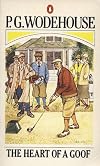
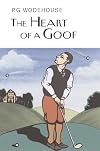
The Heart of a Goof
by P. G. Wodehouse
On This Page
Description
It was a morning when all nature shouted "Fore!" P. G. Wodehouse leads the listener out on to this little nine-hole course with a collection of nine Golf stories-as observed by the Oldest Member. The stories included are: The Heart of a Goof, High Stakes, Keeping in with Vosper, Chester Forgets Himself, The Magic Plus Fours, The Awakening of Rollo Podmarsh, Rodney Fails to Qualify, Jane Gets off the Fairway, and The Purification of Rodney Spelvin.Tags
Recommendations











Member Reviews
Rating: 4* of five
The Book Description: "Golf is the Great Mystery. Like some capricious goddess, it bestows favors with what would appear an almost fat-headed lack of method and discrimination." These words, uttered by "The Oldest Member," set the stage for a romp around the greens only Wodehouse could have conjured up. In nine stories Wodehouse describes not only the fates of the goofs who have allowed golf "to eat into their souls like some malignant growth" but also the impact of the so-called game on courtship, friendship, and business relationships.
This volume includes "The Heart of a Goof," "High Stakes," "Keeping in with Vosper," "Chester Forgets Himself," "The Magic Plus Fours," "The Awakening of Rollo Podmarsh," "Rodney Fails show more to Qualify," "Jane Gets off the Fairway," and "The Purfication of Rodney Spelvin."
My Review: I bow to no man in my appreciation of Wodehouse, even when the subject of his talent is the shudder-and-narcolepsy inducing topic of golf. (Seriously, have you ever watched golf? It is unspeakably dull...almost as boring as cricket, which is the emperor of all screamingly tedious pastimes. Both feature commentators explaining the goings-on in such hushed, reverential tones that they rival nature documentary narrators for comatosity. The mind boggles and the spirit quails before the notion of viewing the “action” live in either case. Has the World Court heard about this? Seems they need to pep up their torture prosecutors, haven't heard of a single case against golfers or cricketeers.)
Where was I? Oh, Wodehouse and his brilliance. The stories in this collection are uniformly amusing, with moments of laugh-out-loud funny. I chose this moment from “Chester Forgets Himself,” a tale of a young man of fine sensibilities and a distinct inability to let loose his baser instincts in cursing the duffers who infest golfing:
If that doesn't raise a smile, or as in my case cause a laugh, avoid the book, and indeed possibly Wodehouse. He's like this a lot. The Oldest Member, a stock character of great and enduring popularity...the tedious old buttonholer in a prominently placed chair who will talk your ear off about nothing much...is so marvelously played for laughs that he's a National Treasure. The Oldest Member always has a story to match your circumstances, explain your problem, soothe your temper. That is, if one isn't whipped into frothing frenzied hatred by the old boy, as quite a lot of 21st-century people are.
But if one can slow down a bit, forget Adam Sandler's insulting humor or Jim Carrey's manic muggings for a moment, there's a humor in here that might just wind a tendril of affection around one's heart. It's a humor of silly and sly and slow genesis, from subjects of daily familiarity. Not the butlers and not the expensive golf clubs, no, those are the set decorations. Wodehouse's humor is about what kind of people there are in our lives. Old people who want to tell you things to help you, but go on and on. Young people in love with each other and not knowing how to say so to each other. Harried strivers working the angles and never quite seeing the forest for all those pesky trees.
Wodehouse knew them, smiled at them, made them into figures of fun, and never once insulted them. I love that, I treasure that, I batten on it. Given the right mind-set, maybe you can too. What have you got to lose? A half-hour reading a story? Try “The Heart of a Goof,” first of this collection, and if there are no smiles, no chortles, no guffaws, return the book to the library and pass on to your next read. You won't be harmed, and you might be enchanted. show less
The Book Description: "Golf is the Great Mystery. Like some capricious goddess, it bestows favors with what would appear an almost fat-headed lack of method and discrimination." These words, uttered by "The Oldest Member," set the stage for a romp around the greens only Wodehouse could have conjured up. In nine stories Wodehouse describes not only the fates of the goofs who have allowed golf "to eat into their souls like some malignant growth" but also the impact of the so-called game on courtship, friendship, and business relationships.
This volume includes "The Heart of a Goof," "High Stakes," "Keeping in with Vosper," "Chester Forgets Himself," "The Magic Plus Fours," "The Awakening of Rollo Podmarsh," "Rodney Fails show more to Qualify," "Jane Gets off the Fairway," and "The Purfication of Rodney Spelvin."
My Review: I bow to no man in my appreciation of Wodehouse, even when the subject of his talent is the shudder-and-narcolepsy inducing topic of golf. (Seriously, have you ever watched golf? It is unspeakably dull...almost as boring as cricket, which is the emperor of all screamingly tedious pastimes. Both feature commentators explaining the goings-on in such hushed, reverential tones that they rival nature documentary narrators for comatosity. The mind boggles and the spirit quails before the notion of viewing the “action” live in either case. Has the World Court heard about this? Seems they need to pep up their torture prosecutors, haven't heard of a single case against golfers or cricketeers.)
Where was I? Oh, Wodehouse and his brilliance. The stories in this collection are uniformly amusing, with moments of laugh-out-loud funny. I chose this moment from “Chester Forgets Himself,” a tale of a young man of fine sensibilities and a distinct inability to let loose his baser instincts in cursing the duffers who infest golfing:
...there was something particularly irritating about the methods of the Wrecking Crew {four bad late-life converts to golfing}. They tried so hard that it seemed almost inconceivable that they should be so slow.(p75, 1956 Herbert Jenkins Autograph edition)
“They are all respectable men,” {the Oldest Member} said, “and were, I believe, highly thought of in their respective businesses. But on the links I admit they are a trial.”
“They are the direct lineal descendants of the Gadarene swine,” said Chester firmly. “Every time they come out I expect to see them rush down the hill from the first tee and hurl themselves into the lake at the second.”
If that doesn't raise a smile, or as in my case cause a laugh, avoid the book, and indeed possibly Wodehouse. He's like this a lot. The Oldest Member, a stock character of great and enduring popularity...the tedious old buttonholer in a prominently placed chair who will talk your ear off about nothing much...is so marvelously played for laughs that he's a National Treasure. The Oldest Member always has a story to match your circumstances, explain your problem, soothe your temper. That is, if one isn't whipped into frothing frenzied hatred by the old boy, as quite a lot of 21st-century people are.
But if one can slow down a bit, forget Adam Sandler's insulting humor or Jim Carrey's manic muggings for a moment, there's a humor in here that might just wind a tendril of affection around one's heart. It's a humor of silly and sly and slow genesis, from subjects of daily familiarity. Not the butlers and not the expensive golf clubs, no, those are the set decorations. Wodehouse's humor is about what kind of people there are in our lives. Old people who want to tell you things to help you, but go on and on. Young people in love with each other and not knowing how to say so to each other. Harried strivers working the angles and never quite seeing the forest for all those pesky trees.
Wodehouse knew them, smiled at them, made them into figures of fun, and never once insulted them. I love that, I treasure that, I batten on it. Given the right mind-set, maybe you can too. What have you got to lose? A half-hour reading a story? Try “The Heart of a Goof,” first of this collection, and if there are no smiles, no chortles, no guffaws, return the book to the library and pass on to your next read. You won't be harmed, and you might be enchanted. show less
This is the second of Wodehouse's two all-golf collections, published in 1926 in the UK as The Heart of a Goof and in 1927 in the US as Divots. For once, there was no important difference between the contents of the two editions.
The earlier collection appeared as The Clicking of Cuthbert (UK 1922) and Golf without tears (US 1924).
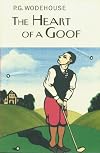
The new Everyman hardback (2006) is up to the same excellent standards as the rest of the series, although I find the dustjacket illustration by Andrzej Klimowski a bit sombre. Everyman have included the famous dedication to Leonora "without whose never-failing sympathy and encouragement this book would have been finished in half the time" and the original preface, dated from "The sixth bunker, Addington".
In show more the preface, Wodehouse complains that the critics who reviewed The Clicking of Cuthbert mostly stated themselves not to be golfers -- "one actually stated in cold print that he did not know what a niblick was". I have to confess that I know little about golf beyond what I've picked up from reading Wodehouse, but I did get someone to explain mashies and niblicks to me when I first encountered these stories. Not that I remember, but it hardly matters.
Wodehouse obviously had a great affection for golf as a sport. But his use of a golf course as a setting for some thirty short stories in all obviously has more to it than this. There was obviously a good market for such stories: Before World War I golf, outside Scotland, was essentially confined to the very rich, but by the twenties it had spread down into the suburban middle classes, and courses were springing up everywhere. Also, it offered a lot of scope for plot construction: it was played by young and old, men and women; it could be played with obsessive attention to technical efficiency, or with comical incompetence; and perhaps most crucially for Wodehouse, it came with a whole new range of marvellously exotic technical terms that could deployed for comic effect. Wodehouse has a lot of fun with the idea of golf-as-obsession: by having all the stories told by the Oldest Member, a man whose entire life revolves around the golf club and its members, he can simultaneously put forward the OM's viewpoint that golf is the only thing that matters, and undermine it for the reader.
The ten stories in this collection perhaps don't all show the same freshness of imagination as those in The Clicking of Cuthbert -- after all, there are only so many ways to structure a story so that it can be resolved by a game of golf -- but they are as superbly crafted as we would expect from Wodehouse. 'The awakening of Rollo Podmarsh' is one of my favourites. Rollo, hopelessly in love with Mary, looks pale and wan and loses his appetite. His little niece, remembering what they did when the dog showed similar symptoms, decides that the kindest thing would be to put him out of his misery, and goes to the chemist to buy poison... As Wodehouse says in the preface, his style "owes much to Dostoievsky"(!) show less
The earlier collection appeared as The Clicking of Cuthbert (UK 1922) and Golf without tears (US 1924).
The new Everyman hardback (2006) is up to the same excellent standards as the rest of the series, although I find the dustjacket illustration by Andrzej Klimowski a bit sombre. Everyman have included the famous dedication to Leonora "without whose never-failing sympathy and encouragement this book would have been finished in half the time" and the original preface, dated from "The sixth bunker, Addington".
In show more the preface, Wodehouse complains that the critics who reviewed The Clicking of Cuthbert mostly stated themselves not to be golfers -- "one actually stated in cold print that he did not know what a niblick was". I have to confess that I know little about golf beyond what I've picked up from reading Wodehouse, but I did get someone to explain mashies and niblicks to me when I first encountered these stories. Not that I remember, but it hardly matters.
Wodehouse obviously had a great affection for golf as a sport. But his use of a golf course as a setting for some thirty short stories in all obviously has more to it than this. There was obviously a good market for such stories: Before World War I golf, outside Scotland, was essentially confined to the very rich, but by the twenties it had spread down into the suburban middle classes, and courses were springing up everywhere. Also, it offered a lot of scope for plot construction: it was played by young and old, men and women; it could be played with obsessive attention to technical efficiency, or with comical incompetence; and perhaps most crucially for Wodehouse, it came with a whole new range of marvellously exotic technical terms that could deployed for comic effect. Wodehouse has a lot of fun with the idea of golf-as-obsession: by having all the stories told by the Oldest Member, a man whose entire life revolves around the golf club and its members, he can simultaneously put forward the OM's viewpoint that golf is the only thing that matters, and undermine it for the reader.
The ten stories in this collection perhaps don't all show the same freshness of imagination as those in The Clicking of Cuthbert -- after all, there are only so many ways to structure a story so that it can be resolved by a game of golf -- but they are as superbly crafted as we would expect from Wodehouse. 'The awakening of Rollo Podmarsh' is one of my favourites. Rollo, hopelessly in love with Mary, looks pale and wan and loses his appetite. His little niece, remembering what they did when the dog showed similar symptoms, decides that the kindest thing would be to put him out of his misery, and goes to the chemist to buy poison... As Wodehouse says in the preface, his style "owes much to Dostoievsky"(!) show less
P. G Wodehouse’s ‘The Heart of a Goof’ is superficially about golf – and you might need to check-out a couple of key words and phrases, not least mashie-niblick, in order to savour to the full all the delights contained within: But don’t be fooled – Wodehouse, like ‘the Oldest Member’, uses golf simply as the excuse to draw you into a series of nine gripping tales of deceit, love and warfare. I am tempted to say siren-like. In fact I will say siren like: Wodehouse, and the oldest member, siren-like, trap the unsuspecting passer-by in tales of neatly woven passions and barely suppressed expletives.
As befits the short, nine hole course, each story is unique in its play – but some are more unique than others.
Hole one show more explains the title – a goof in golf is a special type of player, one that has allowed the noblest of games to get to him and, as a consequence, suffers torments at the poor quality of his or her play (for Wodehouse’s is a strangely egalitarian game with regard to gender). Only love and a slight amount of cheating on behalf of a loved one, can save the nascent romance and push the goof to a proposal.
Holes two and three are a touch exotic in that they are played across the water – and involve the most Wodehousian combination of butler and gambling debts and revolve around suffering a long suffering, but not too present, wife. Money is involved here – as you would expect when touching down on American golfing soil. There is also the entrance of what surely must be the most superior of all Wodehouse’s superior butlers.
Hole four is back on terror firma – the horror being the need to contain oneself whilst out on the course with a ‘lady’, and the dangers of failure to achieve self expression. It’s something of a short hole, but the tension is held ‘til the final putt.
Sartorial elegance, the might plus4 and the arrogance of the newly elevated form the matter of hole five: A severe warning to all who value friendship and take up golf.
Hole six has us with the need for a mummy boy to turn hero (and discard some wet woollen underwear) – whereas the last three holes are ‘linked’ in that the players involved form around a trio of Golfing Male, Golfing Female and (yuk) poet. Don’t be fooled however into thinking they will play in a similar way – there are surprises lurking around the bends, and the final entrance of the Golfing Sister stymies all bets.
Damn fine play I‘d say! show less
As befits the short, nine hole course, each story is unique in its play – but some are more unique than others.
Hole one show more explains the title – a goof in golf is a special type of player, one that has allowed the noblest of games to get to him and, as a consequence, suffers torments at the poor quality of his or her play (for Wodehouse’s is a strangely egalitarian game with regard to gender). Only love and a slight amount of cheating on behalf of a loved one, can save the nascent romance and push the goof to a proposal.
Holes two and three are a touch exotic in that they are played across the water – and involve the most Wodehousian combination of butler and gambling debts and revolve around suffering a long suffering, but not too present, wife. Money is involved here – as you would expect when touching down on American golfing soil. There is also the entrance of what surely must be the most superior of all Wodehouse’s superior butlers.
Hole four is back on terror firma – the horror being the need to contain oneself whilst out on the course with a ‘lady’, and the dangers of failure to achieve self expression. It’s something of a short hole, but the tension is held ‘til the final putt.
Sartorial elegance, the might plus4 and the arrogance of the newly elevated form the matter of hole five: A severe warning to all who value friendship and take up golf.
Hole six has us with the need for a mummy boy to turn hero (and discard some wet woollen underwear) – whereas the last three holes are ‘linked’ in that the players involved form around a trio of Golfing Male, Golfing Female and (yuk) poet. Don’t be fooled however into thinking they will play in a similar way – there are surprises lurking around the bends, and the final entrance of the Golfing Sister stymies all bets.
Damn fine play I‘d say! show less
This is a collection of short stories, all revolving around golf. They are typical Wodehouse romantic comedies, but the characters play golf and golf has a pretty big influence on the plots. A few of the stories are linked by featuring the same characters, but most are stand-alone. I found the golf-after-golf theme tedious, as was the mechanic of having the country club's Oldest Member telling each story to a hapless victim. I liked some of the stories better than others, but the golf was just overwhelming.
I went into this book with low expectations, because I'm not interested in golf and didn't much like Eggs, Beans, and Crumpets, but this one is fun! The characters are engaging, and the language is Wodehouse at his best.
The stories in this collection all take the same path, with the Oldest Member pinning some reluctant sap in the club bar and telling a story of how this or that fellow nearly lost this or that girl of his dreams because of his failures on the golf course. Although there are some tales that show some inventiveness ("Chester Forgets Himself" features marginally imaginative typography), as a whole it's just not that engaging to the non-golfer. On the other hand, as it deals mostly with dopes who think holing out in less than ten strokes is a triumph, I suppose it offers some ray of hope to those of us whose handicaps, if calculated, might cover the national debt.
But I'm not much of a golfer, having a set of clubs and shoes but only show more venturing on the driving range once a year or so and having spent exactly one day on the course, so I'm probably not sufficiently initiated into the "Great Mystery" to find this collection humorous. This does make me worry that I find Jeeves and Wooster funny because of my familiarity with getting smashed and acting like a feckless idiot, and not because of any gift of Wodehouse for writing comedy. show less
But I'm not much of a golfer, having a set of clubs and shoes but only show more venturing on the driving range once a year or so and having spent exactly one day on the course, so I'm probably not sufficiently initiated into the "Great Mystery" to find this collection humorous. This does make me worry that I find Jeeves and Wooster funny because of my familiarity with getting smashed and acting like a feckless idiot, and not because of any gift of Wodehouse for writing comedy. show less
Have been curious about these Wodehouse golf short stories.
Was wondering how he bring off so many , of which this collection is but a small proportion.
Of course, as is so much of the rest of life, it is not the subject but the people and the interaction amongst people which is the focus of these stories.
As a non golfer, I nevertheless enjoyed them very much...a few phrases and the like made me laugh out loud...which is rare for me.
Why not a higher score? For whatever reason I lagged in finishing the book off...other things took my fancy and kept me away.
That tells me that it is enjoyable in the reading but perhaps the lack of pull tells me something.
Having said that I will definitely try another.
Big Ship
23 August 2014
Was wondering how he bring off so many , of which this collection is but a small proportion.
Of course, as is so much of the rest of life, it is not the subject but the people and the interaction amongst people which is the focus of these stories.
As a non golfer, I nevertheless enjoyed them very much...a few phrases and the like made me laugh out loud...which is rare for me.
Why not a higher score? For whatever reason I lagged in finishing the book off...other things took my fancy and kept me away.
That tells me that it is enjoyable in the reading but perhaps the lack of pull tells me something.
Having said that I will definitely try another.
Big Ship
23 August 2014
Members
- Recently Added By
Lists

Books Read in 2019
4,052 works; 110 members
Author Information

657+ Works 110,506 Members
P. G. Wodehouse was born in Guildford, United Kingdom on October 15, 1881. After completing school, he spent two years as a banker at the Hong Kong and Shanghai Bank in London and then took a job as a sports reporter and columnist for the Globe newspaper. His first novel, The Pothunters, was published in 1902. He wrote over 100 novels and short show more story collections during his lifetime including A Perfect Uncle, Love Among the Chickens, The Swoop, P. Smith in the City, Meet Mr. Milliner, Doctor Sally, Quick Service, The Old Reliable, Uneasy Money, A Damsel in Distress, Jill the Reckless, The Adventures of Sally, A Pelican at Blandings, The Girl in Blue, and Aunts Aren't Gentlemen. His most famous characters, Bertie Wooster and his manservant, Jeeves, appeared in books such as Much Obliged, Jeeves. He also wrote lyrics for musical comedies and worked as screenwriter in Hollywood in the 1930s. In 1939, he bought a villa in Le Touquet on the coast of France. He remained there when World War II started in 1939. The following year, the Germans appropriated the villa, confiscated property, and arrested him. He was detained in various German camps for almost one year before being released in 1941. He went to Berlin and spoke of his experience in five radio talks to be broadcast to America and England. The talks themselves were completely innocuous, but he was charged with treason in England. He was cleared, but settled permanently in the United States. He became a citizen in 1955. He was made a Knight Commander of the Order of the British Empire in 1975. He died from a heart attack after a long illness on February 14, 1975 at the age of 93. (Bowker Author Biography) show less
Some Editions
Series
Belongs to Publisher Series
Work Relationships
Common Knowledge
- Canonical title
- The Heart of a Goof
- Original title
- The Heart of a Goof
- Alternate titles
- Divots
- Original publication date
- 1926
- Dedication
- To my daughter Leonora without whose never-failing sympathy and encouragement this book would have been finished in half the time. (1926)
- Disambiguation notice
- UK title "The Heart of a Goof", US title "Divots"
Classifications
Statistics
- Members
- 735
- Popularity
- 38,118
- Reviews
- 13
- Rating
- (4.03)
- Languages
- 7 — Dutch, English, Finnish, French, Italian, Spanish, Swedish
- Media
- Paper, Audiobook, Ebook
- ISBNs
- 35
- ASINs
- 29