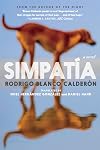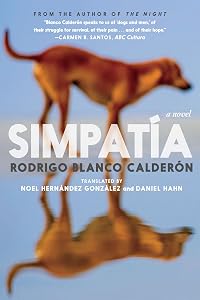
Simpatía
by Rodrigo Blanco Calderón
On This Page
Description
"Simpatía is set in the Venezuela of Nicolas Maduro amid a mass exodus of the intellectual class who have been leaving their pets behind. Ulises Kan, the protagonist and a movie buff, receives a text message from his wife, Paulina, saying she is leaving the country (and him). Ulises is not heartbroken but liberated by Paulina's departure. Two other events end up disrupting his life even further: the return of Nadine, an unrequited love from the past, and the death of his father-in-law, show more General Martín Ayala. Thanks to Ayala's will, Ulises discovers that he has been entrusted with a mission - to transform Los Argonautas, the great family home, into a shelter for abandoned dogs. If he manages to do it in time, he will inherit the luxurious apartment that he had shared with Paulina. This novel centers on themes of family and orphanhood in order to address the abuse of power by a patrilineage of political figures in Latin America, from Simón Bolívar to Hugo Chávez. The untranslatable title, Simpatía, which means both sympathy and charm, ironically references the qualities these political figures share. In a morally bankrupt society, where all human ties seem to have dissolved, Ulises is like a stray dog picking up scraps of sympathy. Can you really know who you love? What is, in essence, a family? Are abandoned dogs proof of the existence or non-existence of God? Ulises unknowingly embodies these questions, as a pilgrim of affection in a post-love era"-- show lessTags
Recommendations
















Member Reviews
I had been looking for a book specifically from Venezuela for the StoryGraph Reads the World challenge, but pickings seemed slim. But I saw this recommended on Instagram, and while there were a few things in the description that gave me pause, I picked it up at the library and ended up glad that I did.
The novel follows Ulises, a man who was once a professor, but whose main responsibility now is executing the wish of his recently deceased father-in-law to transform his home and property into a shelter for abandoned dogs. As complicated as this task might be on it own, the will establishes a deadline for the transformation to be complete, and there are plenty of folks providing additional obstacles – most notably his estranged wife, show more who thinks she should have inherited both her father’s home and the apartment that she and Ulises used to live in, but also a number of corrupt officials and interested parties who, in the crumbling Venezuelan state, will take advantage of any possible leverage to extort some benefit to themselves.
In the background of all this are the dogs. Dogs being abandoned as their owners flee the violence and chaos that Venezuela is descending into. Dogs being abused for having the poor fortune to belong to someone of a differing political position. Dogs that may or may not be related to a dog once owned by revered political figures of the past. Dogs that are so much easier to love than people with their complicated and obscured motivations. Dogs that are also so much easier to harm.
Not all of the dogs are going to live through this book.
There are plenty of interesting men in this book, though the women characters (in my opinion) are not so great. Inscrutable, tragic or harpies, always viewed from the outside, none of them really get a voice here. But I did enjoy that Ulises, while he never seems to be doing much at all, manages to evade or triumph over corruption and complete his mission in the end. I enjoyed the partial picture of Venezuela that this book portrays. show less
The novel follows Ulises, a man who was once a professor, but whose main responsibility now is executing the wish of his recently deceased father-in-law to transform his home and property into a shelter for abandoned dogs. As complicated as this task might be on it own, the will establishes a deadline for the transformation to be complete, and there are plenty of folks providing additional obstacles – most notably his estranged wife, show more who thinks she should have inherited both her father’s home and the apartment that she and Ulises used to live in, but also a number of corrupt officials and interested parties who, in the crumbling Venezuelan state, will take advantage of any possible leverage to extort some benefit to themselves.
In the background of all this are the dogs. Dogs being abandoned as their owners flee the violence and chaos that Venezuela is descending into. Dogs being abused for having the poor fortune to belong to someone of a differing political position. Dogs that may or may not be related to a dog once owned by revered political figures of the past. Dogs that are so much easier to love than people with their complicated and obscured motivations. Dogs that are also so much easier to harm.
Not all of the dogs are going to live through this book.
There are plenty of interesting men in this book, though the women characters (in my opinion) are not so great. Inscrutable, tragic or harpies, always viewed from the outside, none of them really get a voice here. But I did enjoy that Ulises, while he never seems to be doing much at all, manages to evade or triumph over corruption and complete his mission in the end. I enjoyed the partial picture of Venezuela that this book portrays. show less
International Booker Longlist 2024
This novel brings together Venezuelan history, modern Caracas and Venezuelan politics, and a cast of characters who are all Venezuelan, but all of different origins. I really enjoyed this—it is very interesting, from the dogs abandoned as people with means leave the country, to those that stay to either take advantage of the situation or try to help. The characters are all interesting, the families do different and mysterious.
I also found it quite confusing and I am certain I missed things. I am not a fan of open endings like this one—what did he see in the bottom of the cup? Was his “first short story” not a story but his subconscious telling him what he knows to be true? But what is that? Is show more Paul or the younger Aponte the guilty party? Argh.
Yet, I still liked it. I think my 3rd favorite of the Longlist (I have 2 left to read!). show less
This novel brings together Venezuelan history, modern Caracas and Venezuelan politics, and a cast of characters who are all Venezuelan, but all of different origins. I really enjoyed this—it is very interesting, from the dogs abandoned as people with means leave the country, to those that stay to either take advantage of the situation or try to help. The characters are all interesting, the families do different and mysterious.
I also found it quite confusing and I am certain I missed things. I am not a fan of open endings like this one—what did he see in the bottom of the cup? Was his “first short story” not a story but his subconscious telling him what he knows to be true? But what is that? Is show more Paul or the younger Aponte the guilty party? Argh.
Yet, I still liked it. I think my 3rd favorite of the Longlist (I have 2 left to read!). show less
Ratings
Members
- Recently Added By
Author Information

10+ Works 117 Members
Some Editions
Awards and Honors
Awards
Common Knowledge
- Canonical title
- Simpatía
- Important places
- Venezuela
Classifications
Statistics
- Members
- 47
- Popularity
- 637,438
- Reviews
- 3
- Rating
- (3.38)
- Languages
- English, French, Portuguese, Spanish
- Media
- Paper, Ebook
- ISBNs
- 8
- ASINs
- 1