On This Page
Description
Stunning Belrive Priory, consisting of a mansion, park and medieval ruins, is surrounded by the noise and neon signs of its gaudy neighbours - a cotton-mill, a brewey and a main road. Nevertheless, Arthur Ferryman is pleased to return for a family Christmas, but is shocked to discover that his cousins have taken up a new pastime - pistol-shooting. Inspector Appleby arrives on the scene when one of Ferryman's cousins is found shot dead in the study, in a mystery built on family antagonisms.Tags
Recommendations



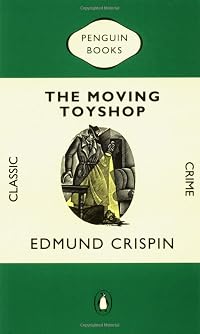


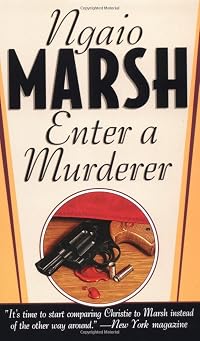


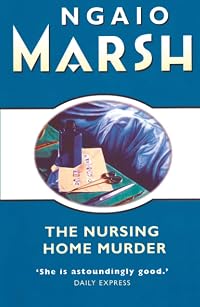


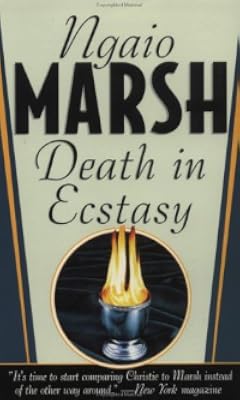









Member Recommendations
wandering_star It feels like a spoiler to explain what these two have in common - other than both being fun Golden Age murder mysteries!
khrhome Dry humor!
Member Reviews
Hilarious, dry dry DRY humor, a bit reminiscent of Terry Pratchett. The denouement in this particular mystery is absolutely absurd -- indescribably funny. Michael Innes is not about "who dunnit", he's about words and language (he was a English professor at Oxford, among other grand places, and it shows): description, characterization, and all with tongue firmly in cheek.
I advise reading Innes on an e-reader, because one of the author's quirks is to use archaic terms that no one has used for two hundred years, so it's a real convenience to be able to just click the word for a definition. After a while, this becomes one of the things you love about his books.
I advise reading Innes on an e-reader, because one of the author's quirks is to use archaic terms that no one has used for two hundred years, so it's a real convenience to be able to just click the word for a definition. After a while, this becomes one of the things you love about his books.
Summary: A gathering of Sir Basil Roper’s extended family and friends is marred when his nephew is shot in his study.
Arthur Ferryman has always loved Belrive, the home of Sir Basil Roper, especially the old priory ruins. So, you can understand his delight on being invited for a holiday gathering with extended family. But city is encroaching on country as Ferryman notes, watching the Cudbury Brewery neon sign pour tall cold ones over the priory ruins. Ah, progress!
Likewise, this is not an idyllic family gathering. Sir Basil has announced plans to sell his estate to fund a science expedition. Not everyone is happy, particularly those who could lose inheritances. Furthermore, a new pastime introduces a new element of danger–pistol show more shooting!
Yes, you guessed it. There is a shooting. Arthur, unsettled by the family dynamics, goes for an evening walk before dinner. At one point, he notices a figure on the terrace outside Sir Basil’s study. Not able to identify the person and not thinking too much of it, he continues his walk as snow begins to fall. As he is returning for dinner, he meets another person at the door, who is none other than Sir John Appleby, a family friend and dinner guest.
When they go in, they learn there has been a shooting in Sir Basil’s study. At first, because he was in there earlier, they feared it was Sir Basil. Instead, it is a nephew, seriously wounded in the right lung. He’s hanging on by a thread as an ambulance rushes him away.
Appleby is asked to join the local police to assist. Appleby more or less invites Ferryman to be his right hand man. Convenient, since Ferryman is our narrator! Typical of manor house mysteries, while Appleby investigates, the family all come up with theories, accusing most everyone in the house. There is even a confession. One of the family is even a would-be mystery writer with her own theories.
There is also some question of who was the intended victim. Everyone notes the family resemblance between Sir Basil and the nephew, as well as the nephew’s brother. This helps account for the variety of theories. In the midst of all that, and a house full of guns, Appleby has to find the shooter while we wait on tenterhooks to see if the victim will survive.
Not everyone appreciates Innes. I would describe his books as mysteries for the cultured, for those who like sophisticated dialogue and dry British humor. And he wrote in the 1930’s and 1940’s, a different time. But I enjoyed the plot development, the cast of characters, and how Innes employs Ferryman as narrator. show less
Arthur Ferryman has always loved Belrive, the home of Sir Basil Roper, especially the old priory ruins. So, you can understand his delight on being invited for a holiday gathering with extended family. But city is encroaching on country as Ferryman notes, watching the Cudbury Brewery neon sign pour tall cold ones over the priory ruins. Ah, progress!
Likewise, this is not an idyllic family gathering. Sir Basil has announced plans to sell his estate to fund a science expedition. Not everyone is happy, particularly those who could lose inheritances. Furthermore, a new pastime introduces a new element of danger–pistol show more shooting!
Yes, you guessed it. There is a shooting. Arthur, unsettled by the family dynamics, goes for an evening walk before dinner. At one point, he notices a figure on the terrace outside Sir Basil’s study. Not able to identify the person and not thinking too much of it, he continues his walk as snow begins to fall. As he is returning for dinner, he meets another person at the door, who is none other than Sir John Appleby, a family friend and dinner guest.
When they go in, they learn there has been a shooting in Sir Basil’s study. At first, because he was in there earlier, they feared it was Sir Basil. Instead, it is a nephew, seriously wounded in the right lung. He’s hanging on by a thread as an ambulance rushes him away.
Appleby is asked to join the local police to assist. Appleby more or less invites Ferryman to be his right hand man. Convenient, since Ferryman is our narrator! Typical of manor house mysteries, while Appleby investigates, the family all come up with theories, accusing most everyone in the house. There is even a confession. One of the family is even a would-be mystery writer with her own theories.
There is also some question of who was the intended victim. Everyone notes the family resemblance between Sir Basil and the nephew, as well as the nephew’s brother. This helps account for the variety of theories. In the midst of all that, and a house full of guns, Appleby has to find the shooter while we wait on tenterhooks to see if the victim will survive.
Not everyone appreciates Innes. I would describe his books as mysteries for the cultured, for those who like sophisticated dialogue and dry British humor. And he wrote in the 1930’s and 1940’s, a different time. But I enjoyed the plot development, the cast of characters, and how Innes employs Ferryman as narrator. show less
Tedious and pedestrian
I found this self-indulgent and rambling. It is less a crime/mystery, more an intellectual exercise in devising as many solutions as possible from an obscure crime within a limited cast. The book begins with chapters of philosophising wrapped around meagre information about Belrive Priory and the extended family who are gathering there. These family members are variously eccentric, silly, juvenile, self-obsessed or pompous — in short, I found it impossible to raise an atom of interest in any one of them. Three visitors are added to the mix - one who is a bit of a cypher, another who proves to be the most interesting of the lot, and finally Inspector Appleby. There is no sense of realism about the investigation show more that follows.
Michael Innes was a professor of English. He had also studied psychoanalysis. And boy, do both show in his writing style. I found it tedious in the extreme, and the only reason I finished it was that I had been sent a free copy in exchange for a review. My one thought when I got to the end was a disbelieving, "Good grief!" show less
I found this self-indulgent and rambling. It is less a crime/mystery, more an intellectual exercise in devising as many solutions as possible from an obscure crime within a limited cast. The book begins with chapters of philosophising wrapped around meagre information about Belrive Priory and the extended family who are gathering there. These family members are variously eccentric, silly, juvenile, self-obsessed or pompous — in short, I found it impossible to raise an atom of interest in any one of them. Three visitors are added to the mix - one who is a bit of a cypher, another who proves to be the most interesting of the lot, and finally Inspector Appleby. There is no sense of realism about the investigation show more that follows.
Michael Innes was a professor of English. He had also studied psychoanalysis. And boy, do both show in his writing style. I found it tedious in the extreme, and the only reason I finished it was that I had been sent a free copy in exchange for a review. My one thought when I got to the end was a disbelieving, "Good grief!" show less
This 1940 Appleby story is very accomplished technically, but I had the feeling that the characterisation and dialogue weren't up to Innes's usual standard. (It's a while since I read any Innes, though, so I might be remembering the others as better than they really are...) There are plenty of more-or-less academic jokes, but they all felt a bit laboured and schoolmasterish, somehow. Possibly that comes from the way Innes has chosen to use a Henry-Greenish "modern novelist" as his first-person narrator: the parody wears a bit thin after a while.
On the other hand, as a whodunnit, it's excellent: we're guided effortlessly through what looks like a hopelessly complicated scenario, in which we don't know whether the shooting was really show more attempted murder or something else. If it was attempted murder, we can't be sure who the intended victim was; we don't even know for sure whether we can trust the narrator. Fun! show less
On the other hand, as a whodunnit, it's excellent: we're guided effortlessly through what looks like a hopelessly complicated scenario, in which we don't know whether the shooting was really show more attempted murder or something else. If it was attempted murder, we can't be sure who the intended victim was; we don't even know for sure whether we can trust the narrator. Fun! show less
Definitely one of Innes' best. Almost a parody of the "house-party" style of detective story, involving the various branches of the Roper family who gather at Belrive Priory, where inevitably a crime occurs. This time it's not murder but attempted murder (the Amazon description is wrong here) - or is it? Was Basil's annoying relative Wilfred Foxcroft shot in mistake for his host? And why was he shot on the wrong side of his body? Appleby's appearance almost exactly coincides with the crime, and turns out to be highly fortuiitous. Games are played with quotations which turn out to be laced with significance. Although some of the later developments are rather far-fetched, the reader can (hopefully) overlook that.
Sir Basil Roper's relations have come to stay for Christmas. His nephew Wilfred Foxcroft is shot, but was he the intended victim?
The narrator's voice was obviously meant as a parody of a certain type of 1930s literary figure, but I found it grated after a while. An ingenious conclusion, so ingenious I'm not even sure it's possible.
The narrator's voice was obviously meant as a parody of a certain type of 1930s literary figure, but I found it grated after a while. An ingenious conclusion, so ingenious I'm not even sure it's possible.
The worst Innes I've read so far. The story is told by an annoyingly appearance-conscious member of stuffy English family. They're all very educated you know. Early on, one of them challenges the others to come up with quotes from Shakespeare referreing to bells, and they all do for several rounds. Our narrator is caught out for accidentally quoting some other Elizabethan (unnamed) that another recognizes as definitely not anywhere in Shakespeare. Characters are paper-thin and badly motivated. Things improved slightly when Appleby arrives shortly after an attempted murder, but then it all goes downhill fast. Everyone comes up with a solution to the case -- about six I think -- and they become increasingly far-fetched, including the show more final true explanation.
Not recommended. show less
Not recommended. show less
Members
- Recently Added By
Lists

Christmas Reading
142 works; 5 members
Author Information

103+ Works 10,661 Members
John Innes Mackintosh Stewart was born in Edinburgh. He attended Oxford where he studied English. He taught English in universities at the University of Adelaide, in South Australia. Stewart published novels, short stories, studies in literature, biographies, and plays. Under his name, he wrote scholarly works such as Character and Motive in show more Shakespeare, Rudyard Kipling, and Thomas Hardy. As Michael Innes, he wrote over fifty detective novels with Inspector John Appleby of Scotland Yard in London as the main character. These titles include Death at the President's Lodging, The Journeying Boy, Lament for a Maker, Operation Pax, the Crabtree Affair and Silence Observed. Stewart died on November 12, 1994. (Bowker Author Biography) show less
Series

Belongs to Publisher Series
Work Relationships
Is contained in
Common Knowledge
- Canonical title
- There Came Both Mist and Snow
- Original title
- There Came Both Mist and Snow
- Alternate titles
- A Comedy of Terrors
- Original publication date
- 1940
- People/Characters
- Arthur Ferryman; Basil Roper; John Appleby
- Important places
- Belrive Priory; Believe, Yorkshire, UK
- First words
- I have seldom paid my annual visit to Basil without reflecting on the irrational nature of our feelings on birth and pedigree.
- Last words
- (Click to show. Warning: May contain spoilers.)"...Goodbye."
- Original language*
- English
*Some information comes from Common Knowledge in other languages. Click "Edit" for more information.
Classifications
Statistics
- Members
- 282
- Popularity
- 114,233
- Reviews
- 14
- Rating
- (3.59)
- Languages
- English, French, Spanish
- Media
- Paper, Audiobook, Ebook
- ISBNs
- 16
- ASINs
- 14