On This Page
Description
First published in 1929 and set in 1920s London in which a group of armchair detectives, who have founded the "Crimes Circle", formulate theories on a recent murder case Scotland Yard has been unable to solve. Each of the six members, including their president, Berkeley's amateur sleuth Roger Sheringham, arrives at an altogether different solution as to the motive and the identity of the perpetrator, and also applies different methods of detection (basically deductive or inductive or a show more combination of both). Completely devoid of brutality but containing a lot of subtle, tongue-in-cheek humour instead, "The Poisoned Chocolates Case" is one of the classic whodunnits of the Golden Age of Detective Fiction. As at least six plausible explanations of what really happened are put forward one after the other, the reader, just like the members of the Crimes Circle themselves, is kept guessing right up to the final pages of the book. show lessTags
Recommendations















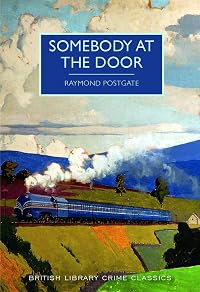

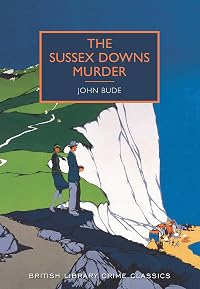
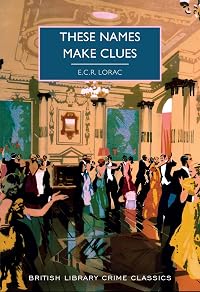

Member Recommendations

Member Reviews
This book basically described is 6 people hear about an unsolved mystery and after time trying to solve it give their monologue explanation of what they think happened. Obviously it's not a plot focused book and the characterisations given to each of the characters are limited (although work pretty well to differentiate everyone) but the mechanical elements of the mystery are solid and well written. It's not something you can "solve" at... well, any point really. Because really it's more complicated than I've just suggested.
When there are 6 different versions of events, it's a given that most are incorrect, although in varying degrees. So each story follows on from the last by saying "well, actually..." Partially this is through show more bringing new facts to light, partially it's through disproving their deductions where they haven't thought through everything. But each story is also convincingly argued, each based on and argued from a different starting point based on different ideas. And each one contains ideas about what actually happened that are near impossible to disprove because they're surrounding events known only to the murderer. Even when other people give what appear to be stronger explanations they often admit they can't exactly *disprove* the last story - even the most implausible of the stories is mostly dismissed because they can't really believe it even though they don't have good reason.
This is of course very different to the typical structure of a detective/mystery story - the detective gathers up the clues which inevitably lead him to one specific conclusion which is completely correct in story. Yet here each clue leads each detective down totally diverging paths pointing to totally different people. The middle story is told by a (fictional) detective story writer who breaks down how in fictional stories misdirection and the whim of the author create the illusion of singular solutions to clear puzzles and how easily clues can be found to point to near anyone. He also uses dodgy statistics to "prove" if you found someone who fitted all of a certain list of qualities they *had* to be the murderer because it'd be so unlikely that they'd exist (It's pretty much the prosecutor's fallacy, a real life issue in court). Each story pokes holes in the conventions and accepted disbelief around mystery stories.
But the target extends beyond mystery stories and to the criminal justice system itself and the whole method of finding criminals. Multiple times in the story the characters are so convinced that they're inclined to take their damning evidence to the police (including the barrister character). Yet they wisely stay their hand and discover their inclinations were wrong. The evidence which so convinced them as well as the reader would likely convince a jury too. How easy it is to twist some clues to create a whole story surrounding one particular suspect is emphasised. I'm not claiming that the book is a deep criticism of this but the parallels with stories of people falsely accused of crimes in real life are obvious and the fictional setting is a clever way of highlighting our own biases in thought.
I also hesitate to say this but it feels like it has something of a "postmodern" sensibility. The whole effect of the plot is to make us doubt what "evidence" really means, both in the context of the plot as well as in mystery stories in general and even in real life. When we get to the final story it's not obvious that we've got the "real" answer. It's easy to imagine a further story disproving that one, and onwards to infinity. We're left with the thought that (minor ending spoilers, not plot just concept)although we know who did it, we don't know how to prove it. Yet what proof could there possibly be that would satisfy us after being led to doubt ourselves so often over the course of the book? Have the characters been chastened by their experience of how their detective work and convictions can be led astray? It seems not. "Proof" is a funny thing. When there are an infinite variety of different stories, of possible interpretations, of different perspectives, how can we ever feel confident we've got the "right" answer, even within a work of fiction? show less
When there are 6 different versions of events, it's a given that most are incorrect, although in varying degrees. So each story follows on from the last by saying "well, actually..." Partially this is through show more bringing new facts to light, partially it's through disproving their deductions where they haven't thought through everything. But each story is also convincingly argued, each based on and argued from a different starting point based on different ideas. And each one contains ideas about what actually happened that are near impossible to disprove because they're surrounding events known only to the murderer. Even when other people give what appear to be stronger explanations they often admit they can't exactly *disprove* the last story - even the most implausible of the stories is mostly dismissed because they can't really believe it even though they don't have good reason.
This is of course very different to the typical structure of a detective/mystery story - the detective gathers up the clues which inevitably lead him to one specific conclusion which is completely correct in story. Yet here each clue leads each detective down totally diverging paths pointing to totally different people. The middle story is told by a (fictional) detective story writer who breaks down how in fictional stories misdirection and the whim of the author create the illusion of singular solutions to clear puzzles and how easily clues can be found to point to near anyone. He also uses dodgy statistics to "prove" if you found someone who fitted all of a certain list of qualities they *had* to be the murderer because it'd be so unlikely that they'd exist (It's pretty much the prosecutor's fallacy, a real life issue in court). Each story pokes holes in the conventions and accepted disbelief around mystery stories.
But the target extends beyond mystery stories and to the criminal justice system itself and the whole method of finding criminals. Multiple times in the story the characters are so convinced that they're inclined to take their damning evidence to the police (including the barrister character). Yet they wisely stay their hand and discover their inclinations were wrong. The evidence which so convinced them as well as the reader would likely convince a jury too. How easy it is to twist some clues to create a whole story surrounding one particular suspect is emphasised. I'm not claiming that the book is a deep criticism of this but the parallels with stories of people falsely accused of crimes in real life are obvious and the fictional setting is a clever way of highlighting our own biases in thought.
I also hesitate to say this but it feels like it has something of a "postmodern" sensibility. The whole effect of the plot is to make us doubt what "evidence" really means, both in the context of the plot as well as in mystery stories in general and even in real life. When we get to the final story it's not obvious that we've got the "real" answer. It's easy to imagine a further story disproving that one, and onwards to infinity. We're left with the thought that (minor ending spoilers, not plot just concept)
Roger Sheringham is the president of an amateur criminology club. The club has six members, almost all of whom are famous in their respective fields of law, drama, and literature. Since Roger and the other club members are fascinated by crime, they are delighted when a unique opportunity comes their way: a Scotland Yard inspector invites them to try their hands at solving a prominent murder case that has stumped the police. The club members, confident in their abilities, decide that that they will each formulate a possible solution to the mystery and present it to the club as a whole. If all the members agree on the murderer's identity, they will inform Scotland Yard of their conclusion. As the members take turns presenting their show more solutions, however, it becomes clear that the case is much more complicated than they originally thought.
This is one of the most unique and interesting mysteries I have ever read. The format is unlike most other mysteries because it doesn't focus on practical detective work like discovering clues and interviewing suspects. Rather, almost all the evidence is presented to the club members at the beginning of the novel, and the book spends most of its time exploring the characters' different theories of the crime. I really liked how the book pokes fun at various detective-novel conventions, particularly the idea that facts necessarily lead to one and only one conclusion. Here, all the club members have access to the same facts, but they all argue convincingly for different solutions. I didn't guess the ultimate answer to the puzzle (although I did have the same theory as one of the club members), but the answer really isn't the point. Instead, this book is all about the philosophy of the detective novel, and as such, I would definitely recommend it to mystery fans! show less
This is one of the most unique and interesting mysteries I have ever read. The format is unlike most other mysteries because it doesn't focus on practical detective work like discovering clues and interviewing suspects. Rather, almost all the evidence is presented to the club members at the beginning of the novel, and the book spends most of its time exploring the characters' different theories of the crime. I really liked how the book pokes fun at various detective-novel conventions, particularly the idea that facts necessarily lead to one and only one conclusion. Here, all the club members have access to the same facts, but they all argue convincingly for different solutions. I didn't guess the ultimate answer to the puzzle (although I did have the same theory as one of the club members), but the answer really isn't the point. Instead, this book is all about the philosophy of the detective novel, and as such, I would definitely recommend it to mystery fans! show less
An interesting and well-written experimental sort of detective novel.
Roger Sheringham has established a small club for people interested in criminology. His latest idea is for them all to investigate a recent unsolved crime ("The Poisoned Chocolates Case") during the course of one week. On successive evenings, each member will then take the floor to share his or her conclusions in hopes that somewhere along the line they will solve it and hand it back over to the police.
What follows is a fairly amusing indictment of traditional detective stories. In many such books, the reader is primed to accept that the detective's deduction on any given fact is the only possible conclusion. But in this book there are as many deductions as there are show more people, and all of them plausible in their own way.
The only flaw in this structure is that when you finally reach the "real" solution, you are still left with a nagging feeling that it's only one of many possibilities...
Which maybe was the point.
And indeed a couple of other authors wrote additional solutions in later years, which are evidently part of the newest edition of the book. It might be worth tracking down just to check out those other solutions.
A few excerpts to show off the occasional flashes of humor:
Roger sped to the rescue. The combatants reminded him of a bull and a gadfly, and that is a contest which it is often good fun to watch. But the Crimes Circle had been founded to investigate the crimes of others, not to provide opportunities for new ones.
The motion was carried unanimously. Mrs. Fielder-Flemming would have liked to vote against it, but she had never yet belonged to any committee where all motions were not carried unanimously and habit was too strong for her.
"A friend of Mrs. Bendix's then. At least," amended Mrs. Fielder-Flemming in some confusion, remembering that real friends seldom murder each other, "she thought of him as a friend. Dear me, this is getting very interesting, Alicia." show less
Roger Sheringham has established a small club for people interested in criminology. His latest idea is for them all to investigate a recent unsolved crime ("The Poisoned Chocolates Case") during the course of one week. On successive evenings, each member will then take the floor to share his or her conclusions in hopes that somewhere along the line they will solve it and hand it back over to the police.
What follows is a fairly amusing indictment of traditional detective stories. In many such books, the reader is primed to accept that the detective's deduction on any given fact is the only possible conclusion. But in this book there are as many deductions as there are show more people, and all of them plausible in their own way.
The only flaw in this structure is that when you finally reach the "real" solution, you are still left with a nagging feeling that it's only one of many possibilities...
Which maybe was the point.
And indeed a couple of other authors wrote additional solutions in later years, which are evidently part of the newest edition of the book. It might be worth tracking down just to check out those other solutions.
A few excerpts to show off the occasional flashes of humor:
Roger sped to the rescue. The combatants reminded him of a bull and a gadfly, and that is a contest which it is often good fun to watch. But the Crimes Circle had been founded to investigate the crimes of others, not to provide opportunities for new ones.
The motion was carried unanimously. Mrs. Fielder-Flemming would have liked to vote against it, but she had never yet belonged to any committee where all motions were not carried unanimously and habit was too strong for her.
"A friend of Mrs. Bendix's then. At least," amended Mrs. Fielder-Flemming in some confusion, remembering that real friends seldom murder each other, "she thought of him as a friend. Dear me, this is getting very interesting, Alicia." show less
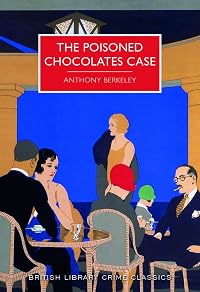
The Poisoned Chocolates Case by Anthony Berkeley was originally published in 1929 and this gem of a mystery has been puzzling mystery buffs every since. My particular edition was a 2016 British Library reprint and includes “A New Denouement” by author Christina Brand which she wrote in 1979 and an Epilogue with yet another explanation added by author Martin Edwards.
This story that causes so much speculation is set in London during the 1920’s as a group of armchair detectives, who are members of a “Crime Circle”, present their theories on a recent murder case that Scotland Yard has been unable to solve. Each of the six members, using very different methods of detection, arrives at an entirely different solution. Each solution show more appears to be entirely plausible, but each is debunked by the other members of the Crime Circle. That is until the final solution is presented.
While the author was obviously poking fun at the day’s popular detective fiction, showing how easily the clues and motives can be weaved together to point at one person or another, this tongue-in-cheek, subtle story is a delight to read and keeps the reader guessing right up to the last page. Personally I would have preferred not reading the later additions as I loved how this book ended. The Poisoned Chocolates Case is a stylish, unique and truly enjoyable classic mystery. show less
This story that causes so much speculation is set in London during the 1920’s as a group of armchair detectives, who are members of a “Crime Circle”, present their theories on a recent murder case that Scotland Yard has been unable to solve. Each of the six members, using very different methods of detection, arrives at an entirely different solution. Each solution show more appears to be entirely plausible, but each is debunked by the other members of the Crime Circle. That is until the final solution is presented.
While the author was obviously poking fun at the day’s popular detective fiction, showing how easily the clues and motives can be weaved together to point at one person or another, this tongue-in-cheek, subtle story is a delight to read and keeps the reader guessing right up to the last page. Personally I would have preferred not reading the later additions as I loved how this book ended. The Poisoned Chocolates Case is a stylish, unique and truly enjoyable classic mystery. show less
WARNING: This review contains spoilers.
****
A fun and interesting look at a case being solved by armchair detectives. The idea of a "Crime Circle Club" seemed a bit precious to me -- each member taking turns to present their solution to a crime that has stumped Scotland Yard? Puh-leez! was my original thought. But this concept was ably executed and proved to be quite an entertaining ride. Each member had a distinctive personality and focused on very different aspects of the case. It was interesting to see how close each member got to the truth while the last member to speak laid out the correct solution.
I will say that I predicted the killer while the last member was presenting his evidence, and it was very frustrating to see the other show more members fail to figure it out. And then they let the killer get away!? Or perhaps they did phone Scotland Yard. It was somewhat open-ended.
And thanks to this book, I learned that nitrobenzene is a terribly dangerous substance, and I cannot imagine why anyone would ever use it as a flavouring, knowing how poisonous it can be. The book has a rather gruesome account of the victim's demise, and that plus some poking around the Internet informed me as to the nature of this chemical. So don't swallow nitrobenzene at home, kids.
To sum up, if you like older mysteries with some entertaining characters and a truly devilish murder, hunt up this one. show less
****
A fun and interesting look at a case being solved by armchair detectives. The idea of a "Crime Circle Club" seemed a bit precious to me -- each member taking turns to present their solution to a crime that has stumped Scotland Yard? Puh-leez! was my original thought. But this concept was ably executed and proved to be quite an entertaining ride. Each member had a distinctive personality and focused on very different aspects of the case. It was interesting to see how close each member got to the truth while the last member to speak laid out the correct solution.
I will say that I predicted the killer while the last member was presenting his evidence, and it was very frustrating to see the other show more members fail to figure it out. And then they let the killer get away!? Or perhaps they did phone Scotland Yard. It was somewhat open-ended.
And thanks to this book, I learned that nitrobenzene is a terribly dangerous substance, and I cannot imagine why anyone would ever use it as a flavouring, knowing how poisonous it can be. The book has a rather gruesome account of the victim's demise, and that plus some poking around the Internet informed me as to the nature of this chemical. So don't swallow nitrobenzene at home, kids.
To sum up, if you like older mysteries with some entertaining characters and a truly devilish murder, hunt up this one. show less
This is very much a book of its time, albeit a well-written one. Roger Sheringham and the five other members of his Crimes Circle each attempt to solve a murder which has stumped Scotland Yard. Sheringham had appeared as an amateur detective in previous Berkeley mysteries and the other participants were all suggestive of one or more prominent figures in contemporary English fiction and public life.
This reviewer found Berkeley’s prose style to be enjoyable. Each character had a different “voice” and each proposed a solution to the murder that was both reasonable and predictable given that person’s (and the people for whom that person was a stand-in) understandings of the world. Reading each of these proposed solutions and the show more responses each “solution” elicited from the group told this reader more about a particular slice of English life and culture than would several volumes of academic exposition. The writers of murder mysteries routinely use short-cuts, exaggerations and stereotypes in order to make the story believable (for fiction is often held to a higher stand of “reality” than is reality itself) and yet the picture that they draw must adhere either the reality the reader understands or proscribes. Since different authors attracted different audiences the varied realities one comes across in these books gives the present day reader a vivid picture of the actual and mental world of the English reader of popular murder mysteries in the first half of the interwar period.
While some of the presumptions and understandings upon which the amateur detectives’ solutions are based will probably come as no surprise to today’s reader others seem to be more appropriate to a Monty Python sketch than a book that is not categorized as farce or magical realism. As this reader expected servants and clerks exist only to be questioned and to fulfill their practical functions. For example, at no point in the story did any person suggest that a member of the working or lower middle class might have played an intentional role in the murder. What was surprising was the degree to which the differences in the way in which men who went to one of the public schools and men who were “merely” well educated were considered as real, tangible evidence of who could and could not have committed the crime given the different solutions proposed. There was also a general agreement not only that men acted (and thought) differently than did women but that methods of murder would differ not only by the gender and education of the murderer but also by the gender of the murdered.
Although The Poisoned Chocolates Mystery is not a collection of short stories it can be read in a similar fashion as the the reader (and the members of the Crime Circle) are introduced to the crime and each of the six present, on separate nights, their proposed solution. There are no maps or complicated alibi checklists to reference. In short, a well written and diverting story for the reader who enjoys murder mysteries written in the early period of the “Golden Age.” show less
This reviewer found Berkeley’s prose style to be enjoyable. Each character had a different “voice” and each proposed a solution to the murder that was both reasonable and predictable given that person’s (and the people for whom that person was a stand-in) understandings of the world. Reading each of these proposed solutions and the show more responses each “solution” elicited from the group told this reader more about a particular slice of English life and culture than would several volumes of academic exposition. The writers of murder mysteries routinely use short-cuts, exaggerations and stereotypes in order to make the story believable (for fiction is often held to a higher stand of “reality” than is reality itself) and yet the picture that they draw must adhere either the reality the reader understands or proscribes. Since different authors attracted different audiences the varied realities one comes across in these books gives the present day reader a vivid picture of the actual and mental world of the English reader of popular murder mysteries in the first half of the interwar period.
While some of the presumptions and understandings upon which the amateur detectives’ solutions are based will probably come as no surprise to today’s reader others seem to be more appropriate to a Monty Python sketch than a book that is not categorized as farce or magical realism. As this reader expected servants and clerks exist only to be questioned and to fulfill their practical functions. For example, at no point in the story did any person suggest that a member of the working or lower middle class might have played an intentional role in the murder. What was surprising was the degree to which the differences in the way in which men who went to one of the public schools and men who were “merely” well educated were considered as real, tangible evidence of who could and could not have committed the crime given the different solutions proposed. There was also a general agreement not only that men acted (and thought) differently than did women but that methods of murder would differ not only by the gender and education of the murderer but also by the gender of the murdered.
Although The Poisoned Chocolates Mystery is not a collection of short stories it can be read in a similar fashion as the the reader (and the members of the Crime Circle) are introduced to the crime and each of the six present, on separate nights, their proposed solution. There are no maps or complicated alibi checklists to reference. In short, a well written and diverting story for the reader who enjoys murder mysteries written in the early period of the “Golden Age.” show less
The Poisoned Chocolates Case is an ingenious, entertaining, and humorous mystery of the old school type, set in London in the 1920s. Six armchair detectives of the Crimes Circle club attempt to solve a perplexing case of murder by (poisoned) chocolate. It is not clear who had been intended as the victim, who the perpetrator could be, and what of many possible motives was the actual one. At each meeting of the club, one of the six members presents their conclusions as to the murderer and the intended victim. Each in turn is able to present a thoroughly plausible explanation, one that seems certain to be true; but each explanation falls away in turn as new facts emerge. The final outcome is entirely unexpected, and leaves the club members show more stunned. The characters are distinctly drawn, and an element of facetious humor suffuses the work. This is a fine old work for mystery lovers.
I found this work in a 1930s era Mammoth Golden Book of Best Detective Stories. However, the book has been reprinted several times over the years, and used copies are readily available at low cost. show less
I found this work in a 1930s era Mammoth Golden Book of Best Detective Stories. However, the book has been reprinted several times over the years, and used copies are readily available at low cost. show less
Members
- Recently Added By
Lists

The Guardian's 1000 Novels Everyone Must Read
1,005 works; 552 members

The Top 100 Crime Novels of All Time
100 works; 15 members

501 Must-Read Books
529 works; 72 members

Haycraft Queen Cornerstones
181 works; 3 members

Books mentioned in Julian Symons’ Bloody Murder
438 works; 6 members

AlphaKIT: Brown
21 works; 4 members

Books Read in 2019
4,052 works; 108 members

#JustTheFacts2020Gold
48 works; 1 member
#MysteryBingo2020Gold(Original)
36 works; 1 member
#MysteryBingo2020Gold(Revised)
36 works; 1 member

Tozai Mystery Best 100 | The Top 100 Mystery Novels
111 works; 3 members
Must Read Detective Stories (Nick Fuller)
278 works; 2 members
Art Bourgeau's Favorites [Mystery Lovers Companion, 1986]
124 works; 2 members

Top Ten Escapist Crime Reads (Martin Edwards)
10 works; 1 member
Author Information

44+ Works 3,080 Members
A journalist as well as a novelist, Anthony Berkeley was a founding member of the Detection Club and one of crime fiction's greatest innovators. He was one of the first to predict the development of the 'psychological' crime novel and he sometimes wrote under the pseudonym of Francis Iles. He wrote twenty-four novels, ten of which feature his show more amateur detective, Roger Sheringham show less
Some Editions
Awards and Honors
Series

Belongs to Publisher Series
Põnevik (15)
Penguin Books (58)
Doubleday Crime Club (1929.03)
Crimen & Cia. (40)
Prisma detectives (33)
Den svarte serie (108)
British Library Crime Classics (Novel)
SaPo (329)
Work Relationships
Common Knowledge
- Canonical title
- The Poisoned Chocolates Case
- Original title
- The Poisoned Chocolates Case
- Alternate titles
- The Poisoned Chocolates Case: An Academic Detective Story
- Original publication date
- 1929-06-01
- People/Characters
- Roger Sheringham; Mabel Fielder-Flemming; Alicia Dammers; Sir Charles Wildman; Ambrose Chitterwick; Morton Harrogate Bradley (show all 13); Sir Eustace Pennefather; Graham Bendix; Joan Bendix; Mrs. Verreker-le-Mesurer; Chief Inspector Moresby; Miss Wildman; Lady Pennefather
- Important places
- London, England, UK
- Related movies*
- Smrt pocestné paní (1969 | IMDb)
- First words
- Roger Sheringham took a sip of the old brandy in front of him and leaned back in his chair at the head of the table.
- Last words
- (Click to show. Warning: May contain spoilers.)Nobody enlightened him.
- Original language*
- English
*Some information comes from Common Knowledge in other languages. Click "Edit" for more information.
Classifications
Statistics
- Members
- 674
- Popularity
- 42,863
- Reviews
- 35
- Rating
- (3.65)
- Languages
- 15 — Czech, Dutch, English, Estonian, Finnish, French, German, Hungarian, Italian, Norwegian (Bokmål), Norwegian, Portuguese, Russian, Spanish, Swedish
- Media
- Paper, Audiobook, Ebook
- ISBNs
- 36
- ASINs
- 15