The Abyss
by Marguerite Yourcenar
On This Page
Description
A novel of 16th century Europe. A young man, destined for the Church, rejects his theological studies and takes up with the scientific studies of the times.Tags
Recommendations















Member Reviews
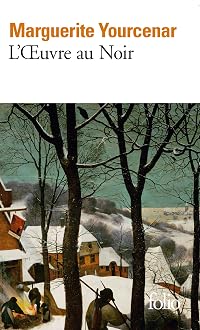
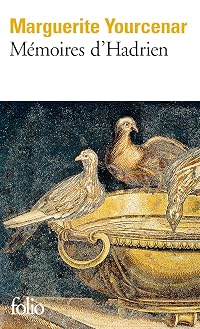
I loved [b:Memoirs of Hadrian|12172|Memoirs of Hadrian|Marguerite Yourcenar|https://i.gr-assets.com/images/S/compressed.photo.goodreads.com/books/1416448158l/12172._SX50_.jpg|1064574], so borrowed another Marguerite Yourcenar novel as soon as I spotted it in the library. Oddly, 'Zeno of Bruges' reminded me more of [b:Narcissus and Goldmund|5954|Narcissus and Goldmund|Hermann Hesse|https://i.gr-assets.com/images/S/compressed.photo.goodreads.com/books/1374680750l/5954._SY75_.jpg|955995] than [b:Memoirs of Hadrian|12172|Memoirs of Hadrian|Marguerite Yourcenar|https://i.gr-assets.com/images/S/compressed.photo.goodreads.com/books/1416448158l/12172._SX50_.jpg|1064574], although that might be because I read the former much more recently. It show more follows the life of Zeno, a doctor, alchemist, and intellectual whose wide-ranging curiosity makes him a dangerous heretic in 16th century Europe. Yourcenar is a magnificent writer and period is evoked brilliantly. The narrative is full of detail and texture, giving the feeling that mainland Europe is in the very early stages of a transition. According to [b:The Origin of Capitalism: A Longer View|185160|The Origin of Capitalism A Longer View|Ellen Meiksins Wood|https://i.gr-assets.com/images/S/compressed.photo.goodreads.com/books/1388987299l/185160._SX50_.jpg|178971], while this novel takes place capitalism was germinating in rural England. In his youth, Zeno takes an interest in the mechanisation of weaving. As he gets older, his focus shifts to medicine and philosophy. However, the structure of the book gives relatively little time to the prime of Zeno's life and his travels. The initial section covers his early years, the second his midlife working as a doctor in Bruges, and the third the end of his life. This made for a somewhat peculiar pace, as the narrative rushed through what I expected to be the most substantive part. It also gave most of the book a solemn and elegiac tone, as Zeno looked back on the past and contemplated death ahead. His consistent disgust at violence and cruelty are likewise powerful but relentlessly uncheerful to read.
Yourcenar's translated prose is glorious and full of striking images like this:
An early chapter titled 'Death in Münster' includes a brief but extraordinary account of the Münster Anabaptist rebellion of 1534-5, which I came across in [b:The Pursuit of the Millennium: Revolutionary Millenarians and Mystical Anarchists of the Middle Ages|191131|The Pursuit of the Millennium Revolutionary Millenarians and Mystical Anarchists of the Middle Ages|Norman Cohn|https://i.gr-assets.com/images/S/compressed.photo.goodreads.com/books/1333509401l/191131._SY75_.jpg|755784]. It does not involve Zeno, however his mother Hilzonda takes part and is executed in the suppression of the uprising.
Zeno is a very interesting character: a man seemingly out of step with his time, with many acquaintances but few close friends, both entranced by the world and jaded by how humans behave in it. I did not find his voice quite as compelling as Hadrian's, perhaps in part because he does not speak directly to the reader. Nonetheless, this is an involving historical novel to savour. show less
Yourcenar's translated prose is glorious and full of striking images like this:
An object brought from Italy was hanging on the wall of the small antechamber, a Florentine mirror in a tortoise-shell frame, formed from a combination of some twenty little convex mirrors hexagonal in shape, like the cells of a beehive, and each mirror enclosed, in its turn, by a narrow border which had once been the shell of a living creature. Zeno looked at himself there in the gray light of a Parisian dawn. What he saw was twenty figures compressed and reduced by the laws of optics, twenty images of a man in a fur bonnet, of haggard and sallow complexion, with gleaming eyes which were themselves mirrors. This man in flight, enclosed within a world of his own, separated from others like himself who were also in flight in worlds parallel to his, recalled to him the hypothesis of the Greek Democritus, about an infinite series of identical universes in each of which lives and dies imprisoned a series of philosophers.
The fantasy evoked a bitter smile. The twenty little figures of the mirror smiled, too, each alone in his frame. He then saw them turn their heads half away and direct themselves toward the door.
An early chapter titled 'Death in Münster' includes a brief but extraordinary account of the Münster Anabaptist rebellion of 1534-5, which I came across in [b:The Pursuit of the Millennium: Revolutionary Millenarians and Mystical Anarchists of the Middle Ages|191131|The Pursuit of the Millennium Revolutionary Millenarians and Mystical Anarchists of the Middle Ages|Norman Cohn|https://i.gr-assets.com/images/S/compressed.photo.goodreads.com/books/1333509401l/191131._SY75_.jpg|755784]. It does not involve Zeno, however his mother Hilzonda takes part and is executed in the suppression of the uprising.
The small citadel of the Just, encircled by the Catholic troops, lived in a very fever of God. The spur to their courage was the open-air preaching held each evening. Bockhold, the favourite Saint, pleased them all with his sermons, for he knew how to season the gory images drawn from the Apocalypse with jokes from the actor's trade. Mingled with the shrill voices of the women, imploring air from their Father in Heaven, rose the groans of the sick and of those first wounded in the siege, who lay on these warm summer nights under the arcades of the square. Hilzonda was one of the most ardent among the worshippers: standing tall, elongated like a flame, the mother of Zeno would denounce the ignominies of Rome. Her eyes, filled with frightful visions, would cloud with tears; suddenly collapsing like a too slender taper and sinking to the ground, she would week in tender contrition, and in the desire to die.
Zeno is a very interesting character: a man seemingly out of step with his time, with many acquaintances but few close friends, both entranced by the world and jaded by how humans behave in it. I did not find his voice quite as compelling as Hadrian's, perhaps in part because he does not speak directly to the reader. Nonetheless, this is an involving historical novel to savour. show less
Davvero bello, le quattro stelle le merita tutte.
Romanzo intenso e solido, nel quale la Yourcenar dimostra una acuta indagine storica ed interpretativa del tempo che fa da sfondo alla narrazione (il Cinquecento).
Zenone, il protagonista, alchimista della materia e della vita, cerca di trovare le sue risposte al bisogno istintivo dell'essere umano di conoscere l'essenza delle cose, anche per capire la natura umana, il senso dell'esistenza, e le leggi che regolano il cosmo.
Intorno, ruotano e si intersecano le vicende di altri personaggi ben caratterizzati e, sullo sfondo, un riuscito affresco storico e culturale."Da circa mezzo secolo si serviva della mente come di un cuneo per allargare, meglio che poteva, gli interstizi del muro che da show more ogni parte ci stringe. Le fessure si dilatavano, o piuttosto sembrava che il muro perdesse da sé la propria compattezza senza tuttavia cessare d'essere denso, quasi muraglia di fumo anziché di pietra". show less
Romanzo intenso e solido, nel quale la Yourcenar dimostra una acuta indagine storica ed interpretativa del tempo che fa da sfondo alla narrazione (il Cinquecento).
Zenone, il protagonista, alchimista della materia e della vita, cerca di trovare le sue risposte al bisogno istintivo dell'essere umano di conoscere l'essenza delle cose, anche per capire la natura umana, il senso dell'esistenza, e le leggi che regolano il cosmo.
Intorno, ruotano e si intersecano le vicende di altri personaggi ben caratterizzati e, sullo sfondo, un riuscito affresco storico e culturale."Da circa mezzo secolo si serviva della mente come di un cuneo per allargare, meglio che poteva, gli interstizi del muro che da show more ogni parte ci stringe. Le fessure si dilatavano, o piuttosto sembrava che il muro perdesse da sé la propria compattezza senza tuttavia cessare d'essere denso, quasi muraglia di fumo anziché di pietra". show less
"It might also have brought me to this point by other ways. We know less about the routes and aims of a man's life than a bird does about its migrations."
Zeno was born into the wealthy Ligre family in Bruges, Belgium. He is a child born out of wedlock however, which despite, and also because of, his privileged background, limits his chances in life to the clerical path. Zeno however is determined to learn and gain knowledge beyond what the authorities of his time have fixed for him. And this book, perhaps in a symbolic way, begins with Zeno and his cousin and heir to the Ligre fortune, Henry, meeting in different paths, the latter headed for war, the former to learn alchemy. Two different but dangerous paths in the time this book is set show more in.
It is sixteenth century Europe. The continent is rife with fanaticism and the religious and political powers are burning and burying alive those suspected of heresy and magic among other crimes. Enslavement and colonization by European powers across other continents is booming. One of the most violent times in recorded history and enters Zeno, an alchemist, physician and philosopher. A man determined to learn and spread truths about the universe and the human body and soul, even though this poses constant dangers to him and will end up being his undoing.
I couldn't help but like Zeno. Determined to learn and know as much as he can about everything he can, including himself, and not giving in to strong external pressures or self-deception.
" What I do not know, I know full well that I do not know, and I envy those who will eventually know more; but I know also that, exactly like me, they will be obliged to measure, deduce, and then mistrust the deductions so produced; they will have to make allowance for the part which is true in any falsehood, and likewise reckon the eternal admixture of falsity in truth."
Yourcenar writes the best historical fiction I've read thus far. What she was able to do brilliantly with Hadrian, she does with Zeno. The [b:Memoirs of Hadrian|12172|Memoirs of Hadrian|Marguerite Yourcenar|https://i.gr-assets.com/images/S/compressed.photo.goodreads.com/books/1416448158l/12172._SX50_.jpg|1064574] is a favourite and one of the best books I've read. And so before reading this book I was wary that it wouldn't come close to Memoirs. And in the end it really didn't need to, perhaps it's even complimentary to Memoirs in certain ways, so that I shouldn't even have to choose which I like best.
I was completely transported to Europe at the end of the middle-ages, with its inquisitions and trials, wars, plagues: its social and political context wonderfully furnished. That together with all the characters in this story, in their generosity, jealousies, pettiness, triumphs, failures, losses, bravery, cowardice and in short, in their humanness, have made this an unforgettable story and the best book I've read this year so far. show less
Zeno was born into the wealthy Ligre family in Bruges, Belgium. He is a child born out of wedlock however, which despite, and also because of, his privileged background, limits his chances in life to the clerical path. Zeno however is determined to learn and gain knowledge beyond what the authorities of his time have fixed for him. And this book, perhaps in a symbolic way, begins with Zeno and his cousin and heir to the Ligre fortune, Henry, meeting in different paths, the latter headed for war, the former to learn alchemy. Two different but dangerous paths in the time this book is set show more in.
It is sixteenth century Europe. The continent is rife with fanaticism and the religious and political powers are burning and burying alive those suspected of heresy and magic among other crimes. Enslavement and colonization by European powers across other continents is booming. One of the most violent times in recorded history and enters Zeno, an alchemist, physician and philosopher. A man determined to learn and spread truths about the universe and the human body and soul, even though this poses constant dangers to him and will end up being his undoing.
I couldn't help but like Zeno. Determined to learn and know as much as he can about everything he can, including himself, and not giving in to strong external pressures or self-deception.
" What I do not know, I know full well that I do not know, and I envy those who will eventually know more; but I know also that, exactly like me, they will be obliged to measure, deduce, and then mistrust the deductions so produced; they will have to make allowance for the part which is true in any falsehood, and likewise reckon the eternal admixture of falsity in truth."
Yourcenar writes the best historical fiction I've read thus far. What she was able to do brilliantly with Hadrian, she does with Zeno. The [b:Memoirs of Hadrian|12172|Memoirs of Hadrian|Marguerite Yourcenar|https://i.gr-assets.com/images/S/compressed.photo.goodreads.com/books/1416448158l/12172._SX50_.jpg|1064574] is a favourite and one of the best books I've read. And so before reading this book I was wary that it wouldn't come close to Memoirs. And in the end it really didn't need to, perhaps it's even complimentary to Memoirs in certain ways, so that I shouldn't even have to choose which I like best.
I was completely transported to Europe at the end of the middle-ages, with its inquisitions and trials, wars, plagues: its social and political context wonderfully furnished. That together with all the characters in this story, in their generosity, jealousies, pettiness, triumphs, failures, losses, bravery, cowardice and in short, in their humanness, have made this an unforgettable story and the best book I've read this year so far. show less
I read this over 20 years ago and it still remains strongly in my head.
Yourcenar's prose is not the delicious sort, delighting the reader with inventive wordplay or imagery that creates new visions of the world by a new interoperation of the senses. Her prose is controlled, at times almost surgical, but it flows effortlessly, and it flows from the mind outward. It is intellectual and incisive.
Zeno's journey is one of the most fascinating I have been taken on by a writer. He is a rebel, a thinker, and a human being with frailties. He amazed me, he frustrate due but he never disappointed me.
I was constantly reminded of Eliot's Adam Bede when I read this. Both are books about characters with ideas and ideals; both written without the show more belligerence politics but underpinned by social and political philosophy.
It's a great book that deserves to endure. show less
Yourcenar's prose is not the delicious sort, delighting the reader with inventive wordplay or imagery that creates new visions of the world by a new interoperation of the senses. Her prose is controlled, at times almost surgical, but it flows effortlessly, and it flows from the mind outward. It is intellectual and incisive.
Zeno's journey is one of the most fascinating I have been taken on by a writer. He is a rebel, a thinker, and a human being with frailties. He amazed me, he frustrate due but he never disappointed me.
I was constantly reminded of Eliot's Adam Bede when I read this. Both are books about characters with ideas and ideals; both written without the show more belligerence politics but underpinned by social and political philosophy.
It's a great book that deserves to endure. show less
Although I liked this book very much, I was unable to give it five stars like I did to Memoirs Of Hadrian, because I have to admit that some parts, especially at the beginning, were a little too philosophical for my taste. Hadrian also was a philosopher, if I remember correctly, but he spoke above all of life. At first, Zeno seemed to me too abstract in his reasoning. In the second part, however, we have a more mature Zeno, and I liked it very much. Zeno is an extraordinary character, I especially admired his thirst for knowledge, his competence, and even his compassion: although he often sees his patients with the clinical and detached eye of the scholar, he often demonstrates some impulse of empathy towards human, but also animal, show more suffering.
It is clear that as with Memoirs Of Hadrian, this novel was also the result of an idea the author had in her youth and then enriched and developed with years of work throughout her life. We see that Yourcenar enters completely into the character and the historical period, as she herself explained in the Author's Note at the end of my edition of the book, when she tells about the "advantages deriving from the long relationships of an author with a chosen or imagined character since adolescence, which however reveals all its secrets to us only when we enter maturity. (Pages 288-289).
The novel, like its protagonist, embraces all aspects of life but in particular the darkest and most tragic ones: in addition to religion I think that a main theme of this book could in fact be the suffering. The original title means something like "a work in black", of "blackness": although sometimes a little light shines through, during the reading the "black" of the work to which the title alludes is strongly felt.
A demanding but definitely worth reading, a novel that fascinates and amazes, an author that I find more and more extraordinary!
Anche se questo libro mi è piaciuto molto, non sono riuscita a dargli le cinque stelline che avevo assegnato invece alle Memorie di Adriano, perché ammetto che alcune parti, specie all'inizio, le ho trovato un po’ troppo filosofiche per i miei gusti. Anche Adriano era filosofo, se ricordo bene, ma parlava soprattutto della vita. Zenone mi è parso all'inizio troppo astratto nei suoi ragionamenti. La seconda parte, comunque, quando abbiamo uno Zenone più maturo, mi è piaciuta davvero moltissimo. Zenone è un personaggio straordinario, di cui ho ammirato soprattutto la sete di conoscenza, la competenza, e anche la compassione: sebbene veda spesso i suoi pazienti con l’occhio clinico e distaccato dello studioso, dimostra spesso slanci di empatia nei confronti della sofferenza, umana ma anche animale.
Si vede che come per Memorie di Adriano anche questo romanzo è stato il frutto di un’idea di gioventù dell’autrice poi arricchita e sviluppata di anni di lavoro per tutta la vita, si vede che Yourcenar entra totalmente nel personaggio e nel periodo storico, come lei stessa ha spiegato nella Nota dell’autore riportata alla fine di questa mia edizione: In altra sede ho espresso ciò che penso, almeno per quel che mi riguarda, dei vantaggi derivanti dai lunghi rapporti d’un autore con un personaggio scelto o immaginato fin dall'adolescenza, che però ci rivela tutti i suoi segreti solo quando entriamo nella maturità. (Pagine 288-289).
Il romanzo, come il suo protagonista, abbraccia tutti gli aspetti della vita ma in particolare quelli più oscuri e tragici, oltre alla religione un tema portante potrebbe infatti essere la sofferenza, subita e inflitta: sebbene a tratti trapeli un po’ di luce, leggendo si avverte pesantemente quel “nero” dell’opera a cui allude il titolo.
Una lettura faticosa ma che vale sicuramente la pena, un romanzo che affascina e stupisce, un’autrice che trovo sempre più straordinaria!
http://www.naufragio.it/iltempodileggere/21850 show less
It is clear that as with Memoirs Of Hadrian, this novel was also the result of an idea the author had in her youth and then enriched and developed with years of work throughout her life. We see that Yourcenar enters completely into the character and the historical period, as she herself explained in the Author's Note at the end of my edition of the book, when she tells about the "advantages deriving from the long relationships of an author with a chosen or imagined character since adolescence, which however reveals all its secrets to us only when we enter maturity. (Pages 288-289).
The novel, like its protagonist, embraces all aspects of life but in particular the darkest and most tragic ones: in addition to religion I think that a main theme of this book could in fact be the suffering. The original title means something like "a work in black", of "blackness": although sometimes a little light shines through, during the reading the "black" of the work to which the title alludes is strongly felt.
A demanding but definitely worth reading, a novel that fascinates and amazes, an author that I find more and more extraordinary!
Anche se questo libro mi è piaciuto molto, non sono riuscita a dargli le cinque stelline che avevo assegnato invece alle Memorie di Adriano, perché ammetto che alcune parti, specie all'inizio, le ho trovato un po’ troppo filosofiche per i miei gusti. Anche Adriano era filosofo, se ricordo bene, ma parlava soprattutto della vita. Zenone mi è parso all'inizio troppo astratto nei suoi ragionamenti. La seconda parte, comunque, quando abbiamo uno Zenone più maturo, mi è piaciuta davvero moltissimo. Zenone è un personaggio straordinario, di cui ho ammirato soprattutto la sete di conoscenza, la competenza, e anche la compassione: sebbene veda spesso i suoi pazienti con l’occhio clinico e distaccato dello studioso, dimostra spesso slanci di empatia nei confronti della sofferenza, umana ma anche animale.
Si vede che come per Memorie di Adriano anche questo romanzo è stato il frutto di un’idea di gioventù dell’autrice poi arricchita e sviluppata di anni di lavoro per tutta la vita, si vede che Yourcenar entra totalmente nel personaggio e nel periodo storico, come lei stessa ha spiegato nella Nota dell’autore riportata alla fine di questa mia edizione: In altra sede ho espresso ciò che penso, almeno per quel che mi riguarda, dei vantaggi derivanti dai lunghi rapporti d’un autore con un personaggio scelto o immaginato fin dall'adolescenza, che però ci rivela tutti i suoi segreti solo quando entriamo nella maturità. (Pagine 288-289).
Il romanzo, come il suo protagonista, abbraccia tutti gli aspetti della vita ma in particolare quelli più oscuri e tragici, oltre alla religione un tema portante potrebbe infatti essere la sofferenza, subita e inflitta: sebbene a tratti trapeli un po’ di luce, leggendo si avverte pesantemente quel “nero” dell’opera a cui allude il titolo.
Una lettura faticosa ma che vale sicuramente la pena, un romanzo che affascina e stupisce, un’autrice che trovo sempre più straordinaria!
http://www.naufragio.it/iltempodileggere/21850 show less
Os personagens são extraordinariamente bem construídos. Tem o charme dos detalhes verídicos, como do homem que dissecou o cadáver do próprio filho, e frases hilárias, como a internação em um hospício da criada Catarina, para que ela possa se descabelar a vontade.
Zenon é médico, alquimista e filósofo, e chegou a receber os graus religiosos mais baixos, o que o torna um sábio renascentista segundo a visão moderna, e apto a discutir muito do que surgia na época, teorias da circulação do sangue (até o final), os humores, a atração e repulsa dos elementos químicos, o sistema proposto por Copérnico, etc. Além disso, seu pai participou da corte Borgia, e ele passa pelas célebres cortes de seu tempo. Sua mãe passa por show more uma seita religiosa fanática, e outros personagens do livro têm contato com outras seitas. Ele se torna o símbolo de uma época, de diversos pensamentos. É impressionante.
Ler Marguerite Yourcenar me desespera de um dia ter a cultura dela. show less
Zenon é médico, alquimista e filósofo, e chegou a receber os graus religiosos mais baixos, o que o torna um sábio renascentista segundo a visão moderna, e apto a discutir muito do que surgia na época, teorias da circulação do sangue (até o final), os humores, a atração e repulsa dos elementos químicos, o sistema proposto por Copérnico, etc. Além disso, seu pai participou da corte Borgia, e ele passa pelas célebres cortes de seu tempo. Sua mãe passa por show more uma seita religiosa fanática, e outros personagens do livro têm contato com outras seitas. Ele se torna o símbolo de uma época, de diversos pensamentos. É impressionante.
Ler Marguerite Yourcenar me desespera de um dia ter a cultura dela. show less
Mme. Yourcenar's Memoirs of Hadrian (1951) is a connesewur's classic. The Abyss is a more awkward and problematical book whose greatest excitements work against some of its qualities as a novel. The stage is the Counter-Reformation and late Renaissance, and the protagonist is Zeno, a bastard-born alchemist, healer, and questioner who has roamed Europe among Catholic, Lutheran, Jew, Moslem; Spaniard, Italian, Lapp. The first third of the book introduces an untidy, sometimes wearying, plethora of characters and events: the rising mercantile fortunes of Zeno's canny Flemish uncle; the fates of his stepfather and mother at the siege of Anabaptist Munster; the brief, intense Calvinist conversion of his half-sister; the soldier-poet fortunes show more of a younger cousin. By contrast the central portion of the book - Zeno's pseudonymous return to a monastery in his native Bruges during the Spanish occupation - is as magnificent as anything in the earlier book: a middle-aged thinker's silent odyssey through suddenly revealed uncertainties of memory, perception, and induction where the mere act of thinking becomes an image of the alchemist's opus magnum - the transmutation of metals. Strangely, this inner journey makes the denouement - Zeno's arrest and trial for heresy - something of an intellectual and emotional anticlimax. Despite the crowded canvas this is not a novel of action or character; indeed, the judicious austerity of the characterizations verges at times on mere perfunctoriness. In Memoirs of Hadrian, the wonderfully finished first-person narration transfigures analogous qualifies into a gravely mirroring simplicity. This highly episodic third-person narration is a less satisfying novel but if anything a deeper imaginative challenge: an attempt to dissect the dark process of unmaking and remaking which constantly recasts experience in not only the alchemist's but the mind's alembic. show less
Members
- Recently Added By
Lists

1001 Books You Must Read Before You Die
1,448 works; 1,132 members

Classics you know you should have read but probably haven't
421 works; 408 members

Le Monde - Les 100 livres du siècle
121 works; 25 members

Best of French Literature
138 works; 27 members

Female Author
1,235 works; 65 members

1960s, Best books published therein
254 works; 22 members

EU Fiction: 1950-2022
223 works; 68 members

1960s
281 works; 16 members

le donne raccontano
116 works; 1 member
Author Information

A French novelist, playwright, and essayist born in Belgium, Marguerite Yourcenar was a resident of the United States for many years, living in isolation on a small island off the coast of Maine. Educated at home by wealthy and cultured parents, she had a strong humanistic background, translating the ancient Greek poet Pindar and the poems of the show more modern Greek Constantine Cavafy. She has translated American Negro spirituals and works of Virginia Woolf (see Vol. 1) and Henry James (see Vol. 1). Her novels include Alexis (1929) and Coup de Grace (1939). A collection of poems, Fires, was published in 1936. Yourcenar is particularly known for Hadrian's Memoirs (1951), a philosophical meditation in the form of a fictional autobiography of the second-century Roman emperor. In Germaine Bree's judgment, "With great erudition and great psychological insight, Marguerite Yourcenar constructed a body of work that is a meditation on the destiny of mankind." In 1981, she became the first woman ever elected to the French Academy. (Bowker Author Biography) show less
Some Editions
Awards and Honors
Series
Belongs to Publisher Series
Work Relationships
Common Knowledge
- Canonical title
- The Abyss
- Original title
- L'Œuvre au noir
- Alternate titles
- Zeno of Bruges
- Original publication date
- 1968
- Important places
- Bruges, Belgio; Münster, North Rhine-Westphalia, Germany; Innsbruck, Tyrol, Austria
- Related movies
- L'oeuvre au noir (1988 | IMDb)
- Epigraph*
- Nec certam sedem, nec propriam faciem, nec munus ullum peculiare tibi dedimus, o Adam, ut quam sedem, quam faciem, quae munera tute optaveris, ea, pro voto, pro tua sententia, habeas et possideas. Definita ceteris natura intr... (show all)a praescriptas a nobis leges coercetur. Tu, nullis angustiis coercitus, pro tuo arbitrio, in cuius manu te posui, tibi illam praefinies. Medium te mundi posui, ut circumspiceres inde commodius quicquid est in mundo. Nec te caelestem neque terrenum, neque mortalem neque immortalem fecimus, ut tui ipsius quasi arbitrarius honorariusque plastes et fictor, in quam malueris tute formam effingas...
Pic de la Mirandole,
Oratio de hominis dignitate.
Je ne t'ai donné ni visage, ni place qui te soit propre, ni aucun don qui te soit particulier, ô Adam, afin que ton visage, ta place, et tes dons, tu les veuilles, les conquières et les possèdes par toi-même. Nature enferme d'autres espèces en des lois par moi établies. Mais toi, que ne limite aucune borne, par ton propre arbitre, entre les mains duquel je t'ai placé, tu te définis toi-même. Je t'ai placé au milieu du monde, afin que tu pusses mieux contempler ce que contient le monde. Je ne t'ai fait ni céleste ni terrestre, mortel ou immortel, afin que de toi-même, librement, à la façon d'un bon peintre ou d'un sculpteur habile, tu achèves ta propre forme. - First words*
- PREMIERE PARTIE
La Vie errante
LE GRAND CHEMIN
Henri-Maximilien Ligre poursuivait par petites étapes sa route vers Paris.
[...] - Quotations*
- Chi sarà tanto insensato da morire senza aver fatto almeno il giro della propria prigione?
Era una di quelle epoche in cui la ragione umana si trova presa in un cerchio di fuoco.
Le scaramucce coi teologi avevano avuto il loro fascino, ma egli sapeva benissimo che non esiste accomodamento durevole tra coloro che cercano, pensano, analizzano e si onorano di essere capaci di pensare domani diversamente ... (show all)da oggi, e coloro che credono o affermano di credere, e obbligano con la pena di morte i loro simili a fare altrettanto. - Last words*
- (Click to show. Warning: May contain spoilers.)Il cigolar delle chiavi nella toppa e dei catenacci non fu per lui che un rumore acutissimo di porta che si apre. Non oltre è dato andare nella fine di Zenone.
- Original language*
- Français
*Some information comes from Common Knowledge in other languages. Click "Edit" for more information.
Classifications
Statistics
- Members
- 1,956
- Popularity
- 10,822
- Reviews
- 35
- Rating
- (4.01)
- Languages
- 22 — Catalan, Czech, Danish, Dutch, English, Estonian, Finnish, French, German, Greek, Hungarian, Italian, Japanese, Lithuanian, Norwegian (Bokmål), Portuguese, Romanian, Russian, Serbian, Spanish, Swedish, Turkish
- Media
- Paper, Audiobook, Ebook
- ISBNs
- 80
- ASINs
- 33