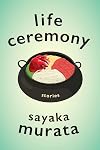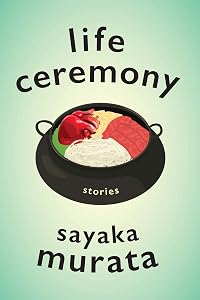
Life Ceremony
by Sayaka Murata
On This Page
Description
The long-awaited first short story-collection by the author of the cult sensation Convenience Store Woman, tales of weird love, heartfelt friendships, and the unsettling nature of human existence. With Life Ceremony, the incomparable Sayaka Murata is back with her first collection of short stories ever to be translated into English. In Japan, Murata is particularly admired for her short stories, which are sometimes sweet, sometimes shocking, and always imbued with an otherworldly imagination show more and uncanniness. In these twelve stories, Murata mixes an unusual cocktail of humor and horror to portray both the loners and outcasts as well as turning the norms and traditions of society on their head to better question them. Whether the stories take place in modern-day Japan, the future, or an alternate reality is left to the reader's interpretation, as the characters often seem strange in their normality in a frighteningly abnormal world. In "A First-Rate Material," Nana and Naoki are happily engaged, but Naoki can't stand the conventional use of deceased people's bodies for clothing, accessories, and furniture, and a disagreement around this threatens to derail their perfect wedding day. "Lovers on the Breeze" is told from the perspective of a curtain in a child's bedroom that jealously watches the young girl Naoko as she has her first kiss with a boy from her class and does its best to stop her. "Eating the City" explores the strange norms around food and foraging, while "Hatchling" closes the collection with an extraordinary depiction of the fractured personality of someone who tries too hard to fit in. In these strange and wonderful stories of family and friendship, sex and intimacy, belonging and individuality, Murata asks above all what it means to be a human in our world and offers answers that surprise and linger. show lessTags
Recommendations

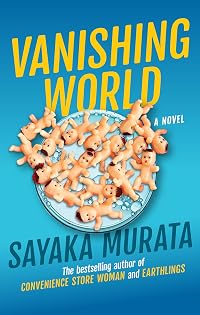






Member Recommendations
Member Reviews
‘’A hundred years later, what would our bodies be used for? Would we be chair legs or sweaters or clock hands? Would we be used for a longer time after our deaths than the time we'd been alive?’’
Sayaka Murata’s stories defy genre, time and place. We are transported to an alternate reality and we move on to an almost psychedelic future before we return to contemporary Japan. The characters of her stories are women who are burdened - although they’d never confess it - by a desperate need to belong, to be liked. However, Murata’s version and depiction of what we would define as ‘’Love’’ is not only highly arbitrary but dubious, suspicious, oppressive. It is a mirror of society’s projections, artificial aspirations, show more a strange kind of idolatry that leads nowhere.
Sayaka Murata marries the abstract, the eerie and the mundane and proves she is one of the most exceptional writers of our time.
A First-Rate Material: A couple is planning a wedding but the future spouses don’t really see eye-to-eye in a story that depicts a time when it is acceptable, fashionable even, to make all kinds of objects from dead humans.
A Magnificent Spread: In a humorously absurd, yet poignant story the woman is about to meet her fiance's husband and his sister is there to help her with the dinner table. But the eating habits of the diners are strange. Too strange...An interesting commentary on how eating is a product of each culture and its significance in the forming of our identity.
A Summer Night’s Kiss/ Two’s Family: Another lady who has had her two children through artificial insemination contemplates kissing and sex while her best friend, her lifelong companion, is fighting for her life. The memories of society's prejudices are still painfully acute. Such a moving, tender story!
The Time of the Large Star: A girl and a boy meet in a land where the moon is adored, the sun is hated and sleep does not exist.
Poochie: If you have readEarthlings, Murata’s writing won't come as a surprise. This is a (very short) story of a girl that decides to have a middle-aged man as a pet.
Life Ceremony: This is a world where sex for pleasure is frowned upon. Where pregnancy is a result of insemination during a ‘’Life Ceremony’’. Will women have to produce the humans that will secure the existence of our species. When mourners consume the flesh of the deceased to conceive a child. This story is strange and twisted and beautiful, but proceed with caution because you may find it deeply disturbing.
Body Magic: Two teenage girls explore relationships and sexuality, ignoring the preconceived notions of their classmates.
Lover on the Breeze: A beautiful blue curtain watches a girl falling in and out of love.
Puzzle: A young woman newly arrived in Tokyo sees and experiences the functions of our bodies in a vastly different way than her colleagues.
‘’I could hear the voices of some people outside, but they were speaking in a foreign language, so I didn't understand what they were saying. As I listened, the voices began to resemble the calls of animals. In my mind they overlapped with the night presences I had sensed on the other side of the torn window screens during those childhood summers, and before I knew it, I had fallen asleep.’’
Eating the City: The hunting for weeds in Tokyo and the simple act of eating become metaphors for navigating and experiencing life in the metropolis, for the memories of childhood.
Hatchling: A bride-to-be narrates the evolution of her five “personalities” that were created out of her desperate need to be liked by everyone. We all develop “faces” we deem appropriate to every interaction but Is there a real ‘’us’’ buried deep inside us or are we truly vacant?
‘’Look, at this point in time, there are five me’s existence. I can't choose which one to be by myself. So I want you to choose which one you want.’’
Many thanks to Grove Press and NetGalley for the ARC in exchange for an honest review.
My reviews can also be found on https://theopinionatedreaderblog.wordpress.com/ show less
Sayaka Murata’s stories defy genre, time and place. We are transported to an alternate reality and we move on to an almost psychedelic future before we return to contemporary Japan. The characters of her stories are women who are burdened - although they’d never confess it - by a desperate need to belong, to be liked. However, Murata’s version and depiction of what we would define as ‘’Love’’ is not only highly arbitrary but dubious, suspicious, oppressive. It is a mirror of society’s projections, artificial aspirations, show more a strange kind of idolatry that leads nowhere.
Sayaka Murata marries the abstract, the eerie and the mundane and proves she is one of the most exceptional writers of our time.
A First-Rate Material: A couple is planning a wedding but the future spouses don’t really see eye-to-eye in a story that depicts a time when it is acceptable, fashionable even, to make all kinds of objects from dead humans.
A Magnificent Spread: In a humorously absurd, yet poignant story the woman is about to meet her fiance's husband and his sister is there to help her with the dinner table. But the eating habits of the diners are strange. Too strange...An interesting commentary on how eating is a product of each culture and its significance in the forming of our identity.
A Summer Night’s Kiss/ Two’s Family: Another lady who has had her two children through artificial insemination contemplates kissing and sex while her best friend, her lifelong companion, is fighting for her life. The memories of society's prejudices are still painfully acute. Such a moving, tender story!
The Time of the Large Star: A girl and a boy meet in a land where the moon is adored, the sun is hated and sleep does not exist.
Poochie: If you have readEarthlings, Murata’s writing won't come as a surprise. This is a (very short) story of a girl that decides to have a middle-aged man as a pet.
Life Ceremony: This is a world where sex for pleasure is frowned upon. Where pregnancy is a result of insemination during a ‘’Life Ceremony’’. Will women have to produce the humans that will secure the existence of our species. When mourners consume the flesh of the deceased to conceive a child. This story is strange and twisted and beautiful, but proceed with caution because you may find it deeply disturbing.
Body Magic: Two teenage girls explore relationships and sexuality, ignoring the preconceived notions of their classmates.
Lover on the Breeze: A beautiful blue curtain watches a girl falling in and out of love.
Puzzle: A young woman newly arrived in Tokyo sees and experiences the functions of our bodies in a vastly different way than her colleagues.
‘’I could hear the voices of some people outside, but they were speaking in a foreign language, so I didn't understand what they were saying. As I listened, the voices began to resemble the calls of animals. In my mind they overlapped with the night presences I had sensed on the other side of the torn window screens during those childhood summers, and before I knew it, I had fallen asleep.’’
Eating the City: The hunting for weeds in Tokyo and the simple act of eating become metaphors for navigating and experiencing life in the metropolis, for the memories of childhood.
Hatchling: A bride-to-be narrates the evolution of her five “personalities” that were created out of her desperate need to be liked by everyone. We all develop “faces” we deem appropriate to every interaction but Is there a real ‘’us’’ buried deep inside us or are we truly vacant?
‘’Look, at this point in time, there are five me’s existence. I can't choose which one to be by myself. So I want you to choose which one you want.’’
Many thanks to Grove Press and NetGalley for the ARC in exchange for an honest review.
My reviews can also be found on https://theopinionatedreaderblog.wordpress.com/ show less
“…normal is a type of madness, isn’t it?”
Weirdness went on a holiday trip and brought back thought experiments as souvenirs for friends and family.
I had enjoyed Convenience Store Woman, and was looking forward to Sayaka Murata’s collection of short stories. “Life Ceremony” turned out to be a mixed bag, though. There were some great and memorable stories, but then again, there were stories that protested too much, stories that preached and fell flat, stories that went too far just because they could. I was bored at times. Still, I don’t regret reading “Life Ceremony”, and I might read Earthlings at some point as well.
“A First-Rate Material” – an engaged couple is settling their differences in a world slightly show more different from ours. Creepy, creepy, creepy…
“A Magnificent Spread” – “Here is to everyone’s disgusting foods!” This one is kind of funny, kind of satirical, with lots of atrocious food.
“A Summer Night’s Kiss” – a few pages about people with different sexual preferences. Me, the reader: “Yes, so what?”
“Two’s Family” – quirky characters with an unusual family arrangement. A lovely story.
“The Time of the Large Star” – here is a town where you can’t sleep. This one is a fragment rather than a short story. It didn’t impress me.
“Poochie” – Who wants a secret pet? There are different kinds… Weird, but fun.
“Life Ceremony” – Ouch. Let’s break as many taboos as possible in one story! If you are squeamish, this is not your cup of tea ;)
“Body Magic” – a nice story about discovering your sexuality. I found it to be too preachy, though.
“Lover on the Breeze” – love and window curtains. “Yes, so what?”
“Puzzle” – weirdness going into such a weird territory that it becomes ridiculous. I kept wanting to laugh, I wonder if that was the author’s intention?
“Eating the City” – so, you want to harvest your food from stuff that is growing in the city, do you? Cool scary weirdness ensues. I liked this one ☺
“Hatchling” – we all play various roles depending on who we are with, and people love to put each other into role boxes. Let’s take this to the limit! It gets very creepy by the end and is probably the best story in this collection. show less
Weirdness went on a holiday trip and brought back thought experiments as souvenirs for friends and family.
I had enjoyed Convenience Store Woman, and was looking forward to Sayaka Murata’s collection of short stories. “Life Ceremony” turned out to be a mixed bag, though. There were some great and memorable stories, but then again, there were stories that protested too much, stories that preached and fell flat, stories that went too far just because they could. I was bored at times. Still, I don’t regret reading “Life Ceremony”, and I might read Earthlings at some point as well.
“A First-Rate Material” – an engaged couple is settling their differences in a world slightly show more different from ours. Creepy, creepy, creepy…
“A Magnificent Spread” – “Here is to everyone’s disgusting foods!” This one is kind of funny, kind of satirical, with lots of atrocious food.
“A Summer Night’s Kiss” – a few pages about people with different sexual preferences. Me, the reader: “Yes, so what?”
“Two’s Family” – quirky characters with an unusual family arrangement. A lovely story.
“The Time of the Large Star” – here is a town where you can’t sleep. This one is a fragment rather than a short story. It didn’t impress me.
“Poochie” – Who wants a secret pet? There are different kinds… Weird, but fun.
“Life Ceremony” – Ouch. Let’s break as many taboos as possible in one story! If you are squeamish, this is not your cup of tea ;)
“Body Magic” – a nice story about discovering your sexuality. I found it to be too preachy, though.
“Lover on the Breeze” – love and window curtains. “Yes, so what?”
“Puzzle” – weirdness going into such a weird territory that it becomes ridiculous. I kept wanting to laugh, I wonder if that was the author’s intention?
“Eating the City” – so, you want to harvest your food from stuff that is growing in the city, do you? Cool scary weirdness ensues. I liked this one ☺
“Hatchling” – we all play various roles depending on who we are with, and people love to put each other into role boxes. Let’s take this to the limit! It gets very creepy by the end and is probably the best story in this collection. show less
Disturbing, that is the first word that comes to mind when thinking of these stories. Disturbing because of the way they begin as small narratives of everyday life and then take increasingly creepy turns, without ever abandoning the quiet, almost emotionless tone. Disturbing because they are narratives that somehow celebrate life (as the title, which is also that of one of the stories, says) by strongly linking it to death. Disturbing because of the way they cling to the mind, reappearing in the form of fragments that during the reading one did not think had affected one so much. Definitely not a read for everyone, but an excellent read nonetheless.
Published in English as Life Ceremony.
Being alive is a glorious feeling meant to be celebrated in earnest, yet polite society has all these rules and regulations that dictate the appropriate (i.e. the normal) way to go about said celebration.
Enter Sayaka Murata and her 12 short stories, that give the metaphorical finger to all things normal and acceptable, in exchange for living life to its fullest, regardless of how silly, weird, uncomfortable and even creepy it may look.
As with any short story collection, I've liked some, adored others, and blinked incomprehensibly at a few. To be fair, I found each and every story rather intriguing, and any low rating was mostly due to lack of a sufficiently fleshed out message. As far as atmosphere show more went though, all of them deserve top notch accolades.
As a general rule, the more unusual and creepier the premise, the more interested it made me. And I say that while looking at my baffled reading notes for A First Rate Material, downright nauseating at times. But I cannot deny the mastery of the writing style, which compelled me to keep on reading and to question my own moral conventions.
All stories aim to challenge some aspect of normality, so it would be impossible for me to recommend a wholly "innocent" one for the more... conventional reader. Even so, I would definitely recommend this book to all proponents of the woke movement, especially those keen to point out cultural appropriation wherever they go. And to anyone who enjoys getting their world view challenged of course, even if in a rather queasy and nauseating manner.
Some of the more conventionally umm... intriguing stories worth mentioning were:
- A Magnificent Spread - for protectors of cultural appropriation
- Body Magic - for every little girl who's ever been prude- or slut-shamed
My personal favourites were:
- A First Rate Material - recycling as a large-scale trendy endeavour
- Life Ceremony - funerals as celebrations of life and the living?
- Hatchling - how to fit in anytime, anywhere and with anyone
Score: 3.8/5 stars
======================
ARC kindly provided by Aufbau Verlag via NetGalley in exchange for a fair and honest review.
Book #16 of my "read at least 20 books in German" challenge. show less
Being alive is a glorious feeling meant to be celebrated in earnest, yet polite society has all these rules and regulations that dictate the appropriate (i.e. the normal) way to go about said celebration.
Enter Sayaka Murata and her 12 short stories, that give the metaphorical finger to all things normal and acceptable, in exchange for living life to its fullest, regardless of how silly, weird, uncomfortable and even creepy it may look.
As with any short story collection, I've liked some, adored others, and blinked incomprehensibly at a few. To be fair, I found each and every story rather intriguing, and any low rating was mostly due to lack of a sufficiently fleshed out message. As far as atmosphere show more went though, all of them deserve top notch accolades.
As a general rule, the more unusual and creepier the premise, the more interested it made me. And I say that while looking at my baffled reading notes for A First Rate Material, downright nauseating at times. But I cannot deny the mastery of the writing style, which compelled me to keep on reading and to question my own moral conventions.
All stories aim to challenge some aspect of normality, so it would be impossible for me to recommend a wholly "innocent" one for the more... conventional reader. Even so, I would definitely recommend this book to all proponents of the woke movement, especially those keen to point out cultural appropriation wherever they go. And to anyone who enjoys getting their world view challenged of course, even if in a rather queasy and nauseating manner.
Some of the more conventionally umm... intriguing stories worth mentioning were:
- A Magnificent Spread - for protectors of cultural appropriation
- Body Magic - for every little girl who's ever been prude- or slut-shamed
My personal favourites were:
- A First Rate Material - recycling as a large-scale trendy endeavour
- Life Ceremony - funerals as celebrations of life and the living?
- Hatchling - how to fit in anytime, anywhere and with anyone
Score: 3.8/5 stars
"Normal is a type of madness, isn’t it? I think it’s just that the only madness society allows is called normal."
======================
ARC kindly provided by Aufbau Verlag via NetGalley in exchange for a fair and honest review.
Book #16 of my "read at least 20 books in German" challenge. show less
Life Ceremony by Sayaka Murata
My rating: 4 of 5 stars
Life Ceremony has been hanging around my TBR lists for a long time! I bought it ages ago on a 99p Kindle deal, after I had read and loved Convenience Store Women. Life Ceremony is a collection of short stories of varying length. The stories are:
A First-Rate Material
A Magnificent Spread
A Summer Night’s Kiss
Two’s Family
The Time of the Large Star
Poochie
Life Ceremony
Body Magic
Lover on the Breeze
Puzzle
Eating the City
Hatchling
A Clean Marriage
A lot of these stories are really fucking weird. I tried to explain some of them (everyday objects made of human remains (A First-Rate Material), a love triangle with a curtain (Lover on the Breeze), what the Life Ceremony is…) to my Husband, and show more he said, “And you said Malazan was messed up?!”
A few of the stories are more straightforward (less human remains) and focus on sweet stories about unconventional families and late-in-life love (Two’s Family), and the different forms empathy can take. Eating the City also found an interesting balance between the important cultural role that food plays, while also the choice of what food we put inside our own bodies can be such a personal preference. I also enjoyed Body Magic for the friendship between the popular girl and the quiet ‘weird’ girl, and their shame-free discussions of sex, which were so much healthier than the way their sex-obsessed peers would talk about it for status.
My favourite two stories were Hatchling and A Clean Marriage. A Clean Marriage is about a couple in a successful sexless marriage – free from the complications of romance and sexual expectations – except this poses a problem when they agree it is time to try for a child. They must go to a special clinic and undertake a radical procedure for ‘Clean Breeders.’ There was a logic in the idea of a clean marriage that I could understand (“We’re family, so we don’t have sex“), but also the absurdity of the procedures was absolutely hilarious.
Hatchling explores the tendency for people to switch and mould their personalities to fit the social groups that they are in. Haruka is too good at this, and has picked up so many contrasting identities in her life that she has no sense of what her true personality is.
Whenever I did something that was liked and praised, that part of me would develop, while if anyone said to me “That’s not like you,” I’d shed that part. As a result, the outline of myself was not mine at all. But this quality was apparently not just mine. If I paid attention to other people, I often thought that a certain person was simply responding to those around them. We kept responding back and forth in our community, turned ourselves into a character, and started behaving according to that character. I began to think that maybe nobody had such a thing as a real self.
This story resonated with me the most because is a subject that I think about a lot. I am no good at being able to mould myself to fit different social groups, possibly because my Social Anxiety makes me hyper aware of things like! I always feel too aware of how others change in different social groups, in particular, how they may be different in groups compared to one-on-one with me. I am always distrustful of people I can feel moulding themselves in this way (I had an ex who was excellent at this, and he did turn out to be a huge liar so… yeah).
I also struggle with the fixed opinions of me that different groups of people in my life have, depending on the age at which I met them, and how difficult it is to change that. This is one of the reasons I keep thinking I need to be meeting new people in order to improve my social skills, because the people that I already know do not leave room for me to do that. They have decided my personality that might not be who I feel like I am inside or how I want to be seen.
Sayaka Murata has a matter-of-fact style that strips back our normal social conventions and offers a different point of view that is so good at examining the little arbitrary quirks and absurdities in how we run our lives, and asking who decided that this was the ‘normal’ thing to do? Maybe it is wasteful not to make use of human remains for furniture and clothing? Maybe it could be a beautiful tribute to eat the dead at their funeral? These are the questions I’ve contemplated after reading this collection!
There are a few stand-out stories in this collection that bump the rating up to 4 stars overall. I am very excited to read more from this author because I have so far loved being inside her weird brain – I have Earthlings still to read, and I just got her new book, Vanishing World, too!
# REVIEW SUMMARY
## I LIKED
- I love Murata’s writing style.
- I love her weird brain and the questions she asks.
- Several of these stories I found very thought-provoking, and a couple really resonated with me.
## I DIDN’T LIKE
- Any short story collection has forgettable ones.
View all my reviews show less
My rating: 4 of 5 stars
Life Ceremony has been hanging around my TBR lists for a long time! I bought it ages ago on a 99p Kindle deal, after I had read and loved Convenience Store Women. Life Ceremony is a collection of short stories of varying length. The stories are:
A First-Rate Material
A Magnificent Spread
A Summer Night’s Kiss
Two’s Family
The Time of the Large Star
Poochie
Life Ceremony
Body Magic
Lover on the Breeze
Puzzle
Eating the City
Hatchling
A Clean Marriage
A lot of these stories are really fucking weird. I tried to explain some of them (everyday objects made of human remains (A First-Rate Material), a love triangle with a curtain (Lover on the Breeze), what the Life Ceremony is…) to my Husband, and show more he said, “And you said Malazan was messed up?!”
A few of the stories are more straightforward (less human remains) and focus on sweet stories about unconventional families and late-in-life love (Two’s Family), and the different forms empathy can take. Eating the City also found an interesting balance between the important cultural role that food plays, while also the choice of what food we put inside our own bodies can be such a personal preference. I also enjoyed Body Magic for the friendship between the popular girl and the quiet ‘weird’ girl, and their shame-free discussions of sex, which were so much healthier than the way their sex-obsessed peers would talk about it for status.
My favourite two stories were Hatchling and A Clean Marriage. A Clean Marriage is about a couple in a successful sexless marriage – free from the complications of romance and sexual expectations – except this poses a problem when they agree it is time to try for a child. They must go to a special clinic and undertake a radical procedure for ‘Clean Breeders.’ There was a logic in the idea of a clean marriage that I could understand (“We’re family, so we don’t have sex“), but also the absurdity of the procedures was absolutely hilarious.
Hatchling explores the tendency for people to switch and mould their personalities to fit the social groups that they are in. Haruka is too good at this, and has picked up so many contrasting identities in her life that she has no sense of what her true personality is.
Whenever I did something that was liked and praised, that part of me would develop, while if anyone said to me “That’s not like you,” I’d shed that part. As a result, the outline of myself was not mine at all. But this quality was apparently not just mine. If I paid attention to other people, I often thought that a certain person was simply responding to those around them. We kept responding back and forth in our community, turned ourselves into a character, and started behaving according to that character. I began to think that maybe nobody had such a thing as a real self.
This story resonated with me the most because is a subject that I think about a lot. I am no good at being able to mould myself to fit different social groups, possibly because my Social Anxiety makes me hyper aware of things like! I always feel too aware of how others change in different social groups, in particular, how they may be different in groups compared to one-on-one with me. I am always distrustful of people I can feel moulding themselves in this way (I had an ex who was excellent at this, and he did turn out to be a huge liar so… yeah).
I also struggle with the fixed opinions of me that different groups of people in my life have, depending on the age at which I met them, and how difficult it is to change that. This is one of the reasons I keep thinking I need to be meeting new people in order to improve my social skills, because the people that I already know do not leave room for me to do that. They have decided my personality that might not be who I feel like I am inside or how I want to be seen.
Sayaka Murata has a matter-of-fact style that strips back our normal social conventions and offers a different point of view that is so good at examining the little arbitrary quirks and absurdities in how we run our lives, and asking who decided that this was the ‘normal’ thing to do? Maybe it is wasteful not to make use of human remains for furniture and clothing? Maybe it could be a beautiful tribute to eat the dead at their funeral? These are the questions I’ve contemplated after reading this collection!
There are a few stand-out stories in this collection that bump the rating up to 4 stars overall. I am very excited to read more from this author because I have so far loved being inside her weird brain – I have Earthlings still to read, and I just got her new book, Vanishing World, too!
# REVIEW SUMMARY
## I LIKED
- I love Murata’s writing style.
- I love her weird brain and the questions she asks.
- Several of these stories I found very thought-provoking, and a couple really resonated with me.
## I DIDN’T LIKE
- Any short story collection has forgettable ones.
View all my reviews show less
My friend often teases me for my love of Japanese literature. “It’s so weird, with so many random things going on,” she says. I don’t think I’ll tell her about Life Ceremony because even I was jolted out of my comfort zone by some of the topics discussed in the 13 short stories in this book.
The stories contained within the book take human rituals (think sex and funerals) and turn them on their head, sometimes bordering on the taboo. They also look at the use of human bodies in different ways – furniture, clothing and even cannibalism. Food and what is normal to eat is also considered in several stories. Relationships and their roles in society are also considered in a novel, different way which seems to be a Murata show more trademark. Some of the stories had a bigger ickiness factor for me than others, but trying to look beyond that, Murata is very clever in how she exposes and challenges what we consider normal. Take the ‘life ceremony’ mentioned in several of the short stories. It’s what we would know as a funeral, but with a grotesque twist – the eating of the corpse which culminates in a mating ritual with the intention to procreate. It seems normal to many of the character except a select few, who are seen as weird and abnormal by others. Other stories have a piece of household furniture taking on human feelings and two children keeping an unusual pet. Some stories are more straightforward – friendship between girls and women and another woman who adapts her personality in different settings to fit in.
The stories all have a sense of being the outsider – thinking or acting differently to the cultural norm. Many of the characters are ashamed by their otherness, while a select few revel in it. While some of the stories shock, it’s never for no reason. Murata uses the shock factor to show discrepancies in the way humans think and act, and to ask the question if what we believe and do is actually right. The stories are written clearly – no smoke and mirrors here. They are always engaging, even if the subject matter is uncomfortable.
Thank you to Allen and Unwin for the copy of this book. My review is honest.
http://samstillreading.wordpress.com show less
The stories contained within the book take human rituals (think sex and funerals) and turn them on their head, sometimes bordering on the taboo. They also look at the use of human bodies in different ways – furniture, clothing and even cannibalism. Food and what is normal to eat is also considered in several stories. Relationships and their roles in society are also considered in a novel, different way which seems to be a Murata show more trademark. Some of the stories had a bigger ickiness factor for me than others, but trying to look beyond that, Murata is very clever in how she exposes and challenges what we consider normal. Take the ‘life ceremony’ mentioned in several of the short stories. It’s what we would know as a funeral, but with a grotesque twist – the eating of the corpse which culminates in a mating ritual with the intention to procreate. It seems normal to many of the character except a select few, who are seen as weird and abnormal by others. Other stories have a piece of household furniture taking on human feelings and two children keeping an unusual pet. Some stories are more straightforward – friendship between girls and women and another woman who adapts her personality in different settings to fit in.
The stories all have a sense of being the outsider – thinking or acting differently to the cultural norm. Many of the characters are ashamed by their otherness, while a select few revel in it. While some of the stories shock, it’s never for no reason. Murata uses the shock factor to show discrepancies in the way humans think and act, and to ask the question if what we believe and do is actually right. The stories are written clearly – no smoke and mirrors here. They are always engaging, even if the subject matter is uncomfortable.
Thank you to Allen and Unwin for the copy of this book. My review is honest.
http://samstillreading.wordpress.com show less
On the scale of Convenience Store Woman to Earthlings, the stories in this collection lean much towards the latter. Taboos are broken, lines crossed, and tastes most definitely challenged, here. There are themes of alienation — of feeling like one is completely estranged from other people, culture or even the reality around them. there is a profound uneasiness surrounding the body, which is often regarded by her characters as some foreign entity, or even a burden. Overall though the stories manage to retain some perverse sense of optimism and joy, finding delight in the disgusting and the alien.
Members
- Recently Added By
Lists

Fiction: Classics, Literary, Short Stories
85 works; 1 member

Top Five Books of 2023
767 works; 317 members

Fiction: Asia
85 works; 2 members
Author Information

15+ Works 7,477 Members
Some Editions
Common Knowledge
Classifications
- Genres
- General Fiction, Fiction and Literature
- DDC/MDS
- 895.636 — Literature & rhetoric Literatures of other languages Literatures of East and Southeast Asia Japanese Japanese fiction 2000–
- LCC
- PL873 .U73 — Language and Literature Languages and literatures of Eastern Asia, Africa, Oceania Languages of Eastern Asia, Africa, Oceania Japanese language and literature Japanese literature
- BISAC
Statistics
- Members
- 614
- Popularity
- 47,387
- Reviews
- 24
- Rating
- (3.78)
- Languages
- English, German, Italian, Spanish
- Media
- Paper, Audiobook, Ebook
- ISBNs
- 17
- ASINs
- 5