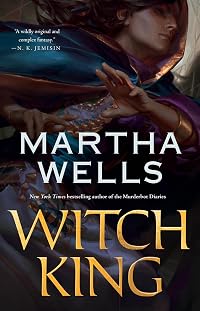
On This Page
Description
After being murdered, his consciousness dormant and unaware of the passing of time while confined in an elaborate water trap, Kai wakes to find a lesser mage attempting to harness Kai's magic to his own advantage. That was never going to go well. But why was Kai imprisoned in the first place? What has changed in the world since his assassination? And why does the Rising World Coalition appear to be growing in influence? Kai will need to pull his allies close and draw on all his pain magic if show more he is to answer even the least of these questions. He's not going to like the answers. show lessTags
Recommendations












Member Reviews
People sometimes ask me if I like fantasy as much as I like science fiction. My usual answer is that I like both—but if you had two stories, one sf and one fantasy, and all else was equal between the two of them, I am more likely to enjoy the sf one than the fantasy one. I think what this comes back to is the definition of science fiction by China Miéville that I am always citing: "rationalized alienation." Science fiction worlds are different from our world, but on rational lines. (Darko Suvin calls this "cognitive estrangement.") Part of the pleasure of reading is figuring out the world; as Jo Walton has said, "SF is like a mystery where the world and the history of the world is what’s mysterious, and putting that all together in show more your mind is as interesting as the characters and the plot, if not more interesting."
But a murder mystery needs to provide logical clues in order to be pleasurable, otherwise the reader has no chance of figuring out the solution. The same is true, I would argue, of sf&f. Thus, I can often (though not always) struggle with fantasy fiction; if the alienation is not rationalized, if the estrangement is not cognitive, then what chance do I have to understand the world? In fantasy, which is based on magic, anything can go—and what fun is a mystery where anything can go? Now, you might argue this is all in my head: certainly fantasy stories follow their own internal logic (sometimes too much), and most science fiction (as Miéville also admits) isn't really based on science. But my head is where the experience of reading takes place, so if it's all in my head, it's still going to affect my reading.
All of this is to say that Witch King embodies everything that makes me bounce off (some) fantasy novels. Lots of weird names, lots of backstories, lots of characters, lots of relationships, lots of places, lots of powers and gods and magic and stuff. Now, if this was science fiction, I might have felt like I had a chance of figuring it all out, of working out the mystery that makes the world operate. But since it's fantasy, it just felt like an onslaught of obscurity. I was never able to figure out who most of these people were, or what they were doing, or why I should care. It has two parallel narratives, one of which fills in relevant history for the other, but I found this obscured rather than clarified; it has a chart of characters in the front, but this made me struggle even more to remember who everyone was as it overwhelmed me with details.
It's possible this is a good novel. Certainly, some people think it's a great novel; I did, after all, read it because it received enough nominations to make it onto the Hugo ballot. It is, however, the very specific kind of novel that I find it difficult to engage with. Be this Martha Wells's fault or not, I got nothing out of this novel at all. show less
But a murder mystery needs to provide logical clues in order to be pleasurable, otherwise the reader has no chance of figuring out the solution. The same is true, I would argue, of sf&f. Thus, I can often (though not always) struggle with fantasy fiction; if the alienation is not rationalized, if the estrangement is not cognitive, then what chance do I have to understand the world? In fantasy, which is based on magic, anything can go—and what fun is a mystery where anything can go? Now, you might argue this is all in my head: certainly fantasy stories follow their own internal logic (sometimes too much), and most science fiction (as Miéville also admits) isn't really based on science. But my head is where the experience of reading takes place, so if it's all in my head, it's still going to affect my reading.
All of this is to say that Witch King embodies everything that makes me bounce off (some) fantasy novels. Lots of weird names, lots of backstories, lots of characters, lots of relationships, lots of places, lots of powers and gods and magic and stuff. Now, if this was science fiction, I might have felt like I had a chance of figuring it all out, of working out the mystery that makes the world operate. But since it's fantasy, it just felt like an onslaught of obscurity. I was never able to figure out who most of these people were, or what they were doing, or why I should care. It has two parallel narratives, one of which fills in relevant history for the other, but I found this obscured rather than clarified; it has a chart of characters in the front, but this made me struggle even more to remember who everyone was as it overwhelmed me with details.
It's possible this is a good novel. Certainly, some people think it's a great novel; I did, after all, read it because it received enough nominations to make it onto the Hugo ballot. It is, however, the very specific kind of novel that I find it difficult to engage with. Be this Martha Wells's fault or not, I got nothing out of this novel at all. show less
Kai, the eponymous witch king, awakes in the cave in which he’s been trapped for over a year.
The story alternates between the present -- as Kai sets out to find his friends, and to discover who imprisoned him in the first place -- and Kai’s past. Wells switches between the two storylines quite effectively, with the flashback chapters managing to tell a coherent, sequential narrative and simultaneously provide context for whatever is currently going on in the present. (The deft way the two stories fit together reminded me of Ancillary Justice by Ann Leckie.)
The scenery, the characters’ personalities and the found-family dynamics are all very Martha Wells-ish. It’s not my favourite, which is to say I’m not as invested in Kai as show more in some of Wells’ other protagonists, but I thought it was excellent storytelling.
The story alternates between the present -- as Kai sets out to find his friends, and to discover who imprisoned him in the first place -- and Kai’s past. Wells switches between the two storylines quite effectively, with the flashback chapters managing to tell a coherent, sequential narrative and simultaneously provide context for whatever is currently going on in the present. (The deft way the two stories fit together reminded me of Ancillary Justice by Ann Leckie.)
The scenery, the characters’ personalities and the found-family dynamics are all very Martha Wells-ish. It’s not my favourite, which is to say I’m not as invested in Kai as show more in some of Wells’ other protagonists, but I thought it was excellent storytelling.
Dahin hesitated, regarding him with wary skepticism. “If you’re really Kai, tell me something only you know.”show less
Distracted by unwilling suspicion, Kai said absently, “Your great-aunt Kavinen thinks your nine-volume history of the Hierarchs war was a boring waste of time.”
Dahin let out a breath that was half laugh, half gasp of outrage. “Yes, but she never said it to my face [...]”
Oh, good. Good. I was worried for a while – I was waiting and waiting for this book, and then, as I read, I kept wondering what to think. The world was interesting, but confusing, since the readers crash-land right in the middle of the action and have to find their way in this new universe. I tend to like to figure things out in books, but I wasn’t having a lot of fun this time. It could just have been me having way too many things on my mind ;) At around 40%, everything clicked into place and I flew through the rest of the book with great pleasure. Thank you, Martha Wells!
There are battles, great characters, found families, conspiracies, flying ships, cool magic, and adventures in submerged ruins. I liked the dual timelines and how show more they gradually merged, how the back stories fueled the “present” timeline.
Kai is a wonderfully badass character. (I’d be happy to read more books about him having various adventures.) How about a body-snatching, soul-sucking, more or less immortal demon as a main character in a fantasy novel? Yes, I thought so. On the other hand, Kai just wants to be left alone so that he can be with his found family and friends. But fate is not obliging.
“ ‘Stop being overdramatic.’
Kai would have loved to, if dramatic things would stop happening to him.”
There are such small matters as being assassinated in one timeline, and saving the world from really evil sorcerers in the other.
“ ‘I’d tell you to be careful, but…’
Kai looked at her through the black film of the veil. ‘You could say ‘be violent’ instead.’
Tahren, who Kai was beginning to suspect had a very dry sense of humor, patted his shoulder and said, ‘Be violent.’ “
The ending was just what the doctor ordered :) show less
There are battles, great characters, found families, conspiracies, flying ships, cool magic, and adventures in submerged ruins. I liked the dual timelines and how show more they gradually merged, how the back stories fueled the “present” timeline.
Kai is a wonderfully badass character. (I’d be happy to read more books about him having various adventures.) How about a body-snatching, soul-sucking, more or less immortal demon as a main character in a fantasy novel? Yes, I thought so. On the other hand, Kai just wants to be left alone so that he can be with his found family and friends. But fate is not obliging.
“ ‘Stop being overdramatic.’
Kai would have loved to, if dramatic things would stop happening to him.”
There are such small matters as being assassinated in one timeline, and saving the world from really evil sorcerers in the other.
“ ‘I’d tell you to be careful, but…’
Kai looked at her through the black film of the veil. ‘You could say ‘be violent’ instead.’
Tahren, who Kai was beginning to suspect had a very dry sense of humor, patted his shoulder and said, ‘Be violent.’ “
The ending was just what the doctor ordered :) show less
I discovered @marthawellswriter through her Murderbot Diaries, and while I’m not normally a big fan of science fiction, her writing and character development had me hooked immediately. As I learned more about her previous works, I was excited to see she has written fantasy as well, but I just hadn’t gotten around to picking anything up yet. When news dropped that she was writing her first fantasy novel in over a decade, I was thrilled, and when I received an ARC via @netgalley, I was ecstatic and started it right away.
WITCH KING is a slow burn of a book, and the reader is dropped directly into the story with no context as to what’s going on. For some, this can be off putting, but if you’re willing to commit, the payoff is worth show more it. Told via dual timelines, starting from when Kai, the demon King of the Witches, escapes from his prison, and then alternatively, the backstory of how Kai is imprisoned to begin with, the entire story is laid out, and questions are answered.
Much like SecUnit from the Murderbot Diaries, Kai is not a likable person; ultimately, it’s what has been done to him by outside forces that makes him the way he is. Also much like the societies from the Murderbot Diaries, gender and sexual stereotypes are tossed out the window, with Wells creating a world where anyone is free to love and be with anyone of their choosing, and the idea that anything is a binary is, frankly, absurd and unnecessary.
This book is not going to be for everyone, and I think for many that came to Wells’ writing via Murderbot, this is going to be a departure. Personally, this book just cemented for me that I am a Martha Wells fan, regardless what genre she’s writing. Even when her characters aren’t likable, they are; her world building is inclusive; her pacing is spot on for me. I’m quite happy she is having her moment, with parts of her back catalogue being reintroduced by Tor; she deserves the accolades.
WITCH KING by Martha Wells releases May 30, 2023, from Tordotcom Publishing.
A huge thank you to NetGalley and @tordotcompub for a free eARC of WITCH KING in exchange for an honest review.
#WitchKing #MarthaWells #TordotcomPublishing
#NetGalley #fantasy #tordotcom show less
WITCH KING is a slow burn of a book, and the reader is dropped directly into the story with no context as to what’s going on. For some, this can be off putting, but if you’re willing to commit, the payoff is worth show more it. Told via dual timelines, starting from when Kai, the demon King of the Witches, escapes from his prison, and then alternatively, the backstory of how Kai is imprisoned to begin with, the entire story is laid out, and questions are answered.
Much like SecUnit from the Murderbot Diaries, Kai is not a likable person; ultimately, it’s what has been done to him by outside forces that makes him the way he is. Also much like the societies from the Murderbot Diaries, gender and sexual stereotypes are tossed out the window, with Wells creating a world where anyone is free to love and be with anyone of their choosing, and the idea that anything is a binary is, frankly, absurd and unnecessary.
This book is not going to be for everyone, and I think for many that came to Wells’ writing via Murderbot, this is going to be a departure. Personally, this book just cemented for me that I am a Martha Wells fan, regardless what genre she’s writing. Even when her characters aren’t likable, they are; her world building is inclusive; her pacing is spot on for me. I’m quite happy she is having her moment, with parts of her back catalogue being reintroduced by Tor; she deserves the accolades.
WITCH KING by Martha Wells releases May 30, 2023, from Tordotcom Publishing.
A huge thank you to NetGalley and @tordotcompub for a free eARC of WITCH KING in exchange for an honest review.
#WitchKing #MarthaWells #TordotcomPublishing
#NetGalley #fantasy #tordotcom show less
Kai wakes in a tomb, where a foolish expositor thinks he can make the demon known as the Witch King into a familiar. Killing the man and freeing himself, a child named Sanja, and Kai's friend, Zeide, the three leave to figure out who imprisoned them for the better part of a year and Zeidie's missing wife, Tahren, before it's too late.
The narrative shifts back and forth between Kai's present and past, when he was a young demon with the Saredi clan who was attacked by the Hierarchs, a warlike people who descended from the south and took over much of the world. The stories fit together beautifully, but the ride is a complicated one, as the past and present both have a lot of political maneuvering and characters to keep track of (the show more Dramatis Personae at the beginning is only minor help, as it doesn't touch on every named character). I loved the depth of world-building and found the ending completely satisfying. This is one that would reward rereading. show less
The narrative shifts back and forth between Kai's present and past, when he was a young demon with the Saredi clan who was attacked by the Hierarchs, a warlike people who descended from the south and took over much of the world. The stories fit together beautifully, but the ride is a complicated one, as the past and present both have a lot of political maneuvering and characters to keep track of (the show more Dramatis Personae at the beginning is only minor help, as it doesn't touch on every named character). I loved the depth of world-building and found the ending completely satisfying. This is one that would reward rereading. show less
Martha Wells is a Hugo, Nebula, and Locus award winner, and her skill and appeal is evident in all of her work. This story - one hopes the first in a line of books - is more serious than her Murderbot series, which combined science fiction with a humorous protagonist that could have done stand-up at the Star Wars Mos Eisley Cantina.
Witch King is set in a fantasy world with the focus on the demon Kaiisteron, called Kai, who is the Fourth Prince of the Underearth. He is also called the Witch King. (Witches were supposed to have been born of the mix of demon and mortal blood during the long-ago war with the underearth.)
Kai’s real body was in the underearth, under the realm of the Fourth House. His kind had made a bargain to come to the show more upper world in mortal form.
The story goes back and forth between the past and the present, in episodes that dovetail one another. For example, we first meet Kai, in both time periods, during a stint of imprisonment.
In the past story line, the autocratic and cruel Heirarchs controlled most of the world, and also closed off passage to and from the underearth, trapping demons in their mortal bodies so they couldn’t escape. Kai had been captured with other demons and chained up in a foul section of the Heirarch’s Summer Halls. He was rescued by Bashasa, a prince of the Benais-arik who had been brought to the Summer Halls as a hostage to ensure the “good behavior” of his people. Bashasa didn’t know who Kai was, but he was the right size to swap out for the dead body of Bashasa’s younger sister, and Bashasa wanted help from a demon to defeat the Hierarchs.
When Bashasa met Kai he was not afraid of him as most mortals were. Instead he said, “I have a proposition for you. Help me destroy the Hierarchs.” Initially Kai was suspicious and hostile, but Bashasa put his hand on Kai’s arm and said gently, ‘Come, we are all prisoners of the Hierarchs here, one way or another. Fighting with each other is the last thing we should do.’” Kai was startled and disarmed; few mortals ever voluntarily touched a demon; generally, they hated, feared, and reviled them.
Kai’s time at the Summer Halls after his rescue by Bashasa was also when he met Ziede Daiyahah, another witch who became his lifelong friend, and Tahren Stargard, an Immortal Blessed. She was called the Fallen because she, alone among the Blessed, had rebelled against the Heirarchs. Those two were also helping Bashasa.
In the present, we know that Bashasa, being a mortal, is long dead. [Kai’s relationships with mortals adds a bittersweet element to the story, reminding me of the pathos in Heinlein’s classic, Time Enough for Love, in which protagonist Lazarus Long has an extended lifespan and thus must endure loss after loss of loved ones.]
Kai and Ziede were abducted from the palace of Bashat, Bashasa’s descendant in Benais-arik, and had been imprisoned for the past year. As the story begins, they managed to escape. Tahren Stargard, now Ziede’s wife, was also taken but they did not know where, and Ziede was desperate to find her. They speculated all of it was an attempt by Benais-arik to interfere with the renewal of the Rising World coalition [the post-Hierarch shared power structure]. Bashat wanted to subvert the coalition and attain hegemony for Benais-arik as an all-powerful Empire. A faction in the rival city of Nient-arik wanted to achieve the same goal. The fact that Kai, Ziede, and Tahren were all missing from Benais-arik led Nient-arik to charge that Benais-arik had lost support of the Witchlands and the Immortal Blessed so it should rule the Rising World. Ziede and Kai, on the other hand, were convinced that Bashat himself was actually behind their capture and thus disappearance. Bashat could claim they were taken by Nient-arik, clearly therefore a nest of traitors, and come out of the situation even stronger.
The power struggles and political machinations sound complex, but Wells writes about them in a way that makes them easy to follow.
As we go back and forth in time, we find out how all these circumstances arose. We also learn about the various powers of the different races, including not only witches, demons, and the Immortal Blessed, but Heirarchs and their enforcers, the Expositors.
Kai, who is part witch, part demon, and part mortal, exhibits just as much complexity and nuance as you would hope for from his mixed heritage. He is fierce, courageous, intelligent, loyal, loving, and willing both to acknowledge his mistakes and to learn from them.
I loved this book. I would definitely have interest in a sequel! show less
Witch King is set in a fantasy world with the focus on the demon Kaiisteron, called Kai, who is the Fourth Prince of the Underearth. He is also called the Witch King. (Witches were supposed to have been born of the mix of demon and mortal blood during the long-ago war with the underearth.)
Kai’s real body was in the underearth, under the realm of the Fourth House. His kind had made a bargain to come to the show more upper world in mortal form.
The story goes back and forth between the past and the present, in episodes that dovetail one another. For example, we first meet Kai, in both time periods, during a stint of imprisonment.
In the past story line, the autocratic and cruel Heirarchs controlled most of the world, and also closed off passage to and from the underearth, trapping demons in their mortal bodies so they couldn’t escape. Kai had been captured with other demons and chained up in a foul section of the Heirarch’s Summer Halls. He was rescued by Bashasa, a prince of the Benais-arik who had been brought to the Summer Halls as a hostage to ensure the “good behavior” of his people. Bashasa didn’t know who Kai was, but he was the right size to swap out for the dead body of Bashasa’s younger sister, and Bashasa wanted help from a demon to defeat the Hierarchs.
When Bashasa met Kai he was not afraid of him as most mortals were. Instead he said, “I have a proposition for you. Help me destroy the Hierarchs.” Initially Kai was suspicious and hostile, but Bashasa put his hand on Kai’s arm and said gently, ‘Come, we are all prisoners of the Hierarchs here, one way or another. Fighting with each other is the last thing we should do.’” Kai was startled and disarmed; few mortals ever voluntarily touched a demon; generally, they hated, feared, and reviled them.
Kai’s time at the Summer Halls after his rescue by Bashasa was also when he met Ziede Daiyahah, another witch who became his lifelong friend, and Tahren Stargard, an Immortal Blessed. She was called the Fallen because she, alone among the Blessed, had rebelled against the Heirarchs. Those two were also helping Bashasa.
In the present, we know that Bashasa, being a mortal, is long dead. [Kai’s relationships with mortals adds a bittersweet element to the story, reminding me of the pathos in Heinlein’s classic, Time Enough for Love, in which protagonist Lazarus Long has an extended lifespan and thus must endure loss after loss of loved ones.]
Kai and Ziede were abducted from the palace of Bashat, Bashasa’s descendant in Benais-arik, and had been imprisoned for the past year. As the story begins, they managed to escape. Tahren Stargard, now Ziede’s wife, was also taken but they did not know where, and Ziede was desperate to find her. They speculated all of it was an attempt by Benais-arik to interfere with the renewal of the Rising World coalition [the post-Hierarch shared power structure]. Bashat wanted to subvert the coalition and attain hegemony for Benais-arik as an all-powerful Empire. A faction in the rival city of Nient-arik wanted to achieve the same goal. The fact that Kai, Ziede, and Tahren were all missing from Benais-arik led Nient-arik to charge that Benais-arik had lost support of the Witchlands and the Immortal Blessed so it should rule the Rising World. Ziede and Kai, on the other hand, were convinced that Bashat himself was actually behind their capture and thus disappearance. Bashat could claim they were taken by Nient-arik, clearly therefore a nest of traitors, and come out of the situation even stronger.
The power struggles and political machinations sound complex, but Wells writes about them in a way that makes them easy to follow.
As we go back and forth in time, we find out how all these circumstances arose. We also learn about the various powers of the different races, including not only witches, demons, and the Immortal Blessed, but Heirarchs and their enforcers, the Expositors.
Kai, who is part witch, part demon, and part mortal, exhibits just as much complexity and nuance as you would hope for from his mixed heritage. He is fierce, courageous, intelligent, loyal, loving, and willing both to acknowledge his mistakes and to learn from them.
I loved this book. I would definitely have interest in a sequel! show less
I received this as part of the 2024 Hugo Award Packet, though I did have it wishlisted for a while,
When we first meet Kai he's just waking up, after being sealed in an underwater tomb for an undetermined length of time. His current body is too far gone so he takes the body a magician is trying to trap him in and kills the magician. Then he has to deal with the consequences of that action. The story alternates between past and present.
Honestly I wasn't really as caught up in this story as I have been by the Murderbot series, but I was left wanting to know more about this world and what was going to happen next, this book is a foundation and I want to see more.
When we first meet Kai he's just waking up, after being sealed in an underwater tomb for an undetermined length of time. His current body is too far gone so he takes the body a magician is trying to trap him in and kills the magician. Then he has to deal with the consequences of that action. The story alternates between past and present.
Honestly I wasn't really as caught up in this story as I have been by the Murderbot series, but I was left wanting to know more about this world and what was going to happen next, this book is a foundation and I want to see more.
Members
- Recently Added By
Lists

Best Fantasy Novels
821 works; 361 members

LGBTQ+ Speculative Fiction
821 works; 51 members

2024 Hugo Awards -- Eligible Works -- Novels
44 works; 6 members

hypatian_kat to-read
429 works; 3 members

mom
729 works; 1 member

Top Five Books of 2023
767 works; 317 members

Books Read in 2024
4,727 works; 128 members
Books We Love to Reread
688 works; 297 members
Author Information

Martha Wells is an American author, born in 1964, based in Texas. She writes fantasy and science fiction novels, novellas, and short stories. Her first novel was, The Element of Fire, published in 1993. Her other work includes City of Bones, The Death of the Necromancer, The Fall of IIe-Rien trilogy, Books of Raksura series, The Murderbot Diaries show more series, and Stargate universe novels. She was awarded the 2017 Nebula Award for Best Novella for All Systems Red (The Murderbot Diaries). (Bowker Author Biography) show less

Martha Wells is a LibraryThing Author, an author who lists their personal library on LibraryThing.
Some Editions
Awards and Honors
Awards
Series

Common Knowledge
- Canonical title
- Witch King
- Original title
- Witch King
- Original publication date
- 2023-05-30
- People/Characters
- Kaiisteron "Kai"; Ziede Daiyahah; Tahren Stargard; Dahin Stargard; Grandmother; Sanja (show all 10); Tenes; Ramad; Ashem; Bashasa Calis
- Important places
- The underearth
- Dedication
- To Felicia
- First words
- Waking was floating to the surface of a soft world of water, not what Kai had expected.
- Last words
- (Click to show. Warning: May contain spoilers.)And together they stepped into the air.
- Publisher's editor
- Harris, Lee
- Blurbers
- Jemisin, N.K.; Cordova, Zoraida
- Original language
- English
Classifications
Statistics
- Members
- 1,922
- Popularity
- 11,121
- Reviews
- 79
- Rating
- (3.73)
- Languages
- English, Polish, Spanish
- Media
- Paper, Audiobook, Ebook
- ISBNs
- 10
- ASINs
- 3