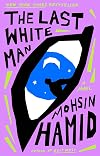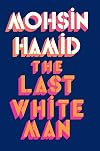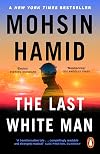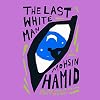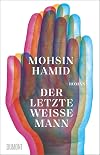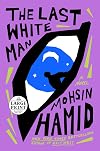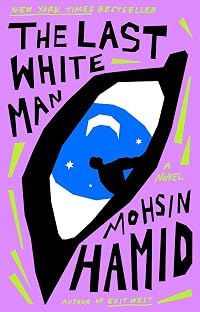
The Last White Man
by Mohsin Hamid
On This Page
Description
"From the internationally bestselling author of Exit West, a story of love, loss, and rediscovery in a time of unsettling change. One morning, a man wakes up to find himself transformed. Overnight, Anders's skin has turned dark, and the reflection in the mirror seems a stranger to him. At first he shares his secret only with Oona, an old friend turned new lover. Soon, reports of similar events begin to surface. Across the land, people are awakening in new incarnations, uncertain how their show more neighbors, friends, and family will greet them.Some see the transformations as the long-dreaded overturning of the established order that must be resisted to a bitter end. In many, like Anders's father and Oona's mother, a sense of profound loss and unease wars with profound love. As the bond between Anders and Oona deepens, change takes on a different shading: a chance at a kind of rebirth--an opportunity to see ourselves, face to face, anew. In Mohsin Hamid's "lyrical and urgent" prose (O Magazine), The Last White Man uplifts our capacity for empathy and the transcendence it allows, a migration of consciousness powerfully enacted by the novel itself"-- show lessTags
Recommendations














Member Reviews
I first heard of this book in a newspaper’s 50 books to read this summer feature a few months ago and started reading it on Monday. It has a great premise: what if a blue collar racist woke up and found himself transformed into a person of color? The book itself, unfortunately, is disappointing. This is to do with both style and execution.
SPOILERS BELOW.
This is literary fiction. The prose is so heavy on stylistic affectation that the story is all but lost. Only one of the book’s 180 pages has more than two periods on it. Most of its pages have, at most, one complete sentence on them. Here’s a random example:
One-hundred-eighty pages of that. And that was one of the shorter sentences.
I can’t help but wonder if Hamid chose this style in part to disguise the book’s lack of substance, because there really isn’t much. Hamid posits an incredibly challenging premise—What if a white person woke up to find they suddenly had dark skin? What if that then started happening to a bunch of white people?—but doesn’t want to bother thinking through the answers. When Anders wakes up and sees that he’s dark-skinned, he is filled with "murderous rage" and wants to kill himself. Why? Because he is dark-skinned. He’s afraid to go outside. Then there are riots and some people are killed. And then society comes to terms with everything, and the next generation of children don't care about skin color at all. The book explores this with about as much depth as I have given it here.
It’s incredibly frustrating, because it doesn’t add to anything to the issue of race, or increase readers’ understanding of it, or challenge them to think about it in new ways. Racist violence already exists; you don't need Hamid’s premise for society to reach that point, and his plot just replicates it in cookie cutter fashion without generating any new insight into who commits it and why. Nor does the book acknowledge, let alone try to work through, that people react to bodily change with shock. It would have been fascinating had Hamid's characters struggled to untangle what part of their shock was driven by the existence of change—any change—and what was driven by racial prejudice. That is a huge, uncomfortable question people across the ideological spectrum would have to grapple with in such a scenario. But Hamid just ignores it. I think you’d also see new forms of racial stratification; undoubtedly some of those formerly white people would try to find a way to set themselves apart from—and above—people who were born with darker skin; how do people deal with that on an individual and societal level? But the book ignores this too. Nor does it include the perspectives of any characters who weren't born with white skin, which given the premise…
Hamid does do some things well. The names of the only two characters in the book who have them—Anders and Oona—made me place it it Scandinavia, but Hamid carefully avoids setting it anywhere discrete at all, and so it could happen anywhere at all. This is an excellent choice. Hamid is sympathetic to how poverty and its related ills—drug use, social alienation, mental health issues, toxic masculinity, nativism—wear away at people who might otherwise have had a chance at being decent human beings. There’s also a surprisingly affecting death scene (all dozen or so words of it). And despite the shortchanged plot (“There are some riots and deaths, and then everyone is okay with race”), I do appreciate the ending's optimism, although again, I think it's going to take a much longer trek to get there.
TL;DR – Overly affected prose coupled with a premise that raises multiple interesting and difficult questions that the author only engages in on a superficial level. show less
SPOILERS BELOW.
This is literary fiction. The prose is so heavy on stylistic affectation that the story is all but lost. Only one of the book’s 180 pages has more than two periods on it. Most of its pages have, at most, one complete sentence on them. Here’s a random example:
The back of the gym, the changing rooms and lockers and showers, stayed open a little longer, and one night as Anders wasshow more
ready to leave, two men got into an argument, and they took it outside, and they were older guys, but big, bulky and strong and surprisingly quick despite their bellies, and they started to shove each other in the parking lot, and a few people gathered round, but those who gathered did not say anything, that was what struck Anders, they did not tell the two to stop, nor cheer them on, they were silent, they just watched, and soon the two men were punching, and it was ferocious, and out of the grunts and the shuffles came the sound of a fist hitting the side of a face, the solid crack of it, the thud, softly liquid and bone breaking at the same time, such a visceral, disturbing sound that it made Anders turn away, and he walked off, walked off without seeing what happened next, whether the dark one had the better of it or the pale one, Anders did not want to see, and though he did not see, the sound lingered, and it kept coming to him even as he lay on his bed that night, causing a wince, or a grimace, a physical response, Anders twitching there by himself, in echo.
One-hundred-eighty pages of that. And that was one of the shorter sentences.
I can’t help but wonder if Hamid chose this style in part to disguise the book’s lack of substance, because there really isn’t much. Hamid posits an incredibly challenging premise—What if a white person woke up to find they suddenly had dark skin? What if that then started happening to a bunch of white people?—but doesn’t want to bother thinking through the answers. When Anders wakes up and sees that he’s dark-skinned, he is filled with "murderous rage" and wants to kill himself. Why? Because he is dark-skinned. He’s afraid to go outside. Then there are riots and some people are killed. And then society comes to terms with everything, and the next generation of children don't care about skin color at all. The book explores this with about as much depth as I have given it here.
It’s incredibly frustrating, because it doesn’t add to anything to the issue of race, or increase readers’ understanding of it, or challenge them to think about it in new ways. Racist violence already exists; you don't need Hamid’s premise for society to reach that point, and his plot just replicates it in cookie cutter fashion without generating any new insight into who commits it and why. Nor does the book acknowledge, let alone try to work through, that people react to bodily change with shock. It would have been fascinating had Hamid's characters struggled to untangle what part of their shock was driven by the existence of change—any change—and what was driven by racial prejudice. That is a huge, uncomfortable question people across the ideological spectrum would have to grapple with in such a scenario. But Hamid just ignores it. I think you’d also see new forms of racial stratification; undoubtedly some of those formerly white people would try to find a way to set themselves apart from—and above—people who were born with darker skin; how do people deal with that on an individual and societal level? But the book ignores this too. Nor does it include the perspectives of any characters who weren't born with white skin, which given the premise…
Hamid does do some things well. The names of the only two characters in the book who have them—Anders and Oona—made me place it it Scandinavia, but Hamid carefully avoids setting it anywhere discrete at all, and so it could happen anywhere at all. This is an excellent choice. Hamid is sympathetic to how poverty and its related ills—drug use, social alienation, mental health issues, toxic masculinity, nativism—wear away at people who might otherwise have had a chance at being decent human beings. There’s also a surprisingly affecting death scene (all dozen or so words of it). And despite the shortchanged plot (“There are some riots and deaths, and then everyone is okay with race”), I do appreciate the ending's optimism, although again, I think it's going to take a much longer trek to get there.
TL;DR – Overly affected prose coupled with a premise that raises multiple interesting and difficult questions that the author only engages in on a superficial level. show less
What if all the white people turned brown? In Mohsin Hamid's "The Last White Man", that's what they do, and what happens is a compelling story -- I listened to it in one hearing. The characters are fully realized and sympathetic in their ordinariness, the social ramifications are well thought out, and the writing is vivid. Most engaging, perhaps, is the optimistic bias Hamid's story takes as it comes to an end, offering hope of a new and more accepting society.
The Last White Man, Mohsin Hamid, author and narrator
Mohsin Hamid has written a short novel about race and its place in our world When Anders wakes up one morning to what he, at first, perceives is a nightmare, he soon realizes that although he went to sleep as a white man, he has now awakened as a man of color. He is now forced to live in a different reality. His comfort zone of whiteness is gone. What problems will he endure? Will he be able to have the same lifestyle? Has he changed in any other way? Soon he will discover subtle changes in his personality, but at first, he calls in sick to his job as a trainer and finds he is afraid to go out. When he does venture out, he wonders if anyone is looking at him in an accusatory manner. show more It seems he is not recognized in his regular haunts. He discovers that some people no longer seem to notice him. He seems invisible to some people or like a shadow, they try to avoid. He notices people he previously took for granted or ignored. The janitor suddenly looms large on his landscape.
Anders has a girlfriend. At first, Oona, a yoga teacher, is very uncomfortable with Anders and begins to avoid him, but soon, it becomes apparent that this change of color in white people is something of a pandemic and is spreading. An entire town is suffering from the same change in skin color. Oona begins to grow more and more accustomed to Anders as a changed man. She sees him as more relaxed, and she too grows more relaxed. They both grow calmer and more accepting of each other, of their family and even of strangers. Soon, she too, is living in a dark-skinned body. She and Anders grow closer and more compatible. They seem to be less threatened and more accepting of each other as more and more people turn dark skinned. They discover that they often treated people without respect before this change. They discover that they are a bit wiser and enjoy each other and their lives far more as they live in these new bodies.
At first, there is some fear and some violence, all around them. There are attacks against those who have darkened, but soon everything calms down and a kind of peace descends. With everyone of one color, everyone is getting along far better. Life seems enjoyable as they take time to enjoy each other’s company without judgment. Without whiteness and its attendant privileges, there are fewer disagreements, fewer moments of self righteous indignation. Previously, one group of people, those with white skin, thought they had the one right way. Did they? Was the color simply a superficial descriptor?
Is life better now or was it better before, and if it was better, was it better because of whiteness or because of the privileges and power whiteness bestowed? If it is better without whiteness, is it because people feel less threatened? Do people become aware of the way one group took advantage of another? When everyone is the same, do they discover the true value of each other?
Let’s suppose that the tables were turned and reverse the situation. What if everyone turned white? Would we get the same result? Would there be less stress or more stress with the added competition? Would we all simply begin to have the same perceived privileges or had we really all had the same privileges all along, if only all we had all made the same effort to access them? Under which scenario would the world advance more and achieve more? Would both scenarios produce the same result? Is homogeneity better than heterogeneity? Is race the only issue that causes disharmony? What about economic advantages? What about intellectual advantages? They are not necessarily the result of race, but rather of ambition and ability, regardless of race.
When one group thinks they have the one right way and demand unanimity and uniformity, is that a successful approach for a community? Are different opinions necessary for creativity and advancement? Can a society survive if one political party silences the other? Does this novel support group think? Which scenario would achieve more unity, changing everyone to white or to black or does the choice of color matter? Is uniformity demanded in all situations for success, or is it an invitation to failure due to a lack of stimulation?
The author’s writing style wastes no words. In brief, but very clear and lucid sentences, he drives his point home about discrimination and the foolishness it is based upon. show less
Mohsin Hamid has written a short novel about race and its place in our world When Anders wakes up one morning to what he, at first, perceives is a nightmare, he soon realizes that although he went to sleep as a white man, he has now awakened as a man of color. He is now forced to live in a different reality. His comfort zone of whiteness is gone. What problems will he endure? Will he be able to have the same lifestyle? Has he changed in any other way? Soon he will discover subtle changes in his personality, but at first, he calls in sick to his job as a trainer and finds he is afraid to go out. When he does venture out, he wonders if anyone is looking at him in an accusatory manner. show more It seems he is not recognized in his regular haunts. He discovers that some people no longer seem to notice him. He seems invisible to some people or like a shadow, they try to avoid. He notices people he previously took for granted or ignored. The janitor suddenly looms large on his landscape.
Anders has a girlfriend. At first, Oona, a yoga teacher, is very uncomfortable with Anders and begins to avoid him, but soon, it becomes apparent that this change of color in white people is something of a pandemic and is spreading. An entire town is suffering from the same change in skin color. Oona begins to grow more and more accustomed to Anders as a changed man. She sees him as more relaxed, and she too grows more relaxed. They both grow calmer and more accepting of each other, of their family and even of strangers. Soon, she too, is living in a dark-skinned body. She and Anders grow closer and more compatible. They seem to be less threatened and more accepting of each other as more and more people turn dark skinned. They discover that they often treated people without respect before this change. They discover that they are a bit wiser and enjoy each other and their lives far more as they live in these new bodies.
At first, there is some fear and some violence, all around them. There are attacks against those who have darkened, but soon everything calms down and a kind of peace descends. With everyone of one color, everyone is getting along far better. Life seems enjoyable as they take time to enjoy each other’s company without judgment. Without whiteness and its attendant privileges, there are fewer disagreements, fewer moments of self righteous indignation. Previously, one group of people, those with white skin, thought they had the one right way. Did they? Was the color simply a superficial descriptor?
Is life better now or was it better before, and if it was better, was it better because of whiteness or because of the privileges and power whiteness bestowed? If it is better without whiteness, is it because people feel less threatened? Do people become aware of the way one group took advantage of another? When everyone is the same, do they discover the true value of each other?
Let’s suppose that the tables were turned and reverse the situation. What if everyone turned white? Would we get the same result? Would there be less stress or more stress with the added competition? Would we all simply begin to have the same perceived privileges or had we really all had the same privileges all along, if only all we had all made the same effort to access them? Under which scenario would the world advance more and achieve more? Would both scenarios produce the same result? Is homogeneity better than heterogeneity? Is race the only issue that causes disharmony? What about economic advantages? What about intellectual advantages? They are not necessarily the result of race, but rather of ambition and ability, regardless of race.
When one group thinks they have the one right way and demand unanimity and uniformity, is that a successful approach for a community? Are different opinions necessary for creativity and advancement? Can a society survive if one political party silences the other? Does this novel support group think? Which scenario would achieve more unity, changing everyone to white or to black or does the choice of color matter? Is uniformity demanded in all situations for success, or is it an invitation to failure due to a lack of stimulation?
The author’s writing style wastes no words. In brief, but very clear and lucid sentences, he drives his point home about discrimination and the foolishness it is based upon. show less
A fascinating trip into the minds of white people whose skin begins turning black. At first it only happens to a few people. In the mind of the storyteller, you can see his shifting sense of self, his fear at what he expects to experience from his observations of other people of color in his town. The book ends on an interesting note: when all people are the same color — no matter what that might be — it is possible to regain ones sense of self and security. An interesting read. The writing style was something I thought I would never like, but it worked really well for this book.
Heard about this through the Velshi Banned Book Club (MSNBC) this morning, checked it out of the library, and finished it this afternoon. I loved it. I can see little quibbles here and there with how the premise plays out, but those did not bother me. Loved the style (long sentences replete with ruminations, but crystal clear), the reflections on grief and loss and identity and...Luckily, I pulled all the other Hamid books from the shelf on my morning visit to the library. Onward.
This book had an interesting premise that started strong and faltered as it continued, but worthwhile nonetheless.
"...then the wedding ring and the wallet and the phone on the dead man were all tallied up, and the messages that had been sent, and the experts weighed in, and the sum of it all was clear, in other words that a white man had indeed shot a dark man, but also that the dark man and the white man were the same."
"...then the wedding ring and the wallet and the phone on the dead man were all tallied up, and the messages that had been sent, and the experts weighed in, and the sum of it all was clear, in other words that a white man had indeed shot a dark man, but also that the dark man and the white man were the same."
Mohsin’s Hamid’s The Last White Man is a book with a very interesting premise written in an interesting way that somehow manages to not be very interesting. Anders wakes one morning to find his skin turned from white to brown. After figuring out how to navigate this new normal, it turns out that the same thing is happening all over the city he lives in. Hamid explores the change through Anders, his girlfriend, Oona, and their parents with a semi-stream-of-consciousness style that translates into very long sentences that are difficult to navigate. The saving grace of The Last White Man — it is short.
Members
- Recently Added By
Lists

Books published and read in 2022
82 works; 5 members

List of Removed Books from Nimitz Library
353 works; 1 member

Fiction: BLM
60 works; 1 member
Author Information

13+ Works 13,113 Members
Mohsin Hamid grew up in Lahore, attended Princeton University and Harvard Law School and worked for several years as a management consultant in New York. His first novel, Moth Smoke, was published in ten languages, won a Betty Trask Award, and was a finalist for the PEN/Hemingway Award. His essays and journalism have appeared in Time, the New York show more Times and the Guardian, among others. His latest novel is The Reluctant Fundamentalist (2007) published by Penguin. He will be featured at the Ubud Writers and Readers Festival 2015 program. He is the author of Exit West, which in 2018, won the inaugural Aspen Words Literary Prize. (Bowker Author Biography) show less
Some Editions
Awards and Honors
Awards
Common Knowledge
- Canonical title
- The Last White Man
- Original publication date
- 2022
- People/Characters
- Anders; Oona
- Dedication
- For Becky
- First words
- One morning Anders, a white man, woke up to find he had turned a deep and undeniable brown.
- Last words
- (Click to show. Warning: May contain spoilers.)and he placed his brown hand on the side of her brown face, soothing her, his brown daughter, his daughter, and miraculously she let him.
- Original language
- English
Classifications
Statistics
- Members
- 592
- Popularity
- 49,535
- Reviews
- 22
- Rating
- (3.57)
- Languages
- 8 — Dutch, English, Finnish, French, German, Hungarian, Spanish, Swedish
- Media
- Paper, Audiobook, Ebook
- ISBNs
- 19
- ASINs
- 5