
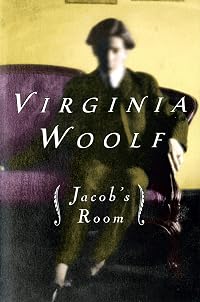
Jacob's Room
by Virginia Woolf
On This Page
Description
Virginia Woolf’s third novel, marks her first foray into Modernist experimentation. The narrative traces Jacob’s childhood in Cornwall and his education at Cambridge, culminating in an evocative portrait of his adult life in London and abroad. Jacob is romantically torn between the artistic Florinda, the upper-middle-class Clara Durrant and the beautiful, but married, Sandra Wentworth Williams. This tissue of romance, though, is torn apart by the cataclysmic events of the First World show more War. Woolf poignantly depicts the life of Jacob through a sequence of alternating perspectives that combine letters, fragments of dialogue and the ephemeral impressions of those nearest to him. Jacob’s voice becomes the absent centre of one of Modernism’s first great novels. show lessTags
Recommendations









Member Reviews
This is the third novel of Woolf's that I've read. Although I enjoyed the other two ([b:Orlando|18839|Orlando|Virginia Woolf|https://d.gr-assets.com/books/1404345499s/18839.jpg|6057225] and [b:Mrs. Dalloway|14942|Mrs. Dalloway|Virginia Woolf|https://d.gr-assets.com/books/1319710256s/14942.jpg|841320]), Jacob's Room is easily my favorite. Here, Woolf allows herself a freedom of perspective that's unmatched in the other books. Jacob as not so much a protagonist as a still point on the center of the map, a focus that lightly anchors the narrative's panoramic progression. The fluidity with which Woolf trades registers from the formal to the histrionic to the elegiac, the assured way she marshals a panoply of voices, it's simply astonishing. show more
The result is, in a word, poetic. Although some parts of the novel hold more interest than others, the best passages are instantly engaging, with a canny use of repetition and rhythm that's almost musical. I wish I had had the time to read it in one sitting, because I expect that my shoddy memory is obscuring some of the interplay across the span of the book.
This is not just for Woolf completists. It's a fully mature work, and worth a look for any enthusiast of the modern novel. show less
The result is, in a word, poetic. Although some parts of the novel hold more interest than others, the best passages are instantly engaging, with a canny use of repetition and rhythm that's almost musical. I wish I had had the time to read it in one sitting, because I expect that my shoddy memory is obscuring some of the interplay across the span of the book.
This is not just for Woolf completists. It's a fully mature work, and worth a look for any enthusiast of the modern novel. show less
Existem dois autores que sabiam lidar com o tempo literário de forma absolutamente brilhante no início do século XX: Marcel Proust e Virginia Woolf, embora de formas diametralmente opostas. Jacob's Room é fragmentado como a vida o é, seu protagonista é construído através de impressões que flutuam no espaço-tempo dos mais diversos pontos de vista e o capítulo final reflete o vazio do quarto abandonado quando se termina um livro.
I initially thought this was a bit cold, devoid of emotion, keeping me at a distance-and as an experiment in narrative form, of course it holds the reader at a distance, but I was wrong about it being cold. This is a small marvel, and it’s not even considered one of her better books. It is like an anti-Bildungsroman, impressionistic, with brief sketches of a character-one Jacob Flanders-whose name is his destiny. So much here is like life: how one can never know a person, only estimate or guess at another’s character; how in the midst of trying to form impressions of one’s own, of taking in life and enjoying the view of Scilly Isles, one realises that one’s copy of Shakespeare has fallen into the ocean. Or as Fanny Elmer show more notes, “One’s godmother ought to have told one”. Told one what? “Told one that it is no use making a fuss; this is life, they should have said”.
There is something here about grief and memory and the war, the countless number of men who died and who live on in the collective memory as numbers. How the act of remembering sometimes feels like a betrayal, because it begins to reveal to you something about the nature of death similar to what Woolf wrote in her diary as she was writing this novel: in death, like “a new form for a new novel”, the bare structure of the person becomes ever more hazy and indistinct, "no scaffolding; scarcely a brick to be seen”, and all you have left are memory as scraps, snatched from here and there, like something they said to you one day as you did the dishes after dinner. The whole person, their form, eludes you.
But it’s also a sly parody of the Bildungsroman and the conventions of realist fiction. Everyone is made fun of in small ways; Jacob and the society that produces countless Jacobs are not let off without subtle commentary. The distance the narrative technique employs is ironic; Woolf’s tone is one of mocking regard of patriarchal institutions and of Jacob himself, who thinks women, like dogs, shouldn’t be allowed into church services in Cambridge. In a way, Woolf skewers the men of her class. A satire that’s an elegy at the same time, about a society that valorises its Jacobs and is prepared to sacrifice them for abstract ideals that benefit a few.
Woolf’s prose is always like air being let into a stuffy room: you sit up straighter and begin to pay more attention to everything around you. If anything, maybe the style here is more fragmented, and less symphonic like in To the Lighthouse. Still, it tells you something about her ability with language that this is considered one of her minor works; most writers would be happy to call it a day if they could produce one novel like this one. The essayistic asides/fragments are, to me, worth the price of admission: “Don’t palter with the second rate. Detest your own age. Build a better one.” show less
There is something here about grief and memory and the war, the countless number of men who died and who live on in the collective memory as numbers. How the act of remembering sometimes feels like a betrayal, because it begins to reveal to you something about the nature of death similar to what Woolf wrote in her diary as she was writing this novel: in death, like “a new form for a new novel”, the bare structure of the person becomes ever more hazy and indistinct, "no scaffolding; scarcely a brick to be seen”, and all you have left are memory as scraps, snatched from here and there, like something they said to you one day as you did the dishes after dinner. The whole person, their form, eludes you.
But it’s also a sly parody of the Bildungsroman and the conventions of realist fiction. Everyone is made fun of in small ways; Jacob and the society that produces countless Jacobs are not let off without subtle commentary. The distance the narrative technique employs is ironic; Woolf’s tone is one of mocking regard of patriarchal institutions and of Jacob himself, who thinks women, like dogs, shouldn’t be allowed into church services in Cambridge. In a way, Woolf skewers the men of her class. A satire that’s an elegy at the same time, about a society that valorises its Jacobs and is prepared to sacrifice them for abstract ideals that benefit a few.
Woolf’s prose is always like air being let into a stuffy room: you sit up straighter and begin to pay more attention to everything around you. If anything, maybe the style here is more fragmented, and less symphonic like in To the Lighthouse. Still, it tells you something about her ability with language that this is considered one of her minor works; most writers would be happy to call it a day if they could produce one novel like this one. The essayistic asides/fragments are, to me, worth the price of admission: “Don’t palter with the second rate. Detest your own age. Build a better one.” show less
Existem dois autores que sabiam lidar com o tempo literário de forma absolutamente brilhante no início do século XX: Marcel Proust e Virginia Woolf, embora de formas diametralmente opostas. Jacob's Room é fragmentado como a vida o é, seu protagonista é construído através de impressões que flutuam no espaço-tempo dos mais diversos pontos de vista e o capítulo final reflete o vazio do quarto abandonado quando se termina um livro.
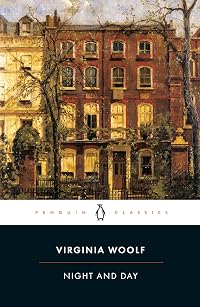
I read this one in college, but that was over 20 years ago so I didn't retain much beyond a generally positive feeling. Reading it now in the context of my very serious Virginia Woolf bookclub (reading everything she published in chronological order) really highlights how Woolf expands into herself with this novel. It has some of the Britishness and relationship stuff of Night and Day, the experimentation of Kew Gardens, the travelogue nature of the Voyage Out, and the playfulness with authorial perspective that weaves in and out of Monday or Tuesday. Jacob is an unknowable cipher, even though we stick with him till the end. But, in trying to know him, we end up knowing a lot about everything else. Which is kind of the way life works. show more Which is why I love Virginia Woolf. show less
I suspect that I chose the wrong Virginia Woolf book for my first read. Jacob’s Room was beautifully written, full of descriptive passages, original in both outlook and style but for most of the book I had not clue as to what was happening. The author after giving us glimpses and hints, leaves it up to her reader to put the pieces together. The words “stream of consciousness” come to mind and I admit I was put off by the disjointedness and lack of plot.
Jacob’s Room appears to be the life story of a young man and it unfolds in a series of scenes from his childhood, his time at Cambridge, his love affairs, his travels and on to his apparent death in World War I. The author’s intention in showing fragments of his life and leaving show more the whole picture elusive and incomplete is perhaps her way of making Jacob a symbol for an entire generation.
This was a poetic, layered, confusing and intriguing read. For much of the book I felt the author was immersed in her own nostalgia and sadness, but I was never totally drawn in and didn’t feel any sense of connection to the story. I fully intend to read more of Virginia Woolf’s writing and perhaps I can learn to appreciate an author who makes her readers work to understand the whys and wherefores of her writing. show less
Jacob’s Room appears to be the life story of a young man and it unfolds in a series of scenes from his childhood, his time at Cambridge, his love affairs, his travels and on to his apparent death in World War I. The author’s intention in showing fragments of his life and leaving show more the whole picture elusive and incomplete is perhaps her way of making Jacob a symbol for an entire generation.
This was a poetic, layered, confusing and intriguing read. For much of the book I felt the author was immersed in her own nostalgia and sadness, but I was never totally drawn in and didn’t feel any sense of connection to the story. I fully intend to read more of Virginia Woolf’s writing and perhaps I can learn to appreciate an author who makes her readers work to understand the whys and wherefores of her writing. show less
The book is so extraordinary, I like it more every time I read it. The novel is so filled with voices, especially women's voices, often unheard by anyone, like the letter from Jacob's mother that waits outside his door.
Who are we when others define us? What is the shape of our life? Add the waste of a generation slaughtered in the war.
Sigh. So satisfying.
Who are we when others define us? What is the shape of our life? Add the waste of a generation slaughtered in the war.
Sigh. So satisfying.
Members
- Recently Added By
Published Reviews
[...] this is one of the most arrogant books that has been written lately. Never was anything more unkindly, unsentimental, ungenial. [...]
Yet Mrs Woolf is a considerable writer, and plays tricks with a fine literary sense. Doubtless she is something of a cult, and in certain passages you might believe that she is making fun of the devotees. Her book is a sort of phantasmagoria; sometimes it show more seems that madness lies this way. Perhaps there are analogies in painting. Some things are said laboriously, some brilliantly and finely, [...] show less
Yet Mrs Woolf is a considerable writer, and plays tricks with a fine literary sense. Doubtless she is something of a cult, and in certain passages you might believe that she is making fun of the devotees. Her book is a sort of phantasmagoria; sometimes it show more seems that madness lies this way. Perhaps there are analogies in painting. Some things are said laboriously, some brilliantly and finely, [...] show less
added by Nevov
Lists

1001 Books You Must Read Before You Die
1,448 works; 1,131 members

20th Century Literature
1,161 works; 54 members

Backlisted
109 works; 9 members

Experimental Literature
141 works; 18 members

Woolf ranked
9 works; 3 members

1920s
141 works; 6 members

SHOULD Read Books!
354 works; 9 members
Backlisted Podcast
65 works; 3 members

My Lesbian Literature Library
14 works; 1 member

Take Four Books
130 works; 1 member
Author Information

648+ Works 118,925 Members
Virginia Woolf was born in London, England on January 25, 1882. She was the daughter of the prominent literary critic Leslie Stephen. Her early education was obtained at home through her parents and governesses. After death of her father in 1904, her family moved to Bloomsbury, where they formed the nucleus of the Bloomsbury Group, a circle of show more philosophers, writers, and artists. During her lifetime, she wrote both fiction and non-fiction works. Her novels included Jacob's Room, Mrs. Dalloway, To the Lighthouse, Orlando, and Between the Acts. Her non-fiction books included The Common Reader, A Room of One's Own, Three Guineas, The Captain's Death Bed and Other Essays, and The Death of the Moth and Other Essays. Having had periods of depression throughout her life and fearing a final mental breakdown from which she might not recover, Woolf drowned herself on March 28, 1941 at the age of 59. Her husband published part of her farewell letter to deny that she had taken her life because she could not face the terrible times of war. (Bowker Author Biography) show less
Some Editions
Awards and Honors
Series
Belongs to Publisher Series
Work Relationships
Is contained in
Common Knowledge
- Original title
- Jacob's Room
- Original publication date
- 1922
- First words
- 'So of course,' wrote Betty Flanders, pressing her heels rather deeper into the sand, 'there was nothing for it but to leave.'
- Last words
- (Click to show. Warning: May contain spoilers.)She held out a pair of Jacob's old shoes.
Classifications
Statistics
- Members
- 2,662
- Popularity
- 6,986
- Reviews
- 38
- Rating
- (3.55)
- Languages
- 16 — Catalan, Czech, Danish, Dutch, English, Finnish, French, German, Greek, Italian, Norwegian (Bokmål), Polish, Spanish, Swedish, Turkish, Portuguese (Portugal)
- Media
- Paper, Audiobook, Ebook
- ISBNs
- 178
- UPCs
- 1
- ASINs
- 63