On This Page
Description
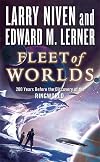
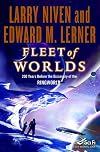
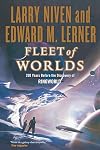
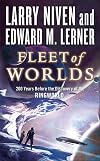
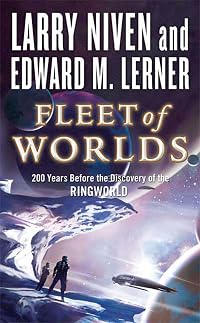
Fleet of Worlds marks Larry Niven's first full novel-length collaboration within his Known Space universe, the playground he created for his bestselling Ringworld series. Teaming up with fellow SF writer Edward M. Lerner, Fleet of Worlds takes a closer look at the Human-Puppeteer (Citizens) relations and the events leading up to Niven's first Ringworld novel. Kirsten Quinn-Kovacs is among the best and brightest of her people. She gratefully serves the gentle race that rescued her ancestors show more from a dying starship and nurtures them still. But, if only the Citizens knew where Kirsten's people came from! A chain reaction of supernovae at the galaxy's core has unleashed a wave of lethal radiation that will sterilize the galaxy. The Citizens flee, taking with them their planets, the Fleet of Worlds. Someone must scout ahead, and Kirsten and her crew eagerly volunteer. But as they set out to explore for any possible dangers in the Fleet's path, they uncover long-hidden truths that will shake the foundations of worlds. show lessTags
Recommendations












Member Reviews
Known Space is alive and well!
The first novel by this collaboration team and the first Known Space book since the plodding Ringworld's Children, Fleet of Worlds is a pleasant surprise. The two writing styles work well together, the characters are very good, and five worlds fleeing through space is a mind-expanding setting.
When the race of aliens known to Humans as the Puppeteers find that a wave of hard radiation from supernovae in the core of our galaxy will reach Known Space in the distant future, their natural caution (or cowardice) prompts them to flee the galaxy now. Bringing their planet and four attendant farming worlds provides the setting for a human colony that has been bred to serve the puppeteers as farmers and advance show more scouts, which the colonists defer to as "citizens".
The characters are a little pale for the first hundred pages or so, but this is the only fault of this wonderful novel. A prequel to Mr. Niven's Ringworld, Fleet of Worlds is the first of a projected two-book arc. show less
The first novel by this collaboration team and the first Known Space book since the plodding Ringworld's Children, Fleet of Worlds is a pleasant surprise. The two writing styles work well together, the characters are very good, and five worlds fleeing through space is a mind-expanding setting.
When the race of aliens known to Humans as the Puppeteers find that a wave of hard radiation from supernovae in the core of our galaxy will reach Known Space in the distant future, their natural caution (or cowardice) prompts them to flee the galaxy now. Bringing their planet and four attendant farming worlds provides the setting for a human colony that has been bred to serve the puppeteers as farmers and advance show more scouts, which the colonists defer to as "citizens".
The characters are a little pale for the first hundred pages or so, but this is the only fault of this wonderful novel. A prequel to Mr. Niven's Ringworld, Fleet of Worlds is the first of a projected two-book arc. show less
This gets four stars from me, but if fractional stars were possible I'd have given it a 3.8.
Larry Niven's Fleet of Worlds is a welcome reversion to Niven's better writing style. His work had become rather weak in the past ten to fifteen years; it seemed that like so many writers, age was robbing him of his abilities and voice.
His many co-authors didn't help, either. Most of them weren't that good, and they brought him down. At his best, Niven used beautifully clear, diamond-like prose to convey startling hard-science concepts and speculation; his fantasy was equally clever and imaginative.
Compared to his best works, his many recent novels plodded. They were better than a lot of the crap that's coming out under the SF label lately, but show more they were disappointing nonetheless.
While Fleet of Worlds doesn't attain the heights of Niven's best work, it is a quite respectable book and definitely worthy of Niven's literary legacy. It ties in to plot elements from previous Known Space stories without exploiting or ruining those stories, and without being annoying. All in all, it works. I haven't heard of the co-author, Edward M. Lerner, before, but so far I'd rate him the best co-author Niven has worked with. Although some of his work with Pournelle was also quite good.
I'll definitely read this one again, and will probably buy it when I get the chance. show less
Larry Niven's Fleet of Worlds is a welcome reversion to Niven's better writing style. His work had become rather weak in the past ten to fifteen years; it seemed that like so many writers, age was robbing him of his abilities and voice.
His many co-authors didn't help, either. Most of them weren't that good, and they brought him down. At his best, Niven used beautifully clear, diamond-like prose to convey startling hard-science concepts and speculation; his fantasy was equally clever and imaginative.
Compared to his best works, his many recent novels plodded. They were better than a lot of the crap that's coming out under the SF label lately, but show more they were disappointing nonetheless.
While Fleet of Worlds doesn't attain the heights of Niven's best work, it is a quite respectable book and definitely worthy of Niven's literary legacy. It ties in to plot elements from previous Known Space stories without exploiting or ruining those stories, and without being annoying. All in all, it works. I haven't heard of the co-author, Edward M. Lerner, before, but so far I'd rate him the best co-author Niven has worked with. Although some of his work with Pournelle was also quite good.
I'll definitely read this one again, and will probably buy it when I get the chance. show less
I was a big fan of Larry Niven back in the day when he was writing Ringworld, Tales of Known Space, Ringworld Engineers, Protector, etc. I had know. This series existed but never took the time to look into it after so many years.
I finally read this one and was pleasantly surprised. It all came back with reading about Nessus, puppeteers and the explosion at the core.
I was somewhat concerned going in that the familiarity would it be there because of the co-writer. Nothing against him but I thought it might be more his story than a tale in the original universe. I was wrong.
This book takes place, as the subtitle says, around 200 years before Ringworld. Touch points with the older novels is with Nessus and the puppeteers of course. With show more touch points to other aspects of the known universe setting. There is a great plot set up with humans who are with them on the Fleet of Worlds and the discoveries they make about their place and past. Good stuff! show less
I finally read this one and was pleasantly surprised. It all came back with reading about Nessus, puppeteers and the explosion at the core.
I was somewhat concerned going in that the familiarity would it be there because of the co-writer. Nothing against him but I thought it might be more his story than a tale in the original universe. I was wrong.
This book takes place, as the subtitle says, around 200 years before Ringworld. Touch points with the older novels is with Nessus and the puppeteers of course. With show more touch points to other aspects of the known universe setting. There is a great plot set up with humans who are with them on the Fleet of Worlds and the discoveries they make about their place and past. Good stuff! show less
This is another science fiction novel set in Known Space. It takes place in a fleet of Puppeteer worlds, this novel delves deeper into the Puppeteer society and psychology than any previous novel, at least that I've read.
The story involves a small band of Humans among the Puppeteers who take on the risky tasks that the Puppeteers shun. They uncover a dark secret that the Puppeteers have kept, and wonder where that information will lead.
Although the story is interesting, it has a different feel from the other stories set in Known Space. It is darker. It shows a darker side of Puppeteer involvement in Human affairs, although this has been suggested, it is now part of the story.
Some of the characters seemed poorly developed. A show more relationship developed between two main Humans, Kirsten and Omar. Although Kirsten had rebuffed Omar's advances, there wasn't an adequate explanation of her change of heart. Other than that, there wasn't really any character development. There were social changes at the end of the story, but the characters didn't seem to change.
Although I did enjoy the story, I feel that the character flaws will keep me from recommending it. There isn't much character development in Niven's stories in general, and the stories are good. Perhaps the co-author introduced them, but they are inadequate and I feel they detract from the story due to their inadequacy. show less
The story involves a small band of Humans among the Puppeteers who take on the risky tasks that the Puppeteers shun. They uncover a dark secret that the Puppeteers have kept, and wonder where that information will lead.
Although the story is interesting, it has a different feel from the other stories set in Known Space. It is darker. It shows a darker side of Puppeteer involvement in Human affairs, although this has been suggested, it is now part of the story.
Some of the characters seemed poorly developed. A show more relationship developed between two main Humans, Kirsten and Omar. Although Kirsten had rebuffed Omar's advances, there wasn't an adequate explanation of her change of heart. Other than that, there wasn't really any character development. There were social changes at the end of the story, but the characters didn't seem to change.
Although I did enjoy the story, I feel that the character flaws will keep me from recommending it. There isn't much character development in Niven's stories in general, and the stories are good. Perhaps the co-author introduced them, but they are inadequate and I feel they detract from the story due to their inadequacy. show less
I began reading this again because I've really been remiss in my ringworld, nay, known space fix. I've always loved Niven's worldbuilding and he's been a staple of sci-fi for me. I didn't know how well I'd like a new collaboration, although I had liked most of the Pournelle books and I thought the Barnes books were also quality.
So far, so good.
Getting into the puppeteers more deeply than I'd ever read, before, should have been a more puppeteer-centric experience. It was fine having a human slave revolt and the breaking apart of the fleet of worlds, but I really wanted more of the psychology and the cultural experience of the alien race. It was a competent book and it did much to develop the future history of the universe, so I don't show more really have any complaints on that score. I'll continue in hope it gets much better, of course. show less
So far, so good.
Getting into the puppeteers more deeply than I'd ever read, before, should have been a more puppeteer-centric experience. It was fine having a human slave revolt and the breaking apart of the fleet of worlds, but I really wanted more of the psychology and the cultural experience of the alien race. It was a competent book and it did much to develop the future history of the universe, so I don't show more really have any complaints on that score. I'll continue in hope it gets much better, of course. show less
When I was a kid, my big brother moved out and left most of his science fiction library behind. He invited me to read whatever I wanted, and I did, encountering many interesting and 'interesting' things in the process.
I discovered Piers Anthony, Isaac Asimov, and, most of all, Larry Niven. My favourite books were Ringworld, some of the Man-Kzin War books, and Protector; I think Ringworld and the Pak exemplified Niven's superb freewheeling intellectual playfulness, which he usually managed to combine with fascinating aliens. The combination was worth putting up with his often rather flat humans.
I was, then, excited when my husband drew to my attention to a new trilogy which featured both the Puppeteers and the Pak.
What did I find? Well. show more A perfectly harmless science fiction story with lots of details of Puppeteer life. It didn't give me any of those "wow, of course" moments of Niven's classic work, but it wasn't a pain to read, and I've always loved Nessus. I'm not sure I found his POV an improvement on seeing him through human eyes, though, and I eventually found it faintly annoying how much of this book was transparently backengineered from Ringworld.
We find out why Nessus wears his mane that way! Details of Puppeteer mating! Backstory on Puppeteer politics! Nessus mentions some possible revisions to human law in passing, and they've been implemented by the time of Ringworld! Etc. Eventually I felt like they were relying too heavily on the diminishing thrills of recognition Ringworld readers would get on picking up these in-jokes, and I wished they'd developed more new ideas.
I'm going to stick with the series, as I love the Pak, and they haven't shown up yet. We'll see. show less
I discovered Piers Anthony, Isaac Asimov, and, most of all, Larry Niven. My favourite books were Ringworld, some of the Man-Kzin War books, and Protector; I think Ringworld and the Pak exemplified Niven's superb freewheeling intellectual playfulness, which he usually managed to combine with fascinating aliens. The combination was worth putting up with his often rather flat humans.
I was, then, excited when my husband drew to my attention to a new trilogy which featured both the Puppeteers and the Pak.
What did I find? Well. show more A perfectly harmless science fiction story with lots of details of Puppeteer life. It didn't give me any of those "wow, of course" moments of Niven's classic work, but it wasn't a pain to read, and I've always loved Nessus. I'm not sure I found his POV an improvement on seeing him through human eyes, though, and I eventually found it faintly annoying how much of this book was transparently backengineered from Ringworld.
We find out why Nessus wears his mane that way! Details of Puppeteer mating! Backstory on Puppeteer politics! Nessus mentions some possible revisions to human law in passing, and they've been implemented by the time of Ringworld! Etc. Eventually I felt like they were relying too heavily on the diminishing thrills of recognition Ringworld readers would get on picking up these in-jokes, and I wished they'd developed more new ideas.
I'm going to stick with the series, as I love the Pak, and they haven't shown up yet. We'll see. show less
This really got 3 1/2 stars from me, but that's not an option. Classic sci-fi, this is a prequel to Niven's Ring World series, which I now want to go read (I read some of it eons ago, but don't remember much). Classic sci-fi: plot driven by scientific principles or ideas, but if you don't get them, that's okay, the book still works. Not a lot of character development, but that's okay too - its still an interesting read. Actually, the alien puppeteer is quite well developed, and I liked the way he was presented ambiguously--I'm still not sure how I feel about him.
Members
- Recently Added By
Author Information

333+ Works 98,449 Members
Larry Niven received his B.A. in mathematics in 1962. His first novel, World of Ptavvs (1966), was a success and launched his career. Niven has won five Hugos and one Nebula award, testimony that his colleagues in the science fiction world respect his work. Perhaps Niven's most well-known creation is Ringworld, a distant planet that may be taken show more as a metaphor for Earth, as it was once great but has since fallen into decay. (Bowker Author Biography) show less

70+ Works 3,441 Members

Edward M. Lerner is a LibraryThing Author, an author who lists their personal library on LibraryThing.
Some Editions
Awards and Honors
Awards
Series


Belongs to Publisher Series
Work Relationships
Is contained in
Common Knowledge
- Original title
- Fleet of Worlds
- Original publication date
- 2007-10-16
- People/Characters
- Nessus; Hindmost; Chiron; Kirsten Quinn-Kovacs; Omar Tanaka-Singh; Eric Huang-Mbeke (show all 7); Nike
- Important places
- Long Pass (starship); Explorer (starship)
- First words
- Long Pass crossed the sky in a series of shallow curves, because Diego MacMillan willed it so.
- Last words
- (Click to show. Warning: May contain spoilers.)These Colonists were quite mistaken to believe their fate and the Concordance's fate could be so easily disentwined.
- Blurbers
- Card, Orson Scott; Clancy, Tom; Pohl, Frederik
- Original language
- English
Classifications
Statistics
- Members
- 888
- Popularity
- 30,545
- Reviews
- 18
- Rating
- (3.60)
- Languages
- 5 — Czech, English, German, Greek, Polish
- Media
- Paper, Audiobook, Ebook
- ISBNs
- 17
- ASINs
- 5