
Edward M. Lerner
Author of Fleet of Worlds
About the Author
Image credit: Edward M. Lerner at Noreascon 4 (Worldcon 2004) Photo by Michael Benveniste
Series
Works by Edward M. Lerner
The Complete Fleet of Worlds: A Ringworld Series: Fleet of Worlds, Juggler of Worlds, Destroyer of Worlds, Betrayer of Worlds, Fate of Worlds (Known Space) (2018) — Author — 6 copies, 1 review
Calculating Minds 3 copies
Presence of Mind 2 copies
Inside the Box 2 copies
Grandpa? 2 copies
Time Out 2 copies
Great Minds 1 copy
A Matter of Perspective 1 copy
By The Rules 1 copy
Survival Instinct 2 1 copy
Origins 1 copy
Chance of Storms 1 copy
At the Watering Hole 1 copy
Moonstruck 1 1 copy
Countdown To Armageddon 2 1 copy
Moonstruck 2 1 copy
Small Business 1 copy
The Night Of The Rfids 1 copy
Countdown To Armageddon 4 1 copy
Countdown To Armageddon 1 1 copy
Countdown To Armageddon 5 1 copy
Where Credit Is Due 1 copy
Countdown To Armageddon 6 1 copy
Countdown To Armageddon 7 1 copy
A Time For Heroes 1 copy
Blessed Are The Bleak 1 copy
Energized 1 1 copy
Energized 2 1 copy
Energized: Part Iii Of Iv 1 copy
Moonstruck 4 1 copy
Moonstruck 3 1 copy
Associated Works
Science Fiction by Scientists: An Anthology of Short Stories (Science and Fiction) (2016) — Contributor — 21 copies, 1 review
Analog Science Fiction and Fact: Vol. CXXII, No. 7 & 8 (July/August 2002) (2002) — Contributor — 14 copies, 1 review
Analog Science Fiction and Fact: Vol. CXXXIV, No. 9 (September 2014) (2014) — Contributor — 9 copies, 1 review
Analog Science Fiction and Fact: Vol. CXXXIII, No. 10 (October 2013) (2013) — Contributor — 7 copies, 2 reviews
Tagged
Common Knowledge
- Birthdate
- 1949-06-22
- Gender
- male
- Organizations
- Science Fiction and Fantasy Writers of America
Institute of Electrical and Electronics Engineers
SIGMA - Nationality
- USA
- Birthplace
- Chicago, Illinois, USA
- Places of residence
- Chicago, Illinois, USA (birth)
- Associated Place (for map)
- Chicago, Illinois, USA
Members
Reviews
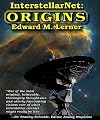
Lerner, Edward M. InterstellarNet: Origins. InterstellarNet No. 1. Foxacre, 2010.
I love the future history premise behind this collection of narratively related short stories: What if SETI got a message from a nearby star in 2002. Your average science fiction writer would have used that as a jumping-off point for some sort of FTL or wormhole gate. But Learner is a much too hard-science guy for that. Instead, he deals with the problem of developing a common language and eventually show more establishing an information-based trade between star systems. Lerner’s background includes work in physics and computer science, as well as an MBA. He is thus able to ask some good questions about this kind of long-distance first contact. What information about ourselves and about our technology should we not trade? How open-sourced should we make the information we receive? What would be the impact on Interstellar communication on our economy and world politics? Finally, with disturbing prescience, he wonders how we might deal with an Interstellar ransomware attack. An alien AI would have it all over your average Russian cybercriminal. The book began as a series of stand-alone short stories in Analog. Lerner revised and expanded them, so they read a bit like a novel that follows one family for several generations. The stories are not always as tightly bound together as I would like, but they are generally well-plotted. I look forward to reading the second volume. 4 stars. show less
I love the future history premise behind this collection of narratively related short stories: What if SETI got a message from a nearby star in 2002. Your average science fiction writer would have used that as a jumping-off point for some sort of FTL or wormhole gate. But Learner is a much too hard-science guy for that. Instead, he deals with the problem of developing a common language and eventually show more establishing an information-based trade between star systems. Lerner’s background includes work in physics and computer science, as well as an MBA. He is thus able to ask some good questions about this kind of long-distance first contact. What information about ourselves and about our technology should we not trade? How open-sourced should we make the information we receive? What would be the impact on Interstellar communication on our economy and world politics? Finally, with disturbing prescience, he wonders how we might deal with an Interstellar ransomware attack. An alien AI would have it all over your average Russian cybercriminal. The book began as a series of stand-alone short stories in Analog. Lerner revised and expanded them, so they read a bit like a novel that follows one family for several generations. The stories are not always as tightly bound together as I would like, but they are generally well-plotted. I look forward to reading the second volume. 4 stars. show less
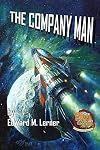
Lerner, Edward M. Company Man. Ring of Fire Press, 2019.
Reading Edward M. Lerner’s Company Man made me realize just how lucky Andy Weir was with The Martian. Both novels are well-plotted near-future hard science fiction stories. Both have likeable first-person narrators. The Martian began as an unadvertised addition to Weir’s website. But then it took off, landing a major and scoring a lucrative movie deal. Company Man, by contrast, was published by Eric Flint’s Ring of Fire Press, a show more small company started as a venue for Flint’s Ring of Fire series. Although Lerner is an experienced writer with a decent fan-base from this magazine publications and work with Larry Niven on the Fleet of Worlds series, Company Man seems to be getting little traction, ranked 901 in the Kindle Store’s narrow hard science fiction category. Lerner’s novel deserves a better fate. The narrator hero is a forensic accountant sent on a mysterious emergency call to a mining station in the Asteroid Belt. He soon finds himself embroiled in a system-wide mystery, involving financial shenanigans, sabotage, and multiple murders. He must solve not only the who but the how of all these crimes. Lerner’s technological extrapolation is first-rate, and I found his Company Man hero understated but engaging. Come on, Hollywood, you need another movie as good as The Martian in your catalog. show less
Reading Edward M. Lerner’s Company Man made me realize just how lucky Andy Weir was with The Martian. Both novels are well-plotted near-future hard science fiction stories. Both have likeable first-person narrators. The Martian began as an unadvertised addition to Weir’s website. But then it took off, landing a major and scoring a lucrative movie deal. Company Man, by contrast, was published by Eric Flint’s Ring of Fire Press, a show more small company started as a venue for Flint’s Ring of Fire series. Although Lerner is an experienced writer with a decent fan-base from this magazine publications and work with Larry Niven on the Fleet of Worlds series, Company Man seems to be getting little traction, ranked 901 in the Kindle Store’s narrow hard science fiction category. Lerner’s novel deserves a better fate. The narrator hero is a forensic accountant sent on a mysterious emergency call to a mining station in the Asteroid Belt. He soon finds himself embroiled in a system-wide mystery, involving financial shenanigans, sabotage, and multiple murders. He must solve not only the who but the how of all these crimes. Lerner’s technological extrapolation is first-rate, and I found his Company Man hero understated but engaging. Come on, Hollywood, you need another movie as good as The Martian in your catalog. show less
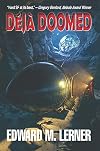
Lerner, Edward M. Déjà Doomed. Caezik, 2021.
Edward M. Lerner’s new near future novel is about what one would expect from him: knowledgeable science and a well-constructed plot. Russians are mining helium-3 on the back side of the Moon, while the Americans are building a large radio-telescope there. Near future or not, the cold war seems to still be on, and both scientific teams have intelligence agents watching over the doings of their rivals. Things change when an independent “robot show more wrangler” discovers an ancient spacesuited alien corpse, and the race is on to discover and scoop up alien tech. All the espionage and other activities wake up an alien AI that has been waiting eons for a chance to put an end to Earth primates. It is all good, unless you delve into the political realities. Projects on this scale are bound to be more international than Lerner suggests. However, good hard science fiction is hard enough to find that a guy with Lerner’s science chops and the ability to tell a story will always get my attention. 4 stars. show less
Edward M. Lerner’s new near future novel is about what one would expect from him: knowledgeable science and a well-constructed plot. Russians are mining helium-3 on the back side of the Moon, while the Americans are building a large radio-telescope there. Near future or not, the cold war seems to still be on, and both scientific teams have intelligence agents watching over the doings of their rivals. Things change when an independent “robot show more wrangler” discovers an ancient spacesuited alien corpse, and the race is on to discover and scoop up alien tech. All the espionage and other activities wake up an alien AI that has been waiting eons for a chance to put an end to Earth primates. It is all good, unless you delve into the political realities. Projects on this scale are bound to be more international than Lerner suggests. However, good hard science fiction is hard enough to find that a guy with Lerner’s science chops and the ability to tell a story will always get my attention. 4 stars. show less
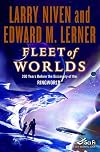
Known Space is alive and well!
The first novel by this collaboration team and the first Known Space book since the plodding Ringworld's Children, Fleet of Worlds is a pleasant surprise. The two writing styles work well together, the characters are very good, and five worlds fleeing through space is a mind-expanding setting.
When the race of aliens known to Humans as the Puppeteers find that a wave of hard radiation from supernovae in the core of our galaxy will reach Known Space in the distant show more future, their natural caution (or cowardice) prompts them to flee the galaxy now. Bringing their planet and four attendant farming worlds provides the setting for a human colony that has been bred to serve the puppeteers as farmers and advance scouts, which the colonists defer to as "citizens".
The characters are a little pale for the first hundred pages or so, but this is the only fault of this wonderful novel. A prequel to Mr. Niven's Ringworld, Fleet of Worlds is the first of a projected two-book arc. show less
The first novel by this collaboration team and the first Known Space book since the plodding Ringworld's Children, Fleet of Worlds is a pleasant surprise. The two writing styles work well together, the characters are very good, and five worlds fleeing through space is a mind-expanding setting.
When the race of aliens known to Humans as the Puppeteers find that a wave of hard radiation from supernovae in the core of our galaxy will reach Known Space in the distant show more future, their natural caution (or cowardice) prompts them to flee the galaxy now. Bringing their planet and four attendant farming worlds provides the setting for a human colony that has been bred to serve the puppeteers as farmers and advance scouts, which the colonists defer to as "citizens".
The characters are a little pale for the first hundred pages or so, but this is the only fault of this wonderful novel. A prequel to Mr. Niven's Ringworld, Fleet of Worlds is the first of a projected two-book arc. show less
Lists
Awards


You May Also Like


Associated Authors
Statistics
- Works
- 70
- Also by
- 14
- Members
- 3,429
- Popularity
- #7,421
- Rating
- 3.6
- Reviews
- 81
- ISBNs
- 128
- Languages
- 5
- Favorited
- 1
