On This Page
Description
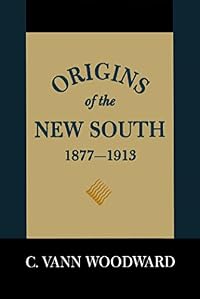
Winner of the Bancroft Prize After more than two decades, Origins of the New South is still recognized both as a classic in regional historiography and as the most perceptive account yet written on the period which spawned the New South. Historian Sheldon Hackney recently summed it up this way: "The pyramid still stands. Origins of the New South has survived relatively untarnished through twenty years of productive scholarship, including the eras of consensus and of the new radicalism. . . . show more Woodward recognizes both the likelihood of failure and the necessity of struggle. It is this profound ambiguity which makes his work so interesting. Like the myth of Sisyphus, Origins of the New South still speaks to our condition." This enlarged edition contains a new preface by the author and a critical essay on recent works by Charles B. Dew. show lessTags
Recommendations
















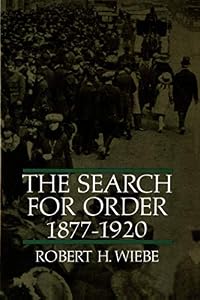


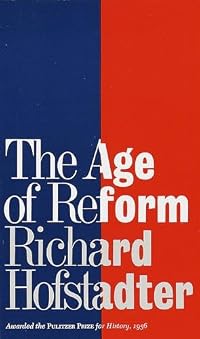

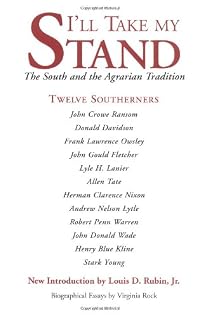


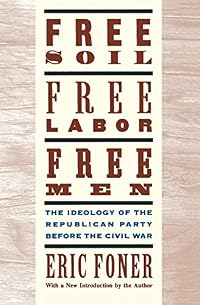





Member Reviews
A foundational work that analyzes the transformation of the post-Reconstruction South into a new political and economic order between 1877 and 1913. The book examines the rise of an industrial economy, the continued rural distress, political shifts, and the complex and often contradictory character of the "New South," which aimed to modernize the region while preserving white supremacy.
Classic on the emergence of a new southern economy and social structure in the wake of the Civil War and Reconstruction. The book was written sixty years ago, which means that it is dated in some ways, and some of its underlying attitudes would offensive were they voiced today (though Woodward was definitely a progressive for his time). Nonetheless, this book still has a lot to say about the way the South got the way it was, and says it well.
In Chapter VII, "The Unredeemed Farmer," Woodward takes on another myth. This time it is the myth that "Emancipation freed the poor whites more than it did the Negro!" This, as Woodward amply demonstrates, simply was not true. The poor white farmer's plight was miserable. A the root of his misery was the crop lien system. Credit was in the saddle and rode the farmer merciless. It was not the local merchant at the South whom Woodward blames for the exploitation of the Southern poor, but rather the financiers at the North, for "the merchant was only a bucket on an endless chain by which the agricultural well of a tributary region was drained of its flow" (p. 184- 5). Woodward also describes the Farmers' Alliance attempts to short circuit show more this exploitative system by co-operative buying and selling (p. 196). The example of successful agitation by the Alliance to which he points is the destruction of the jute trust.
In Chapter VIII, "Mudsills and Bottom Rails," he discusses the relationship between black and white freedoms. Poor whites and freedmen were in pretty much the same economic position, 8 yet the transformation "from slavery to caste as a system of controlling labor" proceeded apace as the New South integrationist ideology attempted to pit workers against each other --divide and conquer (p. 209). The New South was not solid in ~he sense of labor quiescence in the face of management any more than it was politically unified. Addressing the activities of the Knights of Labor and the American Federation of Labor in the South, Woodward provides ample evidence of Southern labor's militancy.
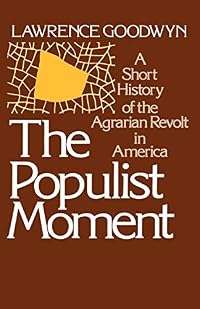
In Chapter IX, "Southern Populism," he points out that the Southern Alliance men were oriented toward the West, as opposed to Southern Conservatives who had entered into a colonial relationship with Eastern capital. At the heart of Southern Populism was the Farmers' Alliance. As a test of Alliance loyalty the Southern Alliancemen chose fealty to the sub treasury system ( p,. 239) .This is an idea upon which Goodwyn would later build, more on this under Goodwyn entry. Analyzing the socio-economic structure of Southern Populism, Woodward finds its leadership to have been drawn from a variety of strata but its rank and file to have been predominantly of the lower orders (p. 246). There would be considerable agreement with Hofstadter I here. This agreement would extend to granting the Southern Populists' position among the national muckraker phenomenon. Indeed, the Southern Populists challenged the New South integrationist ideology head on (pp. 249, 252). Most radical of all was the attempt to integrate blacks into Populism, which itself engendered considerable violence against the movement (257-259). One more example of the fractioned New South!
Finally, in Chapter X, "Revolt Against the East," Woodward addresses the great depression of the nineties in the South. The South was torn by industrial conflict in exactly the same way as the North. The Populists of the South chose to ally themselves with those of the West under the free silver banner. Woodward spends considerable time analyzing Populist electioneering at the South. The detail is good but one could easily def lost. He concludes that revolting against the Democratic leadership, these new silver leaders eventually became as entrenched as the Eastern oriented leadership they had had replaced !(p. 290). show less
In Chapter VIII, "Mudsills and Bottom Rails," he discusses the relationship between black and white freedoms. Poor whites and freedmen were in pretty much the same economic position, 8 yet the transformation "from slavery to caste as a system of controlling labor" proceeded apace as the New South integrationist ideology attempted to pit workers against each other --divide and conquer (p. 209). The New South was not solid in ~he sense of labor quiescence in the face of management any more than it was politically unified. Addressing the activities of the Knights of Labor and the American Federation of Labor in the South, Woodward provides ample evidence of Southern labor's militancy.
In Chapter IX, "Southern Populism," he points out that the Southern Alliance men were oriented toward the West, as opposed to Southern Conservatives who had entered into a colonial relationship with Eastern capital. At the heart of Southern Populism was the Farmers' Alliance. As a test of Alliance loyalty the Southern Alliancemen chose fealty to the sub treasury system ( p,. 239) .This is an idea upon which Goodwyn would later build, more on this under Goodwyn entry. Analyzing the socio-economic structure of Southern Populism, Woodward finds its leadership to have been drawn from a variety of strata but its rank and file to have been predominantly of the lower orders (p. 246). There would be considerable agreement with Hofstadter I here. This agreement would extend to granting the Southern Populists' position among the national muckraker phenomenon. Indeed, the Southern Populists challenged the New South integrationist ideology head on (pp. 249, 252). Most radical of all was the attempt to integrate blacks into Populism, which itself engendered considerable violence against the movement (257-259). One more example of the fractioned New South!
Finally, in Chapter X, "Revolt Against the East," Woodward addresses the great depression of the nineties in the South. The South was torn by industrial conflict in exactly the same way as the North. The Populists of the South chose to ally themselves with those of the West under the free silver banner. Woodward spends considerable time analyzing Populist electioneering at the South. The detail is good but one could easily def lost. He concludes that revolting against the Democratic leadership, these new silver leaders eventually became as entrenched as the Eastern oriented leadership they had had replaced !(p. 290). show less
USA
USA in BOOKS
An Introductory Collection
USA in BOOKS
An Introductory Collection
Jul 2, 2025Chinese, traditional
Ratings
Members
- Recently Added By
Author Information

25+ Works 4,214 Members
One of the world's most distinguished historians, C. Vann Woodward was born in Vanndale, Arkansas, and educated at Emory University and the University of North Carolina, where he received his Ph.D. in 1937. After teaching at Georgia Institute of Technology, the University of Florida, and Scripps College for a time, in 1946 he joined the faculty at show more The Johns Hopkins University, where he began producing the many young Ph.D.s who have followed him into the profession. In 1961 he became Sterling Professor at Yale University, where he remains today as emeritus professor. He has been the Jefferson Lecturer in the Humanities, Harmsworth Professor at Oxford University, and Commonwealth Lecturer at the University of London. Past president of all the major historical associations, he holds the Gold Medal of the National Academy and Institute of Arts and Letters and is a member of the British Academy and the Royal Historical Society. His honors also include a Bancroft Prize for Origins of the New South, 1876--1913 (1951) and a 1982 Pulitzer Prize for Mary Chesnut's Civil War (1981). A premier historian of the American South and of race relations in the United States, Woodward studies the South in a way that sheds light on the human condition everywhere. In recent years he has turned his attention increasingly to comparative history. (Bowker Author Biography) show less
Awards and Honors
Awards
Notable Lists
Series

Common Knowledge
- Canonical title
- Origins of the New South, 1877-1913
- Original publication date
- 1951
- Epigraph
- I remember watching the Diamond Jubilee procession myself as a small boy. I remember the atmosphere. It was: Well, here we are on the top of the world, and we have arrived at this peak to stay there -- forever! There is,... (show all) of course, a thing called history, but history is something unpleasant that happens to other people. We are comfortably outside all that. I am sure, if I had been a small boy in New York in 1897 I should have felt the same. Of course, if I had been a small boy in the 1897 in the Southern part of the United States, I should not have felt the same; I should then have known from my parents that history had happened to my people in my part of the world. -- Arnold J. Toynbee
- First words
- Any honest genealogy of the ruling family of Southern Democrats would reveal a strain of mixed blood.
- Disambiguation notice
- C. VANN Woodward, I believe; not Venn.
Classifications
- Genres
- History, Nonfiction, General Nonfiction, Travel
- DDC/MDS
- 917.5 — History & geography Geography & travel Geography of and travel in North America Southeastern U.S.
- LCC
- F215 .W85 — Local History of the United States, Canada and Latin America United States local history The South. South Atlantic States
- BISAC
Statistics
- Members
- 413
- Popularity
- 74,707
- Reviews
- 4
- Rating
- (3.83)
- Languages
- English
- Media
- Paper, Ebook
- ISBNs
- 7
- ASINs
- 11