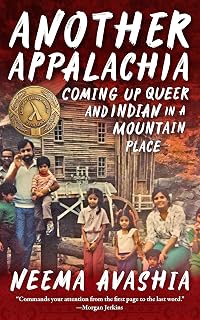
Another Appalachia: Coming Up Queer and Indian in a Mountain Place
by Neema Avashia
On This Page
Description
When Neema Avashia tells people where she's from, their response is nearly always a disbelieving "There are Indian people in West Virginia?" A queer Asian American teacher and writer, Avashia fits few Appalachian stereotypes. But the lessons she learned in childhood about race and class, gender and sexuality continue to inform the way she moves through the world today: how she loves, how she teaches, how she advocates, how she struggles. Another Appalachia examines both the roots and the show more resonance of Avashia's identity as a queer desi Appalachian woman, while encouraging readers to envision more complex versions of both Appalachia and the nation as a whole. With lyric and narrative explorations of foodways, religion, sports, standards of beauty, social media, gun culture, and more, Another Appalachia mixes nostalgia and humor, sadness and sweetness, personal reflection and universal questions. show lessTags
Recommendations



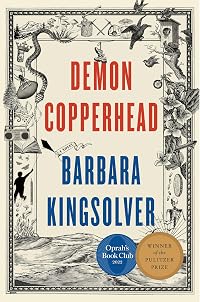
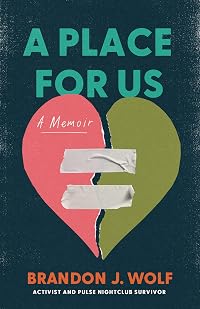
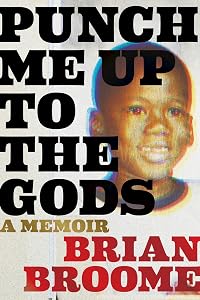
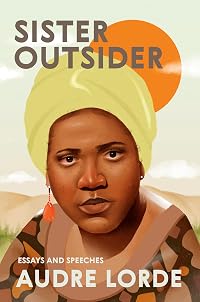
Member Recommendations
Member Reviews
A 5-star read for me, this is memoir-ish, but actually a collection of essays written by a woman whose parents immigrated to the US from India in the late 1960s, and settled shortly thereafter in rural West Virginia, where her father had been hired as company doctor for a chemical firm. Avashia's concept of "home" is firmly rooted in the positive memories of growing up in a neighborhood where everyone was welcome in everyone else's home, where helping each other was bred in the bone, where all the grown-up ladies were "aunties" or extra grandmothers, no matter that they were all White and Avashia and her family were Brown. Nonetheless, prejudice, whether subtle or obvious, unintended or unapologetic, was always in the air. While the show more author speaks of her resistance to traditional gender roles as a young person, and her reluctance to brave her family's reaction to her choice of life partner, the main thrust of this book is the racial and cultural divide she has navigated all her life, rather than the issue of sexual identity. It is amazing to me that she can look back with such clarity on those early years when she was "other" in so many ways, with no apparent resentment for the parts that had to be unnerving. She has always loved and embraced her West Virginia origins, even now that she has spent more of her life elsewhere than she did there. This resonates with me, for whom "home" will ever be the farm I never lived on, where generations of my family beginning in the late 19th century have lived. Highly recommended. show less
[Another Appalachia] is a collection of personal essays making up a kind of memoir by Neema Avashia, a queer woman born to Indian immigrants in West Virginia. While not every essay is directly about her Appalachian roots, each one is certainly informed by them, and the essays that are more about her time in West Virginia offer a fascinating view of the region from "another" sort of voice than we may be used to or expect. Recommended.
Neema Avashia is a Boston teacher who I know through her activism and her Twitter account. In this short collection of essay-length memoirs she reflects on growing up in West Virginia and her present day life in India. Her family emigrated to India as part of a small but significant group of Indian ex-pats who worked in West Virginia's chemical industry. Avashia describes the warm memories of white West Virginians and how the Appalachian and Indian cultural traditions became commingled in her childhood. This is contrasted with how those same white West Virginians who helped her family on arrival support the MAGA ideology that discriminates against immigrants and LGBTQ people. Nevertheless, Avashia fully embraces her West Virginia show more identity and heritage and makes the case that even if people like her are only a small portion of West Virginia's population that they are nevertheless fully West Virginian. show less
Neema Avashia's Another Appalachia is another of the memoirs I've been reading during Pride month. Usually I read mostly fiction, but I wanted to spend some time absorbing people's stories as they understand and speak them.
As the title suggests, Avashia's essay-memoirs have as much to do with growing up in Appalachia as they do with her lesbian identity. Her portrait of West Virginia is fascinating, tracking the economic ups and downs of the region, the regular harassment she encountered as a child, and the ways neighbors who'd lived in the area for multiple generations found common ground with the small community of Indian immigrants who came to the area. These aren't all "kumbaya stories," but there are moments of connection—and not show more just moments, relationships that have lasted for decades—that created a strong sense of community in the neighborhood she grew up in. Some of those relationships have survived the Trump years, some haven't, and her reflections on those changes are both moving and frustrating.
Another Appalachia offers an LGBTQ perspective that will be new to most readers. It also offers a vision of Appalachian life that challenges stereotypes and assumptions about the region.
I received a free electronic review copy of this title from the publisher via EdelweissPlus; the opinions are my own. show less
As the title suggests, Avashia's essay-memoirs have as much to do with growing up in Appalachia as they do with her lesbian identity. Her portrait of West Virginia is fascinating, tracking the economic ups and downs of the region, the regular harassment she encountered as a child, and the ways neighbors who'd lived in the area for multiple generations found common ground with the small community of Indian immigrants who came to the area. These aren't all "kumbaya stories," but there are moments of connection—and not show more just moments, relationships that have lasted for decades—that created a strong sense of community in the neighborhood she grew up in. Some of those relationships have survived the Trump years, some haven't, and her reflections on those changes are both moving and frustrating.
Another Appalachia offers an LGBTQ perspective that will be new to most readers. It also offers a vision of Appalachian life that challenges stereotypes and assumptions about the region.
I received a free electronic review copy of this title from the publisher via EdelweissPlus; the opinions are my own. show less
The author of this memoir is a queer brown Indian immigrant who grew up in Appalachia. I had honestly never seen a book from an author like her. I knew I needed to read it. And it was a fascinating and surprisingly relatable read.
Neema moved to West Virginia when she was quite young and she describes her experience being one of very few brown and non-Christian families in a very white and very Christian neighborhood. But despite these differences she talks about a rich network of neighbors who became in many ways very like an extended family. Her memories of having snacks at a neighbors house and another neighbor helping her learn to play basketball and encouraging her were really great to read. However, mixed in with these positive show more formative experiences are stories about how her fellow students spit on her, told her that her food smelled bad, and called her all manner of racial slurs and epithets.
I found common ground in her stories about seeing hateful facebook posts from people she thought of as family. How to react when a loved one posts pro-Trump things that support hateful rhetoric about people who are just like you? What do you do with those feelings and that reality? Neema tries to be understanding, considering the struggles that the posters have gone through that lead them to these thoughts. I don’t think either of us have a perfect answer as to how to respond.
Read This If You, like me, have never read a book from an author like this. It was informative and really resonated with me. show less
Neema moved to West Virginia when she was quite young and she describes her experience being one of very few brown and non-Christian families in a very white and very Christian neighborhood. But despite these differences she talks about a rich network of neighbors who became in many ways very like an extended family. Her memories of having snacks at a neighbors house and another neighbor helping her learn to play basketball and encouraging her were really great to read. However, mixed in with these positive show more formative experiences are stories about how her fellow students spit on her, told her that her food smelled bad, and called her all manner of racial slurs and epithets.
I found common ground in her stories about seeing hateful facebook posts from people she thought of as family. How to react when a loved one posts pro-Trump things that support hateful rhetoric about people who are just like you? What do you do with those feelings and that reality? Neema tries to be understanding, considering the struggles that the posters have gone through that lead them to these thoughts. I don’t think either of us have a perfect answer as to how to respond.
Read This If You, like me, have never read a book from an author like this. It was informative and really resonated with me. show less
Neema Avashia grew up in West Virginia, the daughter of immigrant parents from Gujarat, India. Neema experienced acceptance and love from her neighbors, but racism and hostility in school; she went to college in Pittsburgh and now teaches in Boston, where she lives with her Jewish/Italian-American partner Laura. Her essays are unique, considered, and a valuable perspective on society, culture, and education.
Quotes
The conditions adults create for young people ultimately shape who those young people end up becoming. (18)
Toeing the company line had been their survival strategy; bucking it was mine....I once viewed my father's ethics as the ethics of community. Now I wondered if in fact they had been the ethics of assimilation, or the show more ethics of survival. (19)
...companies, and governments, cannot be trusted to do what is right for civilians...civilians will only achieve just ends when they speak up. (20)
Ultimately, our politics are profoundly personal, our worldview refined through the lens of our own experiences. (46)
There is no word for nostalgia in Gujarati. The closest concept I can find is that of vatan, or homeland....What did it mean to have such a deep connection to a place? (79)
[Hindu] priests act as conductors of ritual, not spiritual advisors. In truth, our religion is largely self-directed and individualized. (87)
...we can slow down when forced to...we can care for each other when the moment demands it of us. ...our failure to neighbor is not a failure of character; it is a failure of the way our society is designed. (112)
The way to stay safe, I thought, was to blend in. (131)
George Ella saw through the false choice I had been presented as a young person by the teachers and mentors in my community: stay and stagnate, or leave and grow. (158)
"Heritage" by James Still: http://www.blueridgejournal.com/poems/js2-heritage.htm show less
Quotes
The conditions adults create for young people ultimately shape who those young people end up becoming. (18)
Toeing the company line had been their survival strategy; bucking it was mine....I once viewed my father's ethics as the ethics of community. Now I wondered if in fact they had been the ethics of assimilation, or the show more ethics of survival. (19)
...companies, and governments, cannot be trusted to do what is right for civilians...civilians will only achieve just ends when they speak up. (20)
Ultimately, our politics are profoundly personal, our worldview refined through the lens of our own experiences. (46)
There is no word for nostalgia in Gujarati. The closest concept I can find is that of vatan, or homeland....What did it mean to have such a deep connection to a place? (79)
[Hindu] priests act as conductors of ritual, not spiritual advisors. In truth, our religion is largely self-directed and individualized. (87)
...we can slow down when forced to...we can care for each other when the moment demands it of us. ...our failure to neighbor is not a failure of character; it is a failure of the way our society is designed. (112)
The way to stay safe, I thought, was to blend in. (131)
George Ella saw through the false choice I had been presented as a young person by the teachers and mentors in my community: stay and stagnate, or leave and grow. (158)
"Heritage" by James Still: http://www.blueridgejournal.com/poems/js2-heritage.htm show less
In a series of vignettes the author describes growing up as a South Asian girl in a small town in West Virginia, something quite different from other narratives of the Indian American experience, which are often situated in large, diverse urban areas. She describes and questions the complex, and sometimes uncomfortable, observations about being cared for, scrutinized, minimized, and harassed by neighbors, classmates, and other members of the WV majority population. Her relationships with her family are also complicated and multi layered. Recommended for all libraries.
Members
- Recently Added By
Lists

Sexuality & Gender
160 works; 3 members

Bitter Southerner Summer Reading Roundup
198 works; 8 members
Author Information
1 Work 119 Members
Neema Avashia was born and raised in southern West Virginia to parents who immigrated to the United States. She has been a middle school teacher in the Boston Public Schools since 2003. Her essays have appeared in the Bitter Southerner, Catapult, Kenyon Review Online, and elsewhere.
Awards and Honors
Awards
Distinctions
Notable Lists
Common Knowledge
- Original publication date
- 2022
- Important places
- Charleston, West Virginia, USA; Boston, Massachusetts, USA
- First words
- Drive west on I-64, away from the airport named Yeager, carved into a mountaintop, away from the capitol dome coated in gold, away from the cruelly nicknamed "Needle City" with its shuttered buildings and staggering addiction... (show all) numbers.
- Last words
- (Click to show. Warning: May contain spoilers.)And with those words, I am home again. Even if it is only for one generation.
- Blurbers
- Jerkins, Morgan; Mehta, Rahul
Classifications
- Genres
- Nonfiction, LGBTQ+, Biography & Memoir, General Nonfiction, Sexuality and Gender Studies, History
- DDC/MDS
- 975.4 — History & geography History of North America Southeastern United States (South Atlantic states) West Virginia
- LCC
- F247 .K2 .A83 — Local History of the United States, Canada and Latin America United States local history West Virginia
- BISAC
Statistics
- Members
- 119
- Popularity
- 274,477
- Reviews
- 8
- Rating
- (4.06)
- Languages
- English
- Media
- Paper, Audiobook, Ebook
- ISBNs
- 5
- ASINs
- 2