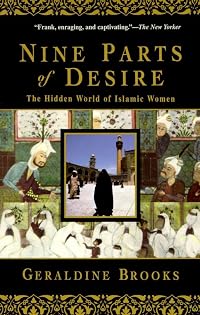
Nine Parts of Desire: The Hidden World of Islamic Women
by Geraldine Brooks
On This Page
Description
Nine Parts of Desire: The Hidden World of Islamic Women is the story of Brook's intrepid journey toward an understanding of the women behind the veils, and of the often contradictory political, religious, and cultural forces that shape their lives. In fundamentalist Iran, Brooks finagles an invitation to tea with the ayatollah's widow - and discovers that Mrs. Khomeini dyes her hair. In Saudi Arabia, she eludes the severe segregation of the sexes and attends a bacchanal, laying bare the show more hypocrisy of this austere, male-dominated society. In war-torn Ethiopia, she watches as a female gynecologist repairs women who have undergone genital mutilation justified by a distorted interpretation of Islam. In villages and capitals throughout the Middle East, she finds that a feminism of sorts has flowered under the forbidding shroud of the chador as she makes other startling discoveries that defy our stereotypes about the Muslim world. Nine Parts of Desire is much more than a captivating work of firsthand reportage; it is also an acute analysis of the world's fastest-growing religion, deftly illustrating how Islam's holiest texts have been misused to justify the repression of women. It was, after all, the Shiite leader Ali who proclaimed that "God created sexual desire in ten parts, then gave nine parts to women." show lessTags
Recommendations

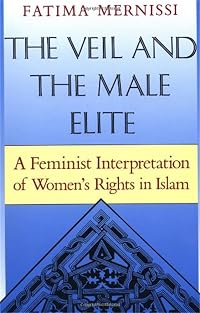
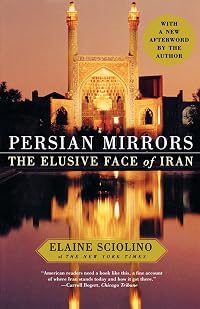
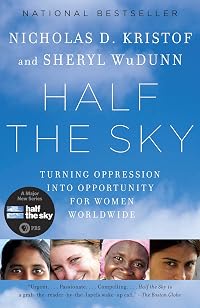

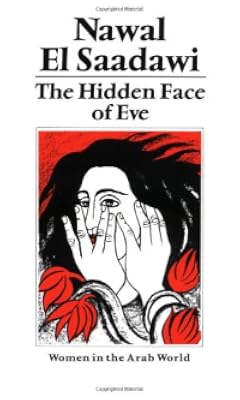
Member Recommendations
amyblue Much more serious than Baghdad without a Map but tells of the same regions from a woman's perspective. Geraldine Brooks is married to Tony Horwitz and I think they both chronicled the same journey in these two books.
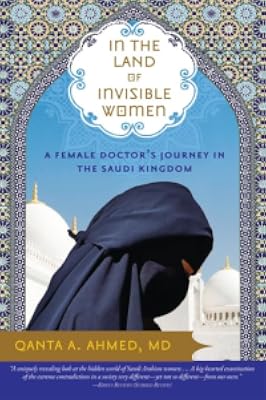
krazy4katz Both books are well written and describe how women cope under Islamic law. Some of the details are surprising. The difference between the 2 authors is that Qanta Ahmed is a western-educated muslim trained as a physician. I think she has a somewhat more intimate perspective on the women she meets compared to Geraldine Brooks. However, both books are very good.

CtrSacredSciences What happens when you are a journalist or filmmaker and set out on a project in the muslim world. What if you're a women journalist or filmmaker? Likely your original project is thwarted, and yet, perhaps something better, more interesting, and unique will come of it all.
Member Reviews
I picked up this book before ever having heard of Geraldine Brooks and her Pulitzer Prize-winning graphic novel "March." It was the subject, not the author, that drew me to "Nine Parts of Desire;" as a world literature teacher, I wanted to gain a deeper understanding of "the hidden world of Islamic women" to enrich our classroom discussions of Scheherazade and Arabian Nights.
Knowing nothing about Geraldine Brooks' reputation, I was initially very skeptical of the text. A Jewish, Australian writer traveling to Saudi Arabia and writing about a foreign culture seemed a little too much like armchair anthropology. An outside gaze is far more likely to misinterpret and misrepresent a culture than someone from the inside. However, I was show more pleasantly surprised by Brooks' text. Although Brooks' understanding has natural limitations as she speaks about an entire religious culture based on a few years in one part of the world, the book parses out the teachings of Muhammad and the Koran from the cultural interpretations of and additions to Islamic teachings. Brooks weaves anecdotes (and, I suspect, some guesswork) with historical fact to illustrate how empowering to women Muslim culture truly can be--and how repressive it can be, as well, in the wrong hands.
What I like most about this book is that, in spite of its shocking and stereotypic cover, it does its best to help readers get a thorough and insightful look into Islamic culture. The chapter titles are intriguing and helpful: "Jihad is for women, too," "The Holy Veil," "Politics, With and Without a Vote," etc. The glossary in the back defines several pages worth of Arabic words referenced throughout the text, often providing both literal and figurative meaning, as well as context. The bibliography is extensive and points the reader to several texts written by Muslims, along with a few primary sources (i.e. letters). It even contains an index which allow the reader to quickly look up not only important people but also key topics like polygamy, women's education, government (including female leaders), divorce, and male/female employment, which are further subcategorized, often by country for easy comparison. Finally, the page I used the most was the reference map of the middle east in the front of the text. These features make the text easily accessible to its primary audience: Westerns wanting to gain a more detailed understanding of an often-stereotyped culture and religion. show less
Knowing nothing about Geraldine Brooks' reputation, I was initially very skeptical of the text. A Jewish, Australian writer traveling to Saudi Arabia and writing about a foreign culture seemed a little too much like armchair anthropology. An outside gaze is far more likely to misinterpret and misrepresent a culture than someone from the inside. However, I was show more pleasantly surprised by Brooks' text. Although Brooks' understanding has natural limitations as she speaks about an entire religious culture based on a few years in one part of the world, the book parses out the teachings of Muhammad and the Koran from the cultural interpretations of and additions to Islamic teachings. Brooks weaves anecdotes (and, I suspect, some guesswork) with historical fact to illustrate how empowering to women Muslim culture truly can be--and how repressive it can be, as well, in the wrong hands.
What I like most about this book is that, in spite of its shocking and stereotypic cover, it does its best to help readers get a thorough and insightful look into Islamic culture. The chapter titles are intriguing and helpful: "Jihad is for women, too," "The Holy Veil," "Politics, With and Without a Vote," etc. The glossary in the back defines several pages worth of Arabic words referenced throughout the text, often providing both literal and figurative meaning, as well as context. The bibliography is extensive and points the reader to several texts written by Muslims, along with a few primary sources (i.e. letters). It even contains an index which allow the reader to quickly look up not only important people but also key topics like polygamy, women's education, government (including female leaders), divorce, and male/female employment, which are further subcategorized, often by country for easy comparison. Finally, the page I used the most was the reference map of the middle east in the front of the text. These features make the text easily accessible to its primary audience: Westerns wanting to gain a more detailed understanding of an often-stereotyped culture and religion. show less
Geraldine Brooks, before she became a novelist, was a journalist, assigned to the Middle East in the late 1980s to early 1990s (this book was published in 1995). Her husband Tony Horowitz accompanied her, fashioned himself as a freelance journalist, and immediately jumped into adventures: tracking smugglers with the camel corps in Egypt, crewing on a supply boat in the Persian Gulf. She was forbidden. Eventually, she realized that the one thing she could do that he could not was talk to women. This book is anecdotes from those years, encounters and observations and conversations, wherever she happened to be. The result is scattered and impressionistic, informative in a general sense because of the variety within a region that we tend to show more lump together. She begins with the veil. "At first, I had naively assumed that hijab would at least free women from the tyranny of the beauty industry." she writes, but this is not the case, because a distinction is made between public and private, and, as one woman tells her, "Islam encourages us to be beautiful for our husbands." She watches an Eritrean doctor perform a gruesome operation to repair consequences of genital mutilation, a cultural practice that was there before Christianity and Islam, and was tolerated by both; a key to eradication is education, so women can read the Koran and see that it commands no such thing. She accompanies a western educated Saudi friend to visit his uncle, a Wahhabi imam who meets with the men of his village every Friday after prayers. He has never before spoken to a woman outside his family. How can he counsel the women then? "They put their problems to him through their husbands, of course." says her friend. "But what if their husband is their problem?" she asks. This possibility had not occurred to either man. She wrangles and invitation to the Islamic Women's Games, where a father is allowed to see his daughter run in competition for the first time, thanks to "the world's first track suit-hijab". She learns to belly dance in Egypt, and in protest of fundamentalist calls for a ban on this ancient tradition, searches for "a venue modest enough to match my talents", where the manager accepts her into the show for an evening. These are revealing glimpses, with no single simple conclusion. Some women renounce their former lives and take on the veil. Some women negotiate space for themselves within the constraints. Some women press for political and social changes. Now several weeks after reading, I do not retain any especially profound or pronounced memories, but I am appreciative of the reminder to look below the surface.
(read 16 Aug 2011) show less
(read 16 Aug 2011) show less
This is brilliant. A western woman's view of Islamic women's lot. In her journalistic career, Geraldine Brooks met and spoke to many women in countries such as Saudi Arabia, Iran, Jordan, Egypt. The book is her reflections on Islamic women generally through the lens of those particular encounters. It is very readable and she is more directly informed than I or any other man could ever be.
It seems she comes to the conclusion that much of the matter has to do with the actual practice of Islam which has, over time, absorbed from cultures it encountered such practices as veiling and seclusion, genital mutilation, and the absence of women from public affairs.
She therefore often uses the terms extremism and fundamentalism to imply there is show more a purer Islam that would not support this sort of behaviour. And yet she notes how few examples of real equality or freedom there are for women in Islamic cultures, and how women seeking greater freedoms must walk a very dangerous and difficult line while many women become promoters of their own restrictions. Brooks knows that the dilemmas of Koranic authorisations of wife beating and apostate executions which vie with the prophet's own great admiration for women, the traditions of their military involvement, and such surprises as Khomeini's happy home life are not easily resolved.
Speaking as a westerner, she knows that women's rights are not to be determined by cultural or local stances but are human and universal, yet she also sees that western leadership often remains ignorant of the difficulties for Islamic women within their borders and does not sufficiently protect them from the horrors of honour killing or clitoridectomy.
One over-riding impression remains with me - that the company of so many women she has encountered in the course of her travels and research has enriched her personally. In the midst of her discoveries and conclusions, her frustrations and confusions, the abiding and fundamental story is a human one, and any way forward is along this path. show less
It seems she comes to the conclusion that much of the matter has to do with the actual practice of Islam which has, over time, absorbed from cultures it encountered such practices as veiling and seclusion, genital mutilation, and the absence of women from public affairs.
She therefore often uses the terms extremism and fundamentalism to imply there is show more a purer Islam that would not support this sort of behaviour. And yet she notes how few examples of real equality or freedom there are for women in Islamic cultures, and how women seeking greater freedoms must walk a very dangerous and difficult line while many women become promoters of their own restrictions. Brooks knows that the dilemmas of Koranic authorisations of wife beating and apostate executions which vie with the prophet's own great admiration for women, the traditions of their military involvement, and such surprises as Khomeini's happy home life are not easily resolved.
Speaking as a westerner, she knows that women's rights are not to be determined by cultural or local stances but are human and universal, yet she also sees that western leadership often remains ignorant of the difficulties for Islamic women within their borders and does not sufficiently protect them from the horrors of honour killing or clitoridectomy.
One over-riding impression remains with me - that the company of so many women she has encountered in the course of her travels and research has enriched her personally. In the midst of her discoveries and conclusions, her frustrations and confusions, the abiding and fundamental story is a human one, and any way forward is along this path. show less
I was completely captivated by this book. A fascinating glimpse into Muslim women's lives that is devastating in its implications vis-à-vis the status of women in the Middle East. Although written over 15 years ago, I suspect it remains as valid an account as ever of the repressions faced by women wherever Islamic fundamentalism has taken root. While cognizant throughout her journeys that her outsider status (privileged, white, American, and a convert to Judaism) imposes limits on what she can witness as well as envisage, author and prize-winning foreign correspondent Geraldine Brooks nevertheless manages to provide a penetrating analysis of the status of women under Islam. As a journalist, her strength is obviously her reportage, show more which manages to succinctly capture the essence of lived lives, whether those of presidential wives or guerrilla fighters. But she also pulls no punches in stating the obvious. While forces such as colonialism and pre-Islamic cultural traditions likely contributed to current misogynistic attitudes and practices in Muslim countries, she does not hesitate to say that the Islamic faith itself is complicit. It is worth quoting at length from her concluding chapter:
In the end, what [progressive Muslim scholars] are proposing is as artificial an exercise as that proposed by the Marxists who used to argue that socialism in its pure form should not be maligned and rejected because of the deficiencies of "actually existing socialism." At some point every religion, especially one that purports to encompass a complete way of life and system of government, has to be called to account for the kind of life it offers the people in the lands where it predominates.
It becomes insufficient to look at Islam on paper, or Islam in history, and dwell on the inarguable improvements it brought to women’s lives in the seventh century. Today, the much more urgent and relevant task is to examine the way the faith has proved such fertile ground for almost every antiwomen custom it encountered in its great march out of Arabia. When it found veils and seclusion in Persia, it absorbed them; when it found genital mutilations in Egypt, it absorbed them; when it found societies in which women had never had a voice in public affairs, its own traditions of lively women’s participation withered.
Once I began working on this book, I looked everywhere for examples of women trying to reclaim Islam’s positive messages, trying to carry forward into the twentieth century the reformist zeal with which Muhammad had remade the lives of many women in the first Muslim community at Medina. It turned out to be a frustrating search. In most places the direction of the debate seemed to be exactly the reverse. Palestinian, Egyptian, Algerian and Afghani women were seeing a curtain come down on decades of women’s liberation as Islamic leaders in their countries turned to the most exclusionary and inequitable interpretations. For those women who struggled against the tide, the results were a discouraging trio of marginalization, harassment and exile.
Read this book in conjunction with Haideh Moghissi’s Feminism and Islamic Fundamentalism: The Limits of Postmodern Analysis for a powerful condemnation of religious, political and academic myopia. show less
In the end, what [progressive Muslim scholars] are proposing is as artificial an exercise as that proposed by the Marxists who used to argue that socialism in its pure form should not be maligned and rejected because of the deficiencies of "actually existing socialism." At some point every religion, especially one that purports to encompass a complete way of life and system of government, has to be called to account for the kind of life it offers the people in the lands where it predominates.
It becomes insufficient to look at Islam on paper, or Islam in history, and dwell on the inarguable improvements it brought to women’s lives in the seventh century. Today, the much more urgent and relevant task is to examine the way the faith has proved such fertile ground for almost every antiwomen custom it encountered in its great march out of Arabia. When it found veils and seclusion in Persia, it absorbed them; when it found genital mutilations in Egypt, it absorbed them; when it found societies in which women had never had a voice in public affairs, its own traditions of lively women’s participation withered.
Once I began working on this book, I looked everywhere for examples of women trying to reclaim Islam’s positive messages, trying to carry forward into the twentieth century the reformist zeal with which Muhammad had remade the lives of many women in the first Muslim community at Medina. It turned out to be a frustrating search. In most places the direction of the debate seemed to be exactly the reverse. Palestinian, Egyptian, Algerian and Afghani women were seeing a curtain come down on decades of women’s liberation as Islamic leaders in their countries turned to the most exclusionary and inequitable interpretations. For those women who struggled against the tide, the results were a discouraging trio of marginalization, harassment and exile.
Read this book in conjunction with Haideh Moghissi’s Feminism and Islamic Fundamentalism: The Limits of Postmodern Analysis for a powerful condemnation of religious, political and academic myopia. show less
This is an excellent, thought-provoking book. Written before 9/11/01, it is a documentation of the resurgence of Islamic fundamentalism that has since been such a concern, but primarily an examination of the place of women in Islamic culture - a somewhat paradoxical and often complex place.
I learned a great deal from this book, about Islam, the Middle East and its history, and the state of women in that part of the world. I have often said that I think of Islam as "younger" religion that is about where Christianity was in the Middle Ages. Certainly, Christianity could be accused of many of the injustices against women that are documented in this book as well as the intolerance of other faiths, but I like to think most Christians have show more progressed past some of that. It is easy for Westerners to say that Muslim culture is backward and flawed, but I think it's dangerous to think we are very much better; Islam has some appealing characteristics and some progressive followers.
Each section in this book addresses a different aspect of women's lives, from marriage and family to education, work, the arts, and sports. Brooks tells the stories of women from countries throughout the Middle East and also Africa and Asia. I enjoyed "meeting" the various women in this book and seeing the variety in their experiences of Islam.
I also learned more about the controversial (at least in my part of the world) faith of Islam. There are many parallels between Islam and Christianity, including both having a charismatic founder and each having both a sacred "source" text and supplemental interpretive texts (the Koran and hadith for Islam, the Gospels and Paul for Christianity). Some of the differences that I find pivotal are the fact that Muhammad was a warrior while Jesus was decidedly not, and that Muhammad left a record of his behavior as a husband and father while we have no such record related to Jesus (though I have often wished we Christians did have his example to follow in those areas).
This book increased my already high regard for Geraldine Brooks, who is a wonderful writer and inquisitive and daring reporter. While it is clear that she doesn't agree with all of the practice of Islam, she generally maintains an objectivity about her subject and manages to find the beauty and positive features of her subject as well.
I highly recommend this book! show less
I learned a great deal from this book, about Islam, the Middle East and its history, and the state of women in that part of the world. I have often said that I think of Islam as "younger" religion that is about where Christianity was in the Middle Ages. Certainly, Christianity could be accused of many of the injustices against women that are documented in this book as well as the intolerance of other faiths, but I like to think most Christians have show more progressed past some of that. It is easy for Westerners to say that Muslim culture is backward and flawed, but I think it's dangerous to think we are very much better; Islam has some appealing characteristics and some progressive followers.
Each section in this book addresses a different aspect of women's lives, from marriage and family to education, work, the arts, and sports. Brooks tells the stories of women from countries throughout the Middle East and also Africa and Asia. I enjoyed "meeting" the various women in this book and seeing the variety in their experiences of Islam.
I also learned more about the controversial (at least in my part of the world) faith of Islam. There are many parallels between Islam and Christianity, including both having a charismatic founder and each having both a sacred "source" text and supplemental interpretive texts (the Koran and hadith for Islam, the Gospels and Paul for Christianity). Some of the differences that I find pivotal are the fact that Muhammad was a warrior while Jesus was decidedly not, and that Muhammad left a record of his behavior as a husband and father while we have no such record related to Jesus (though I have often wished we Christians did have his example to follow in those areas).
This book increased my already high regard for Geraldine Brooks, who is a wonderful writer and inquisitive and daring reporter. While it is clear that she doesn't agree with all of the practice of Islam, she generally maintains an objectivity about her subject and manages to find the beauty and positive features of her subject as well.
I highly recommend this book! show less
I listened to this is audiobook format.
Brooks traveled as a journalist covering various uprisings and wars throughout the middle east before she became a novelist. This book (her first) is a result of many conversations and interviews in the Muslim world from late 1980s-early 1990s. It focuses on the evolution and complexity of a wide range of women's issues: genital mutilation, honor killings, employment, rights to drive, modesty dress, voting, elections to political office, participation in sports, etc. It includes vignettes from many countries and they are not all the same. It was a little disorganized, hard to keep track of which country what happened in, but the combination of history lessons and personal stories was educational show more and impactful. This book is definitely worth reading, and you can pick and choose chapters or just take in a bit of it. There's no real overarching plot that needs to be followed. I also felt she had a pretty balanced view of the issues and made clear distinctions between what she heard and saw and what she thought about it. Not exactly unbiased but she left room for the reader to draw conclusions different from her own. show less
Brooks traveled as a journalist covering various uprisings and wars throughout the middle east before she became a novelist. This book (her first) is a result of many conversations and interviews in the Muslim world from late 1980s-early 1990s. It focuses on the evolution and complexity of a wide range of women's issues: genital mutilation, honor killings, employment, rights to drive, modesty dress, voting, elections to political office, participation in sports, etc. It includes vignettes from many countries and they are not all the same. It was a little disorganized, hard to keep track of which country what happened in, but the combination of history lessons and personal stories was educational show more and impactful. This book is definitely worth reading, and you can pick and choose chapters or just take in a bit of it. There's no real overarching plot that needs to be followed. I also felt she had a pretty balanced view of the issues and made clear distinctions between what she heard and saw and what she thought about it. Not exactly unbiased but she left room for the reader to draw conclusions different from her own. show less
It took me much longer than usual to finish this book. Initially, I thought the slow going was due to the fact that it's non-fiction and I'm a bit of a fiction addict. Still, that didn't quite explain it because it was easy and fascinating reading. I finally decided it was the subject matter that made me reticent to cuddle up with the book and read for hours on end. Nine Parts of Desire is about what it means to be a woman in the Muslim world. I felt Geraldine Brooks did an amazing job writing (as always) and I appreciate that she included so many scriptures from the Koran as well as other Islamic anecdotes that explain why certain traditions have developed over the generations. I learned so much from this book about the history and show more culture(s) of Islam, the history of the Middle East and the situations Islamic women face. The book is a bit dated, given how quickly things in the middle east change (or maybe it's not dated at all because things stay the same there for generations) but I still found it quite valuable. However, one thought kept coming into my mind over and over again as I read it: How accurate is her portrayal? Yes, she spent years and years there, and yes, she seems quite open minded and willing to look for the good wherever it might be found. But can she, a white Judeo-Christian woman, really give readers an accurate picture? The truths she reveals, are these the truths as viewed by Islamic women? I found myself wanting to read a book written by an Islamic woman to see how her thoughts compared with Brooks. Fortunately, at the end of Nine Parts, Brooks includes a very comprehensive bibliography for those (like me) who wish to read more. Several of the books listed are authored by Islamic women. show less
Members
- Recently Added By
Lists

The Emergence of the Modern Middle East
289 works; 13 members

Top Five Books of 2016
795 works; 229 members

Women in Islam
120 works; 8 members

Women's Stories
88 works; 13 members

Read This Next
120 works; 3 members

Books With Numbers in the Title
308 works; 13 members
Author Information

15+ Works 39,625 Members
Geraldine Brooks is the author of two acclaimed works of nonfiction, "Nine Parts of Desire" and "Foreign Correspondence." A former war correspondent, her writing has appeared in The Wall Street Journal, The New York Times, and The Washington Post. (Publisher Provided) Geraldine Brooks was born in Sydney, Australia on September 14, 1955. She show more attended Bethlehem College Ashfield and the University of Sydney. She worked as a feature writer with a special interest in environmental issues for The Sydney Morning Herald for three years. In 1982, she won the Greg Shackleton Australian News Correspondents scholarship to the journalism master's program at Columbia University in New York City. She later worked for The Wall Street Journal, where she covered the Middle East, Africa, and the Balkans. She has written both fiction and non-fiction books including Year of Wonders, Nine Parts of Desire, and The Secret Chord. She has won several awards including the Nita Kibble Literary Award for Foreign Correspondence, the Pulitzer Prize in fiction in 2006 for March, the New England Book Award for Fiction and the Christianity Today Book Award for Caleb's Crossing, and the Australian Book of the Year Award and the Australian Literary Fiction Award in 2008 for People of the Book. (Bowker Author Biography) show less
Series
Belongs to Publisher Series
btb (72999)
Common Knowledge
- Canonical title
- Nine Parts of Desire: The Hidden World of Islamic Women
- Original title
- Nine Parts of Desire
- Original publication date
- 1994-12-01
- People/Characters
- Geraldine Brooks; Muhammad; Zeinab; Sahar; Aisha; Fatima (show all 8); Khadija; Sawda
- Important places
- Dhahran, Saudi Arabia; Tehran, Iran; Cairo, Egypt; Eritrea; Baghdad, Iraq; Palestine (show all 8); United Arab Emirates; Jordan
- Dedication
- To Gloria, who convinced her daughters
that they could do anything.
And to Tony, of course. - First words
- Prologue
The hotel receptionist held my reservation card in his hand.
As the bus full of women inched and squealed its slow way through Tehran traffic toward Khomeini's home, I was the only one on board who wasn't weeping. - Quotations
- Could Rana Kabbani not have taken the trouble to reflect that one in five Muslim girls lives in a community where some form of clitoridectomy is sanctioned and religiously justified by local Islamic leaders? Or to note the ch... (show all)apters on "Women and Circumcision" appearing in many new editions of Islamic texts, especially in Egypt?
And the men whose wives she was helping didn't always like the effect of her help. A rug-weaving project on a wind-swept hilltop named Jebel Bani Hamida had been a roaring success because the women could do the work at home o... (show all)n simple, traditional looms made of sticks and stones. The queen had helped with design and organization, then bought the rugs as gifts for Jordan's official visitors. She also visited the women, squatting beside them in the dust and listening to their problems. The money for the rugs went straight to the women, giving them a measure of independence for the first time in their lives. One of them used the money from her first rug to pay for bus fare to the city to file for a divorce.
Downstairs, in the formal sitting room, I'd been keeping my eye on a side table full of silver-framed pictures of world leaders. Since the start of the Gulf crisis, the pictures had been in constant motion. Saddam Hussein had... (show all) slipped from the front row after his invasion of Kuwait. Egypt's President Hosni Mubarak had disappeared altogether, while George Bush had been pushed behind a lamp. That night George Bush had reemerged, positioned cheek by jowl with Saddam, as if to send the message that Jordan was, after all, a neutral party in the conflict. In front was a picture I'd never seen before: Pope John Paul II, who had just called for an immediate end to the war.
When I first visited Gaza in 1987, girls, unveiled and wearing blue jeans, had been in the streets alongside the youths, throwing stones at Israeli soldiers. Mothers had been right behind them, ready with wet cloths or cut o... (show all)nions to counter the effects of tear gas. Women had gained stature from their role in such protests. Now, thanks to Hamas, women had been sent back home, to manufacture male babies and avoid waste in household expenditures. - Last words
- (Click to show. Warning: May contain spoilers.)When she raised her face to the sun, she was smiling.
Classifications
- Genres
- General Nonfiction, Religion & Spirituality, Nonfiction, Sexuality and Gender Studies
- DDC/MDS
- 305.486971 — Society, government, & culture Social sciences, sociology & anthropology Social group - Age, Gender, Ethnicity Women Specific groups of women Women and religion
- LCC
- HQ1170 .B76 — Social sciences The family. Marriage, Women and Sexuality The Family. Marriage. Women Women. Feminism
- BISAC
Statistics
- Members
- 2,475
- Popularity
- 7,852
- Reviews
- 49
- Rating
- (3.96)
- Languages
- 12 — Danish, Dutch, English, Finnish, German, Hungarian, Italian, Korean, Norwegian (Bokmål), Spanish, Swedish, Portuguese (Portugal)
- Media
- Paper, Audiobook, Ebook
- ISBNs
- 48
- ASINs
- 12