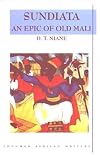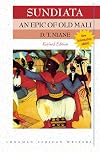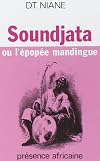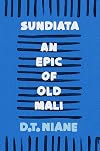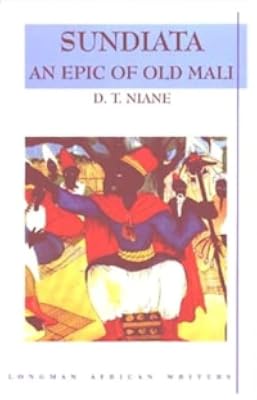
Sundiata: An Epic of Old Mali
by D. T. Niane
On This Page
Description
The son of Sogolon, the hunchback princess, and Maghan, known as "the handsome", Sundiata grew up to fulfill the prophesies of the soothsayers that he would unite the twelve kingdoms of Mali into one of the most powerful empires ever known in Africa, which at its peak stretched right across the savanna belt from the shores of the Atlantic to the dusty walls of Timbuktu. Retold by generations of griots, the guardians of African culture, this oral tradition has been handed down from the show more thirteenth century and captures all the mystery and majesty of medieval African kingship. It is an epic tale, part history and part legend. -- From back cover. show lessTags
Recommendations












Member Reviews
this caught my eye since I know the spelling Sundyata from the reggae band. I didn't know of this potent Malian unifying conqueror. this telling, an annotated transcription of a wandering annalist griot, is rich in a near mythic telling of a figure with one foot in legend. the miraculous birth and battle with a sorcerer recalled to me the book Myth of the Magus
This is the story of a 13th century west African conquerer/emperor. It is a written version of a spoken performance from 1968 by a Malian griot (a traditional African oral storyteller). The story has been handed down for hundreds of years.
Sundiata was one of many princes of a small African kingdom. He was a silent child who did not begin walking until he was about seven years old. After the king's death, Sundiata and his mother left the kingdom out of fear of the king's jealous first wife. Sundiata and his mother traveled around to various royal courts in west Africa until he grew up. Then he returned home to retake his kingdom from a powerful sorcerer.
There are a lot of interesting cultural aspects to this book. It is also interesting show more to see the similarities it has with other ancient stories and histories like the Bible, the Bhagavad Gita, and the Iliad. show less
Sundiata was one of many princes of a small African kingdom. He was a silent child who did not begin walking until he was about seven years old. After the king's death, Sundiata and his mother left the kingdom out of fear of the king's jealous first wife. Sundiata and his mother traveled around to various royal courts in west Africa until he grew up. Then he returned home to retake his kingdom from a powerful sorcerer.
There are a lot of interesting cultural aspects to this book. It is also interesting show more to see the similarities it has with other ancient stories and histories like the Bible, the Bhagavad Gita, and the Iliad. show less
An exceedingly approachable translation of the heroic story of Sundiata, the hero-king of the medieval Malian empire. In its scope, characterizations, and historical importance it easily stands beside [Beowulf], [The Song of Roland] and [The Ramayana] , even perhaps [The Iliad] and [The Aeneid] in world literature. And while it is a celebration of a warrior king -- he is his mother's son!
I enjoyed some aspects of the book, such as the magic/folktales. I was most interested in the first half of the book, when Sogolon (Sundiata's mother) is first introduced and the sections that talked about Sundiata's childhood. When Sogolon and her son are exiled, though, I thought the story became kind of complicated and there were too many people being introduced all at once (most of them being rather inconsequential). It was especially difficult keeping up because I was really just skimming through it. It was assigned reading for my Humanities class and we were only given two days to read it. I probably would have enjoyed it a bit better if I could have taken my time, but most likely I wouldn't have rated it higher than a 2.5 anyway. show more It's just not my type of book.
*I forgot as I was reading Sundiata, that this story was the inspiration for the Disney movie The Lion King. I'm surprised by that now because there are very, very little similarities between the two. The only thing I can think of that the two have in common is that the young prince unwillingly leaves his empire/kingdom and then returns to claim his throne a few years later when the empire is in trouble. It was kind of interesting trying to find other similarities between them that might be less obvious. For instance, I believe Rafiki (the baboon) is supposed to represent the griot (the poet-historian who tells his king's story). Honestly, I prefer the Disney version much better, and I'm sure I'm in the majority on that. show less
*I forgot as I was reading Sundiata, that this story was the inspiration for the Disney movie The Lion King. I'm surprised by that now because there are very, very little similarities between the two. The only thing I can think of that the two have in common is that the young prince unwillingly leaves his empire/kingdom and then returns to claim his throne a few years later when the empire is in trouble. It was kind of interesting trying to find other similarities between them that might be less obvious. For instance, I believe Rafiki (the baboon) is supposed to represent the griot (the poet-historian who tells his king's story). Honestly, I prefer the Disney version much better, and I'm sure I'm in the majority on that. show less
This story tells of the warrior Sundiata. The back cover stated, "...should rank alongside the Iliad and the Odyssey" and I must say I agree. This shows us a part of Africa that we've not seen and also teaches us about the culture of Africa at the time. There's always something new to learn.
The son of Sogolon, the hunchback princess, and Maghan, known as "the handsome", Sundiata grew up to fulfill the prophesies of the soothsayers that he would unite the twelve kingdoms of Mali into one of the most powerful empires ever known in Africa, which at its peak stretched right across the savanna belt from the shores of the Atlantic to the dusty walls of Timbuktu. Retold by generations of griots, the guardians of African culture, this oral tradition has been handed down from the thirteenth century and captures all the mystery and majesty of medieval African kingship. It is an epic tale, part history and part legend. -- From back cover.
I'm not sure this is actually the version I read (and later taught), but I love Sundiata. There's a film that isn't bad, either.
Members
- Recently Added By
Lists

Historical Fiction
889 works; 90 members

Africa
109 works; 8 members

Literature by People of Color
81 works; 9 members

Best African and African diaspora books
111 works; 4 members

Books Read in 2020
4,379 works; 123 members

Black Authors
384 works; 32 members
Best African Books
126 works; 46 members

Books Read in 2021
5,361 works; 113 members

In Our Time books
4,934 works; 2 members
Author Information

10 Works 923 Members
All Editions
Some Editions
Awards and Honors
Series
Belongs to Publisher Series
Work Relationships
Has as a student's study guide
Common Knowledge
- Canonical title
- Sundiata: An Epic of Old Mali
- Original title
- Soundjata, ou l'épopée mandingue
- Important places
- Mali
- First words*
- Je suis griot. C'est moi Djeli Mamadou Kouyaté, fils de Bintou Kouyaté et de Djeli Kedian Kouyaté, maître dans l'art de parler.
- Last words*
- (Click to show. Warning: May contain spoilers.)Partout j'ai pu voir et comprendre ce que mes maîtres m'enseignaient, entre leurs mains j'ai prêté serment d'enseigner ce qui est à enseigner et de taire ce qui est à taire.
- Original language
- French; Mandinka
*Some information comes from Common Knowledge in other languages. Click "Edit" for more information.
Classifications
Statistics
- Members
- 825
- Popularity
- 33,357
- Reviews
- 8
- Rating
- (3.79)
- Languages
- 7 — English, Finnish, French, German, Italian, Mandar, Slovenian
- Media
- Paper, Ebook
- ISBNs
- 11
- ASINs
- 8