With or Without Me: A Memoir of Losing and Finding
by Esther Maria Magnis
On This Page
Description
With or Without Me is an unsparing and eloquent critique of religion. Yet Esther Maria Magnis's ire is merely the beginning of an exceptional journey toward belief and God-a journey punctuated by personal losses retold with intense immediacy. "Maybe God is a sadist," she writes, "a big baby who had a terrible upbringing. If, as Christians claim, God is love, then it's a kind of love I do not understand." She dares to believe anyway, although her questioning won't let up. She fiercely show more dismantles both the clich? phrases she's heard in church and the vague progressive pieties of her parents' generation. Esther Maria Magnis knows believing in God is anything but easy. Because he allows people to suffer. Because he's invisible. And silent. "I think we miss God," she writes, "I would never want to persuade anyone or put myself above atheists. I know there are good reasons not to believe. But sometimes I think most people are just sad that he's not there." With or Without Me is a book for everyone-believer or unbeliever, Christian or atheist-who refuses to surrender to the idea that, just because there can be beauty and truth, there must also be clear answers to the big questions in life. show lessTags
Recommendations

















Member Reviews
A very difficult book both to read and to review. It was like being inside someone else's head, unable to escape. Tortured and impressed and intrigued and irritated and brought to tears and exasperated, all at once.
Her writing is mostly beautiful, especially in the first and last sections - the sections, probably not coincidentally, where she found her belief again. I've never read a more beautiful and deep and thoughtful description of what prayer and belief in God are like. The middle section, however, which begins with the word "Insanity," is exasperating and raw and where you begin to think please find yourself a therapist!
Yes, very difficult to review. I do not consider myself a Christian anymore, though I was raised as a show more Catholic, and I very rarely read books that deal with faith - though the existential questions that plague Magnis plague me as well. I am going to give this book to a very Catholic friend to see what she thinks. As for me, I will be thinking about it for quite a long time. show less
Her writing is mostly beautiful, especially in the first and last sections - the sections, probably not coincidentally, where she found her belief again. I've never read a more beautiful and deep and thoughtful description of what prayer and belief in God are like. The middle section, however, which begins with the word "Insanity," is exasperating and raw and where you begin to think please find yourself a therapist!
Yes, very difficult to review. I do not consider myself a Christian anymore, though I was raised as a show more Catholic, and I very rarely read books that deal with faith - though the existential questions that plague Magnis plague me as well. I am going to give this book to a very Catholic friend to see what she thinks. As for me, I will be thinking about it for quite a long time. show less
 This review was written for LibraryThing Early Reviewers.
Summary: A memoir of losing a father to cancer and the loss of faith that came when earnest, believing prayers went unanswered, and the slow journey back.
Esther’s father announced the news as Christmas approached. He had cancer and the doctors said it was too advanced for them to do anything. He had weeks to a few months to live. Esther had grown up in a church-going family in Germany. Her first prayer was, “I want to keep dad.” She, her brother, and sister joined in attic prayer meetings. Her father fought back and for a short while, the cancer relented and it seemed their prayers were being answered. And then it came roaring back. And for a time, she prayed even more, believing they would travel to Spain as a family. But dad show more died. And God died to Esther.
The middle part of this book is hard reading, as Esther retells the rawness of her grief, her anger at the God who did not act, who was silent. She skips school, drinks, and embraces all the skepticism of those around her about God and truth. This section is full of expletives, many directed toward God. She engages in internal debates with “the clown” and “the snitch” representing skepticism about God and truth and even one’s own existence. Finally she hits rock bottom during a forest party a year after her father died on Easter weekend and declares, “I don’t care.”
Silence. God is silent, and yet present. She realizes that “God subverts silence. There must be a power there we do not understand.” Singing a lullaby to her grandmother who suffers from dementia, she sings the words “He has not forgotten thee” and remembers how she heard it as a child–“Godandthee.’ She questions the certitude of those who confidently assert “there is no truth.” How can they be so confident, then of the truth of this statement? Slowly she gropes her way back to faith, just in time for her brother, who will face his own existential crisis.
This is a powerful memoir. No easy answers. Hard painful realities of life. Unvarnished and raw at times. Believing can be challenging. But for the author, not believing is even harder. In the end, she faced the reality that despite all the hard stuff, at the bottom of reality, “God is.”
____________________________
Disclosure of Material Connection: I received a complimentary review copy of this book from the publisher via LibraryThing’s Early Reviewer Program. show less
Esther’s father announced the news as Christmas approached. He had cancer and the doctors said it was too advanced for them to do anything. He had weeks to a few months to live. Esther had grown up in a church-going family in Germany. Her first prayer was, “I want to keep dad.” She, her brother, and sister joined in attic prayer meetings. Her father fought back and for a short while, the cancer relented and it seemed their prayers were being answered. And then it came roaring back. And for a time, she prayed even more, believing they would travel to Spain as a family. But dad show more died. And God died to Esther.
The middle part of this book is hard reading, as Esther retells the rawness of her grief, her anger at the God who did not act, who was silent. She skips school, drinks, and embraces all the skepticism of those around her about God and truth. This section is full of expletives, many directed toward God. She engages in internal debates with “the clown” and “the snitch” representing skepticism about God and truth and even one’s own existence. Finally she hits rock bottom during a forest party a year after her father died on Easter weekend and declares, “I don’t care.”
Silence. God is silent, and yet present. She realizes that “God subverts silence. There must be a power there we do not understand.” Singing a lullaby to her grandmother who suffers from dementia, she sings the words “He has not forgotten thee” and remembers how she heard it as a child–“Godandthee.’ She questions the certitude of those who confidently assert “there is no truth.” How can they be so confident, then of the truth of this statement? Slowly she gropes her way back to faith, just in time for her brother, who will face his own existential crisis.
This is a powerful memoir. No easy answers. Hard painful realities of life. Unvarnished and raw at times. Believing can be challenging. But for the author, not believing is even harder. In the end, she faced the reality that despite all the hard stuff, at the bottom of reality, “God is.”
____________________________
Disclosure of Material Connection: I received a complimentary review copy of this book from the publisher via LibraryThing’s Early Reviewer Program. show less
This review was written for LibraryThing Early Reviewers.I requested this ER book on a whim, curious about "an unsparing and eloquent critique of religion" that nonetheless doesn't end in atheism, as that journey resonates with my own. Despite studying German at an American evangelical university, I also know very little about contemporary German Christianity and thought that might be an interesting point of comparison.
Magnis is indeed "unsparing" in her honesty about the confusion of an adolescent faith, which I partly recognize from my own religious upbringing, as when she notes God "really got on my nerves with all his other plans, the kind you could only guess at, or had to cobble together from the Bible." Understandably, after months of prayer and hoping,her father's death from cancer show more prompted a crisis of faith for her 17-year-old self, and also understandably, she thought and behaved like an adolescent before and after this tragedy. Over time she reconstructs a (Catholic) faith that works for her, which is challenged again by her brother's cancer diagnosis. The book ends with his death, which is not addressed directly, except of course by the book's existence itself .
Though the blurb didn't emphasize the fact, this is very much a grief memoir. I've read a fair amount of them for one reason or another, and they're not always something I can "appreciate," though any given book that doesn't work for me very well might be ideal for another reader. I find Magnis's emphasis on both her youthful interiority and the minutiae of daily life at once unique and valuable, but also frustrating. It's understandable that she'd act and think and dream as she does, and there's a value to exploring her experience, if only for empathy's sake. But that's not what I was expecting from this book or am currently particularly interested in, so I'm likely not the ideal reader at this point. show less
Magnis is indeed "unsparing" in her honesty about the confusion of an adolescent faith, which I partly recognize from my own religious upbringing, as when she notes God "really got on my nerves with all his other plans, the kind you could only guess at, or had to cobble together from the Bible." Understandably, after months of prayer and hoping,
Though the blurb didn't emphasize the fact, this is very much a grief memoir. I've read a fair amount of them for one reason or another, and they're not always something I can "appreciate," though any given book that doesn't work for me very well might be ideal for another reader. I find Magnis's emphasis on both her youthful interiority and the minutiae of daily life at once unique and valuable, but also frustrating. It's understandable that she'd act and think and dream as she does, and there's a value to exploring her experience, if only for empathy's sake. But that's not what I was expecting from this book or am currently particularly interested in, so I'm likely not the ideal reader at this point. show less
This review was written for LibraryThing Early Reviewers.Beautifully written book about one woman's journey through her life as it relates to her belief in God as tragedies face her. Her thoughts reflect doubt, trust and peace on a continuum. This book is not about any formal religion but instead focuses on spirituality and how we accept it and learn to live in this world with our beliefs. I felt strangely calm and peaceful after reading this book as it put to bed the thought that prayers may not be answered in the way we hope but that our faith and trust in God or a spiritual being we believe in will help us to accept tragedies that occur.
This review was written for LibraryThing Early Reviewers.Although this book is classified as Christian biography, the subject matter could also be identified as an exercise in existentialism as well. Ganesh, Buddha, Mohammed or any other deity might be substituted for the God Esther prays to for the life of her father. She deals with the greatest questions of human existence: why do we suffer, why does God allow us to, what is the meaning of our lives, does God hear us, does He care, why do we not hear His answers?
Unlike a typical story/biography/autobiography, there is less action and more sharing of Esther’s thoughts and interior conversations; arguments for and against the existence of God and their evolution. This is no fairy tale, much as we are longing for it to be. Her questioning is show more ours, and human lives have always existed largely in the unknowable, although some of us have and do rely on faith.
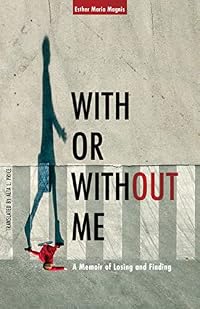
There are many layers of metaphor in the writing and in the physical design of the book itself. The color red in the one word of the title - does it stand for life and God, or the black void of death in a Godless universe? Each chapter’s beginning sentence or phrase is highlighted in red - is this a synopsis or a prelude? Pagination in the outer margin of each page is underlined in a red strand that bleeds onto the paper’s edge, resulting in a jagged line on the fore edge; emblematic of the father’s cruel sufferings and remissions from cancer, or Esther’s wavering belief/disbelief, hopes, devastations, understandings, peace? Only to be repeated again. These are the lives we lead.
What looks to be a quick read is anything but. Only 201 pages comprising 16 chapters, some only a page or a page and a fraction long, they are slow and meditative. These are deep, introspective thoughts that must be considered and digested before continuing. There is much beautiful, en pointe imagery, as on page 88:
“Your spine is so broken and out of shape that you yourself become the
question mark.”
Esther is a teen in body only. In mind and spirit, she is an old and weary soul, rediscovering all the permutations for God’s existence which scholars have debated for all of time. I hear my own thoughts. In the end, you’ll have to read this intellectual symphony to see what Esther decides. This book could have been written for me. Perhaps it was. show less
Unlike a typical story/biography/autobiography, there is less action and more sharing of Esther’s thoughts and interior conversations; arguments for and against the existence of God and their evolution. This is no fairy tale, much as we are longing for it to be. Her questioning is show more ours, and human lives have always existed largely in the unknowable, although some of us have and do rely on faith.
There are many layers of metaphor in the writing and in the physical design of the book itself. The color red in the one word of the title - does it stand for life and God, or the black void of death in a Godless universe? Each chapter’s beginning sentence or phrase is highlighted in red - is this a synopsis or a prelude? Pagination in the outer margin of each page is underlined in a red strand that bleeds onto the paper’s edge, resulting in a jagged line on the fore edge; emblematic of the father’s cruel sufferings and remissions from cancer, or Esther’s wavering belief/disbelief, hopes, devastations, understandings, peace? Only to be repeated again. These are the lives we lead.
What looks to be a quick read is anything but. Only 201 pages comprising 16 chapters, some only a page or a page and a fraction long, they are slow and meditative. These are deep, introspective thoughts that must be considered and digested before continuing. There is much beautiful, en pointe imagery, as on page 88:
“Your spine is so broken and out of shape that you yourself become the
question mark.”
Esther is a teen in body only. In mind and spirit, she is an old and weary soul, rediscovering all the permutations for God’s existence which scholars have debated for all of time. I hear my own thoughts. In the end, you’ll have to read this intellectual symphony to see what Esther decides. This book could have been written for me. Perhaps it was. show less
This review was written for LibraryThing Early Reviewers.Where is God when your loved one gets cancer? The easy answers are all wrong.
With or Without Me is an unsparing and eloquent critique of religion. Yet Esther Maria Magnis’s frustration is merely the beginning of a tortuous journey toward faith—one punctuated by personal losses retold with bluntness and intense immediacy. “Maybe God is a sadist,” she writes, “a big baby who had a terrible upbringing. If, as Christians claim, God is love, then it’s a kind of love I do not understand.” She dares to believe anyway, although her questioning won’t let up. She fiercely dismantles both the clichés she’s heard in church and the endless philosophizing of her parents’ generation.
Esther Maria Magnis knows believing in God is show more anything but easy. Because he allows people to suffer. Because he’s invisible. And silent. “I think we miss God,” she writes, “I would never want to persuade anyone or put myself above atheists. I know there are good reasons not to believe. But sometimes I think most people are just sad that he’s not there.”
With or Without Me is a book for everyone—believer or unbeliever, Christian or atheist—who refuses to surrender to the idea that, just because there can be beauty and truth, there must also be clear answers to the big questions in life. show less
With or Without Me is an unsparing and eloquent critique of religion. Yet Esther Maria Magnis’s frustration is merely the beginning of a tortuous journey toward faith—one punctuated by personal losses retold with bluntness and intense immediacy. “Maybe God is a sadist,” she writes, “a big baby who had a terrible upbringing. If, as Christians claim, God is love, then it’s a kind of love I do not understand.” She dares to believe anyway, although her questioning won’t let up. She fiercely dismantles both the clichés she’s heard in church and the endless philosophizing of her parents’ generation.
Esther Maria Magnis knows believing in God is show more anything but easy. Because he allows people to suffer. Because he’s invisible. And silent. “I think we miss God,” she writes, “I would never want to persuade anyone or put myself above atheists. I know there are good reasons not to believe. But sometimes I think most people are just sad that he’s not there.”
With or Without Me is a book for everyone—believer or unbeliever, Christian or atheist—who refuses to surrender to the idea that, just because there can be beauty and truth, there must also be clear answers to the big questions in life. show less
This was a rough read but well worth it. This women's spiritual journey was expressed openly and honestly. At each rough patch in her life, she questioned why God would allow pain and suffering, as all believers do at various times in their lives. I felt she was very blunt and held nothing back, which I appreciated. There are some very profound moments expressed here.
Since this book was published by Plough Publishing House, which is a Christian publisher, I was quite surprised at the often-used foul language. I've become a bit sensitive to the language that seems to be accepted these days in books, TV and movies. There were times when the author was ranting at God when I could have accepted this more, but it was used throughout the show more book. This is just my own personal dislike and really didn't take away from the value of the book as a whole.
This book was won by me in a book giveaway. show less
Since this book was published by Plough Publishing House, which is a Christian publisher, I was quite surprised at the often-used foul language. I've become a bit sensitive to the language that seems to be accepted these days in books, TV and movies. There were times when the author was ranting at God when I could have accepted this more, but it was used throughout the show more book. This is just my own personal dislike and really didn't take away from the value of the book as a whole.
This book was won by me in a book giveaway. show less
This review was written for LibraryThing Early Reviewers.Members
- Recently Added By
Lists

Best Autobiographies and Memoirs
370 works; 67 members
Author Information
3 Works 39 Members
All Editions
Classifications
Statistics
- Members
- 37
- Popularity
- 778,294
- Reviews
- 14
- Rating
- (4.00)
- Languages
- Dutch, English, German
- Media
- Paper, Audiobook, Ebook
- ISBNs
- 6