
Kendra Atleework
Author of Miracle Country: A Memoir
Works by Kendra Atleework
Tagged
Common Knowledge
- Gender
- female
- Education
- University of Minnesota (MFA|Creative Writing)
- Awards and honors
- Ellen Meloy Desert Writers Award
- Relationships
- Atlee, Robert (father)
Work, Jan (mother) - Birthplace
- Owens Valley, California, USA
- Places of residence
- Bishop, California, USA
Members
Reviews

This is such a rich book, full of strands of issues all joined by this woman's searching heart. Some books about nature/land can be pretty ethereal, hovering somewhere in a distanced mental appreciation. Atleework is very clear that this is her life which she is trying to figure out, her high mountain desert which gives her life. Despite her depiction of herself (compared to her sister) as being "just the facts, ma'am" type of person, she uses very expressive language to show us what is show more important.
Not written linearly, she moves fluidly between present, childhood, and years between, but she never leaves you floundering about where you might be. Water is an important resource in the desert, and she also keeps coming back to how the diversion of natural water flows from mountain areas to the Los Angeles or other large cities has drastically changed life in the high mountains. She is never didactic, instead relating historical events in context to present circumstances and confronting us with the consequences of our unthinking greed. There really is a limit to growth, imposed by the earth's interlinked cycles.
I love her depiction of her parents and how they raised her. They sound like the type of parents I have hoped I was, and her father's guidance is a lot like how my son is raising his children: allowing them to experience the living world around them, participating in things that may be dangerous but guiding them with clear rules of safety. I also connected with her concern for her young brother, who started "running wild" after their mother's death. My own son had an extremely difficult time finding a path for himself through teens into adulthood.
Since the blurb mentioned that there would be a comparison with the Midwest, I was hoping for more of my homeground, but happy with the chance to learn an intimate experience of the Sierras. show less
Not written linearly, she moves fluidly between present, childhood, and years between, but she never leaves you floundering about where you might be. Water is an important resource in the desert, and she also keeps coming back to how the diversion of natural water flows from mountain areas to the Los Angeles or other large cities has drastically changed life in the high mountains. She is never didactic, instead relating historical events in context to present circumstances and confronting us with the consequences of our unthinking greed. There really is a limit to growth, imposed by the earth's interlinked cycles.
I love her depiction of her parents and how they raised her. They sound like the type of parents I have hoped I was, and her father's guidance is a lot like how my son is raising his children: allowing them to experience the living world around them, participating in things that may be dangerous but guiding them with clear rules of safety. I also connected with her concern for her young brother, who started "running wild" after their mother's death. My own son had an extremely difficult time finding a path for himself through teens into adulthood.
Since the blurb mentioned that there would be a comparison with the Midwest, I was hoping for more of my homeground, but happy with the chance to learn an intimate experience of the Sierras. show less
 This review was written for LibraryThing Early Reviewers.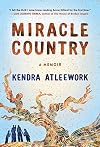
This beautiful book is a love letter from the author Kendra Atleework to to her family, her hometown of Bishop, CA in the Eastern Sierras and high desert of California and to the history of the state itself. The prose is lyrical and mesmerizing. The author lost her mother to cancer at the age of sixteen and as in any family the loss of the mother anchor sets this family adrift. Her younger brother turns to petty crime, her younger sister turns to partying and the dad is just trying to cope show more with the loss of his wife. Hard times. The author takes off for Minnesota where the landscape is green and does not return until her family home is threatened by fire. Throughout the book she writes of the history of the Owen's Valley and how William Mullholland of Los Angeles devised a scheme to defer all the water in the Owen's River to Los Angeles in the late 1800's. This put the Paiute Native Americans who for centuries had lived on the land and more recent ranchers in deep trouble and there are still lawsuits to this day regarding the loss of such an important natural resource to the Owen's Valley. Shame on you William Mullholland.
This book starts off with the fire that took out her childhood neighborhood in 2015. This hit very close to home for me as we lost our home last October (2019) in the Kincaid Fire in Northern California. And there are active fires north of us as I write this. It brought back a little PTSD for me with her detailed descriptions of what she experienced.
High Desert has always intrigued me and I have travelled through it several times. It is beautiful to say the least. When the author returns back home to the Eastern Sierras she is able to take deep look at herself and her family and see where and how she grew up, and how it has influenced the trajectory of her life. This is a sad book at times but it is a beautiful story as well. Lovely writing. Highly Recommended. show less
This book starts off with the fire that took out her childhood neighborhood in 2015. This hit very close to home for me as we lost our home last October (2019) in the Kincaid Fire in Northern California. And there are active fires north of us as I write this. It brought back a little PTSD for me with her detailed descriptions of what she experienced.
High Desert has always intrigued me and I have travelled through it several times. It is beautiful to say the least. When the author returns back home to the Eastern Sierras she is able to take deep look at herself and her family and see where and how she grew up, and how it has influenced the trajectory of her life. This is a sad book at times but it is a beautiful story as well. Lovely writing. Highly Recommended. show less
This review was written for LibraryThing Early Reviewers.
I grew up on the outskirts of Michigan's capital city, Lansing, in the 1960s and 70s. After college I moved away and lived the "big city" life for much of my adulthood - in Denver, and New York at first, then, and mostly, in Chicago and the Chicagoland area.
But always throughout my life there was a returning. Not to Lansing, but to a place farther back in my family's history, a place that I have visited all my life - Michigan's beautiful Upper Peninsula (aka the UP). After leaving the show more working world my husband and I have relocated back to my paternal grandmother's hometown in the UP, to a house on a lake where my family has held property for three generations before me. This is now, and has always felt to me, like my home place.
I am telling you all of this because it's inspired by my reading of Kendra Atleework's amazing debut, her memoir Miracle Country. She writes beautifully of her home place, the Owens Valley in California's Sierra Nevadas, and of its history and the history of the state of California, and of the life of her family, and the loss of her mother when Kendra was only 16.
Her book is a superbly literary and lyrical work of creative nonfiction. Her use of language is stunningly good for a debut work, and carries the reader effortlessly through the changing focus of her story. Subjects range from the tragedy of Indian removal, the drought that threatens California's water supply, the removal of water from the Owens Valley for the sake of Los Angelenos (the greatest good for the greatest number is a recurring theme), wildfires coming down the mountains, the loss of her mother and the resulting crumbling apart of her family, her father's many careers, the eventual resolution of family matters, and her own return back home.
The California desert, the Owens Valley and the Sierra Nevadas are as much a part of her narrative as any of the characters she introduces us to. Like the region I live in now, as viewed by those outside, her home place has it's best days behind it. And yet she returns to it because she loves the area and its people. Like her father, who she says insists on going around with holes in his jeans (which would never do in the big city) and her brother, who doesn't travel far from home on the excuse that he needs to care for his dog, she realizes that she too has too much of the land in her to leave it for too long.
The miracle country of the book's title then is the Owens Valley of California. And yet, there is something in her evocation of place that is universal. I too have felt the tug of a different life from the midst of my big city surroundings, and have returned to my own home place.
Your own idea of a home place may be tied less to geography than to family or friends. Maybe you too have returned to your home place. But if not, I hope maybe one day you will.
Five Stars ⭐⭐⭐⭐⭐ for Miracle Country. I checked out the audiobook from my local library on the Libby app. The narrator, Cassandra Campbell, did an excellent job. Campbell is a prolific audiobook narrator, the voice behind works like The Immortal Life of Henrietta Lacks and Where the Crawdads Sing. show less
But always throughout my life there was a returning. Not to Lansing, but to a place farther back in my family's history, a place that I have visited all my life - Michigan's beautiful Upper Peninsula (aka the UP). After leaving the show more working world my husband and I have relocated back to my paternal grandmother's hometown in the UP, to a house on a lake where my family has held property for three generations before me. This is now, and has always felt to me, like my home place.
I am telling you all of this because it's inspired by my reading of Kendra Atleework's amazing debut, her memoir Miracle Country. She writes beautifully of her home place, the Owens Valley in California's Sierra Nevadas, and of its history and the history of the state of California, and of the life of her family, and the loss of her mother when Kendra was only 16.
Her book is a superbly literary and lyrical work of creative nonfiction. Her use of language is stunningly good for a debut work, and carries the reader effortlessly through the changing focus of her story. Subjects range from the tragedy of Indian removal, the drought that threatens California's water supply, the removal of water from the Owens Valley for the sake of Los Angelenos (the greatest good for the greatest number is a recurring theme), wildfires coming down the mountains, the loss of her mother and the resulting crumbling apart of her family, her father's many careers, the eventual resolution of family matters, and her own return back home.
The California desert, the Owens Valley and the Sierra Nevadas are as much a part of her narrative as any of the characters she introduces us to. Like the region I live in now, as viewed by those outside, her home place has it's best days behind it. And yet she returns to it because she loves the area and its people. Like her father, who she says insists on going around with holes in his jeans (which would never do in the big city) and her brother, who doesn't travel far from home on the excuse that he needs to care for his dog, she realizes that she too has too much of the land in her to leave it for too long.
The miracle country of the book's title then is the Owens Valley of California. And yet, there is something in her evocation of place that is universal. I too have felt the tug of a different life from the midst of my big city surroundings, and have returned to my own home place.
Your own idea of a home place may be tied less to geography than to family or friends. Maybe you too have returned to your home place. But if not, I hope maybe one day you will.
Five Stars ⭐⭐⭐⭐⭐ for Miracle Country. I checked out the audiobook from my local library on the Libby app. The narrator, Cassandra Campbell, did an excellent job. Campbell is a prolific audiobook narrator, the voice behind works like The Immortal Life of Henrietta Lacks and Where the Crawdads Sing. show less
The Eastern Sierra is a land of wild winds and wildfires. In 1892, Mary Austin arrived at the Eastern Sierra and wrote, "You will find it forsaken of most things but beauty and madness and death and God."
Once Paiute harvested fields of wild rye and love grass, before ranchers arrived to summer their stock. The cattle devoured the crops and the First People starved. Bill Mulholland stole lake water to grow Los Angeles. Drought depletes the wells while the streams are diverted to LA.
A woman show more from the Great Lakes and a man from the California coast were drawn to the sublimity of the high desert. They met in a band and went on a hike. They birthed two girls and adopted a brown-skinned son.
It's hard to know how to fix a smashed world at sixteen, at fourteen, at eleven.~ from Miracle Country by Kendra Atleework
Their idyllic life was smashed with their matriarch's early death, spiraling the children into their private hells from which their father could not save them.
Atleework left for LA and then the MidWest. The hills burned. The dust blew arsenic. Her father's well dried up. But the beauty of Atleework's homeland brought her back from her wanderings.
Whiskey's for drinking. Water's for fighting over.~from Miracle Country by Kendra Attleework
The environmental cost for the growth of cities is central to the story and raises ethical questions about water rights. "We live in a landscape damaged beyond repair," Atleework writes, "and we see our loss magnified the world over."
The story of water in Owens Valley...was a sad story of wrong done, a near tall tale with a suit-coated villian and cowboy herons. ~from Miracle Country by Kendra Atleework
The valley's discovery by American soldiers and the settlers eager to displace (or annihilate) the native people is the story of European attitudes that 'built' the country while also destroying it.
Atleework's Miracle Country was a pleasure to read, gorgeous in prose, intimate as a memoir, and wide-ranging in its portrait of a land and its people. Highly recommended.
I was given a free ebook by the publisher through NetGalley in exchange for a fair and unbiased review. show less
Once Paiute harvested fields of wild rye and love grass, before ranchers arrived to summer their stock. The cattle devoured the crops and the First People starved. Bill Mulholland stole lake water to grow Los Angeles. Drought depletes the wells while the streams are diverted to LA.
A woman show more from the Great Lakes and a man from the California coast were drawn to the sublimity of the high desert. They met in a band and went on a hike. They birthed two girls and adopted a brown-skinned son.
It's hard to know how to fix a smashed world at sixteen, at fourteen, at eleven.~ from Miracle Country by Kendra Atleework
Their idyllic life was smashed with their matriarch's early death, spiraling the children into their private hells from which their father could not save them.
Atleework left for LA and then the MidWest. The hills burned. The dust blew arsenic. Her father's well dried up. But the beauty of Atleework's homeland brought her back from her wanderings.
Whiskey's for drinking. Water's for fighting over.~from Miracle Country by Kendra Attleework
The environmental cost for the growth of cities is central to the story and raises ethical questions about water rights. "We live in a landscape damaged beyond repair," Atleework writes, "and we see our loss magnified the world over."
The story of water in Owens Valley...was a sad story of wrong done, a near tall tale with a suit-coated villian and cowboy herons. ~from Miracle Country by Kendra Atleework
The valley's discovery by American soldiers and the settlers eager to displace (or annihilate) the native people is the story of European attitudes that 'built' the country while also destroying it.
Atleework's Miracle Country was a pleasure to read, gorgeous in prose, intimate as a memoir, and wide-ranging in its portrait of a land and its people. Highly recommended.
I was given a free ebook by the publisher through NetGalley in exchange for a fair and unbiased review. show less
Awards


Statistics
- Works
- 1
- Members
- 123
- Popularity
- #162,200
- Rating
- 4.0
- Reviews
- 36
- ISBNs
- 5
