The Visitors
by Jessi Jezewska Stevens
On This Page
Description
"On the eve of the Occupy Wall Street protests, C is flat broke. Once a renowned textile artist, she's now the sole proprietor of an arts supply store in Lower Manhattan. Divorced, alone, at loose ends, C is stuck with a struggling business, a stack of bills, a new erotic interest in her oldest girlfriend, and a persistent hallucination in the form of a rogue garden gnome with a pointed interest in systems collapse... C needs to put her medical debt and her sex life in order, but how to make show more concrete plans with this little visitor haunting her apartment, sporting a three-piece suit and delivering impromptu lectures on the vulnerability of the national grid? Moreover, what's all this computer code doing in the story of her life? And do the answers to all of C's questions lie with an eco-hacktivist cabal threatening to end modern life as we know it? Replaying recent history through a distorting glass, The Visitors is a mordantly funny tour through through a world where not only civic infrastructure but our darkest desires (not to mention our novels) are vulnerable to malware; where mythical creatures talk like Don DeLillo; where love is little more than a blip in our metadata. It peers into How We Got Here and asks What We Do Next, charting the last days of a broken status quo as the path is cleared for something new."--Book jacket. show lessTags
Recommendations
















Member Reviews
This book takes place within blocks of the Occupy Wall Street encampment but its characters have no more than a lazy curiousity about the movement. One character is a hedge fund manager, another owns a failing store --she can't pay the bills but is about to hire an assistant. The fact that she won't be able to pay the assistant? Not her problem, apparently. This sounds ripe for satire, right? Two leaches getting their comeuppance as the shouts of Occupiers rise in the background? Wrong. We're meant to like these hyper-privileged, self-obsessed women who personify everything Occupy resisted.
It's not that the characters are flawed and we're meant to maintain an ironic distance from their failings. The narrator mentions the illegal police show more use of kettling protesters in the early days of the Occupy protest: "those arrested are herded to precinct headquarters and issued a carton of milk, a peanut butter sandwich, and a misdemeanor for blocking traffic on the Brooklyn overpass" (78). In reality, people were assaulted, seriously injured, and the city had to pay millions in lawsuits for their use of this violation of civil rights. Later, the narrator tries to use the UN as a metaphor but fails because the author doesn't understand that the US has one of the largest outstanding UN debts and does not, in fact, "disproportionately financ[e]" the organization" (177). The book is full of blithe ignorance and callous indifference to facts like that. In a book that's trying to make some kind of muddled political point, it's naive at best, deceptive at worst. It's just a crap book.
Formally, the book was interesting (as are almost all of the books And Other Stories publish -- such a great publisher!) and the writing itself was, at times, engaging, but that wasn't enough to salvage this mess. show less
It's not that the characters are flawed and we're meant to maintain an ironic distance from their failings. The narrator mentions the illegal police show more use of kettling protesters in the early days of the Occupy protest: "those arrested are herded to precinct headquarters and issued a carton of milk, a peanut butter sandwich, and a misdemeanor for blocking traffic on the Brooklyn overpass" (78). In reality, people were assaulted, seriously injured, and the city had to pay millions in lawsuits for their use of this violation of civil rights. Later, the narrator tries to use the UN as a metaphor but fails because the author doesn't understand that the US has one of the largest outstanding UN debts and does not, in fact, "disproportionately financ[e]" the organization" (177). The book is full of blithe ignorance and callous indifference to facts like that. In a book that's trying to make some kind of muddled political point, it's naive at best, deceptive at worst. It's just a crap book.
Formally, the book was interesting (as are almost all of the books And Other Stories publish -- such a great publisher!) and the writing itself was, at times, engaging, but that wasn't enough to salvage this mess. show less
 This review was written for LibraryThing Early Reviewers.
Jessi Jezewska Stevens is a talented writer. However, to quote Thanos, her politics bore me. And since her politics permeate the book, the book is boring. I tried, I really did, I got half way through and since I am an obsessive and can’t not finish a book I started, I decided to skim the rest.
I was shocked and angered by how she ended the book. Sure, I found C so emotionally infantile and I couldn’t really care about her. But we what the author did to her was just cruel. Your characters are your children, how can you treat them so badly?
As an aside, I lived on Wall Street during Occupy. Landlords were desperate, and we got a great apartment for a steal. Occupy was an absolute joke. Maybe 150 people tops in the tent park. Some show more rallies had 20 people. Having witnessed tens of thousands at the 2011 protests in Spain, the arrogance and American exceptionalism that made this pathetic protest seem innovative or earth shattering, always annoyed me. The slogan about the 1% was to hide the fact that the protestors were part of the top 10-20% and had no clue what real poverty means. Neither does C and neither does the author, who tries to romanticize a political milieu which meant nothing and accomplished nothing. show less
I was shocked and angered by how she ended the book. Sure, I found C so emotionally infantile and I couldn’t really care about her. But we what the author did to her was just cruel. Your characters are your children, how can you treat them so badly?
As an aside, I lived on Wall Street during Occupy. Landlords were desperate, and we got a great apartment for a steal. Occupy was an absolute joke. Maybe 150 people tops in the tent park. Some show more rallies had 20 people. Having witnessed tens of thousands at the 2011 protests in Spain, the arrogance and American exceptionalism that made this pathetic protest seem innovative or earth shattering, always annoyed me. The slogan about the 1% was to hide the fact that the protestors were part of the top 10-20% and had no clue what real poverty means. Neither does C and neither does the author, who tries to romanticize a political milieu which meant nothing and accomplished nothing. show less
A strange and challenging little novel. C is an artist, a weaver, the daughter of a Yugoslavian immigrant mother, and now the owner of a New York City art supply store spiraling into debt. When the story opens, we have just crested into the worst of the 2008 economic crash, which C weathered along with a divorce and an emergency hysterectomy. She had some success with monumental woven art pieces that were sold and celebrated, but has distanced herself from that world of dealers and patrons. On the other hand, she seems equally uncomfortable with the politics and revolutions of the Occupy activists camping on Wall Street. She both envies her best friend since childhood, Zo, for the wealth shes wrangled through Finance, and cannot level show more with the implications and processes of the system. She is a woman increasingly unstuck from her own life, and also, a tiny floating man has appeared in her apartment, who may be a hallucination, but seems strangely knowledgeable about the ecoterrorist cyber-attacks that the news shows crippling cities around the world.
That's a lot of concept for what is ultimately a story of two women and the relationship they have with themselves and each other. The confusion and alienation they feel as they try to find, or choose to loose, their feet is palpable in Jessi Jezewska Steven's prose. It took me maybe the first third of the book to grasp its pattern, and voice, but by then the suggestions scattered throughout of what was actually about to happen began to coalesce. I think one could read this as an indictment of late-stage capitalism, but the little gnome's ongoing commentary makes me think it's more about the challenges of simply being a human in a world striving for order. Not that I really know what was up with that little guy in the first place, but I don't mind a mystery. show less
That's a lot of concept for what is ultimately a story of two women and the relationship they have with themselves and each other. The confusion and alienation they feel as they try to find, or choose to loose, their feet is palpable in Jessi Jezewska Steven's prose. It took me maybe the first third of the book to grasp its pattern, and voice, but by then the suggestions scattered throughout of what was actually about to happen began to coalesce. I think one could read this as an indictment of late-stage capitalism, but the little gnome's ongoing commentary makes me think it's more about the challenges of simply being a human in a world striving for order. Not that I really know what was up with that little guy in the first place, but I don't mind a mystery. show less
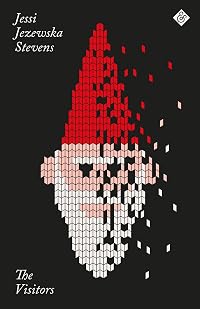
This review was written for LibraryThing Early Reviewers.AH I could tell by this wonderfully weird and perfect cover (and it's also the perfect cover for this book) that I would love the wonderfully weird contents. The back cover also had me when it mentioned the Darkest Timeline which, correct me if I'm wrong, can only remind me of my favorite show of all time. By page twenty or so, I was grinning like the little troll from the Darkest Timeline (probably the troll is kin to the gnome). AH the weird plot, the weird main character, the weirdie little gnome man floating around... possibly hallucination, possibly not. The main character called C is a crafty person who also owns an art supply store in NYC when the economy collapses in 2008. But something is much awry with C, C is also show more collapsing... or maybe reality is collapsing. Such a puzzle! Such a whirlwind! The ending hits on at least three levels! As a bonus, as the book starts, it looks like old computer code on a black screen, the plot hinting at some sort of hack attack. It's all great stuff. In interviews the writer has mentioned that this is a systems novel crossed with a domestic novel. I'm in awe that someone who has a bachelor's degree in math can also be a genius with words. Which might be the one thing that sways people from this book, as I know it was way over my head at times, especially when it discusses the stock market or hacking. The nuanced smartness levels of this book might be off putting to some readers -- but I was along for the ride. I love a flailing, alienated young woman story, especially if you add something extra (ie: gnomes.) This writer is extremely smart but I'll follow this writer to any book she decides to write. Luckily I get to go back to the first novel she wrote a couple years ago. I'm so thankful for this weird little book and it's also FOR SURE going on the list that is one of my favorite genres: 'She's Not Feeling Good At All' ( https://www.goodreads.com/list/show/153374.She_s_Not_Feeling_Good_at_All )
Set this on the shelf next to:
Luster - Raven Leilani
A Line Made By Walking - Sara Baume
Milk Fed - Melissa Broder
Overthrow - Caleb Crain
Red Pill - Hari Kunzru
Mr Robot (another favorite TV show) show less
Set this on the shelf next to:
Luster - Raven Leilani
A Line Made By Walking - Sara Baume
Milk Fed - Melissa Broder
Overthrow - Caleb Crain
Red Pill - Hari Kunzru
Mr Robot (another favorite TV show) show less
This review was written for LibraryThing Early Reviewers.“You are who you let in,” muses the main character who is dealing with the regular appearance of a gnome-like argumentative man living in her apartment. The Visitors explores our modern sense of fear, loneliness, and identity in a world where the 1% strive and the rest struggle. C is trying to save her business, her relationship with her best friend, and her health, while living in a world she feels disconnected to; she is sometimes a visitor to her own life. While an excellent concept and some beautiful writing, this one ultimately was too disjointed by the end.
This review was written for LibraryThing Early Reviewers.The Visitors, by Jessi Jezewska Stevens, is a well-written but scattered novel. Its success will as likely hinge on what a reader brings to the book as on the actual action in the book.
Some readers like to minimize reality by stating falsehoods, suddenly 5000-10000 marchers become a couple of hundred. And they like to judge who can speak about hardship and poverty at the same time they talk about renting an apartment in Manhattan. Hypocrites be hypocrites, leave them to their delusions. There is plenty to like or dislike about the book without showing one's arrogance on topics you feel the need to lie about.
I don't usually go into much discussion about my rating, they aren't that big of a deal, but in this case it will help to explain show more my feelings about the book. In one respect it was a solid three, in another it was a solid four. I went with the four because I think it is the more valuable understanding of the book. So...
It is a three because while the writing is quite good and there are a lot of very good scenes, the plot and storyline seemed a bit too jumbled to enjoy as much as I would have liked. It is a four because the dynamic between the book and my thinking took me to some interesting places. I thought about big issues and very personal ones, about theory and praxis, about where we draw the line between what is best for me and what is best for society (or where we draw the ethical/moral line between selfishness and selflessness). Ultimately, while the novel as a novel was simply okay, the novel as thought-provoker was very good. Since I value what I take away from a book more than just the enjoyment of the act of reading, the four rating won out.
While I am emphasizing the qualities that most spoke to me, I don't think everyone will feel the same. Some may well not care or engage in either way, while some may be so caught up in the story itself that any other thoughts is just frosting on the cake.
I would recommend this to readers who don't mind grappling a bit with an unusual book, though I wouldn't likely recommend this to those comfortable with the status quo and their entitlements, it might provoke them to make demonstrably wrong comments about social movements.
Reviewed from a copy made available by the publisher via LibraryThing. show less
Some readers like to minimize reality by stating falsehoods, suddenly 5000-10000 marchers become a couple of hundred. And they like to judge who can speak about hardship and poverty at the same time they talk about renting an apartment in Manhattan. Hypocrites be hypocrites, leave them to their delusions. There is plenty to like or dislike about the book without showing one's arrogance on topics you feel the need to lie about.
I don't usually go into much discussion about my rating, they aren't that big of a deal, but in this case it will help to explain show more my feelings about the book. In one respect it was a solid three, in another it was a solid four. I went with the four because I think it is the more valuable understanding of the book. So...
It is a three because while the writing is quite good and there are a lot of very good scenes, the plot and storyline seemed a bit too jumbled to enjoy as much as I would have liked. It is a four because the dynamic between the book and my thinking took me to some interesting places. I thought about big issues and very personal ones, about theory and praxis, about where we draw the line between what is best for me and what is best for society (or where we draw the ethical/moral line between selfishness and selflessness). Ultimately, while the novel as a novel was simply okay, the novel as thought-provoker was very good. Since I value what I take away from a book more than just the enjoyment of the act of reading, the four rating won out.
While I am emphasizing the qualities that most spoke to me, I don't think everyone will feel the same. Some may well not care or engage in either way, while some may be so caught up in the story itself that any other thoughts is just frosting on the cake.
I would recommend this to readers who don't mind grappling a bit with an unusual book, though I wouldn't likely recommend this to those comfortable with the status quo and their entitlements, it might provoke them to make demonstrably wrong comments about social movements.
Reviewed from a copy made available by the publisher via LibraryThing. show less
This review was written for LibraryThing Early Reviewers.The summary asks, “what's all this computer code doing in the story of her life?” and the story never really answers it, making the coded interludes just feel shoehorned in. The summary goes on to make the story seem like it’ll flirt with fantasy/sci-fi—and during the initial encounters with the visitor, it does feel a little Gaimany—but it quickly turns to a psychological character piece set to a background of philosophical and political discourse. What the visitor does or says doesn’t seem to affect the story, other than setting C down her spiral, but that could be the point?
The writing is good and the story is fine, the summary just seems to have over-promised.
The writing is good and the story is fine, the summary just seems to have over-promised.
This review was written for LibraryThing Early Reviewers.Members
- Recently Added By
Lists

Literary Hub Summer 2022 Reading List
19 works; 1 member
Author Information

3+ Works 167 Members
Some Editions
Classifications
Statistics
- Members
- 61
- Popularity
- 500,961
- Reviews
- 10
- Rating
- (3.08)
- Languages
- English
- Media
- Paper, Audiobook, Ebook
- ISBNs
- 5
- ASINs
- 1