On This Page
Description
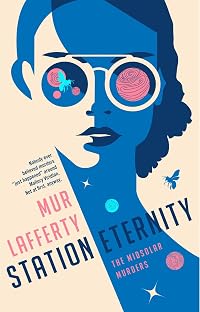
Amateur detective Mallory Viridian's talent for solving murders ruined her life on Earth and drove her to live on an alien space station, but her problems still follow her in this witty, self-aware novel that puts a speculative spin on murder mysteries, from the Hugo-nominated author of Six Wakes. From idyllic small towns to claustrophobic urban landscapes, Mallory Viridian is constantly embroiled in murder cases that only she has the insight to solve. But outside of a classic mystery novel, show more being surrounded by death doesn't make you a charming amateur detective, it makes you a suspect and a social pariah. So when Mallory gets the opportunity to take refuge on a sentient space station, she thinks she has the solution. Surely the murders will stop if her only company is alien beings. At first her new existence is peacefully quiet...and markedly devoid of homicide. But when the station agrees to allow additional human guests, Mallory knows the break from her peculiar reality is over. After the first Earth shuttle arrives, and aliens and humans alike begin to die, the station is thrown into peril. Stuck smack-dab in the middle of an extraterrestrial whodunit, and wondering how in the world this keeps happening to her anyway, Mallory has to solve the crime-and fast-or the list of victims could grow to include everyone on board.... show lessTags
Recommendations


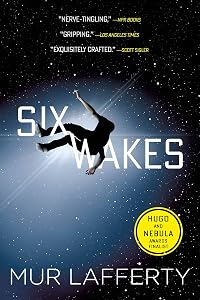



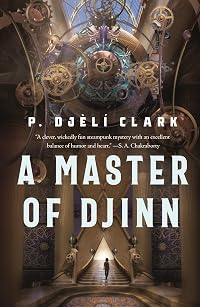

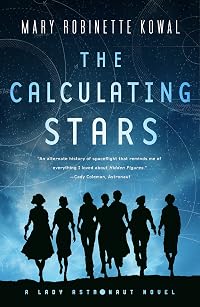
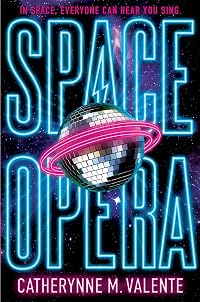







Member Recommendations

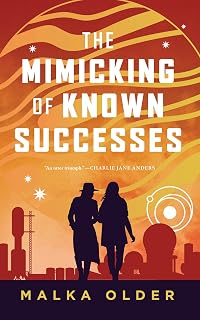
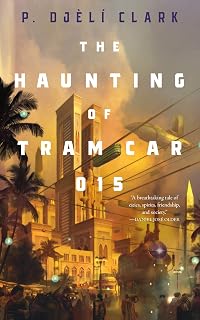
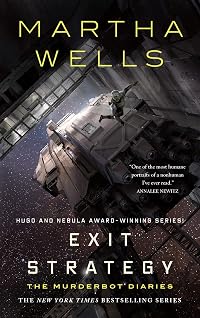
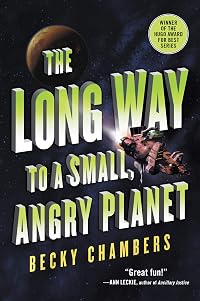
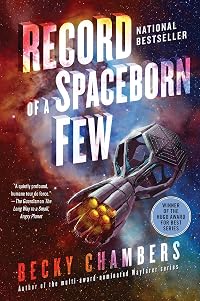
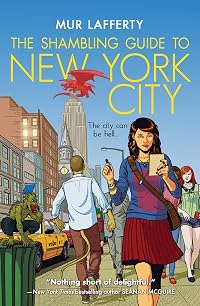
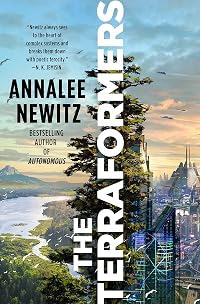
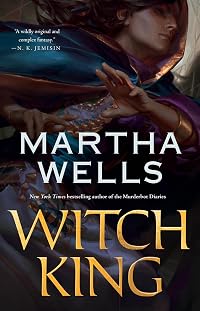
Caramellunacy Both involve murders set in space & a variety of different life-forms
Member Reviews
I loved the idea behind this book, and I love the setting so, so much. Sentient ships! Aliens who don't GAF about humans! A murder mystery sleuth who understands (deeply) how weird it is to encounter murder as often as she does. All the weird little connections that bind everyone together!
All of these things are great, and there were definitely some plot twists I didn't see coming. I think it gets a bit chaotic and messy in a couple of places -- trying to understand the evolutions of the Gneiss and the battle is difficult to track and confusing. I also find both Mallory and Xan less than sympathetic characters -- Mallory's a bit whiny, Xan has too many secrets. I'm excited to see that this is the first book in a series and very show more intrigued to see where it goes next. Also, I LOVE Mrs. Brown.
Advanced Reader's Copy provided by Edelweiss show less
All of these things are great, and there were definitely some plot twists I didn't see coming. I think it gets a bit chaotic and messy in a couple of places -- trying to understand the evolutions of the Gneiss and the battle is difficult to track and confusing. I also find both Mallory and Xan less than sympathetic characters -- Mallory's a bit whiny, Xan has too many secrets. I'm excited to see that this is the first book in a series and very show more intrigued to see where it goes next. Also, I LOVE Mrs. Brown.
Advanced Reader's Copy provided by Edelweiss show less
A book club pick :)
What a mess!
I haven’t read that many boring mysteries, but this one takes top spot.
I liked Six Wakes, so I jumped at the chance to read a “murder on a space station” book by the same author. It started off promisingly enough:
Murders just seem to happen around Mallory Viridian. She also happens to solve them.
The book was doing excellent things with ”murders always happen when the famous detective appears” trope, turning it on its head.
”Romance was out of the question; if someone dated Mallory, then someone close to them would die. Without fail.” Mallory hides from people and is very lonely. She has sought refuge on a sentient space station full of aliens, hoping this will stop her “curse”. These first show more few chapters were fun.
Suddenly, a shuttle full of humans is on its way. Mallory runs around in panic. There is a murder, of course. In fact, there are several. Then I watched the book crash and burn.
There was a never-ending parade of new POV characters and their back stories, as we were jumping back and forth in time. Sometimes we jumped several times per chapter. The stories piled up. Murder mystery, what murder mystery? Is Mallory doing any detective stuff? Nope.
Does one of my most hated stupid plot devices make an appearance? Indeed. People have secrets, and they tell each other that they are keeping secrets. ”I can’t tell you right now. I can’t explain, I am sorry.” ”I’ll tell you everything, but now is not the time.” This happens more than once. This is the sound of me rocking back and forth.
The characters’ motivations and behaviour often made zero sense. Well, of course they didn’t, they were there for plot reasons. Wait a minute… Plot, hello, where did you go? Where are you? Did you drown in the swamp this book turned into?
There are also things like ”Mallory remembered that the Gneiss* usually preferred to talk to one another via vibrations…” and “oh, by the way, I am a Gneiss princess!” and “oh, by the way, we aliens x have this thing we can do”. World building, what world building? What is show, don’t tell? This is the sound of me trying not to hit my head against the wall.
*Gneiss are sentients made of rock. They would have been better off in a different book.
Dear book gods, why was this novel so long? 457 pages! It desperately needed tightening up. It needed to be at least a hundred pages shorter.
I confess that I was hate reading for most of the book. The last chapters got more interesting and had some cool moments, but it was too little, too late.
I will need to be very, very careful in choosing my next read. Just sayin’. show less
What a mess!
I haven’t read that many boring mysteries, but this one takes top spot.
I liked Six Wakes, so I jumped at the chance to read a “murder on a space station” book by the same author. It started off promisingly enough:
Murders just seem to happen around Mallory Viridian. She also happens to solve them.
The book was doing excellent things with ”murders always happen when the famous detective appears” trope, turning it on its head.
”Romance was out of the question; if someone dated Mallory, then someone close to them would die. Without fail.” Mallory hides from people and is very lonely. She has sought refuge on a sentient space station full of aliens, hoping this will stop her “curse”. These first show more few chapters were fun.
Suddenly, a shuttle full of humans is on its way. Mallory runs around in panic. There is a murder, of course. In fact, there are several. Then I watched the book crash and burn.
There was a never-ending parade of new POV characters and their back stories, as we were jumping back and forth in time. Sometimes we jumped several times per chapter. The stories piled up. Murder mystery, what murder mystery? Is Mallory doing any detective stuff? Nope.
Does one of my most hated stupid plot devices make an appearance? Indeed. People have secrets, and they tell each other that they are keeping secrets. ”I can’t tell you right now. I can’t explain, I am sorry.” ”I’ll tell you everything, but now is not the time.” This happens more than once. This is the sound of me rocking back and forth.
The characters’ motivations and behaviour often made zero sense. Well, of course they didn’t, they were there for plot reasons. Wait a minute… Plot, hello, where did you go? Where are you? Did you drown in the swamp this book turned into?
There are also things like ”Mallory remembered that the Gneiss* usually preferred to talk to one another via vibrations…” and “oh, by the way, I am a Gneiss princess!” and “oh, by the way, we aliens x have this thing we can do”. World building, what world building? What is show, don’t tell? This is the sound of me trying not to hit my head against the wall.
*Gneiss are sentients made of rock. They would have been better off in a different book.
Dear book gods, why was this novel so long? 457 pages! It desperately needed tightening up. It needed to be at least a hundred pages shorter.
I confess that I was hate reading for most of the book. The last chapters got more interesting and had some cool moments, but it was too little, too late.
I will need to be very, very careful in choosing my next read. Just sayin’. show less
I don't usually read that much science fiction, but the premise of a person that seems to have murders happening around them sounded interesting. It took me a while to really get into it, and there were a lot of threads to keep hold of, but overall, I liked it quite a bit by the time I finished the last page. (I immediately started the second book and I'm enjoying it right from the start, being more familiar now with the Space Station and the aliens who reside there).
I think the worldbuilding is pretty fantastic and I like how unusual some of the aliens are. You don't often hear about rock people who can evolve into sentient space vehicles or war machines, and I thought that was pretty interesting. It was also cool to read a book where show more humans are the minority and don't behave that well when faced with aliens who actually have more advanced technology and knowledge. I liked that the Eternity is sentient and found it interesting how the environment was impacted when she was in deep distress. That made me feel a lot of empathy for her and see as as a truly separate entity rather than just a Space Station that people reside in.
As for the murders and the mystery of why Mallory seems to trigger murders, I won't say much because of spoilers, but let's just say that there were a lot of things that caught me completely by surprise as the various loose threads were wrapped up. I think that made me like the book a lot more. I read a lot of books and very few surprise me as much as this one did. And Mallory has grown on me, as have some of the other characters whose backgrounds and personalities unfolded more as the story went on. show less
I think the worldbuilding is pretty fantastic and I like how unusual some of the aliens are. You don't often hear about rock people who can evolve into sentient space vehicles or war machines, and I thought that was pretty interesting. It was also cool to read a book where show more humans are the minority and don't behave that well when faced with aliens who actually have more advanced technology and knowledge. I liked that the Eternity is sentient and found it interesting how the environment was impacted when she was in deep distress. That made me feel a lot of empathy for her and see as as a truly separate entity rather than just a Space Station that people reside in.
As for the murders and the mystery of why Mallory seems to trigger murders, I won't say much because of spoilers, but let's just say that there were a lot of things that caught me completely by surprise as the various loose threads were wrapped up. I think that made me like the book a lot more. I read a lot of books and very few surprise me as much as this one did. And Mallory has grown on me, as have some of the other characters whose backgrounds and personalities unfolded more as the story went on. show less
Oh I LOVED this, it was an absolutely chewy mystery in an incredibly cool sci-fi, humans-encountering-extraterrestrial-life scenario, with just the right amount of humor. The set-up—a woman who believes, due to mountains of evidence, that her presence literally attracts murderers, or even causes other people to murder each other, has run away to a space station with an exceedingly low human population—is superb. It's just a page-turning, engrossing, fantastic book, good for fans of Martha Wells and Murderbot, Daniel O'Malley, or Becky Chambers but with crime & mystery! Sign me up for any future entries in this series, I am absolutely there.
This originally appeared at The Irresponsible Reader.
---
WHAT'S STATION ETERNITY ABOUT?
In the not-too-distant future, Aliens (of various species) have made Contact with Humanity. It's not unheard of for them to be seen on earth, looking around. Many humans are worried about war with the aliens—that they're around to invade or something. What they can't accept is that the aliens just don't think enough about humanity to bother.
Nearby—but not that near—is a Space Station where the aliens that Earth knows about are living. It's important to know that the Space Station is sentient. She's allowed three humans to live on board. One is an ambassador from the U.S. (you're going to spend a lot of time wondering how he got that appointment, show more until—of course—Lafferty explains it, and then it'll actually make sense); another is our protagonist, Mallory Viridian (more on her in a bit); and Xan, an Army quartermaster, Mallory met in college a few years back.
People tend to die around Mallory. Well, that's not exactly true—people in Mallory's vicinity have a tendency to be murdered. When that happens, Mallory is really good at solving the murders, too. Sure, she has to repeatedly convince law enforcement that she wasn't involved in the murder—but after that, she's great at figuring out who did the killing. Her presence on the Space Station is her attempt at staying away from people. Her thinking is that if she's not around people, they can't be killed. Yes, there are two other humans on board, but she avoids them as much as possible for their own sake.
But now...Eternity has decided to allow a shuttle-full of humans to visit, and Mallory is worried. Beyond worried, really. She tries to convince Eternity to call it off, but before she can...there's a murder. And before long, there are others—is Mallory up for the challenge?
THE ALIENS
There's a lot that I liked about this novel—more than I'm going to be able to really dig down into. But one of my favorite aspects of the novel is the alien races, their cultures, how they relate to humans, and so on. Aliens should be...alien. They shouldn't all be humanoid with a few cosmetic differences. Novels are a better place for this than movies/TV because they're not limited by an F/X budget, but still, we tend to get variations on a theme. Lafferty's good at keeping the aliens strange and humans should be equally strange to them (beyond a McCoy-can't-get-the-whole-Vulcan-logic thing)
A couple of examples to start with: there's the food on the station—a lot of it is lethal to humans, some is just unpalatable (think of the way 80s sitcom characters would react to the idea of sushi, and then multiply that). There's also the way way that the universal translation device (fairly reminiscent of Adam's Babel Fish) being implanted is a bloody and painful process—which is still not easy and pain-free by the end of the book. Unless I'm forgetting something (likely) or haven't been exposed to the right things (very likely), I'm used to this being a seamless, easy and pain-free process in SF.
We are talking about races here that can remember thinking of species like humans (and some others on the station) as "masticatables,*" before they got to the point where they saw them as sentient beings who should be treated with respect and on the same level. Physiology, communication, ethics, and worldviews that we can't comprehend easily. Not only are they only barely interested in dealing with humans (it's never stated, but I think most of Eternity's residents wish they'd waited a few centuries before making First Contact)—they're sure not going to go out of their way to make things accessible to humans. It's up to the three on board to figure out how to survive.
* Of the thousands and thousands of words that I read last week, that's probably my favorite one..
That said, they are pretty curious about humanity's squishy bodies full of wetness, our lack of symbiotic relationships (oh, yeah, I forgot to mention—every other race in this book is in some sort of symbiosis). Isolated creatures are hard for them to wrap their minds around. Throughout the novel, various characters repeatedly express how they can't understand how humans get by without a symbiotic relationship of some kind—in fact, they pity humans for how they must be isolated and hampered by it.
I could keep going here, but without writing a few hundred words on each race, I'm not going to be able to say enough (besides, that's Lafferty's job, not mine). Let me just sum up by saying that these aliens are alien, and we're pretty strange to them. I love seeing both of these in action.
A QUESTION OF GENRE
In my Spotlight post, wrote that Station Eternity is:
"a witty, self-aware whodunit with a unique sci-fi twist" (at least that's what the promotional material says—I'd call it a witty, self-aware Sci-Fi novel with a unique whodunit twist, if I was in the mood to split hairs).
Now, largely, genre is used as a marketing tool—how do we get this in front of the readers who are most likely to respond with their attention (and wallets, can't forget to get Lafferty and the publisher paid). As such, maybe it doesn't matter what genre it's classified as—and there's something to it. But genre also helps you talk about a book—the conventions of the genre, the way a book diverts from and/or uses them, etc. It also helps you find a book, "I'm in the mood for a good book," really doesn't get you very far, whereas "I'm in the mood for an Urban Fantasy," points you in the right direction.
So, Ace's marketing—and the title of the series itself—leans on the mystery. And I think that's fair. But I think the emphasis in this novel is on SF elements. That might not really be the case* in future novels in the series, but it felt that way this time. Lafferty's own bibliography and résumé are pretty heavy on Speculative Fiction, too—so it makes sense that the book would be Science Fiction-heavy.
* Pun unintended. But I really wish I had planned it.
Considered separately, I think the mystery part of the novel isn't as successful as the SF part is. That's largely because the SF aspects change the rules for the mystery. Thankfully, you don't have to consider the two strains separately—the book doesn't, there's little reason for a reader to do that (unless you're trying to talk about it in a blog post or something).
As I mentioned, most of the various races in the novel are in a symbiotic relationship of some kind to survive (and things do not go well for them when the symbiosis is disrupted). I think the relationship between the two genres here could be thought of that way—it's a mutually dependent relationship. The SF needs the mystery to generate and advance the plot, and the whodunit needs the SF to have a setting and for the characters to work.
Ultimately, I think a Mystery-reader who isn't that into SF is not as likely to enjoy this as a SF-reader who isn't that into Mysteries will. But I think readers of either genre who are open to the idea are going to find themselves really getting into this.
SO, WHAT DID I THINK ABOUT STATION ETERNITY?
I've said almost nothing about Mallory, Xan or any of the other humans running around this book—but this has gone on too long already. Also, most of what I'd say is best discovered in the novel. So let me just say that Mallory is a fantastic character, and I'll sign up for at least three more books about her now. She's this great mix of neurosis (tied to all the murders around her, so they're understandable), talent, determination and snark. We don't get to know Xan quite as well—but I'll eagerly take at least one more book about him, too. He's going to be able to be a very different person after the events of this book, and I'm curious to see what that looks like.
Eternity herself is a character I want to understand more—and everyone on board, too. There's a Princess, for example, who seems like good comic relief when we meet her—and stays that way for most of the book. Then she does something and becomes a whole different kind of character—she's still a hoot, but she's a whole lot more.
That goes for the series, too—after Lafferty has created this world and shaken it up pretty well in this book, I want to see what happens afterward.
But I've gotten side-tracked, I want to focus on Station Eternity—there's a lot of backstory woven into plot, and Lafferty handles it well. We learn enough to advance the plot and understand the characters—but not so much that she can't throw us a curve-ball every now and then to be surprised by someone. And she does—and I relished each of them. These events and the characters will keep you on your toes.
This is a funny book—in the narration, some of the situations, and the way the characters relate to each other. The circumstances around a lot of the murders that Mallory encounters, for example, are frequently ridiculous. But it is not a comedy—we're talking about a lot of murders for one thing. Then there's intergalactic intrigue, the dangers of space travel, and life-or-death situations all around. The interactions and histories between the various characters are full of drama and the serious stuff that comes from being a person, too. There's a great balance of light and darkness throughout the book and Lafferty writes both with skill and a touch of panache.
I had a great time with this book and will be thinking about it for a while to come—and as I've suggested, I'm eager to see what's around the corner. I strongly recommend this book for mystery fans open to aliens walking around, SF fans interested in a different kind of story, and readers who like good things. show less
---
WHAT'S STATION ETERNITY ABOUT?
In the not-too-distant future, Aliens (of various species) have made Contact with Humanity. It's not unheard of for them to be seen on earth, looking around. Many humans are worried about war with the aliens—that they're around to invade or something. What they can't accept is that the aliens just don't think enough about humanity to bother.
Nearby—but not that near—is a Space Station where the aliens that Earth knows about are living. It's important to know that the Space Station is sentient. She's allowed three humans to live on board. One is an ambassador from the U.S. (you're going to spend a lot of time wondering how he got that appointment, show more until—of course—Lafferty explains it, and then it'll actually make sense); another is our protagonist, Mallory Viridian (more on her in a bit); and Xan, an Army quartermaster, Mallory met in college a few years back.
People tend to die around Mallory. Well, that's not exactly true—people in Mallory's vicinity have a tendency to be murdered. When that happens, Mallory is really good at solving the murders, too. Sure, she has to repeatedly convince law enforcement that she wasn't involved in the murder—but after that, she's great at figuring out who did the killing. Her presence on the Space Station is her attempt at staying away from people. Her thinking is that if she's not around people, they can't be killed. Yes, there are two other humans on board, but she avoids them as much as possible for their own sake.
But now...Eternity has decided to allow a shuttle-full of humans to visit, and Mallory is worried. Beyond worried, really. She tries to convince Eternity to call it off, but before she can...there's a murder. And before long, there are others—is Mallory up for the challenge?
THE ALIENS
There's a lot that I liked about this novel—more than I'm going to be able to really dig down into. But one of my favorite aspects of the novel is the alien races, their cultures, how they relate to humans, and so on. Aliens should be...alien. They shouldn't all be humanoid with a few cosmetic differences. Novels are a better place for this than movies/TV because they're not limited by an F/X budget, but still, we tend to get variations on a theme. Lafferty's good at keeping the aliens strange and humans should be equally strange to them (beyond a McCoy-can't-get-the-whole-Vulcan-logic thing)
A couple of examples to start with: there's the food on the station—a lot of it is lethal to humans, some is just unpalatable (think of the way 80s sitcom characters would react to the idea of sushi, and then multiply that). There's also the way way that the universal translation device (fairly reminiscent of Adam's Babel Fish) being implanted is a bloody and painful process—which is still not easy and pain-free by the end of the book. Unless I'm forgetting something (likely) or haven't been exposed to the right things (very likely), I'm used to this being a seamless, easy and pain-free process in SF.
We are talking about races here that can remember thinking of species like humans (and some others on the station) as "masticatables,*" before they got to the point where they saw them as sentient beings who should be treated with respect and on the same level. Physiology, communication, ethics, and worldviews that we can't comprehend easily. Not only are they only barely interested in dealing with humans (it's never stated, but I think most of Eternity's residents wish they'd waited a few centuries before making First Contact)—they're sure not going to go out of their way to make things accessible to humans. It's up to the three on board to figure out how to survive.
* Of the thousands and thousands of words that I read last week, that's probably my favorite one..
That said, they are pretty curious about humanity's squishy bodies full of wetness, our lack of symbiotic relationships (oh, yeah, I forgot to mention—every other race in this book is in some sort of symbiosis). Isolated creatures are hard for them to wrap their minds around. Throughout the novel, various characters repeatedly express how they can't understand how humans get by without a symbiotic relationship of some kind—in fact, they pity humans for how they must be isolated and hampered by it.
I could keep going here, but without writing a few hundred words on each race, I'm not going to be able to say enough (besides, that's Lafferty's job, not mine). Let me just sum up by saying that these aliens are alien, and we're pretty strange to them. I love seeing both of these in action.
A QUESTION OF GENRE
In my Spotlight post, wrote that Station Eternity is:
"a witty, self-aware whodunit with a unique sci-fi twist" (at least that's what the promotional material says—I'd call it a witty, self-aware Sci-Fi novel with a unique whodunit twist, if I was in the mood to split hairs).
Now, largely, genre is used as a marketing tool—how do we get this in front of the readers who are most likely to respond with their attention (and wallets, can't forget to get Lafferty and the publisher paid). As such, maybe it doesn't matter what genre it's classified as—and there's something to it. But genre also helps you talk about a book—the conventions of the genre, the way a book diverts from and/or uses them, etc. It also helps you find a book, "I'm in the mood for a good book," really doesn't get you very far, whereas "I'm in the mood for an Urban Fantasy," points you in the right direction.
So, Ace's marketing—and the title of the series itself—leans on the mystery. And I think that's fair. But I think the emphasis in this novel is on SF elements. That might not really be the case* in future novels in the series, but it felt that way this time. Lafferty's own bibliography and résumé are pretty heavy on Speculative Fiction, too—so it makes sense that the book would be Science Fiction-heavy.
* Pun unintended. But I really wish I had planned it.
Considered separately, I think the mystery part of the novel isn't as successful as the SF part is. That's largely because the SF aspects change the rules for the mystery. Thankfully, you don't have to consider the two strains separately—the book doesn't, there's little reason for a reader to do that (unless you're trying to talk about it in a blog post or something).
As I mentioned, most of the various races in the novel are in a symbiotic relationship of some kind to survive (and things do not go well for them when the symbiosis is disrupted). I think the relationship between the two genres here could be thought of that way—it's a mutually dependent relationship. The SF needs the mystery to generate and advance the plot, and the whodunit needs the SF to have a setting and for the characters to work.
Ultimately, I think a Mystery-reader who isn't that into SF is not as likely to enjoy this as a SF-reader who isn't that into Mysteries will. But I think readers of either genre who are open to the idea are going to find themselves really getting into this.
SO, WHAT DID I THINK ABOUT STATION ETERNITY?
I've said almost nothing about Mallory, Xan or any of the other humans running around this book—but this has gone on too long already. Also, most of what I'd say is best discovered in the novel. So let me just say that Mallory is a fantastic character, and I'll sign up for at least three more books about her now. She's this great mix of neurosis (tied to all the murders around her, so they're understandable), talent, determination and snark. We don't get to know Xan quite as well—but I'll eagerly take at least one more book about him, too. He's going to be able to be a very different person after the events of this book, and I'm curious to see what that looks like.
Eternity herself is a character I want to understand more—and everyone on board, too. There's a Princess, for example, who seems like good comic relief when we meet her—and stays that way for most of the book. Then she does something and becomes a whole different kind of character—she's still a hoot, but she's a whole lot more.
That goes for the series, too—after Lafferty has created this world and shaken it up pretty well in this book, I want to see what happens afterward.
But I've gotten side-tracked, I want to focus on Station Eternity—there's a lot of backstory woven into plot, and Lafferty handles it well. We learn enough to advance the plot and understand the characters—but not so much that she can't throw us a curve-ball every now and then to be surprised by someone. And she does—and I relished each of them. These events and the characters will keep you on your toes.
This is a funny book—in the narration, some of the situations, and the way the characters relate to each other. The circumstances around a lot of the murders that Mallory encounters, for example, are frequently ridiculous. But it is not a comedy—we're talking about a lot of murders for one thing. Then there's intergalactic intrigue, the dangers of space travel, and life-or-death situations all around. The interactions and histories between the various characters are full of drama and the serious stuff that comes from being a person, too. There's a great balance of light and darkness throughout the book and Lafferty writes both with skill and a touch of panache.
I had a great time with this book and will be thinking about it for a while to come—and as I've suggested, I'm eager to see what's around the corner. I strongly recommend this book for mystery fans open to aliens walking around, SF fans interested in a different kind of story, and readers who like good things. show less
In as much as Mur Lafferty has become something of a rising star in the field, and I really don't read much short fiction, I figured that this novel was as good a place as any to start with the woman's writing. My basic reservation was that I'm not a fan of murder mysteries so, again, I had the attitude of "impress me." What I didn't gather, until I read Lafferty's dedication to Douglas Adams, is that this is very much a send-up of that particular genre. Lafferty is also quite prepared to offer a send-up of the first-contact novel, as her advanced alien races can be jerks as much as her human characters. Further, giving this novel some depth, is that Lafferty spends a lot of time offering mini-portraits of her characters; this novel show more does read like it was written by someone with a MFA, and I'm counting this as a virtue. As for downsides, there were points where the action could have been a little more gripping, and there could have been a little more sense of urgency. That said, seeing as this is apparently going to be at least a trilogy, there was a lot of set up work to be done, and I'm now looking forward to those follow-on works. show less
Mallory Viridian has a problem. Everywhere she goes, murder follows in her wake. People just seem to want to commit murder when she’s around, and she has a knack for solving the crimes, much to the dismay of everyone around her. She tries to stay away from people, leading to a lonely existence. Luckily for her humanity has just made First Contact, and the sentient space station Eternity won’t allow any humans aboard – except for her. And her ability seems to ignore the aliens.
For a while Mallory lives in peace, but suddenly Eternity decides to allow more human visitors. Mallory knows that means death is right behind. Soon enough she’s trying to solve murders in space, keep as many people alive as possible, and get to the heart show more of exactly why she has this curse and why the aliens are so interested in her.
It’s a who-dun-it murder mystery in space. I love it! The aliens were diverse and weird, the tone of the book is fun and absurd, and the conclusion was unexpected but satisfying. There was a large cast of characters and a lot of POV chapters, but I like that when it’s done well. It makes the world feel bigger and the characters multi-dimensional, and I was really interested in some of the backstories and secrets we learned. I raced through this book and I’m excited to see there’s a sequel that I’ll be picking up immediately. If you like your sci-fi a little quirky, or if you like your murder mysteries in a different and unique setting, then you should pick up Station Eternity. show less
For a while Mallory lives in peace, but suddenly Eternity decides to allow more human visitors. Mallory knows that means death is right behind. Soon enough she’s trying to solve murders in space, keep as many people alive as possible, and get to the heart show more of exactly why she has this curse and why the aliens are so interested in her.
It’s a who-dun-it murder mystery in space. I love it! The aliens were diverse and weird, the tone of the book is fun and absurd, and the conclusion was unexpected but satisfying. There was a large cast of characters and a lot of POV chapters, but I like that when it’s done well. It makes the world feel bigger and the characters multi-dimensional, and I was really interested in some of the backstories and secrets we learned. I raced through this book and I’m excited to see there’s a sequel that I’ll be picking up immediately. If you like your sci-fi a little quirky, or if you like your murder mysteries in a different and unique setting, then you should pick up Station Eternity. show less
Members
- Recently Added By
Lists

2023 Hugo Awards -- Eligible Works -- Novels
70 works; 21 members

Truly alien aliens (SF)
42 works; 3 members

LibraryReads, October 2022
9 works; 1 member

Books Read in 2023
5,638 works; 147 members

Paranormal investigators and space detectives
274 works; 9 members
Author Information

66+ Works 4,652 Members
Some Editions
Awards and Honors
Awards
Distinctions
Series

Common Knowledge
- Canonical title
- Station Eternity
- Original publication date
- 2022-10
- People/Characters
- Mallory Viridian; Alexander "Xan" Morgan; Adrian Casserly-Berry; Station Eternity; Ren (Gurudev); Stephanie (Gneiss) (show all 17); Ferdinand (Gneiss); Tina (Gneiss); Blue Sundry; Lovely Brown; Elizabeth Brown; Calliope Oh; Phineas Morgan; Opal Slav; Kathleen Bartlett; Devanshi; Osric
- Important places
- Station Eternity
- Dedication
- To Douglas Adams, who will never know the impression he made on so many writers,
and Alasdair Stuart, who is the world's best electric monk. - First words
- Nobody ever believed murders "just happened" around Mallory Viridian.
- Last words
- (Click to show. Warning: May contain spoilers.)"That is our specialty," Devanshi said, and got to work on Fenris 2.
- Publisher's editor
- Sowards, Anne
- Blurbers
- Kowal, Mary Robinette; Kingfisher, T.; Pinsker, Sarah; Divya, S. B.; Kelly, James Patrick
- Original language
- English US
Classifications
Statistics
- Members
- 665
- Popularity
- 43,835
- Reviews
- 36
- Rating
- (3.77)
- Languages
- English
- Media
- Paper, Audiobook, Ebook
- ISBNs
- 4
- ASINs
- 3