On This Page
Description
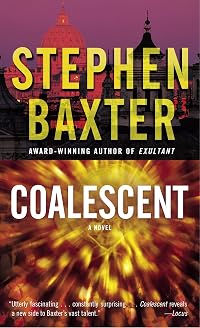
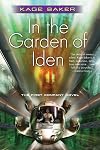
“Lean, taut storytelling . . . breakneck stuff . . . Arguably his most accessible book to date—Baxter [is] resplendent.”—SFX magazineWhen his father dies suddenly, George Poole stumbles onto a family secret: He has a twin sister he never knew existed, who was raised by an enigmatic cult called the Order. The Order is a hive—a human hive with a dominant queen—that has prospered below the streets of Rome for almost two millennia. After Poole enters the Order’s vast underground show more city and meets the disturbing inhabitants, he uncovers evidence that they have embarked on a divergent evolutionary path. These genetically superior humans are equipped with the tools necessary to render modern Homo sapiens as extinct as the Neanderthals. And now they are preparing to leave their underground realm.
“[Excels] at both action-packed storytelling and philosophical speculation.”—Library Journal
“Utterly fascinating . . . constantly surprising . . . Coalescent reveals a new side to Baxter’s vast talent.”—Locus. show less
Tags
Recommendations











Member Recommendations
Tobu About an idealist/humanist secret society from the future; brings a more cynical angle
Member Reviews
An interesting look into a family whose records stretch back generations. The story alternates between a modern man whose father has just died and he finds that he had a twin, who is in a religious order in Rome, so he goes to Rome to find out about her.
The other story is set during the fall of Roman Britain, starting with Regina as a demanding 7 year old and following her through hardship and trials to Rome as well.
When the two stories merge it starts to become an interesting story of adaptation and change. I found it enthraling until the setup for the next book, then I started to wonder where Baxter is going with the story.
The other story is set during the fall of Roman Britain, starting with Regina as a demanding 7 year old and following her through hardship and trials to Rome as well.
When the two stories merge it starts to become an interesting story of adaptation and change. I found it enthraling until the setup for the next book, then I started to wonder where Baxter is going with the story.
Sometimes I think Baxter is a hit-or-miss kind of author, thinking he goes over the same ground in rather interesting new ways, but when I think about it... His George Poole characters are all rather... DIFFERENT. Yes, yes, George Poole is here, again, but the kind of story told isn't spanning the world or the galaxy or all of time... this time.
Rather, we've got a rather cool Roman historical romance (of a kind) that brings together old English history and the Celts in rather awesome ways while jumping back to the current time in a cool family history mystery.
I was frankly entertained. Both sides of history (and later on, a future history,) were fascinating and thrilling and reminded me at times of Greg Bear's [b:Darwin's show more Radio|64923|Darwin's Radio (Darwin's Radio #1)|Greg Bear|https://images.gr-assets.com/books/1298430821s/64923.jpg|2878580], a historical drama, and a first-contact SF. All three are wonderful and at some moments I was reminded of Poul Anderson's [b:The Boat of a Million Years|338327|The Boat of a Million Years|Poul Anderson|https://images.gr-assets.com/books/1463044660s/338327.jpg|2705088]. That's high praise. :)
I'm into this enough that I have to jump on the second book right away. After all, we're talking about a full transformation of humanity into a HIVE MIND!
Yay! It's what I asked Santa for Christmas! ;) show less
Rather, we've got a rather cool Roman historical romance (of a kind) that brings together old English history and the Celts in rather awesome ways while jumping back to the current time in a cool family history mystery.
I was frankly entertained. Both sides of history (and later on, a future history,) were fascinating and thrilling and reminded me at times of Greg Bear's [b:Darwin's show more Radio|64923|Darwin's Radio (Darwin's Radio #1)|Greg Bear|https://images.gr-assets.com/books/1298430821s/64923.jpg|2878580], a historical drama, and a first-contact SF. All three are wonderful and at some moments I was reminded of Poul Anderson's [b:The Boat of a Million Years|338327|The Boat of a Million Years|Poul Anderson|https://images.gr-assets.com/books/1463044660s/338327.jpg|2705088]. That's high praise. :)
I'm into this enough that I have to jump on the second book right away. After all, we're talking about a full transformation of humanity into a HIVE MIND!
Yay! It's what I asked Santa for Christmas! ;) show less
From the back:
"When his father dies suddenly, George Poole stumbles onto a family secret; He has a twin sister he never knew existed, who was raised by an enigmatic cult called the Order. The Order is a hive--a human hive with a dominant queen--that has prospered below the streets of Rome for almost two millennia. After Poole enters the Order's vast underground city and meets the disturbing inhabitants, he uncovers evidence that they have embarked on a divergent evolutionary path. These genetically superior humans are equipped with the tools necessary to render modern Homo sapiens as extinct as the Neanderthal. And now they are preparing to leave their underground realm."
My review:
First of all, the back cover info is a trifle show more misleading, which is a shame because the real story is just as good and absorbing as the cover hype. The book weaves together three narratives: George Poole's first person mystery as he searches for his lost sister; the historical fiction 5th Century exploits of one of his ancestors Regina, who lives through the fall of the Roman Empire in Britain, moves to Rome, and founds the Order; and the modern SF story of Lucia, one of the members of the Order. Of the three, I found George's story to be the weakest. He is basically a foil for introducing the other two and a stand-in for the reader; someone to whom things can be explained rather than an active agent. As the book progressed I actually became a little impatient with the George story and always looked forward to the next installments of Regina and Lucia.
I enjoyed the book; it's a fascinating meld of science fiction and historical fiction. Baxter does a great job showing how the withdrawal of Rome from Britain resulted in the rapid decline of cities, withering of trade, decline of population and the loss of education and skills; in other words, the rapid onset of the Dark Ages in just a couple of generations. King Arthur makes an appearance--as two different characters that are frequently cited as sources for the legend--as well as Merlin. Baxter also does a credible job of creating the Order, giving it a sound basis in science and biology, and evolving it through 1500 years to the semblance of a hive. Although there is no dominant queen and they don't "plan" an invasion of the rest of earth, as trumpeted in the back matter.
I do have a nit to pick. Baxter has a penchant for punning names. In another book I reviewed, his rogue protagonist was Malenfant (bad child in French.) In this one, the founding mother of the Order is Regina (queen.) He also named some secondary characters after historical figures that lived in those times. The fictional ones had nothing to do with the historical characters, so I found it jarring whenever they appeared. There are plenty of names that don't carry any associations, which could have easily been used. Naming is a tricky thing and there is nothing wrong with using a name to reinforce a character, but if it pulls the reader out of the story, it's a distraction.
To summarize, I enjoyed the book. The writing is straight-forward, the characters interesting, the plot unique. Baxter is a deep thinker who sprinkles his narrative with discussions of social behavior, philosophy, morals, and science. I'd recommend this book to both the SF and HF communities. show less
"When his father dies suddenly, George Poole stumbles onto a family secret; He has a twin sister he never knew existed, who was raised by an enigmatic cult called the Order. The Order is a hive--a human hive with a dominant queen--that has prospered below the streets of Rome for almost two millennia. After Poole enters the Order's vast underground city and meets the disturbing inhabitants, he uncovers evidence that they have embarked on a divergent evolutionary path. These genetically superior humans are equipped with the tools necessary to render modern Homo sapiens as extinct as the Neanderthal. And now they are preparing to leave their underground realm."
My review:
First of all, the back cover info is a trifle show more misleading, which is a shame because the real story is just as good and absorbing as the cover hype. The book weaves together three narratives: George Poole's first person mystery as he searches for his lost sister; the historical fiction 5th Century exploits of one of his ancestors Regina, who lives through the fall of the Roman Empire in Britain, moves to Rome, and founds the Order; and the modern SF story of Lucia, one of the members of the Order. Of the three, I found George's story to be the weakest. He is basically a foil for introducing the other two and a stand-in for the reader; someone to whom things can be explained rather than an active agent. As the book progressed I actually became a little impatient with the George story and always looked forward to the next installments of Regina and Lucia.
I enjoyed the book; it's a fascinating meld of science fiction and historical fiction. Baxter does a great job showing how the withdrawal of Rome from Britain resulted in the rapid decline of cities, withering of trade, decline of population and the loss of education and skills; in other words, the rapid onset of the Dark Ages in just a couple of generations. King Arthur makes an appearance--as two different characters that are frequently cited as sources for the legend--as well as Merlin. Baxter also does a credible job of creating the Order, giving it a sound basis in science and biology, and evolving it through 1500 years to the semblance of a hive. Although there is no dominant queen and they don't "plan" an invasion of the rest of earth, as trumpeted in the back matter.
I do have a nit to pick. Baxter has a penchant for punning names. In another book I reviewed, his rogue protagonist was Malenfant (bad child in French.) In this one, the founding mother of the Order is Regina (queen.) He also named some secondary characters after historical figures that lived in those times. The fictional ones had nothing to do with the historical characters, so I found it jarring whenever they appeared. There are plenty of names that don't carry any associations, which could have easily been used. Naming is a tricky thing and there is nothing wrong with using a name to reinforce a character, but if it pulls the reader out of the story, it's a distraction.
To summarize, I enjoyed the book. The writing is straight-forward, the characters interesting, the plot unique. Baxter is a deep thinker who sprinkles his narrative with discussions of social behavior, philosophy, morals, and science. I'd recommend this book to both the SF and HF communities. show less
Lots of people say that it`s the weakest book of the Xeelee saga and you even can skip it but I disagree. Yes it`s very different to the previous book with the happenings area mainly in the Earth`s past and present but it`s about a very interesting part of the inherently mosaic like saga and it connects the story to the main storyline very nicely.
I was a little disappointed with this one. There were three main "issues" for me (without giving too much away)
- The main character set in the present isn't a character I ever grew to care about. He's a bit of a bumbler and really just serves to present a pair of eyes to show us portions of the story
- Most of the book feels like exposition. It's a 4 book series, so I'm willing to give the next book a chance (who am I kidding, I'll still probably read all 4 regardless ... Baxter is an excellent author and even his "not great" stories are still good). But this book in many places felt like a slog just to get to the few points Baxter was making
- There's very little "science fiction" in this. Perhaps we could stretch and call some of the show more social fiction science fiction, but even with that, there's very little of it.
The most gripping part of this book really was the story set in the far past. As a historical fiction, that piece of the narrative was very successful. We'll see if, after building up all of this structure, Baxter utilizes it again in the future stories, or if much of it was "wasted" in over-describing how these groups of people came together. show less
- The main character set in the present isn't a character I ever grew to care about. He's a bit of a bumbler and really just serves to present a pair of eyes to show us portions of the story
- Most of the book feels like exposition. It's a 4 book series, so I'm willing to give the next book a chance (who am I kidding, I'll still probably read all 4 regardless ... Baxter is an excellent author and even his "not great" stories are still good). But this book in many places felt like a slog just to get to the few points Baxter was making
- There's very little "science fiction" in this. Perhaps we could stretch and call some of the show more social fiction science fiction, but even with that, there's very little of it.
The most gripping part of this book really was the story set in the far past. As a historical fiction, that piece of the narrative was very successful. We'll see if, after building up all of this structure, Baxter utilizes it again in the future stories, or if much of it was "wasted" in over-describing how these groups of people came together. show less
I love Sci-Fi that has a strong scientific component to the problems faced by believable people. In Volumes 1 and 3 of the Destiny's Children books, Baxter does this extremely well. What starts as a historical novel set in England around the fall of the Roman Empire, intertwined by the tale of a contemporary nerdish accountant trying to trace an older sister he learned about only after his father died in England.
Both stories were interesting, but in the first half of the book I wondered where the science was. It did appear (and it was in the structure of the book from the start) but it was a very different kind of science than one expects to encounter in a Sci-Fi novel.
I am even a practitioner of the science concerned, and found no show more faults in the way Baxter used it to lead to the conclusion of the story. One of the most satisfying and intellectually exciting reads I have had in several years as I began to understand what science he was using in his fiction and to see how it drove towards a particular conclusion. show less
Both stories were interesting, but in the first half of the book I wondered where the science was. It did appear (and it was in the structure of the book from the start) but it was a very different kind of science than one expects to encounter in a Sci-Fi novel.
I am even a practitioner of the science concerned, and found no show more faults in the way Baxter used it to lead to the conclusion of the story. One of the most satisfying and intellectually exciting reads I have had in several years as I began to understand what science he was using in his fiction and to see how it drove towards a particular conclusion. show less
This was actually the first book of Baxter's that I had read, and while I feel that the book did drag in places, I felt it well worth my time and money to make it to the ending. I actually really appreciated his efforts at characterization and description, although I did feel this came through much better in the ancient weave of the story than in the modern.
A friend summed up what he thought as the main reason why many of Baxter's fans weren't as fond of this book as his others -- unlike the other Baxter books, my friend labeled this one as "girl science fiction". I can't say whether or not that is true -- but I am without a Y chromosome myself, and was drawn to this book even though I've never felt an urge to read any of his other show more books (even after thumbing through them). show less
A friend summed up what he thought as the main reason why many of Baxter's fans weren't as fond of this book as his others -- unlike the other Baxter books, my friend labeled this one as "girl science fiction". I can't say whether or not that is true -- but I am without a Y chromosome myself, and was drawn to this book even though I've never felt an urge to read any of his other show more books (even after thumbing through them). show less
Members
- Recently Added By
Lists

Arthur C. Clarke Award Winners and Shortlisted Books
219 works; 14 members
Author Information

260+ Works 43,820 Members
Some Editions
Awards and Honors
Awards
Distinctions
Series


Belongs to Publisher Series
Work Relationships
Is contained in
Common Knowledge
- Canonical title
- Coalescent
- Original publication date
- 2003-10
- People/Characters
- Ambrosius Aurelianus
- Dedication
- To Neil, Ann, Katherine, Anna and Claire Baines
- First words
- I have come to stay in Amalfi. I can't face going back to Britain — not yet — and to be here is a great relief after the swarming strangeness I encountered in Rome.
- Last words
- (Click to show. Warning: May contain spoilers.)And yet a part of me, I know, will always long to be immersed again in that dense warmth, to be surrounded by smiling faces like mirrors of my own, to give myself up to the mindless, loving joy of the hive.
Classifications
Statistics
- Members
- 1,022
- Popularity
- 25,439
- Reviews
- 21
- Rating
- (3.43)
- Languages
- English, French, German
- Media
- Paper, Ebook
- ISBNs
- 13
- ASINs
- 6