On This Page
Description
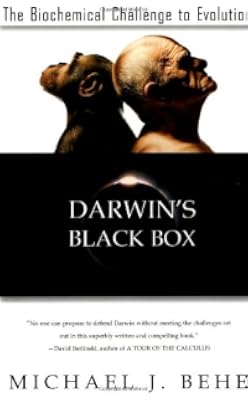
Naming Darwin's Black Box to the National Review's list of the 100 most important nonfiction works of the twentieth century. From one end of the spectrum to the other, Darwin's Black Box has established itself as the key text in the Intelligent Design movement-the one argument that must be addressed in order to determine whether Darwinian evolution is sufficient to explain life as we know it, or not. For this edition, Behe has written a major new Afterword tracing the state of the debate in show more the decade since it began. It is his first major new statement on the subject and will be welcomed by the thousands who wish to continue this intense debate. show lessTags
Recommendations
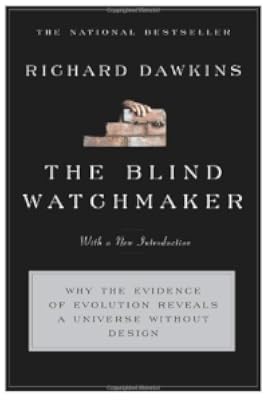
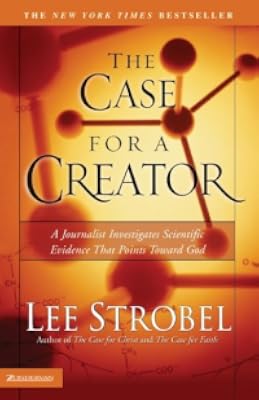
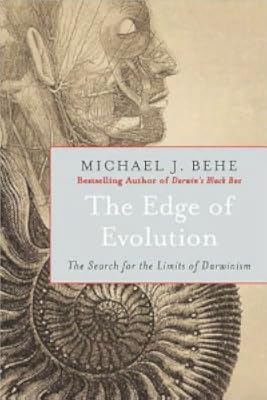
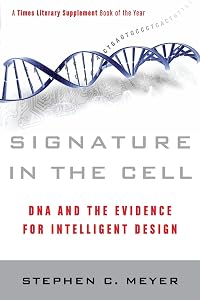










Member Recommendations

StephenBarkley Selfless Gene challenges Darwin's Black Box. They're both interesting reads on a similar topic.
04
Member Reviews
These are my criticisms of Darwin’s Black Box:
1) It turns out that many of the systems the author uses as examples of irreducible complexity are not, in fact, irreducibly complex, and have been proven so by numerous scientists. This is the most prolific avenue of criticism against the book in the years since it was published.
2) The author assumes that the current function of a given complex system must also be the original function of that system in its preceding iterations. But that isn’t always true. For example: We know from the fossil record and the anatomy of other animals that our vocal chords didn’t originally evolve as a system for generating modulated sound. Their original purpose– and a function that they still fulfill show more – was to anchor and coordinate the work of the musculature of our necks, shoulders, and upper torso. Sound-generation was a secondary characteristic that came into being at some point as the system evolved that ended up superseding the original function. Simplify a complex eye, and it may not function as an eye anymore – but that doesn’t mean it might not function perfectly well as something else. Systems gain additional functionality as complexity increases. We can’t always discern with certainty what, of all a complex system’s current functions, was its original. Therefore, the entire premise of "irreducible complexity" as it's put forth in this book becomes meaningless. Simpler antecedent versions of systems don't have to possess the same function as their more complex descendents at all.
3) The author doesn’t do nearly enough to account for the synergistic effects of formerly discrete systems co-evolving and combining together into new systems. As the newly combined system evolves, it eventually reaches a level of such cohesion that we can no longer discern the original discrete systems that combined to create it. Such a system will appear irreducibly complex to us, even though it did, in fact, evolve from preceding systems.
4) The author’s entire understanding of evolution is premised on the belief that simple systems must precede complex systems in evolutionary processes. This is generally the way things go – but it’s not an inviolate rule. It’s not, in fact, a necessary requisite for evolution. Surprisingly complex systems can spontaneously generate (for that matter, the author doesn’t seem to acknowledge that spontaneous generation happens). Not all preceding systems are necessarily simpler, just as not all evolved systems are necessarily more complex. His argument loses significant leverage when we recognize that the process of evolution isn’t nearly as regular and predicable as he makes it out to be.
One of the biggest misunderstandings of Darwin’s theory is the role of random mutation in the process. It’s not possible to systematically observe random mutation, nor to test it through controlled scientific experimentation, and so we don’t really talk about it. But Darwin himself acknowledged random mutation as one of the main ways that characteristics come into being in a species. Irreducible complexity really only works as a criticism of evolution if we exist in a world where all factors can be known and accounted for. The world simply doesn't work that way.
As I read this book, I got tired of the same old attitude I see in too many of the arguments that people make against the Theory of Evolution – namely, the belief that the theory as a whole must be wrong simply because it doesn’t explain everything.
Darwin’s theory of evolution never claimed to explain everything. Darwin himself never shied away from pointing out that his theory needed more development, that it fails to explain some key issues. There have always been questions left unanswered by it – there’s absolutely nothing insightful about pointing that out. It’s legitimate and important to ask those unanswered questions, and to seek for answers to them, but the mere presence of those unanswered questions isn’t enough to disprove the whole theory.
If Darwin’s Black Box had simply raised some of those unanswered questions and explored them, I would consider it one of the most important popular science books written in the past few decades. But that’s not what the book turns out to be – in the end, the author falls into the intellectually lax pitfall of unsupported logic that allows him to leap from the statement, “There are some things that evolution doesn’t explain” to, “The Theory of Evolution fails!” You need a whole lot more than a few unanswered questions to support a conclusion that big.
If you believe in Intelligent Design, in any of its many forms, that’s fine. Argue for it on its own merits. You can’t claim to have proven it simply by pointing out that our current understanding of evolution leaves some questions unanswered. show less
1) It turns out that many of the systems the author uses as examples of irreducible complexity are not, in fact, irreducibly complex, and have been proven so by numerous scientists. This is the most prolific avenue of criticism against the book in the years since it was published.
2) The author assumes that the current function of a given complex system must also be the original function of that system in its preceding iterations. But that isn’t always true. For example: We know from the fossil record and the anatomy of other animals that our vocal chords didn’t originally evolve as a system for generating modulated sound. Their original purpose– and a function that they still fulfill show more – was to anchor and coordinate the work of the musculature of our necks, shoulders, and upper torso. Sound-generation was a secondary characteristic that came into being at some point as the system evolved that ended up superseding the original function. Simplify a complex eye, and it may not function as an eye anymore – but that doesn’t mean it might not function perfectly well as something else. Systems gain additional functionality as complexity increases. We can’t always discern with certainty what, of all a complex system’s current functions, was its original. Therefore, the entire premise of "irreducible complexity" as it's put forth in this book becomes meaningless. Simpler antecedent versions of systems don't have to possess the same function as their more complex descendents at all.
3) The author doesn’t do nearly enough to account for the synergistic effects of formerly discrete systems co-evolving and combining together into new systems. As the newly combined system evolves, it eventually reaches a level of such cohesion that we can no longer discern the original discrete systems that combined to create it. Such a system will appear irreducibly complex to us, even though it did, in fact, evolve from preceding systems.
4) The author’s entire understanding of evolution is premised on the belief that simple systems must precede complex systems in evolutionary processes. This is generally the way things go – but it’s not an inviolate rule. It’s not, in fact, a necessary requisite for evolution. Surprisingly complex systems can spontaneously generate (for that matter, the author doesn’t seem to acknowledge that spontaneous generation happens). Not all preceding systems are necessarily simpler, just as not all evolved systems are necessarily more complex. His argument loses significant leverage when we recognize that the process of evolution isn’t nearly as regular and predicable as he makes it out to be.
One of the biggest misunderstandings of Darwin’s theory is the role of random mutation in the process. It’s not possible to systematically observe random mutation, nor to test it through controlled scientific experimentation, and so we don’t really talk about it. But Darwin himself acknowledged random mutation as one of the main ways that characteristics come into being in a species. Irreducible complexity really only works as a criticism of evolution if we exist in a world where all factors can be known and accounted for. The world simply doesn't work that way.
As I read this book, I got tired of the same old attitude I see in too many of the arguments that people make against the Theory of Evolution – namely, the belief that the theory as a whole must be wrong simply because it doesn’t explain everything.
Darwin’s theory of evolution never claimed to explain everything. Darwin himself never shied away from pointing out that his theory needed more development, that it fails to explain some key issues. There have always been questions left unanswered by it – there’s absolutely nothing insightful about pointing that out. It’s legitimate and important to ask those unanswered questions, and to seek for answers to them, but the mere presence of those unanswered questions isn’t enough to disprove the whole theory.
If Darwin’s Black Box had simply raised some of those unanswered questions and explored them, I would consider it one of the most important popular science books written in the past few decades. But that’s not what the book turns out to be – in the end, the author falls into the intellectually lax pitfall of unsupported logic that allows him to leap from the statement, “There are some things that evolution doesn’t explain” to, “The Theory of Evolution fails!” You need a whole lot more than a few unanswered questions to support a conclusion that big.
If you believe in Intelligent Design, in any of its many forms, that’s fine. Argue for it on its own merits. You can’t claim to have proven it simply by pointing out that our current understanding of evolution leaves some questions unanswered. show less
This promised to be an informed critique of Darwinist theory from the viewpoint of a trained biochemist. Behe goes straight for the jugular by claiming that Darwinian evolutionary theory is plain wrong; it fails to explain what is happening at the molecular level. Behe's analogy is an explanation of how a car works that doesn't even mention the engine. Realising this analogy was plain wrong, I set the book aside to read later, perhaps...
Later I rediscovered Behe as a recurrent target of censure in scientific journals for his specious argumentation in favour of Intelligent Design. OMG, Behe is a Fundie! Indeed, he devotes some 50 pages to Intelligent Design. Sorry, that's pseudo-science!
Behe is the scientific equivalent of David Irving, show more the academic Holocaust denier. Idiots may believe it, but he doesn't have the excuse of ignorance. He knows when his arguments are wrong, but uses them all the same. I really despise intelligent people who put the truth second. The true spirit of science is argument in search of truth. But Behe doesn't want an adult discussion, he justs wants to "win" by fair means or foul, scoring cheap debating points in favour of his preconceived notions. show less
Later I rediscovered Behe as a recurrent target of censure in scientific journals for his specious argumentation in favour of Intelligent Design. OMG, Behe is a Fundie! Indeed, he devotes some 50 pages to Intelligent Design. Sorry, that's pseudo-science!
Behe is the scientific equivalent of David Irving, show more the academic Holocaust denier. Idiots may believe it, but he doesn't have the excuse of ignorance. He knows when his arguments are wrong, but uses them all the same. I really despise intelligent people who put the truth second. The true spirit of science is argument in search of truth. But Behe doesn't want an adult discussion, he justs wants to "win" by fair means or foul, scoring cheap debating points in favour of his preconceived notions. show less
I think my review of this excellent and solidly researched book is most easily adduced by the complete opposite of the review written by miketroll in this collection. It is fascinating that a book which puts forward a hypothesis based on experiment (rather than Darwinian evolution which is not) can create so much posturing and bigotry amongst scientists and the faithful alike.
I am a scientist; I have always found any religion an indicator of personal inadequacy but I realise that scientists can also treat ideas as a matter of faith independent of the evidence for or against (cf global warming, global cooling, the Piltdown Man, phrenology, phlogiston and so on back to the dawn of thinking). Behe manages to make the astoundingly complex show more biochemical interactions which power the body at least accessible if not understandable. In the process he presents a solidly researched body of evidence which suggests that these molecules and their interactions could not have been the result of "gradual evolution" because it is not possible to show any intermediate steps which might have led to the function. Indeed, in many of his examples, any intermediate steps which could be imagined would have been counter evolutionary in that they would have selected against the target process.
And now back to miketroll. He says that the "true spirit of science is argument in search of truth". This is a common mistake made by the scientifically naive. Without even dipping into concepts regarding the philosophy of truth or the existential nature of reality, he and some other reviewers entirely miss the point. Science is about hypothesis - proposing a theory which matches observational data and can be tested by experiment and, most importantly, being prepared to modify or discard that theory if a better match comes along. Behe devotes a well reasoned book to the suggestion that Darwinian evolution may not be the (whole) answer and, in the process, puts forward some ideas about what might have happened. Just because these may not be very palatable doesn't mean that they are "cheap debating points" I hope you enjoy this book as much as I have show less
I am a scientist; I have always found any religion an indicator of personal inadequacy but I realise that scientists can also treat ideas as a matter of faith independent of the evidence for or against (cf global warming, global cooling, the Piltdown Man, phrenology, phlogiston and so on back to the dawn of thinking). Behe manages to make the astoundingly complex show more biochemical interactions which power the body at least accessible if not understandable. In the process he presents a solidly researched body of evidence which suggests that these molecules and their interactions could not have been the result of "gradual evolution" because it is not possible to show any intermediate steps which might have led to the function. Indeed, in many of his examples, any intermediate steps which could be imagined would have been counter evolutionary in that they would have selected against the target process.
And now back to miketroll. He says that the "true spirit of science is argument in search of truth". This is a common mistake made by the scientifically naive. Without even dipping into concepts regarding the philosophy of truth or the existential nature of reality, he and some other reviewers entirely miss the point. Science is about hypothesis - proposing a theory which matches observational data and can be tested by experiment and, most importantly, being prepared to modify or discard that theory if a better match comes along. Behe devotes a well reasoned book to the suggestion that Darwinian evolution may not be the (whole) answer and, in the process, puts forward some ideas about what might have happened. Just because these may not be very palatable doesn't mean that they are "cheap debating points" I hope you enjoy this book as much as I have show less
An able argument in favor of intelligent design. Although the subject matter is biochemistry (and I didn't do that well in that class), Behe makes a profound case in a very absorbing and readable fashion. The thesis is that living cells contain very complex, "irreducibly complex" chemical systems, that work in ways that do not seem to allow any reasonable pathway for a Darwin-style, step-by-step evolution. Behe beats that drum until the reader does not want to hear any more, but the reason is that he is trying to build an unassailable fortress of arguments against those who, he knows, will attack any hint of intelligent design talk in the hallowed halls of science.
I feel it is important to understand both sides of the argument. This side gets an A for effort. There's nothing wrong with the biochemistry here but what shocks me is the incredible leap taken to explain its origins. The problem here is a lack of understanding of evolutionary theory and a refusal to accept it for very unscientific reasons. In other words, a refusal to really look at both sides. Since this is a scientific argument, let's ignore for a moment the religious implications and just focus on the fact that the biggest claim made here is really that evolutionary biology has not yet found evidence of every intermediate biochemical structure and system leading up to the present form. Rather than ask why and continue the research, show more we dismiss the theory of evolution all together? That's ridiculous and I don't even really think that's what this book is saying but there is an eagerness to make that what this book is saying. This book ends up saying that evolution as a system exists but only after the complex building blocks were laid out by a designer (not even necessarily the Judeo-Christian-Muslim God). I do think this book needs to be read and given a chance if only to criticize the content for its lack of understanding of the idea it claims to disprove and its frustrating lack of curiosity at what explanations may arise with future research in the field of biochemistry.
Oh and if you found this to be a difficult read in any way, I wouldn't go quoting its arguments as fact without having properly understood them and for that matter, properly understanding what evolutionary theory is. show less
Oh and if you found this to be a difficult read in any way, I wouldn't go quoting its arguments as fact without having properly understood them and for that matter, properly understanding what evolutionary theory is. show less
The creation/evolution debate is one I find interesting, but not that interesting. I've said in the past that I'd like to read more on evolution, but the truth is, I haven't. And this book, well, I've heard about it for years, but it wasn't until I picked up a copy of it at a book sale that I actually got around to reading it. At one point I checked the copyright date and saw that it was first published in 1996. Oy! I am a master of procrastination! Anyway, I digress. In Darwin's Black Box, Professor Behe examines Darwin's theory of evolution via natural selection in light of the findings of (then) current biochemistry. He offers a number of examples showing that biological systems are incredibly complex mechanisms and could not have show more developed piecemeal from random mutations. I found it an fascinating read. Oh, not his arguments about evolution. This book has been in print so long that I've heard most of them before in other media. What I really enjoyed was his examples--descriptions of some natural wonders that are happening all around us. It took me back to childhood days when I'd pore over science books from the library.
--J. show less
--J. show less
i believe anyone who considers themselves to have a scientific mind should have questions about evolution. this book has questions and proposes answers, but most of all it provokes thought about evolution and its possible limitations.
Members
- Recently Added By
Lists

Falling for Science
56 works; 3 members

Non-Fiction Worth Reading
1,016 works; 256 members

Sycamore Baptist Church Book Study Reading List
156 works; 5 members

CCE 1000 Good Books List
1,033 works; 12 members

Ambleside Books
459 works; 18 members

The Great Courses: The Darwinian Revolution
50 works; 1 member

Shaykh Hamza's Book Recommendations
439 works; 3 members
Author Information

16+ Works 3,214 Members
Michael J. Behe is a biochemist, an intelligent design advocate, and author of Darwin's Black Box and The Edge of Evolution. He is a professor of biochemistry at Lehigh University, and a founding senior fellow of Discovery Institute's Center for Science and Culture.
Some Editions
Awards and Honors
Notable Lists
Series

Common Knowledge
- Canonical title
- Darwin's Black Box
- Original title
- Darwin's black box : the biochemical challenge to evolution
- Alternate titles*
- 生物化學對進化論的挑戰; 達爾文的黑盒子 : 生化理論對進化論的挑戰
- Original publication date
- 1996
- People/Characters
- Charles Darwin [Charles Robert: 1809-1882]
- Original language
- English
*Some information comes from Common Knowledge in other languages. Click "Edit" for more information.
Classifications
Statistics
- Members
- 2,414
- Popularity
- 8,111
- Reviews
- 18
- Rating
- (3.59)
- Languages
- 9 — Chinese, Czech, Dutch, English, German, Italian, Portuguese, Spanish, Turkish
- Media
- Paper, Audiobook, Ebook
- ISBNs
- 17
- ASINs
- 16