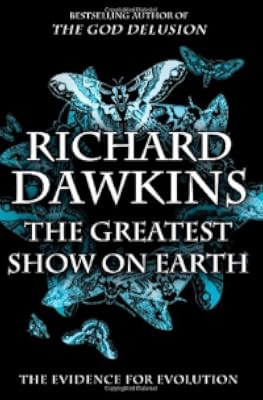
The Greatest Show on Earth: The Evidence for Evolution
by Richard Dawkins
On This Page
Description
Sifting through rich layers of scientific evidence, Dawkins' "The Greatest Show on Earth" is a stunning counterattack on advocates of "Intelligent Design," explaining the evidence for evolution while exposing the absurdities of the creationist "argument."Tags
Recommendations



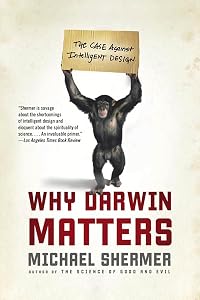

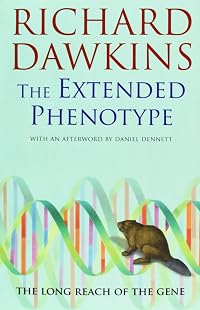
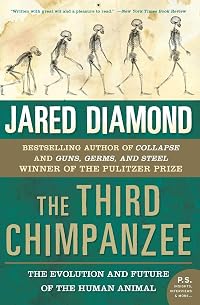


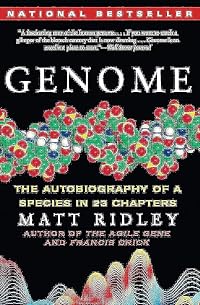
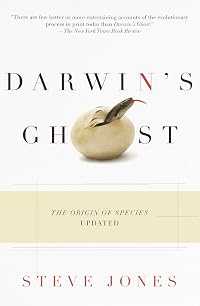
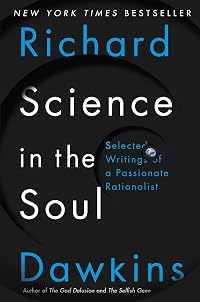


Member Recommendations


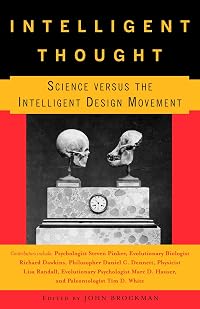
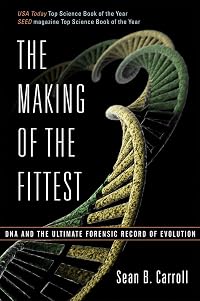
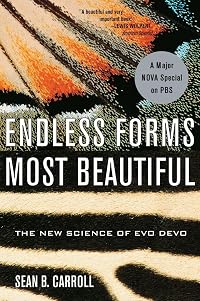
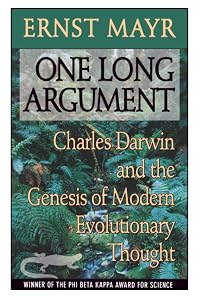
themulhern Both books present the establishing of the chronology of their subjects very well. There is a bit of overlap in the time scales, so both discuss radiocarbon dating.
Member Reviews
In this Year of Darwin, it's not surprising to see a new book from one of the leading proponents of Evolution. Dawkins has covered the topic from many angles in the past, this time, however, he's poking his fingers in the eyes of Creationists/"Intelligent Designers" (or, as he prefers to call them, "History deniers"). Dawkins begins by stating the dictionary definitions of the word "theory", a common entry point on Creationist dogma. The first definition of the term is, to paraphrase, "an explanation that describes a set of facts." This, he maintains, is what the Theory of Evolution is; a model which describes a set of facts. The "History deniers," however, insist on pointing to another definition of the term -- again to paraphrase, "a show more conjecture that describes a set of observations that have not been tested." By the end of the book, there is no doubt whatsoever that the first definition is the correct one when describing evolution.
Dawkins also purports to give readers ammunition they can use when going up against Creationist/Intelligent Designer pinheads. His examples superbly describe the evidence for evolution beyond any shadow of a doubt -- however, the examples are not of the sort that simpletons will readily understand or concede. He does debase another tiresome argument that the "fossil record is incomplete" and "riddled with missing links;" Dawkins goes on to explain how we can prove evolution without using a single fossil, and besides, we have plenty of "missing links," the deniers just keep saying that as if constant repetition will make the evidence go away. Some of the hard, indisputable evidence comes from experiments in microbiology -- which is where the ammunition gets a little sophisticated for use in your average bar fight.
The conclusion of the book in inescapable -- the Theory of Evolution is not dogma, to be taught alongside alternate opinions -- it is fact and needs to be taught as such. One of the staggering statistics he repeated often is that 44% of Americans actually believe the earth is less than 10,000 years old and that humans coexisted with dinosaurs. While there is some good stuff here to throw at them, most will just yell "la la la" when you try to make them less ignorant. show less
Dawkins also purports to give readers ammunition they can use when going up against Creationist/Intelligent Designer pinheads. His examples superbly describe the evidence for evolution beyond any shadow of a doubt -- however, the examples are not of the sort that simpletons will readily understand or concede. He does debase another tiresome argument that the "fossil record is incomplete" and "riddled with missing links;" Dawkins goes on to explain how we can prove evolution without using a single fossil, and besides, we have plenty of "missing links," the deniers just keep saying that as if constant repetition will make the evidence go away. Some of the hard, indisputable evidence comes from experiments in microbiology -- which is where the ammunition gets a little sophisticated for use in your average bar fight.
The conclusion of the book in inescapable -- the Theory of Evolution is not dogma, to be taught alongside alternate opinions -- it is fact and needs to be taught as such. One of the staggering statistics he repeated often is that 44% of Americans actually believe the earth is less than 10,000 years old and that humans coexisted with dinosaurs. While there is some good stuff here to throw at them, most will just yell "la la la" when you try to make them less ignorant. show less
This is Dawkins' latest book, a love story to evolution that clearly, painstakingly, and non-combatatively lays out the evidence for evolution. It's very well-written, and it is definitely a book meant to explain to people - reasonable people, who are open to science - why evolution is a fact. This is long-overdue, honestly, and Dawkins shows up a lot of his critics by being able to step back from the religous arguments and say (and this is a paraphrase, because I don't have the book with me, but it's close to a direct quote): "I already wrote a book about why I don't believe in god, so we're not talking about it here. Believe what you want about how the universe started, but now follow me on a journey about how life has transformed."
He show more still retains the Dawkins fire and punchiness, and makes no bones about his ... almost, I don't know, disbelief that there are so many people out there who are young-earth creationists (you and me both, Mr Dawkins!), but he has a specific purpose to this book and sticks with it. It's delightful, and well-done, and the joy of science shines through. This has surpassed The Selfish Gene as my intro-to-evolution go-to book now, which says a lot! show less
He show more still retains the Dawkins fire and punchiness, and makes no bones about his ... almost, I don't know, disbelief that there are so many people out there who are young-earth creationists (you and me both, Mr Dawkins!), but he has a specific purpose to this book and sticks with it. It's delightful, and well-done, and the joy of science shines through. This has surpassed The Selfish Gene as my intro-to-evolution go-to book now, which says a lot! show less
While I am not a scientist, I do possess scientific curiosity. All my life I've taken the theory of evolution as read, but this book reveals that while I was right to trust in its truth, I was taught incorrectly. Either that or my basic understanding became flawed. The 'hairpin species' explanation was my personal watershed. It makes so much more sense than my previous idea of evolution that I can hardly credit my "belief" in it. Contrary to popular understanding we (and every other modern life form) do not descend from a previous species in a ladder-like formation; instead we share an ancestor only. It is that ancestor that propagated not only it's immediately descended changed for, but others. The line of evolution forks at that show more species, does a U-turn as Dawkins describes and produces two new lines of change. I'd never thought of it like that and I'm so glad that I've got a fix on it now.
Ditto for the inherent flaws in current animal design as well as whole ecosystems. I'd never given any thought to the waste inherent in say the one-upmanship that goes on between predator and prey (Dawkins calls it an arms race, but I prefer my own term). If an intelligent force developed this system, it's a wreck and also cruel. Ditto for the simple idea of forests. Why do trees produce such massively tall trunks that do no good except to elevate them above other trees? The height itself, independent of its ability to furnish an advantage over other trees, does not help in energy gathering (photosynthesis) - tree trunks are not energy gatherers, but energy wasters in a pure sense. Now if an intelligent designer was at work here, why this needless waste? Trees are basically elevated meadows and are elevated because trees need to compete. If god really is benevolent, why all this clashing and striving? Why not just make all the trees the same height and be done with it? They'd be better off, growing wider and wider and gathering the same amount of sunlight as they do at their present heights, but without all that wasted effort of growing a trunk. Strange.
One thing that does bug me about Dawkins, however I admire his scientific dedication, is his lack of humility. He's convinced that his is the greatest intellect in the universe and there is nothing that he cannot understand or perceive. The idea that there might be something beyond his ability to sense or make sense of it just doesn't occur to him. It's a bit hard to stomach at times. He's a smug bastard at his core and a pedant to boot. After a while I was able to ignore his personality flaws and concentrate on the information he presents, because he does present it well.
This is my first reading of a Dawkins book because of this arrogance. I just can't stand a smug person no matter how I might agree with him, but since Douglas Adams waxes on about him so much I decided to give him a go. I may read another, but I've got to have a palate cleanser or ten in between. I may also have to listen to this one a couple more times. It's very information dense and I'm sure that many things sailed past me while I was trying to work out others. I feel sorry and ashamed that so many people do not understand science and instead cling to outmoded beliefs and argue which of their imaginary friends reigns supreme.
Lastly, I found the audio presentation by two narrators to be awkward and confusing at times. I'm not sure how they split the work precisely, it seems Lalla (what a name, what is she, 5?) read from others' works while Dawkins narrated his own commentary and contribution. I'm grateful to Simon & Schuster for choosing to include a digital booklet containing all of the printed book's illustrations. I wish more publishers would do this. show less
Ditto for the inherent flaws in current animal design as well as whole ecosystems. I'd never given any thought to the waste inherent in say the one-upmanship that goes on between predator and prey (Dawkins calls it an arms race, but I prefer my own term). If an intelligent force developed this system, it's a wreck and also cruel. Ditto for the simple idea of forests. Why do trees produce such massively tall trunks that do no good except to elevate them above other trees? The height itself, independent of its ability to furnish an advantage over other trees, does not help in energy gathering (photosynthesis) - tree trunks are not energy gatherers, but energy wasters in a pure sense. Now if an intelligent designer was at work here, why this needless waste? Trees are basically elevated meadows and are elevated because trees need to compete. If god really is benevolent, why all this clashing and striving? Why not just make all the trees the same height and be done with it? They'd be better off, growing wider and wider and gathering the same amount of sunlight as they do at their present heights, but without all that wasted effort of growing a trunk. Strange.
One thing that does bug me about Dawkins, however I admire his scientific dedication, is his lack of humility. He's convinced that his is the greatest intellect in the universe and there is nothing that he cannot understand or perceive. The idea that there might be something beyond his ability to sense or make sense of it just doesn't occur to him. It's a bit hard to stomach at times. He's a smug bastard at his core and a pedant to boot. After a while I was able to ignore his personality flaws and concentrate on the information he presents, because he does present it well.
This is my first reading of a Dawkins book because of this arrogance. I just can't stand a smug person no matter how I might agree with him, but since Douglas Adams waxes on about him so much I decided to give him a go. I may read another, but I've got to have a palate cleanser or ten in between. I may also have to listen to this one a couple more times. It's very information dense and I'm sure that many things sailed past me while I was trying to work out others. I feel sorry and ashamed that so many people do not understand science and instead cling to outmoded beliefs and argue which of their imaginary friends reigns supreme.
Lastly, I found the audio presentation by two narrators to be awkward and confusing at times. I'm not sure how they split the work precisely, it seems Lalla (what a name, what is she, 5?) read from others' works while Dawkins narrated his own commentary and contribution. I'm grateful to Simon & Schuster for choosing to include a digital booklet containing all of the printed book's illustrations. I wish more publishers would do this. show less
Estamos cercados por infindaveis formas belissimas e fascinantes, e nao e por acidente, e sim uma consequencia direta da evolucao pela selecao natural nao aleatoria unica na vida, o maior espetaculo da Terra. Nao ha interpretacoes alternativas para a existencia da vida neste planeta. Richard Dawkins decidiu escrever um livro para defender essa tese e convencer a todos sem excecao de que Darwin tem razao. Depois de oito obras que revolucionaram o pensamento evolucionario, ele traz a publico o que chama de seu elo perdido, ligando todos os seus escritos: uma sintese pessoal das evidencias cientificas de que a evolucao e, mais do que uma teoria, um fato estabelecido.
As evidencias da evolucao sao tao validas e irrefutaveis quanto, por show more exemplo, as evidencias historicas de que existiu o Imperio Romano: Tambem os seres vivos trazem a historia escrita em todo o corpo. Sao repletos de equivalentes biologicos das estradas, muralhas, monumentos, cacos de ceramica e ate inscricoes antigas romanas, tudo esculpido no dna vivo, pronto para ser decifrado por estudiosos. Para Dawkins, a visao da vida pelo prisma da evolucao guiada pela selecao natural e grandiosa, sublime, e ele nao mede esforcos para levar o leitor a compartilhar seu arrebatamento. Nem para fulminar com argumentos inatacaveis e humor sarcastico as ideias dos que tentam defender interpretacoes sucedaneas vale dizer, os criacionistas da Terra Jovem, para quem os seres vivos foram criados por volta de 10 mil anos atras, e os proponentes do design inteligente, que ate acreditam que houve evolucao, porem gracas a um empurraozinho divino.
Dawkins mostra-se, como sempre, incomparavel na arte de traduzir a ciencia para nao especialistas. Em sua prosa premiada, a embriologia, o sequenciamento do codigo genetico e o sistema de genes/proteinas que rege a vida ganham clareza e, mais do que isso, fascinio. Suas analogias e metaforas invariavelmente se tornam classicas show less
As evidencias da evolucao sao tao validas e irrefutaveis quanto, por show more exemplo, as evidencias historicas de que existiu o Imperio Romano: Tambem os seres vivos trazem a historia escrita em todo o corpo. Sao repletos de equivalentes biologicos das estradas, muralhas, monumentos, cacos de ceramica e ate inscricoes antigas romanas, tudo esculpido no dna vivo, pronto para ser decifrado por estudiosos. Para Dawkins, a visao da vida pelo prisma da evolucao guiada pela selecao natural e grandiosa, sublime, e ele nao mede esforcos para levar o leitor a compartilhar seu arrebatamento. Nem para fulminar com argumentos inatacaveis e humor sarcastico as ideias dos que tentam defender interpretacoes sucedaneas vale dizer, os criacionistas da Terra Jovem, para quem os seres vivos foram criados por volta de 10 mil anos atras, e os proponentes do design inteligente, que ate acreditam que houve evolucao, porem gracas a um empurraozinho divino.
Dawkins mostra-se, como sempre, incomparavel na arte de traduzir a ciencia para nao especialistas. Em sua prosa premiada, a embriologia, o sequenciamento do codigo genetico e o sistema de genes/proteinas que rege a vida ganham clareza e, mais do que isso, fascinio. Suas analogias e metaforas invariavelmente se tornam classicas show less
Richard Dawkins is obviously a rational, concerned, and passionate man. He sees the great diversity of life as The Greatest Show on Earth, and he is upset that so many people (about 40% in the U.S. and 20% in Britain) are willfully blind to the process that brought it about. I can understand his dismay. It's a bit like bringing some friends to the most wonderful movie you ever saw, and they close their eyes so they can't see it and plug their ears so they won't hear the score. You implore them to look, plead for them to listen, but they simply refuse. How frustrating that would be. Now imagine it's not a movie you want them to see, but something far more important, something real—a fact of life—THE fact of life.
This book is Dawkins' show more attempt to explain the process of evolution by natural selection to those who apparently do not understand it, especially to those who willfully refuse to understand it. He provides examples, analogies, and summarizes the overwhelming amount of supporting evidence. There are even color pictures. He undoubtedly thinks this will help. He is a rational person, after all.
The Greatest Show on Earth is an excellent summation of what we know about the evolution of life. If the book has a shortcoming, it's that it can't do what he wants it to do. I doubt logic and evidence are capable of swaying the opinions of young Earth creationists. They hold their views based on faith, not on reason, and evidence is entirely beside the point. Creationism isn't amenable to scientific evaluation since it is not a scientific theory, and I found his occasional digressions into refutations of it little more than a distraction from the science he was otherwise explaining so well. Still, I would recommend this book to anyone interested in the subject of evolution. I can't see it as being much help to those who aren't interested in it, though.
Dawkins is clearly dismayed that so many people are either ignorant of evolution or refuse to acknowledge that it occurs because of theological presumptions. In fact, he seems almost obsessed with it, but he may be upsetting himself unduly. Yes, opinion polls conducted over the last twenty years or so suggest that about 40% of Americans might be under the impression that life on Earth appeared suddenly in all its current and varied forms less than 10,000 years ago, but so what? Even if everyone believed the whole world popped into existence last Thursday (complete with a full set of false memories and a bunch of annoyingly deceptive fossils) it wouldn't affect reality. Life has evolved and will continue to evolve much as it has done for the last several billion years, whether anyone wants to believe it or not.
We could hope it was otherwise, but cultures change slowly. I'm sure that if a similar poll were conducted a hundred years ago the results would have been far worse. Progress has been made. It just seems stalled among some populations. How long did it take until most people accepted that the Earth orbited the Sun or that continents rode on tectonic plates and shifted position over time? I'm sure there are still people (even a few from industrialized nations) who believe the world is flat. Scientific understanding has never been universal and, for the most part, this hasn't mattered. People can live productive and happy lives without knowing why things are the way they are. A farmer doesn't need to know that axial tilt causes seasons in order for him to grow vegetables. An understanding of how gravity creates tides is not necessary for a fisherman to bring his boat back to the dock. If you think Poseidon causes tides and that seasons shift from spring through winter by divine decree, it doesn't stop them from happening. What does matter is that those who work in scientific fields understand what is actually happening, and this is almost universally the case.
I'm sure Dawkins would agree with this, but I'm also sure he would point out that, in a democracy, scientifically ignorant people can and sometimes do elect scientifically ignorant representatives. Laws and regulations these politicians enact can have negative consequences if they base them on poor or erroneous understandings of the issues at hand. I confess that this also concerns me.
From a political standpoint, Dawkins' concern about people who refuse to accept the simple fact that life evolves has merit, but it points to a more general failure of our culture and of our politicians to adapt to our rapidly expanding knowledge of the universe. A general understanding of science and scientific principles is far more important now than it was a mere century ago because of how much we depend on science and technology in our daily lives. Unfortunately, basic scientific literacy lags far behind what it should be. Without it, we only have unquestioned assumptions, uninformed opinions, and gut feelings to help us make decisions, and these seldom provide a good basis for wise choices.
I'm American, so I would like America to continue to be a leading force in science and technology. A scientifically literate population seems to me to be a necessary precursor of that. But America isn't the world. There are other nations, and some of them seemingly do a far better job of providing a basic scientific understanding to their general populations. This is likely to yield more scientists and engineers, better political decisions, and a greater likelihood of continued technological advancement and economic prosperity. I don't want to sound like a cultural Darwinist, but nations that can adapt their cultures to our growing understanding of the world will prosper. Those that do not won't. If American doesn't lead, some other nation undoubtedly will.
So, whereas opinion polls may be a cause for concern, they don't imply an end to human advancement, and they certainly don't affect how nature actually works. The only real question is how well people and the societies they live in will deal with scientific discoveries that challenge previously held beliefs. Those better able to adapt their worldviews to accommodate new knowledge will have an advantage over those that do not. It's not exactly the same, but this is something like how evolution works. show less
This book is Dawkins' show more attempt to explain the process of evolution by natural selection to those who apparently do not understand it, especially to those who willfully refuse to understand it. He provides examples, analogies, and summarizes the overwhelming amount of supporting evidence. There are even color pictures. He undoubtedly thinks this will help. He is a rational person, after all.
The Greatest Show on Earth is an excellent summation of what we know about the evolution of life. If the book has a shortcoming, it's that it can't do what he wants it to do. I doubt logic and evidence are capable of swaying the opinions of young Earth creationists. They hold their views based on faith, not on reason, and evidence is entirely beside the point. Creationism isn't amenable to scientific evaluation since it is not a scientific theory, and I found his occasional digressions into refutations of it little more than a distraction from the science he was otherwise explaining so well. Still, I would recommend this book to anyone interested in the subject of evolution. I can't see it as being much help to those who aren't interested in it, though.
Dawkins is clearly dismayed that so many people are either ignorant of evolution or refuse to acknowledge that it occurs because of theological presumptions. In fact, he seems almost obsessed with it, but he may be upsetting himself unduly. Yes, opinion polls conducted over the last twenty years or so suggest that about 40% of Americans might be under the impression that life on Earth appeared suddenly in all its current and varied forms less than 10,000 years ago, but so what? Even if everyone believed the whole world popped into existence last Thursday (complete with a full set of false memories and a bunch of annoyingly deceptive fossils) it wouldn't affect reality. Life has evolved and will continue to evolve much as it has done for the last several billion years, whether anyone wants to believe it or not.
We could hope it was otherwise, but cultures change slowly. I'm sure that if a similar poll were conducted a hundred years ago the results would have been far worse. Progress has been made. It just seems stalled among some populations. How long did it take until most people accepted that the Earth orbited the Sun or that continents rode on tectonic plates and shifted position over time? I'm sure there are still people (even a few from industrialized nations) who believe the world is flat. Scientific understanding has never been universal and, for the most part, this hasn't mattered. People can live productive and happy lives without knowing why things are the way they are. A farmer doesn't need to know that axial tilt causes seasons in order for him to grow vegetables. An understanding of how gravity creates tides is not necessary for a fisherman to bring his boat back to the dock. If you think Poseidon causes tides and that seasons shift from spring through winter by divine decree, it doesn't stop them from happening. What does matter is that those who work in scientific fields understand what is actually happening, and this is almost universally the case.
I'm sure Dawkins would agree with this, but I'm also sure he would point out that, in a democracy, scientifically ignorant people can and sometimes do elect scientifically ignorant representatives. Laws and regulations these politicians enact can have negative consequences if they base them on poor or erroneous understandings of the issues at hand. I confess that this also concerns me.
From a political standpoint, Dawkins' concern about people who refuse to accept the simple fact that life evolves has merit, but it points to a more general failure of our culture and of our politicians to adapt to our rapidly expanding knowledge of the universe. A general understanding of science and scientific principles is far more important now than it was a mere century ago because of how much we depend on science and technology in our daily lives. Unfortunately, basic scientific literacy lags far behind what it should be. Without it, we only have unquestioned assumptions, uninformed opinions, and gut feelings to help us make decisions, and these seldom provide a good basis for wise choices.
I'm American, so I would like America to continue to be a leading force in science and technology. A scientifically literate population seems to me to be a necessary precursor of that. But America isn't the world. There are other nations, and some of them seemingly do a far better job of providing a basic scientific understanding to their general populations. This is likely to yield more scientists and engineers, better political decisions, and a greater likelihood of continued technological advancement and economic prosperity. I don't want to sound like a cultural Darwinist, but nations that can adapt their cultures to our growing understanding of the world will prosper. Those that do not won't. If American doesn't lead, some other nation undoubtedly will.
So, whereas opinion polls may be a cause for concern, they don't imply an end to human advancement, and they certainly don't affect how nature actually works. The only real question is how well people and the societies they live in will deal with scientific discoveries that challenge previously held beliefs. Those better able to adapt their worldviews to accommodate new knowledge will have an advantage over those that do not. It's not exactly the same, but this is something like how evolution works. show less
This was well written, with sound arguments and proofs presented. However, the narrative flops between pandering to those already in the know, and towards those that are happy to remain in the dark. If this subject matter appeals to you, you will enjoy this book. If the subject doesn’t appeal to you, you likely won’t read it at all. If you’re a theist who is open to being reasoned out of your faith, this should help you along your way.
This is a great book, for those like me, who have a solid though by no means professional science background and have a desire to learn more about evolution. I doubt that it will even dent the skull of a hardened creationist or intelligent designer but then I doubt that Dawkins thinks that it will either since such readers come with ideological armor in place. (Please don't even think about making noises regarding the 'ideology of science'. For me neither has an epistemological grounding that the other lacks. It is rather a question of who is crashing who's party without regard for or bothering to learn or understand the rules.)
Dawkins is good at explaining detailed processes, conveying the meat without losing one in the myriad details show more which might overwhelm the non-professional. One grasps easily what is at issue (i.e., needs explanation) and what Dawkins' and other evolutionists' take is on that issue. Better yet, the book contains an endless number of fascinating points when one stops and thinks, "I get that now" or "Isn't that amazing" or "Now why did I think that!"
A few of these moments are revelatory ones. For example, there is a section near the end of the book when Dawkins discusses the mechanisms of memory for survival techniques, a fascinating section on what he calls the 'four memories': the gene pool, the immune system, the nervous system, and culture. This is so simple yet compelling in its explanatory power. Obviously, the gene pool that survives is all about the 'memory' of what has worked over eons. Immune system and neurological memory pertain more to survival of individuals. But in my reading of this, culture/cultural memory is a repository of memory that has implications for survival it would seem of both individuals and species. Every individual is affected by cultural memories to the extent they are exposed to them (loosely via education and experience) and every individual makes some greater or lesser contribution to culture. To learn one's own culture and what one's culture knows about past cultures is to learn about surviving and thriving or not in different circumstances and environments than one's own. This is valuable information about prior versions of one's own 'form of life' in different circumstances. To forget this or never learn it is to make oneself vulnerable to lose in the same sense one is vulnerable when one forgets, in a game of cards, what cards have already been tossed onto the discard pile.
I stray here. But this book, like all good books, provides many opportunities to stray. show less
Dawkins is good at explaining detailed processes, conveying the meat without losing one in the myriad details show more which might overwhelm the non-professional. One grasps easily what is at issue (i.e., needs explanation) and what Dawkins' and other evolutionists' take is on that issue. Better yet, the book contains an endless number of fascinating points when one stops and thinks, "I get that now" or "Isn't that amazing" or "Now why did I think that!"
A few of these moments are revelatory ones. For example, there is a section near the end of the book when Dawkins discusses the mechanisms of memory for survival techniques, a fascinating section on what he calls the 'four memories': the gene pool, the immune system, the nervous system, and culture. This is so simple yet compelling in its explanatory power. Obviously, the gene pool that survives is all about the 'memory' of what has worked over eons. Immune system and neurological memory pertain more to survival of individuals. But in my reading of this, culture/cultural memory is a repository of memory that has implications for survival it would seem of both individuals and species. Every individual is affected by cultural memories to the extent they are exposed to them (loosely via education and experience) and every individual makes some greater or lesser contribution to culture. To learn one's own culture and what one's culture knows about past cultures is to learn about surviving and thriving or not in different circumstances and environments than one's own. This is valuable information about prior versions of one's own 'form of life' in different circumstances. To forget this or never learn it is to make oneself vulnerable to lose in the same sense one is vulnerable when one forgets, in a game of cards, what cards have already been tossed onto the discard pile.
I stray here. But this book, like all good books, provides many opportunities to stray. show less
Members
- Recently Added By
Published Reviews
ThingScore 83
This brings me to the intellectual flaw, or maybe it’s a fault just of tone, in Dawkins’s otherwise eloquent paean to evolution: he has let himself slip into being as dogmatic as his opponents. He has become the Savonarola of science, condemning the doubters of evolution as “history-deniers” who are “worse than ignorant” and “deluded to the point of perversity.” This is not show more the language of science, or civility. Creationists insist evolution is only a theory, Dawkins that it’s only a fact. Neither claim is correct. show less
added by Shortride
The Greatest Show on Earth is Dawkins on top form: unambiguous, beautifully argued, with prose flowing like quicksilver.
added by jlelliott
Though he looses a shock-and-awe flurry of evidentiary darts (natural selection, fossil records, molecular biology, and much more), he also mutes some of the shriller tendencies that have unhinged—or at least made hectoring and unlovely—his previous works. The result is a sweeping, wryly joyous case for rationality, empiricism, and no God on this green Earth.
added by Shortride
Lists

Libros para periodistas de ciencia
25 works; 1 member

Top Five Books of 2012
55 works; 11 members

Atheism, humanism, freethought, &c. — Best nonfiction books in favour of
167 works; 14 members

The r/AskScience Reading List
159 works; 3 members

Really awesome
10 works; 1 member

Books Do Furnish a Life
43 works; 1 member
Author Information

75+ Works 63,964 Members
Richard Dawkins was educated at Oxford University and taught zoology at the University of California and Oxford University, holding the position of the Charles Simonyi Professor of the Public Understanding of Science. He writes about such topics as DNA and genetic engineering, virtual reality, astronomy, and evolution. His books include The show more Selfish Gene, The Extended Phenotype, The Blind Watchmaker, River Out of Eden, Climbing Mount Improbable, The God Delusion, and An Appetite for Wonder: The Making of a Scientist. (Bowker Author Biography) show less
Awards and Honors
Common Knowledge
- Canonical title*
- Die Schöpfungslüge. Warum Darwin Recht hatte
- Original title
- The Greatest Show on Earth: The Evidence for Evolution
- Alternate titles
- Greatest Show on Earth
- Original publication date
- 2009-09
- People/Characters
- Douglas Noël Adams; Per Ahlberg; Will Atkinson; Dimitri Belyaev; Henri Bergson; Zachary Blount (show all 36); Edward Blyth; Niels Bohr; Ludwig Boltzmann; Sydney Brenner; William Buckland; George W. Bush; Graham Cairns-Smith; Ellen Censky; Jenny Clack; Michael Coates; Raymond Coppinger; Hugh Cott; Jerry Coyne; Francis Crick; J. D. Currey; Edward Daeschler; Clare D'Alberto; Raymond Dart; Charles Darwin [Charles Robert: 1809-1882]; Erasmus Darwin; Erasmus Alvey Darwin; Francis Darwin; George Darwin; Paul Davies; Charles Dawson; Derek Denton; Michael Denton; Iain Douglas-Hamilton; Eugène Dubois; Arthur Eddington
- Dedication
- for Josh Timonen
- First words
- Preface
The evidence for evolution grows by the day, and has never been stronger. At the same time, paradoxically, ill-informed opposition is also stronger than I can remember. This book is my personal summary of the evide... (show all)nce that the 'theory' of evolution is actually a fact—as incontrovertible a fact as any in science.
Imagine that you are a teacher of Roman history and the Latin language, anxious to impart your enthusiasm for the ancient world—for the elegiacs of Ovid and the odes of Horace, the sinewy economy of Latin grammar as exhibit... (show all)ed in the oratory of Cicero, the strategic niceties of the Punic Wars, the generalship of Julius Caesar and the voluptuous excesses of the later emperors. - Last words
- (Click to show. Warning: May contain spoilers.)We are surrounded by endless forms, most beautiful and most wonderful, and it is no accident, but the direct consequence of evolution by non-random natural selection—the only game in town, the greatest show on Earth.
- Blurbers
- Ridley, Matt; Ramachandran, V. S.; Shubin, Neil; Coyne, Jerry; Harries, Lord, of Pentregarth; Roberts, Alice
- Original language
- English
*Some information comes from Common Knowledge in other languages. Click "Edit" for more information.
Classifications
Statistics
- Members
- 5,126
- Popularity
- 2,685
- Reviews
- 88
- Rating
- (4.15)
- Languages
- 18 — Czech, Danish, Dutch, English, Finnish, French, German, Greek, Hungarian, Italian, Malayalam, Polish, Russian, Serbian, Spanish, Swedish, Turkish, Portuguese (Portugal)
- Media
- Paper, Audiobook, Ebook
- ISBNs
- 48
- UPCs
- 1
- ASINs
- 30