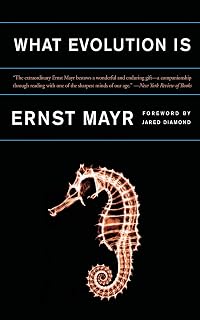
What Evolution Is
by Ernst Mayr
On This Page
Description
A pillar of evolutionary biology, Mayr (comparative zoology, Harvard U.) writes for three types of readers: anyone, biologist or not, who wants to know more about evolution; those who accept evolution but doubt the Darwinian explanation of it; and creationists who want to learn more about it even if only to challenge it better.Tags
Recommendations
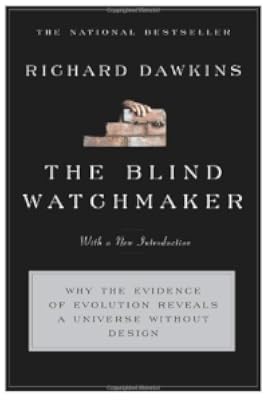




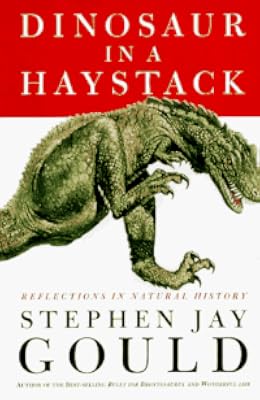
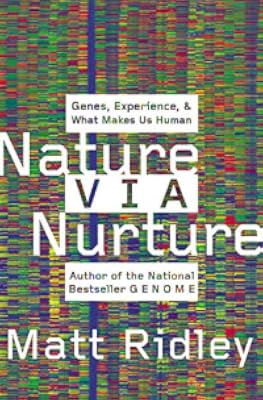
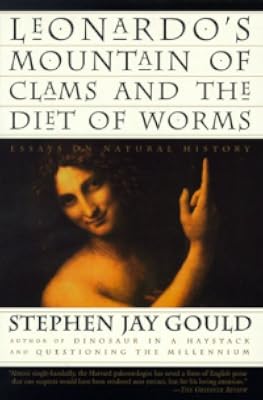
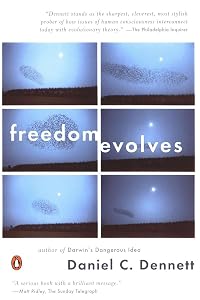


Member Recommendations
Member Reviews
Ernst Mayr was one of the leading evolutionary biologists of the last century. He lived to be a hundred years old and was well into his nineties when he wrote this book, showing that his brain was as sharp as ever.
It is a wide-ranging book which succinctly covers all the key issues relating to evolution, but I would particularly like to draw attention to two aspects of Mayr's approach.
Firstly, he shows that Darwinian evolutionary theory actually consists of several distinct strands. For example, after the publication of Darwin's "On the Origin of Species", the idea of the common descent of all living creatures ("the tree of life") became widely accepted relatively quickly, whereas the mechanism of evolutionary change - natural selection show more - took much longer to gain widespread support, even amongst scientists.
Similarly, Mayr shows that evolution over time within one species and the branching off of a new species from an existing one (speciation) are two distinct but related processes. (Mayr himself played a central role in developing a fuller understanding of the speciation process.)
The second important aspect of Mayr's approach is his criticism of the fact that "most treatments of evolution are written in a reductionist manner in which all evolutionary phenomena are reduced to the level of the gene". This is directed against those like Richard Dawkins who see the gene as being the target of natural selection. Mayr shows that natural selection cannot "see" individual genes and that it is the organism as a whole which is the target of selection. It is the organism that lives or dies and succeeds or fails in reproducing, not the individual gene.
This last point has been reinforced by the fact that we now know that one gene can affect several different parts of an organism or its behaviour, and that several genes often interact with each other to produce one characteristic.
I strongly recommend this book. But I must point out that, although it is largely very clearly written, a few parts are quite difficult, especially for anyone who is new to evolutionary theory. For that reason I would recommend Jerry Coyne's book, "Why Evolution Is True", as a companion volume for newcomers. show less
It is a wide-ranging book which succinctly covers all the key issues relating to evolution, but I would particularly like to draw attention to two aspects of Mayr's approach.
Firstly, he shows that Darwinian evolutionary theory actually consists of several distinct strands. For example, after the publication of Darwin's "On the Origin of Species", the idea of the common descent of all living creatures ("the tree of life") became widely accepted relatively quickly, whereas the mechanism of evolutionary change - natural selection show more - took much longer to gain widespread support, even amongst scientists.
Similarly, Mayr shows that evolution over time within one species and the branching off of a new species from an existing one (speciation) are two distinct but related processes. (Mayr himself played a central role in developing a fuller understanding of the speciation process.)
The second important aspect of Mayr's approach is his criticism of the fact that "most treatments of evolution are written in a reductionist manner in which all evolutionary phenomena are reduced to the level of the gene". This is directed against those like Richard Dawkins who see the gene as being the target of natural selection. Mayr shows that natural selection cannot "see" individual genes and that it is the organism as a whole which is the target of selection. It is the organism that lives or dies and succeeds or fails in reproducing, not the individual gene.
This last point has been reinforced by the fact that we now know that one gene can affect several different parts of an organism or its behaviour, and that several genes often interact with each other to produce one characteristic.
I strongly recommend this book. But I must point out that, although it is largely very clearly written, a few parts are quite difficult, especially for anyone who is new to evolutionary theory. For that reason I would recommend Jerry Coyne's book, "Why Evolution Is True", as a companion volume for newcomers. show less
Perfect. Here at last is a great book explaining the essential facts about evolutionary biology to everyone -novices and afficionados alike. There's a lot of introductory books on the topic, but this one stands out for at least two reasons.
First, Ernst Mayr is not taking side when dealing with arguable issues. Well, he certainly has his convictions (pro-gradualism, anti-selfish gene hypothesis...) but, he is very honest and fairplay with views opoosite to his own. We can't say the same about every author...
Then, and above all, he's not assuming his readers are a bunch of fools unable to grasp such difficult topics if they are not trained and qualified for it. He defines every key concepts, even the toughest ones in a enlightening prose, show more supported by enough examples to make the whole understandable even by laymen (like me!). There's a lot to learn, that's what we are here for.
Besides, the plan is well structured and organised: proofs that evolution is a fact, how it works and accounts for biodiversity and, finally, a closing chapter about human evolution. A straighforward appendix draws back on the main points by completing them. There's even a glossary to make the whole easier to go through.
A MUST read. show less
First, Ernst Mayr is not taking side when dealing with arguable issues. Well, he certainly has his convictions (pro-gradualism, anti-selfish gene hypothesis...) but, he is very honest and fairplay with views opoosite to his own. We can't say the same about every author...
Then, and above all, he's not assuming his readers are a bunch of fools unable to grasp such difficult topics if they are not trained and qualified for it. He defines every key concepts, even the toughest ones in a enlightening prose, show more supported by enough examples to make the whole understandable even by laymen (like me!). There's a lot to learn, that's what we are here for.
Besides, the plan is well structured and organised: proofs that evolution is a fact, how it works and accounts for biodiversity and, finally, a closing chapter about human evolution. A straighforward appendix draws back on the main points by completing them. There's even a glossary to make the whole easier to go through.
A MUST read. show less
A really through introduction to evolution. Not too technical, and easy to understand. My only criticism is he occasionally leaves some terms undefined. I think he wrote this when he was in his 90s' so we can cut him some slack. Highly recommended
This is a great starting point on understanding evolution. He is quite conservative, but lays a great foundation.
Ratings
Members
- Recently Added By
Author Information

73+ Works 2,534 Members
Ernst Mayr is Professor Emeritus in the Museum of Comparative Zoology at Harvard University
All Editions
Series
Belongs to Publisher Series
Common Knowledge
- Canonical title
- What Evolution Is
- Original title
- What Evolution is
- Original publication date
- 2001
- People/Characters*
- Darwin, Charles
- Important events*
- Veröffentlichung "Die Entstehung der Arten", 1859
- First words*
- Die Evolutionstheorie ist das tiefgreifendste, machtvollste Gedankengebäude, das in den letzten 200 Jahren erdacht wurde.
- Original language*
- Englisch
*Some information comes from Common Knowledge in other languages. Click "Edit" for more information.
Classifications
Statistics
- Members
- 795
- Popularity
- 34,914
- Reviews
- 5
- Rating
- (3.92)
- Languages
- 7 — Chinese, Czech, English, Finnish, German, Portuguese, Romanian
- Media
- Paper, Audiobook, Ebook
- ISBNs
- 15
- ASINs
- 4