Evolution: What the Fossils Say and Why It Matters
by Donald R. Prothero
On This Page
Description
Donald R. Prothero's Evolution is an entertaining and rigorous history of the transitional forms and series found in the the fossil record. Its engaging narrative of scientific discovery and well-grounded analysis has led to the book's widespread adoption in courses that teach the nature and value of fossil evidence. Evolution tackles flood geology, rock dating, neo-Darwinism, and macroevolution. It includes extensive coverage of the primordial soup, invertebrate transitions, the development show more of the backbone, the reign of the dinosaurs, and the transformation from chimpanzee to human. The book details the many "missing links," including some of the most recent discoveries, that flesh out the fossil timeline and the evolutionary process.In this second edition, Prothero describes new transitional fossils from various periods, vividly depicting such bizarre creatures as the Odontochelys, or the "turtle on the half shell," fossil snakes with legs, and the "Frogamander," a new example of amphibian transition. Prothero's discussion of intelligent-design arguments includes more historical examples and careful examination of the "experiments" and observations that are exploited by creationists seeking to undermine sound science education. With new perspectives, Prothero reframes creationism more as a case study in denialism and pseudoscience than as a field with its own intellectual dynamism. The first edition was hailed as the best book on the fossil evidence for evolution, and this second edition will be welcome in the libraries of scholars, teachers, and general readers who stand up for sound science. show lessTags
Recommendations


















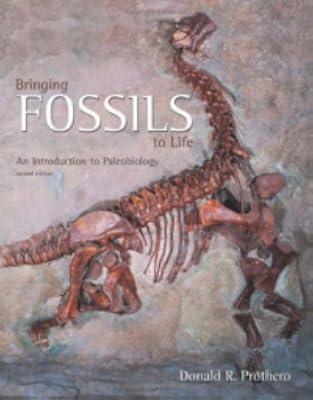

Member Recommendations
Member Reviews
A very rare occurrence, five out of five stars.
First of all I like all the small unimportant things about it. It's a hardback, and a good quality one, with heavy paper and a lovely cover, and colour plates, and nice margins for scribbling notes, and a thorough index and bibliography (breathe). Best of all of these things it has a comprehensive further reading list at the end of every chapter. Joy.
Second and, of course, far more important than all that stuff, this guy knows his stuff, isn't afraid of saying when he doesn't know stuff, or isn't sure about stuff, and he has actually done the science stuff (ok well not all of it).
Comprehensive coverage of the politics and religion behind the creationist agenda methods and arguments and a show more comprehensive take down of why they are wrong. An understanding of what science is and how it works shows us that creationists are 'not even wrong' in the sense that they aren't even doing science. A brief history of the brief history of creationism (it is very modern). A tour of fossilisation, dating, 'flood geology', the grand canyon and quote mining followed by a potted history of the evolution of evolution and a list of the main kinds of evidence supporting evolution as a fact of history (aside from fossils) and a quick summary of the current understanding out how it works..
But this is just a warm up for Prothero, next he brings out the oft neglected big guns and gives us a comprehensive overview of some of the main lines of fossil evidence supporting the modern synthesis. Diagrams, photos, anecdotes and of course plenty of places to go next if you want to dig deeper.
I'm doing a couple of talks to BHA folks later in the year on creationism in the UK and I have found a few gems to work into my talk somewhere.
Wit and wisdom, hard facts and open acknowledgement of what we don't know makes him my kind of author.
Buy it. show less
First of all I like all the small unimportant things about it. It's a hardback, and a good quality one, with heavy paper and a lovely cover, and colour plates, and nice margins for scribbling notes, and a thorough index and bibliography (breathe). Best of all of these things it has a comprehensive further reading list at the end of every chapter. Joy.
Second and, of course, far more important than all that stuff, this guy knows his stuff, isn't afraid of saying when he doesn't know stuff, or isn't sure about stuff, and he has actually done the science stuff (ok well not all of it).
Comprehensive coverage of the politics and religion behind the creationist agenda methods and arguments and a show more comprehensive take down of why they are wrong. An understanding of what science is and how it works shows us that creationists are 'not even wrong' in the sense that they aren't even doing science. A brief history of the brief history of creationism (it is very modern). A tour of fossilisation, dating, 'flood geology', the grand canyon and quote mining followed by a potted history of the evolution of evolution and a list of the main kinds of evidence supporting evolution as a fact of history (aside from fossils) and a quick summary of the current understanding out how it works..
But this is just a warm up for Prothero, next he brings out the oft neglected big guns and gives us a comprehensive overview of some of the main lines of fossil evidence supporting the modern synthesis. Diagrams, photos, anecdotes and of course plenty of places to go next if you want to dig deeper.
I'm doing a couple of talks to BHA folks later in the year on creationism in the UK and I have found a few gems to work into my talk somewhere.
Wit and wisdom, hard facts and open acknowledgement of what we don't know makes him my kind of author.
Buy it. show less
Evolution, by vertebrate paleontologist Donald Prothero, is a mix of fairly technical overview of vertebrate evolution with polemics against creationism and intelligent design. Prothero has made something of a secondary career out of debating creationists – he learned Greek and Hebrew so he could read the Bible in the original – and is known for upstaging his opponents (he has an ongoing battle with Duane Gish) by going to their lectures, noting the slides and powerpoints they use, then setting up specific refutations in advance (Gish apparently facilitates this by seldom changing his presentation). He’s also very accomplished paleontologists, spending years in the Bighorn Basin and the storage cabinets of the American Museum of show more Natural History to elucidate the taxonomy of ungulate groups.
The problem I see is Prothero never really picks out a target audience. Prothero’s background at the AMNH is obvious; the museum was the forefront of cladistic taxonomy in North America. Unfortunately it also acquired an “attitude” famous in the community; any taxonomist who didn’t fully accept cladistics was treated with thinly disguised contempt. A little of that carries over into this book; for a work presumably aimed at an intelligent lay audience, Prothero doesn’t really do a good job of explaining how cladistics works. There are a couple of paragraphs on shared derived characteristics but more examples would be beneficial.
A secondary consideration is Prothero is sometimes just plain wrong (well, not up to date at least). For example his chart of animal evolution makes the myriapods the sister group of insects, while the most recent molecular data puts the crustaceans in that position. Prothero notes several times how cladistics reordered traditional phyletic taxonomy, but comes across as if he’s saying “We used to wrong but now we fixed it” rather than “science is continuously updating and refining – and much of what we think we know now will probably be refuted in the future”. Ironically Prothero points out the creationists are in the habit of describing the changes in science as a weakness rather than as strength – I had an online discussion with a YEC who kept naïvely citing examples of scientists not being able to assign an animal to a taxonomic group without realizing that was evidence for evolutionary theory, not against it.
Prothero also lets his impatience with creationists and IDers show a little too much, almost to the point of coming across as petulant rather than professional. His final chapter sees creationism as a major threat to the welfare of America, attributing the decline of American science pre-eminence to it (and with a sideways polemic against the Bush Administration and “the flunkies of the oil industry in Congress” for “foot-dragging” on climate change). There’s one final disquieting note; in his chapter on ungulate evolution – his main area of expertise – he refers readers to his book Horns, Tusks and Flippers: The Evolution of Hoofed Animals – coauthored with Robert M. Schoch. Yes, that Robert M. Schoch, the same guy who believes the Great Sphinx was built by a lost civilization. Well, Schoch is a vertebrate paleontologist, and a respected one, but if you’re going to rail against anti-science creationists who have no expertise in paleontologist you might want to be a little bit careful about getting into bed with somebody like Schoch.
Worth reading if you want an introduction to mammalian paleontology, especially ungulate paleontology. Less useful if you want to debate creationists, although the chapter on the history of Biblical fundamentalism is interesting (I didn’t know that the original fundamentalists were concerned with “higher criticism”, not with evolutionary theory). Extensive bibliography with a mix of paleontological, creationist, and creationist debunking books. Well illustrated. show less
The problem I see is Prothero never really picks out a target audience. Prothero’s background at the AMNH is obvious; the museum was the forefront of cladistic taxonomy in North America. Unfortunately it also acquired an “attitude” famous in the community; any taxonomist who didn’t fully accept cladistics was treated with thinly disguised contempt. A little of that carries over into this book; for a work presumably aimed at an intelligent lay audience, Prothero doesn’t really do a good job of explaining how cladistics works. There are a couple of paragraphs on shared derived characteristics but more examples would be beneficial.
A secondary consideration is Prothero is sometimes just plain wrong (well, not up to date at least). For example his chart of animal evolution makes the myriapods the sister group of insects, while the most recent molecular data puts the crustaceans in that position. Prothero notes several times how cladistics reordered traditional phyletic taxonomy, but comes across as if he’s saying “We used to wrong but now we fixed it” rather than “science is continuously updating and refining – and much of what we think we know now will probably be refuted in the future”. Ironically Prothero points out the creationists are in the habit of describing the changes in science as a weakness rather than as strength – I had an online discussion with a YEC who kept naïvely citing examples of scientists not being able to assign an animal to a taxonomic group without realizing that was evidence for evolutionary theory, not against it.
Prothero also lets his impatience with creationists and IDers show a little too much, almost to the point of coming across as petulant rather than professional. His final chapter sees creationism as a major threat to the welfare of America, attributing the decline of American science pre-eminence to it (and with a sideways polemic against the Bush Administration and “the flunkies of the oil industry in Congress” for “foot-dragging” on climate change). There’s one final disquieting note; in his chapter on ungulate evolution – his main area of expertise – he refers readers to his book Horns, Tusks and Flippers: The Evolution of Hoofed Animals – coauthored with Robert M. Schoch. Yes, that Robert M. Schoch, the same guy who believes the Great Sphinx was built by a lost civilization. Well, Schoch is a vertebrate paleontologist, and a respected one, but if you’re going to rail against anti-science creationists who have no expertise in paleontologist you might want to be a little bit careful about getting into bed with somebody like Schoch.
Worth reading if you want an introduction to mammalian paleontology, especially ungulate paleontology. Less useful if you want to debate creationists, although the chapter on the history of Biblical fundamentalism is interesting (I didn’t know that the original fundamentalists were concerned with “higher criticism”, not with evolutionary theory). Extensive bibliography with a mix of paleontological, creationist, and creationist debunking books. Well illustrated. show less
A detailed look at the fossil record, in an attempt to answer the challenge that there are no transitional fossils, or that the fossils show a pattern other than evolution. The author avoids most of the dense jargon that could make such a book inaccessible to the lay audience it is aimed at; he explains the concepts well, and includes a great many drawings, as well as black-and-white and color photos. The focus is on the Animal kingdom; the transitional fossils in plants and other groups are not included. The book loses half a star for the assumptions it makes on religion; assuming that the creationists are "Christians" and not Christians because their theology differs from what you learned in Sunday School as a child is not legitimate; show more the sneer quotes suggest that the author is competent to determine what proper Christian belief is. To dismiss the creationists as though they are wrong about their Christian belief is to ignore the reality that Christianity is a multi-faceted belief system, and there appears to be no one right way of being a Christian. Other than that, a good outing. show less
I've somewhere between 60-100 books covering the subjects of Evolution and Paleontology, and this is the most comprehensive of the bunch. It veers a little into the technical in the middle sections for a casual read, but is always clear and understandable. This is a great book!
Prothero also takes a lot of time to explain, with devastating detail, the fact that evolution occurred, in stark contrast to the fairytale claims of creationists. How in the world anyone could read this book, with its wealth of supporting literature, photographic and analytical evidence, and come away with a creationist viewpoint is beyond me. It happened, folks. Get used to it. :)
Evolution? The fossils say YES!
Prothero also takes a lot of time to explain, with devastating detail, the fact that evolution occurred, in stark contrast to the fairytale claims of creationists. How in the world anyone could read this book, with its wealth of supporting literature, photographic and analytical evidence, and come away with a creationist viewpoint is beyond me. It happened, folks. Get used to it. :)
Evolution? The fossils say YES!
Great overview of some of the major transitional stages of evolution with some wonderful illustrations.
It is the most complete book I've seen on this topic. You get a hardcover fully illustrated book that likes to be shown on your coffee table for a very reasonable price. Also looks very good on your LibraryThing list.
Ratings
Members
- Recently Added By
Author Information

38+ Works 1,562 Members
Donald R. Prothero specializes in physics, planetary sciences, astronomy, earth sciences, and vertebrate paleontology. He taught for 35 years at the college level at Columbia, Knox, Pierce, and Vassar Colleges, most recently as professor of geology at Occidental College, and lecturer in geobiology at the California Institute of Technology. He has show more authored or edited more than 30 books and 300 scientific papers. show less
All Editions
Awards and Honors
Awards
Common Knowledge
- Canonical title
- Evolution: What the Fossils Say and Why It Matters
- Original title
- Evolution: What the Fossils Say and Why It Matters
- Original publication date
- 2007-11-06
- Epigraph
- Sit down before a fact as a little child, be prepared to give up every preconceived notion, follow humbly wherever and to whatever abysses nature leads, or you shall learn nothing.
—Thomas Henry Huxley
The Bible t... (show all)ells you how to go to Heaven, not how the heavens go.
—Pope John Paul II - Dedication
- To my friends and mentors
Niles Eldredge and the late Stephen Jay Gould,
who transformed both paleontology and evolutionary biology - First words
- Foreword
Why People Do Not Accept Evolution
Michael Shermer
__________________________________
Thomas Henry Huxley proclaimed the Origen of Species to be "the most potent instrument for the extension of the... (show all) realm of knowledge which has come into man's hands since Newton's Principia." Ernst Mayr, arguably the greatest evolutionary theorist since Darwin, asserted that the Origen of Species triggered the greatest paradigm shift in the history of science. The late paleontologist Stephen Jay Gould, who inherited Huxley's mantle as public intellectual, call the theory of evolution one of the half dozen most important ideas in the entire history of Western thought. The philosopher of scence Daniel Dennett call evolution the most dangerous idea in the history of science.¹
To the Reader: Is Evolution a Threat to Your Relgious Beliefs?
__________________________________
Speak to the earth and it shall teach thee.
Job 12:8
__________________________________
Many people find the top... (show all)ic of evolution and religion troubling and confusing. Some were raised in very strict churches that preavhed that evolution is atheistic and that to even think about the evidence of evolution is sinful. Fundamentalists have long tried to drive a wedge beween Christians and science, arguing that their interpretation of the Bible is the only one and that anyone who accepts the evidence for evolution is an atheist.
I The Nature of Science
What is Science?
__________________________________
The great tragedy of science—the slaying of a beautiful hypothesis by an ugly fact.
—Thomas H. Huxley
There are many hypothese... (show all)s in science which are wrong. That's perfectly all right; they're the aperture to finding out what's right. Science is a self-correcting process. To be accepted, new ideas must survive the most rigorous standards of evidence and scrutiny.
—Carl Sagan
__________________________________
Before we discuss evolution and the fossil record in detail, we must clear up a number of misconceptions about what science is—and isn't. Many people get their image of science from Hollywood stereotypes of the "mad scientist," fiendishly plotting some diabolical creation with a room full of bubbling beakers and sparkng electrical apparatus. Invariably, the plot concludes with some sort of "Frankenstein" message that it's not nice for science to mess with Mother Nature. Even the positive stereotypes are not much better, with nerdy characters like Jimmy Neutron and Poindexter (always wearing glasses and the obligatory white lab coat) using the same bubbling beakers and sparking equipment but trying to invent something new or good. - Last words
- (Click to show. Warning: May contain spoilers.)Darwin (1859) said it best in the concluding paragraph of On the Origen of Species,
There is grandeur in this view of life, with its several powers, having been originally breathed into a few forms or into one; and that, whilst this planet has gone cycling on according to the fixed law of gravity, from so simple a beginning endless forms most beautiful and most wonderful have been, and are being, evolved. - Blurbers
- Lieberman, Bruce; Shermer, Michael
Classifications
Statistics
- Members
- 339
- Popularity
- 93,376
- Reviews
- 6
- Rating
- (4.34)
- Languages
- English
- Media
- Paper, Audiobook, Ebook
- ISBNs
- 4
- ASINs
- 5