On This Page
Description
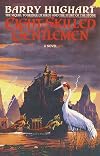
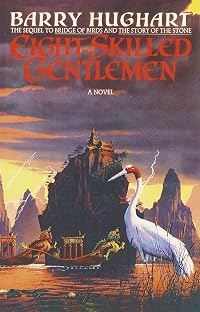
The third book in the Chronicles of Master Li and Number Ten Ox series When a resepcted mandarin is murdered in the heart of the Forbidden City, Master Li and his sidekick, Number Ten Ox, are called in to investigate. Thus begins a Sherlockian adventure that takes Master Li and Number Ten Ox--accompanied by a scarred puppeteer and his shamanka daughter--on a wild chase across China. With murder, mayhem, and magic aplenty, and Chinese folklore and literary references thrown into the mix, show more Eight Skilled Gentlemen is a hilarious romp through Ancient China. show lessTags
Recommendations














Member Reviews
Take a Shakespeare problem play, steep it in Chinese myth and add a dash of lethal mayhem and you might come close to approximating Eight Skilled Gentleman.
Master Li and Number Ten Ox are attending the public execution of Sixth Degree Hosteler Tu as imperial witnesses, despite Master Li’s well known dislike of formality. When the execution is interrupted by a dying vampire ghoul carrying a half-gnawed head, Master Li realizes there’s something strangely aristocratic about the victim that requires further investigation. They discover the rest of the victim in the Forbidden City, and after consulting with the sainted Celestial Master, are concerned the saint just confessed to the crime. But events turn out far weirder than Master Li show more suspects, and solving the crime will require investigating smugglers, traveling with a scarred puppeteer and his lovely shaman daughter, and tracking down mystical creatures and myths that are almost three thousand years old.
“One assumes [the artists] were half mad, and they honored their gods by carving deities in death agonies. You’re looking at an unparalleled psychological self-portrait of an exhausted race, teetering upon the edge of extinction, but don’t you see the wonder of our recent experiences? Some of the old gods were sure to survive.”
Almost too complicated to explain yet extremely simple on the surface, Hughart has truly produced a work of art. There is the seemingly straightforward investigation driving the plot, shaded with social commentary along the way (and don’t even kid yourself that Hughart is only talking about ancient Chinese culture). There is side illumination of the history of the Chinese people, and their own myths about the cultural absorption/conflict with indigenous groups. There is outright silliness, particularly with the foodie to end all foodies (literally), Sixth Degree Hosteler Tu, or the time that Master Li impersonates a grave ghoul.
“Somehow or other he got his hands on one of your memoirs!” He swiftly scanned the chicken tracks. “Usual critical comments!” he yelled. “Clotted construction, inept imagery, mangled metaphors, and so on!”
But it’s not only the complexly woven themes. Hughart plays around more than ever with the narrative. In the beginning, Master Li shares letter from a reader accusing Number Ten Ox of purple prose (no self-mocking there). The festive atmosphere of the square is conveyed in groups of shouting (“Sha la jen la!” “Hao! Hao! Hao!”). Poetry is read. The tale of a weak noble is demonstrated, complete with a broom as sword. A play within a play is performed. Prophetic dreams (as well as priapic ones) are experienced. On two occasions, one with the puppeteer and one with Number Ten Ox, we are treating to Master Li as Greek chorus, leaving me giggling out loud (“Good evening” “That’s the Miao-chia”). The narrative is far more complex than either of the other books. Most of the time it works–it turns out it is usually necessary to understand the plot–but sometimes not at well. Quite honestly, that’s about on par with my Shakespeare experiences–the play-within-a-play device generally annoys.
It’s worth noting that there are a couple of gruesome episodes, with poor Ox standing in for the audience with a heartfelt “Gligghh!” While I had my doubts for the author choice to include such scenes, it did put me in mind of the old, old tales–the one where Cinderella’s sisters chopped off their toes to fit into the glass slipper, or the one where Bluebeard has the locked room with bodies.
“Every historian is faced with a chapter in which he cannot win. If he includes the relevant material he will send his readers screaming into the night, and if he doesn’t include it he isn’t writing history.”
The first time I read, I was suffering from Tired, and as the shenanigans built, I had trouble understanding the dizzying changes in direction. When thinking about my review, I started over and re-read the entire book. Like experiencing Shakespeare again and again, each time through allows me to consider some different aspect, whether plot, emotion or lyricism. Overall, worth the time, clotted construction, inept imagery, mangled metaphors and all. show less
Master Li and Number Ten Ox are attending the public execution of Sixth Degree Hosteler Tu as imperial witnesses, despite Master Li’s well known dislike of formality. When the execution is interrupted by a dying vampire ghoul carrying a half-gnawed head, Master Li realizes there’s something strangely aristocratic about the victim that requires further investigation. They discover the rest of the victim in the Forbidden City, and after consulting with the sainted Celestial Master, are concerned the saint just confessed to the crime. But events turn out far weirder than Master Li show more suspects, and solving the crime will require investigating smugglers, traveling with a scarred puppeteer and his lovely shaman daughter, and tracking down mystical creatures and myths that are almost three thousand years old.
“One assumes [the artists] were half mad, and they honored their gods by carving deities in death agonies. You’re looking at an unparalleled psychological self-portrait of an exhausted race, teetering upon the edge of extinction, but don’t you see the wonder of our recent experiences? Some of the old gods were sure to survive.”
Almost too complicated to explain yet extremely simple on the surface, Hughart has truly produced a work of art. There is the seemingly straightforward investigation driving the plot, shaded with social commentary along the way (and don’t even kid yourself that Hughart is only talking about ancient Chinese culture). There is side illumination of the history of the Chinese people, and their own myths about the cultural absorption/conflict with indigenous groups. There is outright silliness, particularly with the foodie to end all foodies (literally), Sixth Degree Hosteler Tu, or the time that Master Li impersonates a grave ghoul.
“Somehow or other he got his hands on one of your memoirs!” He swiftly scanned the chicken tracks. “Usual critical comments!” he yelled. “Clotted construction, inept imagery, mangled metaphors, and so on!”
But it’s not only the complexly woven themes. Hughart plays around more than ever with the narrative. In the beginning, Master Li shares letter from a reader accusing Number Ten Ox of purple prose (no self-mocking there). The festive atmosphere of the square is conveyed in groups of shouting (“Sha la jen la!” “Hao! Hao! Hao!”). Poetry is read. The tale of a weak noble is demonstrated, complete with a broom as sword. A play within a play is performed. Prophetic dreams (as well as priapic ones) are experienced. On two occasions, one with the puppeteer and one with Number Ten Ox, we are treating to Master Li as Greek chorus, leaving me giggling out loud (“Good evening” “That’s the Miao-chia”). The narrative is far more complex than either of the other books. Most of the time it works–it turns out it is usually necessary to understand the plot–but sometimes not at well. Quite honestly, that’s about on par with my Shakespeare experiences–the play-within-a-play device generally annoys.
It’s worth noting that there are a couple of gruesome episodes, with poor Ox standing in for the audience with a heartfelt “Gligghh!” While I had my doubts for the author choice to include such scenes, it did put me in mind of the old, old tales–the one where Cinderella’s sisters chopped off their toes to fit into the glass slipper, or the one where Bluebeard has the locked room with bodies.
“Every historian is faced with a chapter in which he cannot win. If he includes the relevant material he will send his readers screaming into the night, and if he doesn’t include it he isn’t writing history.”
The first time I read, I was suffering from Tired, and as the shenanigans built, I had trouble understanding the dizzying changes in direction. When thinking about my review, I started over and re-read the entire book. Like experiencing Shakespeare again and again, each time through allows me to consider some different aspect, whether plot, emotion or lyricism. Overall, worth the time, clotted construction, inept imagery, mangled metaphors and all. show less
Con 'Ocho honorables magos', Barry Hughart dio por finalizada las Crónicas del Maestro Li y Buey Número Diez, de las que forman parte 'Puente de pájaros' y 'La leyenda de la piedra'. Como él mismo comenta en el libro, podría haber seguido y seguido con esta saga de manera automática, como hacen otros escritores, pero no lo creyó oportuno, y lo que es más importante, deseó poner un digno punto final a estas historias porque veía que el proceso empezaba a hacerse repetitivo y tedioso. Así que cortó por lo sano, como el que deja de fumar de repente, como él dice. ¡Qué bien les hubiese ido a otros esta forma de pensar!
Las historias del Maestro Li y Buey Número Diez, transcurren en "una China que nunca fue, pero que debería show more haber sido", una China alternativa en la que la magia, los prodigios y las leyendas se dan la mano para crear todo un universo propio. En esta entrega, de lectura independiente, todo comienza cuando el Maestro Li y Buey Número Diez acuden a la ejecución de Tu el Hostelero de Sexta Categoría, cuando de repente aparece un gul vampiro y se arma un barullo enorme. Siguiendo la pista de este gul, darán con una cabeza a medio devorar perteneciendo a un importante mandarín que les llevará hasta la Ciudad Prohibida... El misterio está servido.
La novela repite el mismo esquema que las anteriores, se plantea una caso misterioso y peculiar que nuestros dos personajes, a modo de Holmes y Watson, deberán resolver. Sin llegar a las cotas de calidad y excelencia de 'Puente de pájaros', la primera de las crónicas, 'Ocho honorables magos' profundiza en este mundo alternativo, repleto de asesinos, estafadores, deidades sobrenaturales y demonios, todo ello rodeado de ese humor tan característico de Hughart, además de ser un libro magníficamente escrito.
Es una pena haber llegado al final de las historias de estos entrañables personajes, cuyas aventuras son memorables. Sin duda, permanecerán en mi recuerdo para siempre. show less
Las historias del Maestro Li y Buey Número Diez, transcurren en "una China que nunca fue, pero que debería show more haber sido", una China alternativa en la que la magia, los prodigios y las leyendas se dan la mano para crear todo un universo propio. En esta entrega, de lectura independiente, todo comienza cuando el Maestro Li y Buey Número Diez acuden a la ejecución de Tu el Hostelero de Sexta Categoría, cuando de repente aparece un gul vampiro y se arma un barullo enorme. Siguiendo la pista de este gul, darán con una cabeza a medio devorar perteneciendo a un importante mandarín que les llevará hasta la Ciudad Prohibida... El misterio está servido.
La novela repite el mismo esquema que las anteriores, se plantea una caso misterioso y peculiar que nuestros dos personajes, a modo de Holmes y Watson, deberán resolver. Sin llegar a las cotas de calidad y excelencia de 'Puente de pájaros', la primera de las crónicas, 'Ocho honorables magos' profundiza en este mundo alternativo, repleto de asesinos, estafadores, deidades sobrenaturales y demonios, todo ello rodeado de ese humor tan característico de Hughart, además de ser un libro magníficamente escrito.
Es una pena haber llegado al final de las historias de estos entrañables personajes, cuyas aventuras son memorables. Sin duda, permanecerán en mi recuerdo para siempre. show less
I wouldn't have believed anybody could scream loud enough to make the mob in the Vegetable Market shut up and pay attention, or make the Chief Executioner of Peking come to a halt with his sword raised high, but that is exactly what happened. All eyes turned to six figures that were racing into the square through the Gate of Prolonged Righteousness. The five men in the lead had wide staring eyes, faces bleached white with terror, and mouths gaping like coal bins as they emitted one earsplitting scream after another. The sixth figure was the cause of the commotion, and one look was enough to freeze my blood. I had heard tales of vampire ghouls from Auntie Hua since I was five years old, but I had never expected to see one, and this show more ch'ih-mei, as Master Li later confirmed, was a specimen so classic it could have been used to illustrate the famous scientific study by the great P'u Sung-ling, Recorder of Things Strange.
The third and last book in the series begins with a vampire ghoul interrupting a public execution in Peking, just as the executioner is about to beat the previous record for number of consecutive executions with a single blow of the axe. As the vampire ghoul has also decapitated a mandarin on an island, Li Kao and Number Ten Ox begin are asked to investigate, and find themselves investigating the link between the demonic murders, a monkey man who steals antique bird-cages, and some highly-placed criminals. Li Kao and Number Ten Ox are helped by a puppeteer and his shaman daughter, and if you have read the first two books you will not be surprised at how the relationships between the four main characters pan out, or that the investigation involves quite a lot of time spent underground. I slightly preferred this book to "The Story of the Stone", but it's probably good that the author stopped after three books, as the plots were getting a bit predictable. show less
The third and last book in the series begins with a vampire ghoul interrupting a public execution in Peking, just as the executioner is about to beat the previous record for number of consecutive executions with a single blow of the axe. As the vampire ghoul has also decapitated a mandarin on an island, Li Kao and Number Ten Ox begin are asked to investigate, and find themselves investigating the link between the demonic murders, a monkey man who steals antique bird-cages, and some highly-placed criminals. Li Kao and Number Ten Ox are helped by a puppeteer and his shaman daughter, and if you have read the first two books you will not be surprised at how the relationships between the four main characters pan out, or that the investigation involves quite a lot of time spent underground. I slightly preferred this book to "The Story of the Stone", but it's probably good that the author stopped after three books, as the plots were getting a bit predictable. show less
Eight Skilled Gentlemen is the third and last of Hughart's Master Li and Number Ten Ox stories. Which is unfortunate, because these are some really great books. Hughart's prose is just as lyrical here as in the previous volumes, and the incorporation of Chinese folklore is just as fascinating as always. Even though the plot is a bit weaker here than in the previous two volumes, Eight Skilled Gentlemen is still better than most and high n my list of keepers.
Highly recommended, but read the other two first to get the full effect.
Highly recommended, but read the other two first to get the full effect.
This is the last of Hughart's Ancient China stories, and he somehow managed to get me teary-eyed at the end there (bastard;)). It wasn't as good as the second book, but only because I've grown wise to his plot twists. The theme of all the books was definitely that appearances are deceiving and people are always in disguise. Even the narrator wears his peasantry like a cloak. The last part of this book was an amazing ending to a fascinating and beautiful trilogy.
Eight Skilled Gentlemen is the third story of Master Li and Number Ten Ox. Unfortunately, the first thing that hit me about this story was historical inaccuracies. The story takes place in the familiar environs of Peking (Beijing), but many of the referred-to landmarks such as the Forbidden City and the artificial lakes weren't built until hundreds of years after the story's Tang dynasty setting (in fact, Beijing was mostly a frontier outpost at the time). That aside, I found the story fairly compelling, as politically corrupt officials pitted themselves against a mysterious supernatural force, with our protagonists of course getting stuck in the middle. I found the big reveal at the end to be surprising, though in hindsight it was show more completely in line with the reveals in the other stories. The final boat race scene at the end was a bit odd, though, and not as satisfying an ending as I would have preferred. show less
This one is the third one in the series, and was written only one year after the previous one. Compared to the previous two books, this one was a somewhat lesser effort, in that the story wasn't as crisp and things didn't tie together as nicely, and you could fairly easily tell the direction of the twists based on the way the previous books had worked (something that bothered me about the Harry Potter series, as well).
Still, this book was still quite enjoyable. The style, with all the references to real and fake Chinese legends and characters and landscapes, is still very fun to read. The dialogue, as well; the characters are just as fond of puns, poetic phrasings and alliteration as the real Chinese people I've dealt with, and since I show more enjoy those things myself, I get a kick out of seeing them here. The characters, well... if you like the two leads, you're not going to find anything to object to here, although the act is wearing a bit thin. Ox will always fall in love with the main female lead, Master Li will always find clues somewhere and play the charlatan half the time, etc. A little development wouldn't hurt.
The plot isn't as well thought out as the previous two books, but on the whole, it played nicely. It just wasn't as tight, but it's a high order to get that. Here, we have high-level mandarins, Chinese vampires and a series of amusing gods, ape-men, and ancient, mysterious cages, and all of it has to be worked out fairly quickly. It's still imaginative, but just not all tied together quite as well.
Anyway, it's definitely still good, and I'd still recommend it if you're already in the series. It's just sad it's the last one; there really should have been a few more. Stupid publishing companies. show less
Still, this book was still quite enjoyable. The style, with all the references to real and fake Chinese legends and characters and landscapes, is still very fun to read. The dialogue, as well; the characters are just as fond of puns, poetic phrasings and alliteration as the real Chinese people I've dealt with, and since I show more enjoy those things myself, I get a kick out of seeing them here. The characters, well... if you like the two leads, you're not going to find anything to object to here, although the act is wearing a bit thin. Ox will always fall in love with the main female lead, Master Li will always find clues somewhere and play the charlatan half the time, etc. A little development wouldn't hurt.
The plot isn't as well thought out as the previous two books, but on the whole, it played nicely. It just wasn't as tight, but it's a high order to get that. Here, we have high-level mandarins, Chinese vampires and a series of amusing gods, ape-men, and ancient, mysterious cages, and all of it has to be worked out fairly quickly. It's still imaginative, but just not all tied together quite as well.
Anyway, it's definitely still good, and I'd still recommend it if you're already in the series. It's just sad it's the last one; there really should have been a few more. Stupid publishing companies. show less
Members
- Recently Added By
Lists

made me cackle as I read (fiction)
20 works; 3 members

Books Read in 2015
3,299 works; 129 members

Best Fantasy Novels
821 works; 361 members
Author Information

4 Works 5,093 Members
Some Editions
Awards and Honors
Awards
Series

Belongs to Publisher Series
Work Relationships
Is contained in
Common Knowledge
- Canonical title*
- Huit honorables magiciens
- Original title
- Eight Skilled Gentlemen
- Original publication date
- 1990
- People/Characters
- Li Kao; Number Ten Ox
- Important places
- China
- Important events
- Tang Dynasty (618 | 907)
- Dedication
- For Derk Bodde, Goran Aijmer,
and all the other pioneers
who almost got it right - First words
- I have no intention of setting down the disgusting details concerning Sixth Degree Hosteler Tu.
- Last words
- (Click to show. Warning: May contain spoilers.)"Ox!" cried Master Liu. "Bring your esteemed parents and come say hello to some friends of ours!"
"Yes, sir" I said.
*Some information comes from Common Knowledge in other languages. Click "Edit" for more information.
Classifications
Statistics
- Members
- 868
- Popularity
- 31,192
- Reviews
- 18
- Rating
- (3.93)
- Languages
- 5 — English, French, German, Japanese, Spanish
- Media
- Paper, Ebook
- ISBNs
- 13
- ASINs
- 3