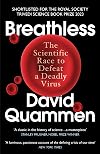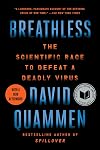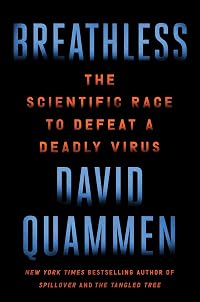
Breathless: The Scientific Race to Defeat a Deadly Virus
by David Quammen
On This Page
Description
National Book Award FinalistThe story of the worldwide scientific quest to decipher the coronavirus SARS-CoV-2, trace its source, and make possible the vaccines to fight the Covid-19 pandemic.
Breathless is the story of SARS-CoV-2 and its fierce journey through the human population, as seen by the scientists who study its origin, its ever-changing nature, and its capacity to kill us. David Quammen expertly shows how strange new viruses emerge from animals into humans as we disrupt wild show more ecosystems, and how those viruses adapt to their human hosts, sometimes causing global catastrophe. He explains why this coronavirus will probably be a "forever virus," destined to circulate among humans and bedevil us endlessly, in one variant form or another. As scientists labor to catch it, comprehend it, and control it, with their high-tech tools and methods, the virus finds ways of escape.
Based on interviews with nearly one hundred scientists, including leading virologists in China and around the world, Quammen explains that:
-Infectious disease experts saw this pandemic coming
-Some scientists, for more than two decades, warned that "the next big one" would be caused by a changeable new virus—very possibly a coronavirus—but such warnings were ignored for political or economic reasons
-The precise origins of this virus may not be known for years, but some clues are compelling, and some suppositions can be dismissed
-And much more.
Breathless takes you inside the frantic international effort to understand and control SARS-CoV-2 as if we were peering over the shoulders of the brilliant scientists who led the chase. show less
Tags
Recommendations
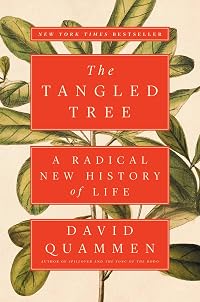
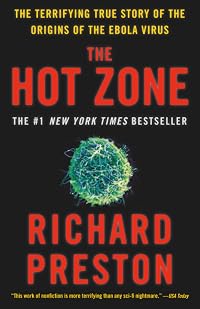
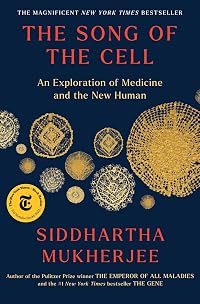
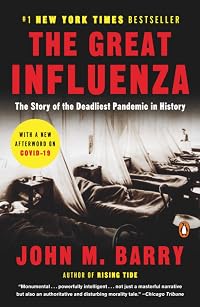
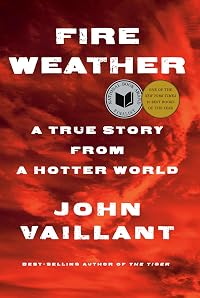
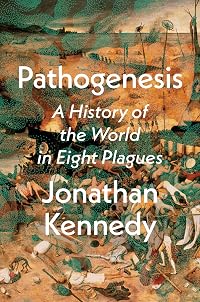
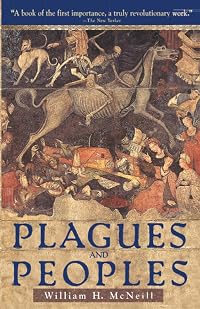
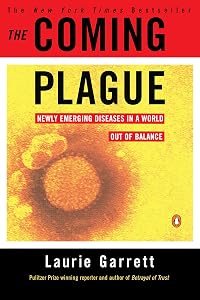
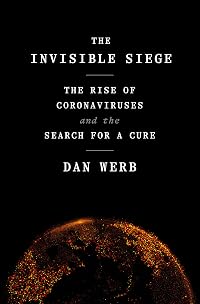
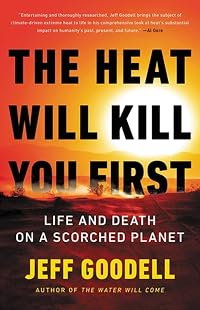
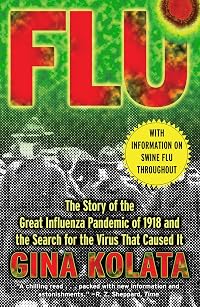
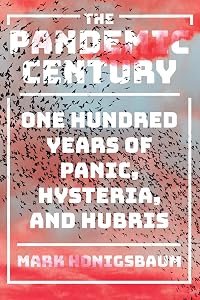

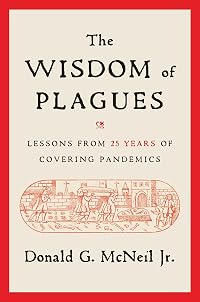
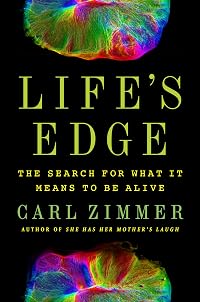


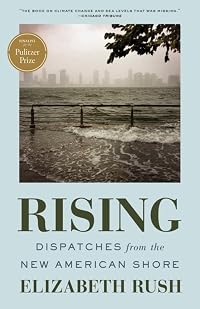
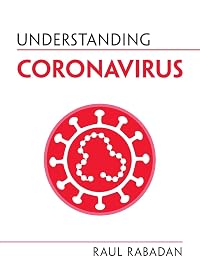

Member Recommendations
Member Reviews
First off, I have to say that I owe David Quammen a debt of gratitude. Years ago, I read his book Spillover, about diseases that cross over from infecting animals to infecting humans, and he explained the subject so well, and was so clear about the when-not-if expectations of future pandemics and how they were likely to come about that when covid hit, I felt right from the beginning that I had a good, useful handle on what was happening and why.
In this 2022 book, he turns his attention to covid itself. Specifically, he concentrates not on the social, personal, or political aspects of the pandemic (although he certainly allows some of his thoughts on those matters to peek through, especially his contempt for the Trump administration's show more handling of things), but on the scientific aspects. In particular, on scientists' efforts to sequence the virus's genome and trace its mutations, to develop vaccines, and to understand its origins. In that last, he includes a lot of discussion of the "lab leak hypothesis," which he concludes is not impossible but highly unlikely.
Quammen is a good and vivid writer, but he's trying to pull off a nearly impossible balancing act here. Because the scientific details are incredibly detailed, complex, and generally not very accessible to the layman. He's trying very hard to convey as full an understanding of this stuff as possible without getting incomprehensibly bogged down in the scientific weeds, and he may do as good a job as is possible at it, but even as a science-minded reader, I sometimes felt a bit overwhelmed with information and unsatisfied with my understanding of it. Even given that, though, I did find it worthwhile to have all of this laid out before me, and to get an organized retrospective on exactly what was happening in the world of epidemiology and virology in that confusing and chaotic time. And even if explaining everything both engagingly and with perfect clarity is ultimately impossible, this topic is important enough to be worth making the effort to try, and I am glad I made the effort to read. show less
In this 2022 book, he turns his attention to covid itself. Specifically, he concentrates not on the social, personal, or political aspects of the pandemic (although he certainly allows some of his thoughts on those matters to peek through, especially his contempt for the Trump administration's show more handling of things), but on the scientific aspects. In particular, on scientists' efforts to sequence the virus's genome and trace its mutations, to develop vaccines, and to understand its origins. In that last, he includes a lot of discussion of the "lab leak hypothesis," which he concludes is not impossible but highly unlikely.
Quammen is a good and vivid writer, but he's trying to pull off a nearly impossible balancing act here. Because the scientific details are incredibly detailed, complex, and generally not very accessible to the layman. He's trying very hard to convey as full an understanding of this stuff as possible without getting incomprehensibly bogged down in the scientific weeds, and he may do as good a job as is possible at it, but even as a science-minded reader, I sometimes felt a bit overwhelmed with information and unsatisfied with my understanding of it. Even given that, though, I did find it worthwhile to have all of this laid out before me, and to get an organized retrospective on exactly what was happening in the world of epidemiology and virology in that confusing and chaotic time. And even if explaining everything both engagingly and with perfect clarity is ultimately impossible, this topic is important enough to be worth making the effort to try, and I am glad I made the effort to read. show less
To be honest, I’m not really sure why I finished this one. For one thing, it was pretty clear to me well before the halfway mark that I wasn’t really going to enjoy it or get much out of it. And I didn’t. I guess I’m just not at all interested in medical science. I read a lot of nonfiction, and a lot of it centers on subjects that are beyond my normal interests. But the one thing I’m now clear about is that I should skip the medical books.
From a more objective standpoint, though, I don’t think I would recommend this book in particular. It seems to be a general history of the pandemic, and the scientific community’s response to it. But by the end, it’s clearly just a defense against the lab-leak theory of the outbreak’s show more origin. For my part, I don’t really care much about that question. Not that it’s unimportant, but the question seems pretty complex, and I don’t think it’s something a rando like me (or you, probably) has enough understanding to parse. I’m tired of people acting like whatever knowledge they have of such a controversy is precisely the amount of knowledge necessary to discern the truth. And this book seems to be targeted at just such people.
Besides which, the facts are clearly not all in. This book came out months ago, but just last week there were new revelations about this question. And I doubt they’ll be the last. Writing, publishing, or reading such a lengthy book on the subject seems premature, at this point. I don’t feel like it was time well spent. As I said, I’m not really sure why I finished. show less
From a more objective standpoint, though, I don’t think I would recommend this book in particular. It seems to be a general history of the pandemic, and the scientific community’s response to it. But by the end, it’s clearly just a defense against the lab-leak theory of the outbreak’s show more origin. For my part, I don’t really care much about that question. Not that it’s unimportant, but the question seems pretty complex, and I don’t think it’s something a rando like me (or you, probably) has enough understanding to parse. I’m tired of people acting like whatever knowledge they have of such a controversy is precisely the amount of knowledge necessary to discern the truth. And this book seems to be targeted at just such people.
Besides which, the facts are clearly not all in. This book came out months ago, but just last week there were new revelations about this question. And I doubt they’ll be the last. Writing, publishing, or reading such a lengthy book on the subject seems premature, at this point. I don’t feel like it was time well spent. As I said, I’m not really sure why I finished. show less
It's the first non-fiction book in English on the SARS-CoV-2 virus for the general public to include analyses of numerous science pre-prints which explain the scope and purpose of those writings. That makes Breathless essential reading for non-virologists who want to maintain an understanding of the current pandemic. Breathless has also just been published in the Italian language, with several other translations in the works. Included is a Notes/References section, where a list of sources for this book has been compiled. One website also used while writing Breathless is http://www.virological.org where virologists around the world provide early looks for their peers on current questions, data, and theories.
Breathless also makes the case show more for the continued global priority of doing whatever it takes to eliminate future spillovers of viruses, especially coronaviruses, that may otherwise continue to travel from Earth's ecosystems into our human populations.
Keep in mind that a book on the SARS-CoV-2 virus, written in the middle of that pandemic, is bound to leave a few loose ends. That's the purpose of research on these coronaviruses -- to keep expanding the boundaries of what we know. My hunch is that the COVID-19 pandemic will end someday, years from now. Thus, my family and I just bought another box of N95 masks.
PS: In November 2022, Breathless was included on the NYTimes list of the 100 best books of 2022. show less
Breathless also makes the case show more for the continued global priority of doing whatever it takes to eliminate future spillovers of viruses, especially coronaviruses, that may otherwise continue to travel from Earth's ecosystems into our human populations.
Keep in mind that a book on the SARS-CoV-2 virus, written in the middle of that pandemic, is bound to leave a few loose ends. That's the purpose of research on these coronaviruses -- to keep expanding the boundaries of what we know. My hunch is that the COVID-19 pandemic will end someday, years from now. Thus, my family and I just bought another box of N95 masks.
PS: In November 2022, Breathless was included on the NYTimes list of the 100 best books of 2022. show less
Among the many general-interest Covid books out there, Quammen successfully finds his own area. However, scientific research on Covid and its origins is broad enough that the book tends to be shallow and sometimes incoherent. The motivations of the research, and therefore of Quammen's discussions, aren't always spelled out. The book's timeliness also makes it inconclusive; there are still too many loose threads. The books on Covid vaccine development and deployment, written by active participants, have narrower focuses and much more rewarding conclusions.
An exhaustively researched presentation on the quest to find the beginnings of the COVID pandemic. The author leaves no stone unturned ultimately landing on four theories about its origin. Most of the book is written in a manner that a novice like me but I would be lying if I said I didn't get lost now and then in the detailed scientific data. Ultimately, I learned much and found the book valuable and should be read widely to insure an educated informed citizenry.
I found this informative and straightforward, and I enjoyed the look at similar diseases to Covid-19 and how those spread and were treated. We are far enough out from the start of the pandemic for there to be enough other things I'm raging over that this didn't cause too much angst for me. I don't think I would have enjoyed reading this the year it was published.
Quammen interviewed many researchers involved in the Covid-19 pandemic during and just after the lockdown using Zoom. He has digested and presented this information for us in his usual straightforward and evenhanded way. The nature of RNA viruses, the known history of the progression of the pandemic, and various opinions on the origin of the virus are discussed. DQ occasionally goes off on a tangent, e.g. the details of Pangolin smuggling, but I found it all interesting. My edition from last year has an addendum that brings things up to date, although there hasn't been a lot of new data on the origin of the virus - the author explains why.
================================
There is a summary of the whole book at the end of the text that show more was largely made by abstracting what you've just finished reading. I found it unnecessary unless you aren't going to read the book.
Chapter 37, page 145: In addition, the CDC kept advising that, when local health departments could test they should focus only on people with a travel history, or people with severe symptoms... The author should explain why the CDC made this recommendation.
Chapter 69, page 279. a potluck banquet involving roughly forty thousand families [!] show less
================================
There is a summary of the whole book at the end of the text that show more was largely made by abstracting what you've just finished reading. I found it unnecessary unless you aren't going to read the book.
Chapter 37, page 145: In addition, the CDC kept advising that, when local health departments could test they should focus only on people with a travel history, or people with severe symptoms... The author should explain why the CDC made this recommendation.
Chapter 69, page 279. a potluck banquet involving roughly forty thousand families [!] show less
Members
- Recently Added By
Lists

Disaster Books
74 works; 19 members

Science: Health & Medical
100 works; 1 member

National Book Awards 2022 Longlist
50 works; 1 member

Books Read in 2022
5,168 works; 111 members
Author Information

34+ Works 8,484 Members
Writer David Quammen grew up in Cincinnati, Ohio and was later educated at both Yale and Oxford Universities. Quammen began his career by writing for The Christian Science Monitor, the National Center for Appropriate Technology, and Audubon, Esquire, Rolling Stone, and Harpers Magazines. He wrote the novels The Soul of Viktor Tronko and The Song show more of the Dodo: Island Biogeography in an Age of Extinctions, which won the 1997 New York Public Library Helen Bernstein Award for Excellence in Journalism. He also received two National Magazine Awards for his column "Natural Acts" in Outside magazine. (Bowker Author Biography) David Quammen is the author of "The Boilerplate Rhino" & "The Song of the Dodo." Among his honors are two National Magazine Awards for his writing in "Outside." (Bowker Author Biography) David Quammen is a two-time winner of the National Magazine Award for his science essays & other work in "Outside" magazine. He is the author of three novels & several other books, including the award-winning "The Song of the Dodo". He lives in Bozeman, Montana. (Bowker Author Biography) show less
Awards and Honors
Awards
Distinctions
Notable Lists
Common Knowledge
- Original publication date
- 2022-10
- Important places
- Wuhan, China
- Important events
- COVID-19 pandemic
- Dedication
- to all those who have lost loved ones in this pandemic
- First words
- To some people it wasn't surprising, the advent of this pandemic, merely shocking in the way a grim inevitability can shock.
- Last words
- (Click to show. Warning: May contain spoilers.)There are many more fearsome viruses where SARS-COV-2 came from wherever that is.
- Original language
- English US
- Canonical DDC/MDS
- 614.588
- Canonical LCC
- RA644.C67
Classifications
- Genres
- Science & Nature, General Nonfiction, Nonfiction
- DDC/MDS
- 614.588 — Applied science & technology Medicine & health Epidemics, Poisons, Alternative Medicine Incidence of and public measures to prevent specific diseases and kinds of diseases
- LCC
- RA644 .C67 — Medicine Public aspects of medicine Public aspects of medicine Public health. Hygiene. Preventive medicine Disease (Communicable and noninfectious) and public
- BISAC
Statistics
- Members
- 241
- Popularity
- 134,984
- Reviews
- 8
- Rating
- (3.94)
- Languages
- 5 — Dutch, English, Italian, Portuguese, Spanish
- Media
- Paper, Audiobook, Ebook
- ISBNs
- 17
- ASINs
- 3